《画楼春梦》|仙侠紫韵花楼剧情 MV
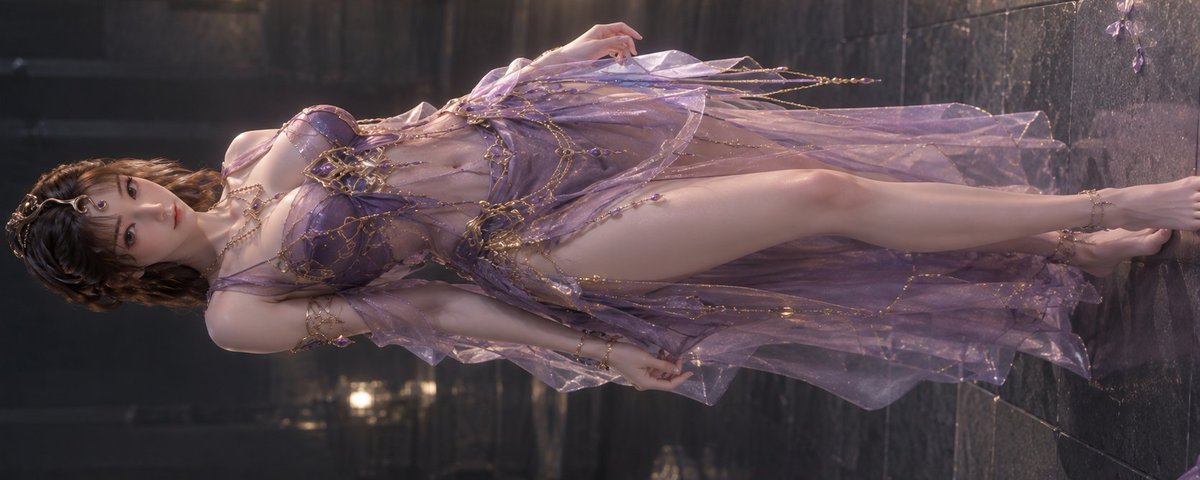
文章目录
** **
可单独复制到 H3 的完整提示词:
For this segment, generate exactly 13.268s of vertical 9:16 cinematic video. Original-song global range: 00:00.000–00:13.268. The supplied <Audio 1> is the exact segment file seg01_00m00p00s-00m13p27s.mp3; its local clock starts at 00:00.
For this H3 segment, use all four references with strictly separated responsibilities:
<Picture 1>is the ONLY source for the heroine's identity and appearance. Preserve her exact identity and all existing visual details; add no new appearance or costume descriptions.<Picture 2>is ONLY a camera-composition reference for the explicitly designated true 90-degree overhead shot in this segment, if one is specified. Never take its person, face, clothing or environment.<Picture 3>is ONLY the environment reference. Reproduce its purple xianxia private flower-pavilion architecture, dark rosewood lattice windows and flooring, smoky-lavender and mauve translucent gauze, restrained champagne-gold details, existing furniture and warm window light. If Picture 3 contains a person, ignore that person completely; use only the environment around them.<Audio 1>is the exact audio slice named for this segment. Its local clock begins at 00:00. Follow the original tempo and the local lyric timings below exactly.
ABSOLUTE CAST RULE: exactly one human character exists — the woman from Picture 1. No guests, customers, male lead, servants, musicians, dancers, passersby, silhouettes, partial bodies, human reflections or human shadows. Even when lyrics mention a visitor or lover, express the idea only through her solo performance, her gaze, empty space and the existing environment.
ENVIRONMENT LOCK: remain inside the same room and preserve Picture 3's architectural layout, object positions, materials and palette. Do not create another room, courtyard, waterside, boat, stage or exterior location. Do not add a pipa, wine vessel, candle, boat, water, petals or other props unless that exact object is visibly present in Picture 3. Translate lyrical imagery into hand gestures, existing reflections, window shadows and fabric movement instead. No text, subtitles, title cards, filming equipment or crew.
CAMERA LAW: every viewpoint must come from a real physical camera position. Describe physical height, distance, relation to the performer, optical axis and actual travel path. Use close and motivated camera movement — lateral tracking, short arc moves, push-ins, pull-backs, tilt/pedestal moves and brief whip transitions. No distant spectator camera, no huge empty orbit, no digital crop or simulated zoom. The camera and choreography move in 1:1 synchronization; frame the action before its accent peak, then move on the release. All transitions preserve the movement direction and body momentum.
PERFORMANCE LAW: expressive Chinese classical dance rather than standing and posing. Build connected movement through feet, weight transfer, pelvis, torso, shoulders, arms, wrists and fingertips. Use cloud-arm sweeps, thread-palm turns, cover steps, controlled pivots, sleeve flicks, waist circles, spiral turns and deliberate recovery. Keep footwork purposeful and grounded; no repeated crossed-foot stepping in place, no aimless walking, no robotic arm opening, no repeated pointing. The heroine's facial expression changes with the lyric, but avoid excessive lip-sync.
STORY TONE: intimate, poetic, restrained and self-possessed. This is a solo memory told inside one private purple flower pavilion, never a busy entertainment venue.
Create a 13.268-second opening chapter of a cinematic solo story MV.
CAMERA PLAN AND ACTION TIMELINE (all times are LOCAL to this clip): [00:00.000–00:01.083 | SHOT 1 — ESTABLISHING OVERHEAD] Use a genuine TRUE 90-DEGREE OVERHEAD camera: physically place the camera directly above the heroine, with its optical axis pointing vertically down and perpendicular to the floor. Match the exact top-down geometry, subject placement and overhead spatial composition of Picture 2 only. Picture 1 remains the heroine identity source; Picture 3 remains the room source. The dark floor and the existing purple fabrics form the spatial plane around her. She begins in a composed low seated or kneeling position already consistent with the source frame; her fingertips make a small poised opening gesture. The camera makes a very small vertical rise while staying perfectly vertical. [00:01.083–00:02.958 | SHOT 2 — THE POURING GESTURE] Cut on the first lyric accent to a close three-quarter view from just above seated shoulder height, physically about an arm's length from her. The lens follows her right hand downward toward the existing table area as she performs a graceful pouring mime for “把那酒斟满”. Do not create a cup, jug or bottle if it is not already visible in Picture 3. Her wrist rolls, fingertips open, then gather; the camera tracks the hand and returns to her face with a short physical tilt. [00:03.125–00:05.125 | SHOT 3 — LIFT THE CURTAIN] From close beside her forearm, track upward with the hand as she lifts and parts the existing purple gauze for “把那帘儿卷”. The lens passes just beside the gauze so its translucent weave briefly crosses the foreground; reveal the same room beyond, not a new space. Her torso follows the hand with a measured weight shift and a small turning step. [00:05.125–00:09.125 | SHOT 4 — THE EMPTY ENTRANCE] Move in a short curved path from her right side to the front of her face, keeping the camera close. As the lyric mentions the young gentleman, she looks toward the already-empty entrance, then returns her gaze to the lens. The entrance remains completely empty: no visitor, silhouette or shadow. She performs a connected phrase: palm glides outward, wrist turns inward, the second hand follows under the first, one small cover step changes her facing, and her shoulder and head complete the turn. [00:09.125–00:13.268 | SHOT 5 — HER OWN TERMS / OUTGOING MATCH] Cut to a tight face-and-hands close shot from her eye height. On “莫问我芳名” she raises two relaxed fingers near her cheek with a knowing, restrained smile; on “莫问我几钱” she turns the wrist outward and lets the hand travel toward the camera, showing playful self-possession rather than inviting another character into frame. During the final 0.35 seconds, the raised hand sweeps close across the lens from lower-left to upper-right, filling the frame with soft motion blur. END FRAME: hand crossing rightward, same direction and speed to be picked up by Segment 02.
EDITING: elegant opening reveal, one clear overhead signature shot, then close hand tracking and a short front arc. The overhead shot is used only here as the opening spatial signature; the remaining shots return to close physical viewpoints. No random rapid cuts.
SEGMENT 02|弦上试心|先将一曲琵琶弹到你心弦
-
原曲时间: 00:13.268–00:24.738(11.470s)
-
Audio 1 文件: seg02_00m13p27s-00m24p74s.mp3
-
歌词定位: 先将一曲琵琶弹到你心弦 00.232–03.440;眉儿轻轻展 03.857–05.857;眼儿弯弯转 05.857–07.815;说什么海誓山盟不如眼前 07.815–11.190。
-
段间转场: 承接上一段右手由左下向右上掠过镜头的动作;本段末尾让紫纱/袖缘由右向左擦过镜头,第三段从同一遮挡方向揭开。
可单独复制到 H3 的完整提示词:
For this segment, generate exactly 11.470s of vertical 9:16 cinematic video. Original-song global range: 00:13.268–00:24.738. The supplied <Audio 1> is the exact segment file seg02_00m13p27s-00m24p74s.mp3; its local clock starts at 00:00.
For this H3 segment, use all four references with strictly separated responsibilities:
<Picture 1>is the ONLY source for the heroine's identity and appearance. Preserve her exact identity and all existing visual details; add no new appearance or costume descriptions.<Picture 2>is ONLY a camera-composition reference for the explicitly designated true 90-degree overhead shot in this segment, if one is specified. Never take its person, face, clothing or environment.<Picture 3>is ONLY the environment reference. Reproduce its purple xianxia private flower-pavilion architecture, dark rosewood lattice windows and flooring, smoky-lavender and mauve translucent gauze, restrained champagne-gold details, existing furniture and warm window light. If Picture 3 contains a person, ignore that person completely; use only the environment around them.<Audio 1>is the exact audio slice named for this segment. Its local clock begins at 00:00. Follow the original tempo and the local lyric timings below exactly.
ABSOLUTE CAST RULE: exactly one human character exists — the woman from Picture 1. No guests, customers, male lead, servants, musicians, dancers, passersby, silhouettes, partial bodies, human reflections or human shadows. Even when lyrics mention a visitor or lover, express the idea only through her solo performance, her gaze, empty space and the existing environment.
ENVIRONMENT LOCK: remain inside the same room and preserve Picture 3's architectural layout, object positions, materials and palette. Do not create another room, courtyard, waterside, boat, stage or exterior location. Do not add a pipa, wine vessel, candle, boat, water, petals or other props unless that exact object is visibly present in Picture 3. Translate lyrical imagery into hand gestures, existing reflections, window shadows and fabric movement instead. No text, subtitles, title cards, filming equipment or crew.
CAMERA LAW: every viewpoint must come from a real physical camera position. Describe physical height, distance, relation to the performer, optical axis and actual travel path. Use close and motivated camera movement — lateral tracking, short arc moves, push-ins, pull-backs, tilt/pedestal moves and brief whip transitions. No distant spectator camera, no huge empty orbit, no digital crop or simulated zoom. The camera and choreography move in 1:1 synchronization; frame the action before its accent peak, then move on the release. All transitions preserve the movement direction and body momentum.
PERFORMANCE LAW: expressive Chinese classical dance rather than standing and posing. Build connected movement through feet, weight transfer, pelvis, torso, shoulders, arms, wrists and fingertips. Use cloud-arm sweeps, thread-palm turns, cover steps, controlled pivots, sleeve flicks, waist circles, spiral turns and deliberate recovery. Keep footwork purposeful and grounded; no repeated crossed-foot stepping in place, no aimless walking, no robotic arm opening, no repeated pointing. The heroine's facial expression changes with the lyric, but avoid excessive lip-sync.
STORY TONE: intimate, poetic, restrained and self-possessed. This is a solo memory told inside one private purple flower pavilion, never a busy entertainment venue.
Create an 11.470-second cinematic solo MV chapter, continuing directly from Segment 01.
CAMERA PLAN AND ACTION TIMELINE (LOCAL time): [00:00.000–00:00.800 | MATCH-ON-ACTION OPEN] Begin with the same hand crossing close to the lens from lower-left toward upper-right, at the same direction and approximate speed as Segment 01. The hand clears the lens and reveals the heroine in a close side-front composition. No reset pose. [00:00.800–00:03.440 | SHOT 1 — INVISIBLE MELODY] The camera is physically close to her hands at upper-torso height, lens directed diagonally across her forearms. She performs a refined pipa-inspired hand phrase without adding a pipa or any instrument: right fingertips make three delicate plucking gestures in the air, left palm receives the imaginary vibration, both wrists spiral outward, and the arms travel in a smooth horizontal cloud-arm pathway. The camera tracks along this hand path, then tilts to her profile. The lyric is embodied through gesture, not literal instrument insertion. [00:03.857–00:05.857 | SHOT 2 — BROW AND EXPRESSION] Cut to a very close three-quarter facial view at her eye height. On “眉儿轻轻展” she gradually lifts her brows and lets a small smile appear. The camera makes a short curved slide from her left cheek toward the front, maintaining close distance and natural facial perspective. [00:05.857–00:07.815 | SHOT 3 — THE EYES TURN] Keep the lens close and move laterally with her gaze. Her eyes travel first toward the empty room, then return toward the camera; her head follows a fraction later. A subtle focus pull shifts from her moving fingertips in the foreground to her eyes. [00:07.815–00:11.470 | SHOT 4 — PRESENT, NOT PROMISES] The camera retreats only half a step to a medium close composition, then performs a short arc from front-right to front-left as she completes a classical phrase: one palm extends, the other threads beneath it, wrists turn, one foot takes a controlled cover step, torso spirals, arms cross briefly before the chest and open into a smaller elegant shape. On “不如眼前” she looks directly into the lens with a calm, knowing expression. In the last 0.45 seconds, her existing sleeve or a nearby existing gauze curtain sweeps from right to left across the lens, creating a full-frame soft fabric wipe.
OUTGOING MATCH: fabric crosses the lens right-to-left. Segment 03 must begin with that same fabric clearing in the same direction, revealing the heroine already in motion. Keep the same room and no additional person.
SEGMENT 03|罗袖起舞|郎若有情意,便坐近一些
-
原曲时间: 00:24.738–00:37.518(12.780s)
-
Audio 1 文件: seg03_00m24p74s-00m37p52s.mp3
-
歌词定位: 郎若有情意 00.345–02.387;便坐近一些 02.387–04.345;休教这满堂春色空付了流年 04.345–07.762;檀板响三声 09.095–10.720;罗袖舞翩翩 11.095–12.720。
-
段间转场: 承接第二段右向左的纱/袖遮挡;末尾旋身让袖摆从左向右掠过镜头。第四段从这片袖摆后方揭示空荡的雅阁。
可单独复制到 H3 的完整提示词:
For this segment, generate exactly 12.780s of vertical 9:16 cinematic video. Original-song global range: 00:24.738–00:37.518. The supplied <Audio 1> is the exact segment file seg03_00m24p74s-00m37p52s.mp3; its local clock starts at 00:00.
For this H3 segment, use all four references with strictly separated responsibilities:
<Picture 1>is the ONLY source for the heroine's identity and appearance. Preserve her exact identity and all existing visual details; add no new appearance or costume descriptions.<Picture 2>is ONLY a camera-composition reference for the explicitly designated true 90-degree overhead shot in this segment, if one is specified. Never take its person, face, clothing or environment.<Picture 3>is ONLY the environment reference. Reproduce its purple xianxia private flower-pavilion architecture, dark rosewood lattice windows and flooring, smoky-lavender and mauve translucent gauze, restrained champagne-gold details, existing furniture and warm window light. If Picture 3 contains a person, ignore that person completely; use only the environment around them.<Audio 1>is the exact audio slice named for this segment. Its local clock begins at 00:00. Follow the original tempo and the local lyric timings below exactly.
ABSOLUTE CAST RULE: exactly one human character exists — the woman from Picture 1. No guests, customers, male lead, servants, musicians, dancers, passersby, silhouettes, partial bodies, human reflections or human shadows. Even when lyrics mention a visitor or lover, express the idea only through her solo performance, her gaze, empty space and the existing environment.
ENVIRONMENT LOCK: remain inside the same room and preserve Picture 3's architectural layout, object positions, materials and palette. Do not create another room, courtyard, waterside, boat, stage or exterior location. Do not add a pipa, wine vessel, candle, boat, water, petals or other props unless that exact object is visibly present in Picture 3. Translate lyrical imagery into hand gestures, existing reflections, window shadows and fabric movement instead. No text, subtitles, title cards, filming equipment or crew.
CAMERA LAW: every viewpoint must come from a real physical camera position. Describe physical height, distance, relation to the performer, optical axis and actual travel path. Use close and motivated camera movement — lateral tracking, short arc moves, push-ins, pull-backs, tilt/pedestal moves and brief whip transitions. No distant spectator camera, no huge empty orbit, no digital crop or simulated zoom. The camera and choreography move in 1:1 synchronization; frame the action before its accent peak, then move on the release. All transitions preserve the movement direction and body momentum.
PERFORMANCE LAW: expressive Chinese classical dance rather than standing and posing. Build connected movement through feet, weight transfer, pelvis, torso, shoulders, arms, wrists and fingertips. Use cloud-arm sweeps, thread-palm turns, cover steps, controlled pivots, sleeve flicks, waist circles, spiral turns and deliberate recovery. Keep footwork purposeful and grounded; no repeated crossed-foot stepping in place, no aimless walking, no robotic arm opening, no repeated pointing. The heroine's facial expression changes with the lyric, but avoid excessive lip-sync.
STORY TONE: intimate, poetic, restrained and self-possessed. This is a solo memory told inside one private purple flower pavilion, never a busy entertainment venue.
Create a 12.780-second solo classical-dance MV chapter, continuing from the fabric wipe of Segment 02.
CAMERA PLAN AND ACTION TIMELINE (LOCAL time): [00:00.000–00:00.650 | FABRIC REVEAL] The purple fabric that crossed the lens at the end of Segment 02 clears right-to-left. Reveal the heroine already carrying momentum into a small side-facing step; do not make her reset to a neutral stance. [00:00.650–00:02.387 | SHOT 1 — INVITATION THROUGH EMPTY SPACE] Camera at her upper-torso height, physically close at roughly one arm's length, starts beside her right shoulder and glides to a front three-quarter position. On “郎若有情意” she offers one palm outward toward an empty area of the room, then curls the fingertips gently back toward herself. The empty space remains empty. [00:02.387–00:04.345 | SHOT 2 — DRAW THE SPACE CLOSER] The camera makes a short physical push-in following her extended hand. On “便坐近一些” she bends one knee slightly, shifts weight into the nearer foot and draws both hands inward in a smooth scooping motion, as though inviting an imagined memory closer. No chair moves and no second person appears. [00:04.345–00:07.762 | SHOT 3 — CLASSICAL DANCE PHRASE] Move into a close side-tracking shot at waist-to-shoulder height. Use the Rev.1.4 cloud-arm / thread-palm / back-to-front turn chain: right arm sweeps across the face, left palm threads under and turns outward, the left foot makes a controlled cover step, pelvis and torso spiral over the supporting foot, she pivots from a partial back view to a front three-quarter view, then crosses both arms briefly before the chest and releases them into an open curved line. Camera travels parallel with her torso and then rounds a short arc, never making a full orbit around a stationary performer. [00:07.762–00:09.095 | MUSICAL BREATH] Let the arms settle through the wrists while her weight transfers from one foot to the other. A brief insert tracks her fingertips and the moving edge of the existing sleeve; do not freeze the entire body. [00:09.095–00:10.720 | SHOT 4 — THREE ACCENTS] On “檀板响三声”, mark three separate musical accents with three crisp but elegant actions: wrist flick, palm turn, then a compact shoulder-and-torso accent. The camera answers each with a tiny lateral reframe, not three arbitrary cuts. [00:11.095–00:12.780 | SHOT 5 — SLEEVE SPIN / OUTGOING WIPE] On “罗袖舞翩翩” she performs one quick controlled flat turn, sleeve extending into a horizontal arc, then lets the fabric trail behind the rotation. Camera arcs at matching rotational speed only during the turn. In the final 0.4 seconds, sleeve moves left-to-right across the lens and fills the frame.
OUTGOING MATCH: sleeve crosses left-to-right. Segment 04 begins with the same sleeve clearing left-to-right, but the room beyond is now visibly empty and still. Preserve rotation direction and body momentum.
SEGMENT 04|空阁春梦|偏偏只等来一场春梦
-
原曲时间: 00:37.518–00:49.333(11.815s)
-
Audio 1 文件: seg04_00m37p52s-00m49p33s.mp3
-
歌词定位: 一盏春风醉倒多少少年 00.357–02.982;我在画楼等呀等 03.815–05.565;等一阵花香等一阵风 05.565–07.607;等那有情人掀开珠帘 07.607–09.857;偏偏只等来一场春梦 09.857–11.815。
-
段间转场: 承接上一段左向右的袖摆,袖摆离开镜头后露出同一间无人雅阁;末尾她的手贴近一侧紫纱,纱面擦过镜头,带入第五段的相思独舞。
可单独复制到 H3 的完整提示词:
For this segment, generate exactly 11.815s of vertical 9:16 cinematic video. Original-song global range: 00:37.518–00:49.333. The supplied <Audio 1> is the exact segment file seg04_00m37p52s-00m49p33s.mp3; its local clock starts at 00:00.
For this H3 segment, use all four references with strictly separated responsibilities:
<Picture 1>is the ONLY source for the heroine's identity and appearance. Preserve her exact identity and all existing visual details; add no new appearance or costume descriptions.<Picture 2>is ONLY a camera-composition reference for the explicitly designated true 90-degree overhead shot in this segment, if one is specified. Never take its person, face, clothing or environment.<Picture 3>is ONLY the environment reference. Reproduce its purple xianxia private flower-pavilion architecture, dark rosewood lattice windows and flooring, smoky-lavender and mauve translucent gauze, restrained champagne-gold details, existing furniture and warm window light. If Picture 3 contains a person, ignore that person completely; use only the environment around them.<Audio 1>is the exact audio slice named for this segment. Its local clock begins at 00:00. Follow the original tempo and the local lyric timings below exactly.
ABSOLUTE CAST RULE: exactly one human character exists — the woman from Picture 1. No guests, customers, male lead, servants, musicians, dancers, passersby, silhouettes, partial bodies, human reflections or human shadows. Even when lyrics mention a visitor or lover, express the idea only through her solo performance, her gaze, empty space and the existing environment.
ENVIRONMENT LOCK: remain inside the same room and preserve Picture 3's architectural layout, object positions, materials and palette. Do not create another room, courtyard, waterside, boat, stage or exterior location. Do not add a pipa, wine vessel, candle, boat, water, petals or other props unless that exact object is visibly present in Picture 3. Translate lyrical imagery into hand gestures, existing reflections, window shadows and fabric movement instead. No text, subtitles, title cards, filming equipment or crew.
CAMERA LAW: every viewpoint must come from a real physical camera position. Describe physical height, distance, relation to the performer, optical axis and actual travel path. Use close and motivated camera movement — lateral tracking, short arc moves, push-ins, pull-backs, tilt/pedestal moves and brief whip transitions. No distant spectator camera, no huge empty orbit, no digital crop or simulated zoom. The camera and choreography move in 1:1 synchronization; frame the action before its accent peak, then move on the release. All transitions preserve the movement direction and body momentum.
PERFORMANCE LAW: expressive Chinese classical dance rather than standing and posing. Build connected movement through feet, weight transfer, pelvis, torso, shoulders, arms, wrists and fingertips. Use cloud-arm sweeps, thread-palm turns, cover steps, controlled pivots, sleeve flicks, waist circles, spiral turns and deliberate recovery. Keep footwork purposeful and grounded; no repeated crossed-foot stepping in place, no aimless walking, no robotic arm opening, no repeated pointing. The heroine's facial expression changes with the lyric, but avoid excessive lip-sync.
STORY TONE: intimate, poetic, restrained and self-possessed. This is a solo memory told inside one private purple flower pavilion, never a busy entertainment venue.
Create an 11.815-second emotional solo story-MV chapter, continuing from Segment 03's sleeve wipe.
CAMERA PLAN AND ACTION TIMELINE (LOCAL time): [00:00.000–00:00.650 | EMPTY-ROOM REVEAL] The sleeve clears left-to-right and reveals the same purple flower-pavilion chamber. The heroine remains the only person. Begin with the camera just behind the moving gauze at shoulder height; the room beyond is quiet and unoccupied. [00:00.650–00:02.982 | SHOT 1 — THE ROOM AFTER THE SONG] Camera physically withdraws along a short diagonal from near her shoulder to a medium view, revealing the empty central floor and existing seating. She completes the last trace of her dance phrase, allows the sleeve to settle, then turns her eyes toward the empty entrance. No guests or human silhouettes. [00:03.815–00:05.565 | SHOT 2 — WAITING] Camera at seated eye height, close to her profile, tracks parallel as she shifts her weight toward the entrance and pauses. On “我在画楼等呀等”, her hand rises slightly as if about to part the curtain, then stops before touching it. Her gaze holds on the empty doorway. [00:05.565–00:07.607 | SHOT 3 — WIND WITHOUT A VISITOR] Shift focus from her fingertips to the existing gauze curtain moving gently in the room's ambient air. She follows the fabric with her eyes, then lets her wrist float through a soft wave. Camera makes a small lateral slide behind the gauze, producing foreground parallax; do not add falling flowers, wind spirits or other effects. [00:07.607–00:09.857 | SHOT 4 — THE CURTAIN STAYS EMPTY] Camera moves to a close view looking past her shoulder toward the curtain and empty entrance. She lifts the edge of the existing curtain herself, looks through it, finds no one, and slowly lets it fall. The frame contains only her and the room. [00:09.857–00:11.815 | SHOT 5 — DREAM BREAK / OUTGOING WIPE] The camera returns to a close side-front view. On “偏偏只等来一场春梦” she lowers her eyes, lets her raised hand fall, and turns inward toward the room. Her fingertips brush the nearest existing purple gauze; the gauze moves close to the lens and softly covers it during the final 0.35 seconds.
OUTGOING MATCH: close gauze texture fills the frame. Segment 05 begins on the same gauze texture and the same gentle fabric drift, then reveals her hand drawing away toward her chest. Keep the emotional continuity: disappointment becomes introspection, not melodramatic crying.
SEGMENT 05|相思入袖|我把相思唱呀唱
-
原曲时间: 00:49.333–01:01.638(12.305s)
-
Audio 1 文件: seg05_00m49p33s-01m01p64s.mp3
-
歌词定位: 我把相思唱呀唱 00.000–01.750;唱尽了人间多少痴狂 01.750–04.000;若君真心怜我薄命 04.000–06.042;莫把真情只换一杯酒香 06.042–09.125;余下器乐至 12.305。
-
段间转场: 承接第四段贴近镜头的紫纱纹理,纱幔移开后露出女主收回胸前的手;末尾进入顺时针旋转,下一段从同一旋转相位接上。
可单独复制到 H3 的完整提示词:
For this segment, generate exactly 12.305s of vertical 9:16 cinematic video. Original-song global range: 00:49.333–01:01.638. The supplied <Audio 1> is the exact segment file seg05_00m49p33s-01m01p64s.mp3; its local clock starts at 00:00.
For this H3 segment, use all four references with strictly separated responsibilities:
<Picture 1>is the ONLY source for the heroine's identity and appearance. Preserve her exact identity and all existing visual details; add no new appearance or costume descriptions.<Picture 2>is ONLY a camera-composition reference for the explicitly designated true 90-degree overhead shot in this segment, if one is specified. Never take its person, face, clothing or environment.<Picture 3>is ONLY the environment reference. Reproduce its purple xianxia private flower-pavilion architecture, dark rosewood lattice windows and flooring, smoky-lavender and mauve translucent gauze, restrained champagne-gold details, existing furniture and warm window light. If Picture 3 contains a person, ignore that person completely; use only the environment around them.<Audio 1>is the exact audio slice named for this segment. Its local clock begins at 00:00. Follow the original tempo and the local lyric timings below exactly.
ABSOLUTE CAST RULE: exactly one human character exists — the woman from Picture 1. No guests, customers, male lead, servants, musicians, dancers, passersby, silhouettes, partial bodies, human reflections or human shadows. Even when lyrics mention a visitor or lover, express the idea only through her solo performance, her gaze, empty space and the existing environment.
ENVIRONMENT LOCK: remain inside the same room and preserve Picture 3's architectural layout, object positions, materials and palette. Do not create another room, courtyard, waterside, boat, stage or exterior location. Do not add a pipa, wine vessel, candle, boat, water, petals or other props unless that exact object is visibly present in Picture 3. Translate lyrical imagery into hand gestures, existing reflections, window shadows and fabric movement instead. No text, subtitles, title cards, filming equipment or crew.
CAMERA LAW: every viewpoint must come from a real physical camera position. Describe physical height, distance, relation to the performer, optical axis and actual travel path. Use close and motivated camera movement — lateral tracking, short arc moves, push-ins, pull-backs, tilt/pedestal moves and brief whip transitions. No distant spectator camera, no huge empty orbit, no digital crop or simulated zoom. The camera and choreography move in 1:1 synchronization; frame the action before its accent peak, then move on the release. All transitions preserve the movement direction and body momentum.
PERFORMANCE LAW: expressive Chinese classical dance rather than standing and posing. Build connected movement through feet, weight transfer, pelvis, torso, shoulders, arms, wrists and fingertips. Use cloud-arm sweeps, thread-palm turns, cover steps, controlled pivots, sleeve flicks, waist circles, spiral turns and deliberate recovery. Keep footwork purposeful and grounded; no repeated crossed-foot stepping in place, no aimless walking, no robotic arm opening, no repeated pointing. The heroine's facial expression changes with the lyric, but avoid excessive lip-sync.
STORY TONE: intimate, poetic, restrained and self-possessed. This is a solo memory told inside one private purple flower pavilion, never a busy entertainment venue.
Create a 12.305-second solo story-dance MV chapter, continuing from the gauze close-up of Segment 04.
CAMERA PLAN AND ACTION TIMELINE (LOCAL time): [00:00.000–00:01.750 | SHOT 1 — THE HEART UNDER THE SLEEVE] The gauze texture clears from the lens. Reveal her hand resting near her chest; she slowly draws the hand away and opens the palm. Camera is physically close at chest height, angled slightly across her forearms, then makes a measured tilt to her face as she begins “我把相思唱呀唱”. [00:01.750–00:04.000 | SHOT 2 — MEMORY IN MOTION] Camera tracks laterally with her upper body as she performs a continuous emotional phrase: one hand traces a small arc from chest to cheek, the other follows beneath it, wrists rotate inward and outward, elbows soften, torso spirals, then both hands separate into a gentle outward line. On “唱尽了人间多少痴狂”, her eyes briefly close and reopen toward the camera. No literal singing performance or exaggerated mouth movements. [00:04.000–00:06.042 | SHOT 3 — A QUESTION WITH NO ANSWER] Cut to a close three-quarter portrait. The camera makes a short physical push-in while she turns one palm upward, waits a beat, then folds the fingers inward. Her expression is vulnerable but composed; no other person is implied by the composition. [00:06.042–00:09.125 | SHOT 4 — NOT FOR A CUP OF WINE] Camera descends with her hands from chest level toward the existing table plane, then rises along her forearm. She performs a pouring-rejecting gesture without creating or holding any new cup or vessel: one hand offers an open palm, the other gently closes over it, then both hands separate and sweep outward as she turns her torso away from the table. The action reads as refusing to exchange true affection for a drink. [00:09.125–00:12.305 | SHOT 5 — TURNING INTO THE INSTRUMENTAL] She gathers the movement into a smooth clockwise turn. The camera begins a short clockwise arc only as the body initiates the turn, maintaining the same rotational phase and close radius. Her arms form a high-low diagonal; the fabric trails naturally after her shoulders. End mid-turn with the right shoulder moving toward the lens, the same rotational direction still active.
OUTGOING MATCH: finish on a clockwise half-turn in progress, not on a stationary pose. Segment 06 starts at the same rotational phase and continues the turn without restarting.
SEGMENT 06|器乐独舞|无歌词身韵段
-
原曲时间: 01:01.638–01:13.478(11.840s)
-
Audio 1 文件: seg06_01m01p64s-01m13p48s.mp3
-
歌词定位: 纯器乐过渡;无 lyric_events。
-
段间转场: 本段开头承接第五段顺时针旋转,不重启动作;本段末尾背身、双臂逐拍上升,下一段从相同背身朝向和抬臂状态接入。
可单独复制到 H3 的完整提示词:
For this segment, generate exactly 11.840s of vertical 9:16 cinematic video. Original-song global range: 01:01.638–01:13.478. The supplied <Audio 1> is the exact segment file seg06_01m01p64s-01m13p48s.mp3; its local clock starts at 00:00.
For this H3 segment, use all four references with strictly separated responsibilities:
<Picture 1>is the ONLY source for the heroine's identity and appearance. Preserve her exact identity and all existing visual details; add no new appearance or costume descriptions.<Picture 2>is ONLY a camera-composition reference for the explicitly designated true 90-degree overhead shot in this segment, if one is specified. Never take its person, face, clothing or environment.<Picture 3>is ONLY the environment reference. Reproduce its purple xianxia private flower-pavilion architecture, dark rosewood lattice windows and flooring, smoky-lavender and mauve translucent gauze, restrained champagne-gold details, existing furniture and warm window light. If Picture 3 contains a person, ignore that person completely; use only the environment around them.<Audio 1>is the exact audio slice named for this segment. Its local clock begins at 00:00. Follow the original tempo and the local lyric timings below exactly.
ABSOLUTE CAST RULE: exactly one human character exists — the woman from Picture 1. No guests, customers, male lead, servants, musicians, dancers, passersby, silhouettes, partial bodies, human reflections or human shadows. Even when lyrics mention a visitor or lover, express the idea only through her solo performance, her gaze, empty space and the existing environment.
ENVIRONMENT LOCK: remain inside the same room and preserve Picture 3's architectural layout, object positions, materials and palette. Do not create another room, courtyard, waterside, boat, stage or exterior location. Do not add a pipa, wine vessel, candle, boat, water, petals or other props unless that exact object is visibly present in Picture 3. Translate lyrical imagery into hand gestures, existing reflections, window shadows and fabric movement instead. No text, subtitles, title cards, filming equipment or crew.
CAMERA LAW: every viewpoint must come from a real physical camera position. Describe physical height, distance, relation to the performer, optical axis and actual travel path. Use close and motivated camera movement — lateral tracking, short arc moves, push-ins, pull-backs, tilt/pedestal moves and brief whip transitions. No distant spectator camera, no huge empty orbit, no digital crop or simulated zoom. The camera and choreography move in 1:1 synchronization; frame the action before its accent peak, then move on the release. All transitions preserve the movement direction and body momentum.
PERFORMANCE LAW: expressive Chinese classical dance rather than standing and posing. Build connected movement through feet, weight transfer, pelvis, torso, shoulders, arms, wrists and fingertips. Use cloud-arm sweeps, thread-palm turns, cover steps, controlled pivots, sleeve flicks, waist circles, spiral turns and deliberate recovery. Keep footwork purposeful and grounded; no repeated crossed-foot stepping in place, no aimless walking, no robotic arm opening, no repeated pointing. The heroine's facial expression changes with the lyric, but avoid excessive lip-sync.
STORY TONE: intimate, poetic, restrained and self-possessed. This is a solo memory told inside one private purple flower pavilion, never a busy entertainment venue.
Create an 11.840-second instrumental solo classical-dance MV chapter. There are no lyrics in this segment; let the instrumental rhythm and phrase accents determine the movement.
CAMERA PLAN AND ACTION TIMELINE (LOCAL time): [00:00.000–00:01.400 | MATCHED ROTATION] Continue the exact clockwise turn already in progress at the end of Segment 05. Preserve the same body direction, turn speed and shoulder phase. The camera follows the same clockwise short arc at close distance, then decelerates as her supporting foot settles. Do not restart from a front-facing neutral pose. [00:01.400–00:04.000 | SHOT 1 — CLOUD ARMS AND COVER STEP] Camera moves parallel beside her at lower-chest height, physically about one arm's length away. She performs the classical cloud-arm / thread-palm chain: right palm sweeps across the face, left hand threads beneath and rolls outward, left foot makes a clean cover step, weight transfers through the ball of the foot, torso follows the hand path, and the arms cross softly before the chest then release. The camera tracks along the same hand-to-torso pathway. [00:04.000–00:06.000 | SHOT 2 — WAIST SPIRAL] Cut to a close side view. She turns her sleeve outward, traces a full controlled waist circle from right to down to left, then spirals the torso back toward the camera. The camera lowers slightly with the waist circle, travels along the side of her body, then rises with the recovery. One fluid physical camera path, not a digital zoom. [00:06.000–00:08.500 | SHOT 3 — SLEEVE TURN] She initiates one quick flat turn with a compact sleeve flick. The fabric extends into a horizontal arc; camera arcs at the same rotational speed only while she turns. She completes the turn with a controlled spotting head and a stable supporting foot, then lets the sleeve's inertia finish naturally. Do not add repeated spins. [00:08.500–00:10.400 | SHOT 4 — BACK-TO-FRONT RELEASE] Camera crosses behind her shoulder as she changes from a three-quarter back view to a front-side view. Both hands travel upward in a flowing path, wrists uncurl, and her torso rises from the spiral into a tall extended line. [00:10.400–00:11.840 | OUTGOING MATCH — BACK VIEW / ARMS RISING] She finishes with her back angled toward the camera, both arms continuing to rise overhead through the final musical phrase. Camera settles behind and slightly to one side, close enough to preserve detail. END FRAME: back-facing body axis and arms partway overhead.
OUTGOING MATCH: Segment 07 must begin from the same back-facing orientation and continuing arm rise. No extra dancer, no prop and no change of room.
SEGMENT 07|紫金照影|金钗斜鬓边
-
原曲时间: 01:13.478–01:25.125(11.647s)
-
Audio 1 文件: seg07_01m13p48s-01m25p12s.mp3
-
歌词定位: 器乐 00.000–03.647;金钗斜鬓边 03.647–05.605;玉盏映红颜 05.605–07.730;新裁罗裙偏惹春风怜 08.313–11.647。
-
段间转场: 承接第六段背身抬臂;本段 3.647 秒歌词才进入。末尾双手收拢于身前并向下落,八段从相同手部方向接起,转入内心表达。
可单独复制到 H3 的完整提示词:
For this segment, generate exactly 11.647s of vertical 9:16 cinematic video. Original-song global range: 01:13.478–01:25.125. The supplied <Audio 1> is the exact segment file seg07_01m13p48s-01m25p12s.mp3; its local clock starts at 00:00.
For this H3 segment, use all four references with strictly separated responsibilities:
<Picture 1>is the ONLY source for the heroine's identity and appearance. Preserve her exact identity and all existing visual details; add no new appearance or costume descriptions.<Picture 2>is ONLY a camera-composition reference for the explicitly designated true 90-degree overhead shot in this segment, if one is specified. Never take its person, face, clothing or environment.<Picture 3>is ONLY the environment reference. Reproduce its purple xianxia private flower-pavilion architecture, dark rosewood lattice windows and flooring, smoky-lavender and mauve translucent gauze, restrained champagne-gold details, existing furniture and warm window light. If Picture 3 contains a person, ignore that person completely; use only the environment around them.<Audio 1>is the exact audio slice named for this segment. Its local clock begins at 00:00. Follow the original tempo and the local lyric timings below exactly.
ABSOLUTE CAST RULE: exactly one human character exists — the woman from Picture 1. No guests, customers, male lead, servants, musicians, dancers, passersby, silhouettes, partial bodies, human reflections or human shadows. Even when lyrics mention a visitor or lover, express the idea only through her solo performance, her gaze, empty space and the existing environment.
ENVIRONMENT LOCK: remain inside the same room and preserve Picture 3's architectural layout, object positions, materials and palette. Do not create another room, courtyard, waterside, boat, stage or exterior location. Do not add a pipa, wine vessel, candle, boat, water, petals or other props unless that exact object is visibly present in Picture 3. Translate lyrical imagery into hand gestures, existing reflections, window shadows and fabric movement instead. No text, subtitles, title cards, filming equipment or crew.
CAMERA LAW: every viewpoint must come from a real physical camera position. Describe physical height, distance, relation to the performer, optical axis and actual travel path. Use close and motivated camera movement — lateral tracking, short arc moves, push-ins, pull-backs, tilt/pedestal moves and brief whip transitions. No distant spectator camera, no huge empty orbit, no digital crop or simulated zoom. The camera and choreography move in 1:1 synchronization; frame the action before its accent peak, then move on the release. All transitions preserve the movement direction and body momentum.
PERFORMANCE LAW: expressive Chinese classical dance rather than standing and posing. Build connected movement through feet, weight transfer, pelvis, torso, shoulders, arms, wrists and fingertips. Use cloud-arm sweeps, thread-palm turns, cover steps, controlled pivots, sleeve flicks, waist circles, spiral turns and deliberate recovery. Keep footwork purposeful and grounded; no repeated crossed-foot stepping in place, no aimless walking, no robotic arm opening, no repeated pointing. The heroine's facial expression changes with the lyric, but avoid excessive lip-sync.
STORY TONE: intimate, poetic, restrained and self-possessed. This is a solo memory told inside one private purple flower pavilion, never a busy entertainment venue.
Create an 11.647-second solo narrative-dance MV chapter, continuing directly from Segment 06.
CAMERA PLAN AND ACTION TIMELINE (LOCAL time): [00:00.000–00:01.500 | CONTINUE THE BACK-FACING RISE] Begin with the same back-facing body orientation and arms still rising from Segment 06. The camera remains behind her at shoulder height and makes a close, short upward pedestal move as her hands finish their overhead arc. No new opening pose. [00:01.500–00:03.647 | SHOT 1 — TURN INTO THE LIGHT] Camera slides from behind her right shoulder around a compact arc toward her side profile. She lowers one arm in a controlled spiral while the other hand traces past the side of her head, drawing attention to the existing ornament and silhouette without changing or adding any accessory. [00:03.647–00:05.605 | SHOT 2 — HAIR ORNAMENT DETAIL] At the lyric “金钗斜鬓边”, cut to a close detail from just above shoulder height, physically near the temple side of her head. Focus briefly on the ornament that already exists in Picture 1, then rack focus to her eye. The camera moves a few centimeters along the contour of her head; do not invent a new hairpin. [00:05.605–00:07.730 | SHOT 3 — REFLECTION WITHOUT A NEW CUP] On “玉盏映红颜”, use a small existing reflective surface or the warm sheen of the polished floor / existing porcelain in Picture 3, only if actually visible. Let a warm highlight glide across her face as she cups both hands in a graceful oval gesture and turns her chin toward the light. Do not add a cup or any new object. [00:08.313–00:11.647 | SHOT 4 — THE FABRIC ANSWERS] Camera withdraws just enough to include her upper body and complete arm pathway, then tracks sideways. She performs a lyrical sleeve phrase: wrists cross, palms thread outward, elbows rise asymmetrically, torso curves, one foot steps along a shallow diagonal, and she pivots into a three-quarter front position. The camera arcs with the pivot, finishing close to the front. In the final 0.4 seconds, both hands gather inward and descend toward the centerline, wrists folding softly.
OUTGOING MATCH: end on both hands descending toward the chest. Segment 08 begins with the same downward hand motion and develops it into a self-possessed gesture. No other person or added object.
SEGMENT 08|不羡繁华|不羡谁家贵
-
原曲时间: 01:25.125–01:37.083(11.958s)
-
Audio 1 文件: seg08_01m25p12s-01m37p08s.mp3
-
歌词定位: 不羡谁家贵 00.000–01.958;不求谁家田 01.958–04.041;只求一人肯把真心放枕边 04.208–07.333;你说我娇艳 07.958–09.958;我说你会怜 09.958–11.958。
-
段间转场: 承接第七段双手向胸前收拢;本段末尾她的视线向画面左侧移去,摄影机绕到她肩后,下一段从同一视线方向切入。
可单独复制到 H3 的完整提示词:
For this segment, generate exactly 11.958s of vertical 9:16 cinematic video. Original-song global range: 01:25.125–01:37.083. The supplied <Audio 1> is the exact segment file seg08_01m25p12s-01m37p08s.mp3; its local clock starts at 00:00.
For this H3 segment, use all four references with strictly separated responsibilities:
<Picture 1>is the ONLY source for the heroine's identity and appearance. Preserve her exact identity and all existing visual details; add no new appearance or costume descriptions.<Picture 2>is ONLY a camera-composition reference for the explicitly designated true 90-degree overhead shot in this segment, if one is specified. Never take its person, face, clothing or environment.<Picture 3>is ONLY the environment reference. Reproduce its purple xianxia private flower-pavilion architecture, dark rosewood lattice windows and flooring, smoky-lavender and mauve translucent gauze, restrained champagne-gold details, existing furniture and warm window light. If Picture 3 contains a person, ignore that person completely; use only the environment around them.<Audio 1>is the exact audio slice named for this segment. Its local clock begins at 00:00. Follow the original tempo and the local lyric timings below exactly.
ABSOLUTE CAST RULE: exactly one human character exists — the woman from Picture 1. No guests, customers, male lead, servants, musicians, dancers, passersby, silhouettes, partial bodies, human reflections or human shadows. Even when lyrics mention a visitor or lover, express the idea only through her solo performance, her gaze, empty space and the existing environment.
ENVIRONMENT LOCK: remain inside the same room and preserve Picture 3's architectural layout, object positions, materials and palette. Do not create another room, courtyard, waterside, boat, stage or exterior location. Do not add a pipa, wine vessel, candle, boat, water, petals or other props unless that exact object is visibly present in Picture 3. Translate lyrical imagery into hand gestures, existing reflections, window shadows and fabric movement instead. No text, subtitles, title cards, filming equipment or crew.
CAMERA LAW: every viewpoint must come from a real physical camera position. Describe physical height, distance, relation to the performer, optical axis and actual travel path. Use close and motivated camera movement — lateral tracking, short arc moves, push-ins, pull-backs, tilt/pedestal moves and brief whip transitions. No distant spectator camera, no huge empty orbit, no digital crop or simulated zoom. The camera and choreography move in 1:1 synchronization; frame the action before its accent peak, then move on the release. All transitions preserve the movement direction and body momentum.
PERFORMANCE LAW: expressive Chinese classical dance rather than standing and posing. Build connected movement through feet, weight transfer, pelvis, torso, shoulders, arms, wrists and fingertips. Use cloud-arm sweeps, thread-palm turns, cover steps, controlled pivots, sleeve flicks, waist circles, spiral turns and deliberate recovery. Keep footwork purposeful and grounded; no repeated crossed-foot stepping in place, no aimless walking, no robotic arm opening, no repeated pointing. The heroine's facial expression changes with the lyric, but avoid excessive lip-sync.
STORY TONE: intimate, poetic, restrained and self-possessed. This is a solo memory told inside one private purple flower pavilion, never a busy entertainment venue.
Create an 11.958-second solo story-dance MV chapter, continuing from Segment 07's closing hand movement.
CAMERA PLAN AND ACTION TIMELINE (LOCAL time): [00:00.000–00:01.958 | SHOT 1 — HANDS RETURN TO THE HEART] Begin with the same hands descending toward her chest. Camera is close at chest height, moving backward by a small physical distance as she opens both palms away from her body on “不羡谁家贵”. Her weight shifts from the rear foot to the front foot; her shoulders remain relaxed and the gesture finishes in a curved, asymmetrical line. [00:01.958–00:04.041 | SHOT 2 — RELEASE THE WORLD] Camera tracks laterally across her front. On “不求谁家田”, she turns one palm upward, lets it pass across the other hand, then releases both arms outward and down. The movement is a continuous cloud-arm phrase with a deliberate foot pivot, not a stationary hand pose. [00:04.208–00:07.333 | SHOT 3 — ONLY A TRUE HEART] Move to a close three-quarter view from slightly beside her. She draws both hands inward, one palm settling lightly over the other near the chest; her gaze softens and lowers, then returns toward the lens. Camera makes a short physical push-in, then shifts focus from the hands to her eyes. Do not depict a bed or add a pillow just because the lyric mentions one. [00:07.958–00:09.958 | SHOT 4 — A COMPLIMENT, HELD LIGHTLY] On “你说我娇艳”, the camera makes a quick but smooth curved move from front-left toward the frontal axis. She lifts her chin, gives a restrained, amused smile and turns one wrist beside her cheek; her eyes glance briefly away, then back. [00:09.958–00:11.958 | SHOT 5 — HER ANSWER] On “我说你会怜”, she lets the smile settle into calm confidence, lowers her hand and turns her gaze toward frame-left. Camera passes close beside her shoulder and begins moving toward a rear three-quarter position. The final frame holds her side gaze and shoulder line, ready for the next chapter's over-shoulder shot.
OUTGOING MATCH: gaze direction remains toward frame-left; camera ends just behind her shoulder. Segment 09 begins from the same eye-line and shoulder position, then moves into a closer expression shot. The entrance remains empty.
SEGMENT 09|一笑作别|三分醉意七分笑
-
原曲时间: 01:37.083–01:49.076(11.993s)
-
Audio 1 文件: seg09_01m37p08s-01m49p08s.mp3
-
歌词定位: 三分醉意七分笑藏在眉间 00.000–04.000;若是明朝别 04.000–06.083;莫要说亏欠 06.417–08.083;留下一句珍重也算不负相见 08.250–11.333。
-
段间转场: 承接第八段向画面左侧的眼神与肩后机位;本段结尾让眼神落到地板柔和反光中,第十段从同一反光细节起镜并抬回人物。
可单独复制到 H3 的完整提示词:
For this segment, generate exactly 11.993s of vertical 9:16 cinematic video. Original-song global range: 01:37.083–01:49.076. The supplied <Audio 1> is the exact segment file seg09_01m37p08s-01m49p08s.mp3; its local clock starts at 00:00.
For this H3 segment, use all four references with strictly separated responsibilities:
<Picture 1>is the ONLY source for the heroine's identity and appearance. Preserve her exact identity and all existing visual details; add no new appearance or costume descriptions.<Picture 2>is ONLY a camera-composition reference for the explicitly designated true 90-degree overhead shot in this segment, if one is specified. Never take its person, face, clothing or environment.<Picture 3>is ONLY the environment reference. Reproduce its purple xianxia private flower-pavilion architecture, dark rosewood lattice windows and flooring, smoky-lavender and mauve translucent gauze, restrained champagne-gold details, existing furniture and warm window light. If Picture 3 contains a person, ignore that person completely; use only the environment around them.<Audio 1>is the exact audio slice named for this segment. Its local clock begins at 00:00. Follow the original tempo and the local lyric timings below exactly.
ABSOLUTE CAST RULE: exactly one human character exists — the woman from Picture 1. No guests, customers, male lead, servants, musicians, dancers, passersby, silhouettes, partial bodies, human reflections or human shadows. Even when lyrics mention a visitor or lover, express the idea only through her solo performance, her gaze, empty space and the existing environment.
ENVIRONMENT LOCK: remain inside the same room and preserve Picture 3's architectural layout, object positions, materials and palette. Do not create another room, courtyard, waterside, boat, stage or exterior location. Do not add a pipa, wine vessel, candle, boat, water, petals or other props unless that exact object is visibly present in Picture 3. Translate lyrical imagery into hand gestures, existing reflections, window shadows and fabric movement instead. No text, subtitles, title cards, filming equipment or crew.
CAMERA LAW: every viewpoint must come from a real physical camera position. Describe physical height, distance, relation to the performer, optical axis and actual travel path. Use close and motivated camera movement — lateral tracking, short arc moves, push-ins, pull-backs, tilt/pedestal moves and brief whip transitions. No distant spectator camera, no huge empty orbit, no digital crop or simulated zoom. The camera and choreography move in 1:1 synchronization; frame the action before its accent peak, then move on the release. All transitions preserve the movement direction and body momentum.
PERFORMANCE LAW: expressive Chinese classical dance rather than standing and posing. Build connected movement through feet, weight transfer, pelvis, torso, shoulders, arms, wrists and fingertips. Use cloud-arm sweeps, thread-palm turns, cover steps, controlled pivots, sleeve flicks, waist circles, spiral turns and deliberate recovery. Keep footwork purposeful and grounded; no repeated crossed-foot stepping in place, no aimless walking, no robotic arm opening, no repeated pointing. The heroine's facial expression changes with the lyric, but avoid excessive lip-sync.
STORY TONE: intimate, poetic, restrained and self-possessed. This is a solo memory told inside one private purple flower pavilion, never a busy entertainment venue.
Create an 11.993-second solo emotional story-MV chapter, continuing from Segment 08's frame-left gaze.
CAMERA PLAN AND ACTION TIMELINE (LOCAL time): [00:00.000–00:04.000 | SHOT 1 — THE SMILE IN HER BROW] Begin just behind her shoulder at close distance, keeping the same frame-left eye-line. Camera travels in a short curved path around her shoulder into a close frontal portrait. On “三分醉意七分笑藏在眉间”, her expression changes in small stages: a faint smile appears, the eyes brighten, then the smile becomes more knowing without turning into a broad exaggerated grin. Her fingers make a tiny relaxed flourish near the cheek, then fall naturally. [00:04.000–00:06.083 | SHOT 2 — TOMORROW'S DISTANCE] Cut to a close side view at eye height. On “若是明朝别”, she turns her face toward the empty entrance, then lets her gaze travel back across the room. Camera moves laterally beside her at the same speed as the head turn, maintaining a narrow background depth. [00:06.417–00:08.083 | SHOT 3 — NO DEBT] Camera shifts to a front three-quarter position. On “莫要说亏欠”, she gives a small downward nod, opens one hand and lets it fall, then turns her wrist palm-up before withdrawing it. The body remains fluid through a subtle weight transfer and torso rotation; this is acceptance, not collapse. [00:08.250–00:11.333 | SHOT 4 — A QUIET GOODBYE] Camera physically pulls back a short distance as she performs one slow turning phrase: her near hand sweeps across her chest, both wrists cross and open, one foot pivots, and the torso turns toward the window light. She does not follow or wave to anyone. The empty room remains empty. During the final 0.45 seconds, her eyes lower toward the polished floor and the camera tilts down with her gaze until a soft existing floor reflection fills the lower frame.
OUTGOING MATCH: end on the warm-violet reflection on the existing floor. Segment 10 begins on the same reflection and tilts upward toward her. No candle, instrument or person is added.
SEGMENT 10|烛影弦间|琵琶声渐缓
-
原曲时间: 01:49.076–02:01.083(12.007s)
-
Audio 1 文件: seg10_01m49p08s-02m01p08s.mp3
-
歌词定位: 琵琶声渐缓 00.715–02.340;烛影落窗前 02.757–04.340;谁把一腔心事付弦间 04.715–07.340;我在画楼等呀等 08.257–10.007;等一阵花香等一阵风 10.007–12.007。
-
段间转场: 承接第九段地板反光;本段由反光抬到窗格暖光和女主侧脸。末尾让现有袖缘落下并盖住镜头上半部,第十一段以袖缘向上掀开、切入严格俯拍。
可单独复制到 H3 的完整提示词:
For this segment, generate exactly 12.007s of vertical 9:16 cinematic video. Original-song global range: 01:49.076–02:01.083. The supplied <Audio 1> is the exact segment file seg10_01m49p08s-02m01p08s.mp3; its local clock starts at 00:00.
For this H3 segment, use all four references with strictly separated responsibilities:
<Picture 1>is the ONLY source for the heroine's identity and appearance. Preserve her exact identity and all existing visual details; add no new appearance or costume descriptions.<Picture 2>is ONLY a camera-composition reference for the explicitly designated true 90-degree overhead shot in this segment, if one is specified. Never take its person, face, clothing or environment.<Picture 3>is ONLY the environment reference. Reproduce its purple xianxia private flower-pavilion architecture, dark rosewood lattice windows and flooring, smoky-lavender and mauve translucent gauze, restrained champagne-gold details, existing furniture and warm window light. If Picture 3 contains a person, ignore that person completely; use only the environment around them.<Audio 1>is the exact audio slice named for this segment. Its local clock begins at 00:00. Follow the original tempo and the local lyric timings below exactly.
ABSOLUTE CAST RULE: exactly one human character exists — the woman from Picture 1. No guests, customers, male lead, servants, musicians, dancers, passersby, silhouettes, partial bodies, human reflections or human shadows. Even when lyrics mention a visitor or lover, express the idea only through her solo performance, her gaze, empty space and the existing environment.
ENVIRONMENT LOCK: remain inside the same room and preserve Picture 3's architectural layout, object positions, materials and palette. Do not create another room, courtyard, waterside, boat, stage or exterior location. Do not add a pipa, wine vessel, candle, boat, water, petals or other props unless that exact object is visibly present in Picture 3. Translate lyrical imagery into hand gestures, existing reflections, window shadows and fabric movement instead. No text, subtitles, title cards, filming equipment or crew.
CAMERA LAW: every viewpoint must come from a real physical camera position. Describe physical height, distance, relation to the performer, optical axis and actual travel path. Use close and motivated camera movement — lateral tracking, short arc moves, push-ins, pull-backs, tilt/pedestal moves and brief whip transitions. No distant spectator camera, no huge empty orbit, no digital crop or simulated zoom. The camera and choreography move in 1:1 synchronization; frame the action before its accent peak, then move on the release. All transitions preserve the movement direction and body momentum.
PERFORMANCE LAW: expressive Chinese classical dance rather than standing and posing. Build connected movement through feet, weight transfer, pelvis, torso, shoulders, arms, wrists and fingertips. Use cloud-arm sweeps, thread-palm turns, cover steps, controlled pivots, sleeve flicks, waist circles, spiral turns and deliberate recovery. Keep footwork purposeful and grounded; no repeated crossed-foot stepping in place, no aimless walking, no robotic arm opening, no repeated pointing. The heroine's facial expression changes with the lyric, but avoid excessive lip-sync.
STORY TONE: intimate, poetic, restrained and self-possessed. This is a solo memory told inside one private purple flower pavilion, never a busy entertainment venue.
Create a 12.007-second quiet, intimate solo MV chapter, continuing from Segment 09's floor reflection.
CAMERA PLAN AND ACTION TIMELINE (LOCAL time): [00:00.000–00:00.715 | REFLECTION-TO-FACE MATCH] Start with the same warm-violet reflection on the existing polished wooden floor. The camera physically tilts upward from the floor plane, passing the lower edge of her sleeve and arriving at her side profile. Preserve the same warm window-light direction and room layout. [00:00.715–00:02.340 | SHOT 1 — THE SOUND FADES] On “琵琶声渐缓”, frame her hands in a tight close-up. She performs a restrained plucking-like finger phrase in the air, with the fingertips gradually slowing and the wrists softening. Do not add a pipa. Camera tracks the diminishing hand movement and settles on the fingers at the final note. [00:02.757–00:04.340 | SHOT 2 — WINDOW SHADOW] On “烛影落窗前”, move the camera laterally toward the existing lattice-window light and shadow, then rack focus back to her cheek. Express the lyric through the actual warm light and window-grid shadows already in Picture 3; do not create a candle or candle flame. [00:04.715–00:07.340 | SHOT 3 — THE STRING OF MEMORY] Camera makes a short close arc around her front shoulder. Her right hand traces a thin horizontal line in the air, the left hand follows beneath it, both wrists turn inward as if gathering a memory, then the hands separate. She lowers her eyes for one beat and looks toward the empty room. Keep the image intimate and restrained. [00:08.257–00:10.007 | SHOT 4 — THE OLD WAITING] She turns toward the familiar empty entrance. Camera moves behind her shoulder, letting the existing gauze and empty doorway sit in the background. Her hand begins to lift toward the curtain but pauses before touching it. [00:10.007–00:12.007 | SHOT 5 — WIND AND SLEEVE WIPE] On “等一阵花香等一阵风”, she turns her palm outward and lets the existing sleeve descend across the foreground. The camera tracks the fabric as it falls close to the lens; by the final 0.35 seconds the upper frame is veiled by soft purple gauze.
OUTGOING MATCH: gauze hangs across the upper frame and continues downward. Segment 11 begins as the same gauze lifts away, revealing a true top-down view of the same solitary heroine. No candle, other person or new room.
SEGMENT 11|重回等待|等那有情人掀开珠帘
-
原曲时间: 02:01.083–02:14.718(13.635s)
-
Audio 1 文件: seg11_02m01p08s-02m14p72s.mp3
-
歌词定位: 等那有情人掀开珠帘 00.000–02.250;偏偏只等来一场春梦 02.250–04.208;我把相思唱呀唱 04.208–05.958;唱尽了人间多少痴狂 05.958–08.250;若君真心怜我薄命 08.250–10.292;莫把真情只换一杯酒香 10.292–12.875。
-
段间转场: 承接第十段垂落的紫纱;本段开头纱幔向上移开,揭示图2严格90°俯拍的孤独构图。末尾俯拍中她抬起一只手向斜上方舒展,第十二段从同一手势切至地板反光与横向移动。
可单独复制到 H3 的完整提示词:
For this segment, generate exactly 13.635s of vertical 9:16 cinematic video. Original-song global range: 02:01.083–02:14.718. The supplied <Audio 1> is the exact segment file seg11_02m01p08s-02m14p72s.mp3; its local clock starts at 00:00.
For this H3 segment, use all four references with strictly separated responsibilities:
<Picture 1>is the ONLY source for the heroine's identity and appearance. Preserve her exact identity and all existing visual details; add no new appearance or costume descriptions.<Picture 2>is ONLY a camera-composition reference for the explicitly designated true 90-degree overhead shot in this segment, if one is specified. Never take its person, face, clothing or environment.<Picture 3>is ONLY the environment reference. Reproduce its purple xianxia private flower-pavilion architecture, dark rosewood lattice windows and flooring, smoky-lavender and mauve translucent gauze, restrained champagne-gold details, existing furniture and warm window light. If Picture 3 contains a person, ignore that person completely; use only the environment around them.<Audio 1>is the exact audio slice named for this segment. Its local clock begins at 00:00. Follow the original tempo and the local lyric timings below exactly.
ABSOLUTE CAST RULE: exactly one human character exists — the woman from Picture 1. No guests, customers, male lead, servants, musicians, dancers, passersby, silhouettes, partial bodies, human reflections or human shadows. Even when lyrics mention a visitor or lover, express the idea only through her solo performance, her gaze, empty space and the existing environment.
ENVIRONMENT LOCK: remain inside the same room and preserve Picture 3's architectural layout, object positions, materials and palette. Do not create another room, courtyard, waterside, boat, stage or exterior location. Do not add a pipa, wine vessel, candle, boat, water, petals or other props unless that exact object is visibly present in Picture 3. Translate lyrical imagery into hand gestures, existing reflections, window shadows and fabric movement instead. No text, subtitles, title cards, filming equipment or crew.
CAMERA LAW: every viewpoint must come from a real physical camera position. Describe physical height, distance, relation to the performer, optical axis and actual travel path. Use close and motivated camera movement — lateral tracking, short arc moves, push-ins, pull-backs, tilt/pedestal moves and brief whip transitions. No distant spectator camera, no huge empty orbit, no digital crop or simulated zoom. The camera and choreography move in 1:1 synchronization; frame the action before its accent peak, then move on the release. All transitions preserve the movement direction and body momentum.
PERFORMANCE LAW: expressive Chinese classical dance rather than standing and posing. Build connected movement through feet, weight transfer, pelvis, torso, shoulders, arms, wrists and fingertips. Use cloud-arm sweeps, thread-palm turns, cover steps, controlled pivots, sleeve flicks, waist circles, spiral turns and deliberate recovery. Keep footwork purposeful and grounded; no repeated crossed-foot stepping in place, no aimless walking, no robotic arm opening, no repeated pointing. The heroine's facial expression changes with the lyric, but avoid excessive lip-sync.
STORY TONE: intimate, poetic, restrained and self-possessed. This is a solo memory told inside one private purple flower pavilion, never a busy entertainment venue.
Create a 13.635-second solo story-dance MV chapter, continuing from Segment 10's descending purple gauze.
CAMERA PLAN AND ACTION TIMELINE (LOCAL time): [00:00.000–00:02.250 | SHOT 1 — TRUE OVERHEAD / EMPTY CURTAIN] The existing gauze lifts away from the lens and reveals a genuine TRUE 90-DEGREE OVERHEAD shot. The camera is physically positioned directly above the heroine, optical axis perfectly vertical and perpendicular to the floor. Match Picture 2's overhead geometry and framing only; use Picture 1 for the heroine and Picture 3 for the room. The floor remains the dominant plane. She is alone beneath the camera, reaches one hand toward the empty curtain line, then lets it hover and return. The entrance remains empty; do not show a visitor or shadow. [00:02.250–00:04.208 | SHOT 2 — THE DREAM RETURNS TO EMPTY SPACE] Keep the overhead position for the first beat, then hard cut to a close side-front view at her seated height. On “偏偏只等来一场春梦”, she lowers the hand to her lap and turns her face away from the empty curtain. Camera makes a brief physical pull-back to include the empty space beside her, never revealing another person. [00:04.208–00:05.958 | SHOT 3 — SINGING THE MEMORY WITH MOVEMENT] From a close front-left position, track her hands as they rise from lap to chest: fingertips gather, wrists roll outward, elbows open, and one palm traces a curved line across the face. Her torso spirals with the arms, then returns toward the lens. This is dance, not pantomime lip-sync. [00:05.958–00:08.250 | SHOT 4 — THE LONGING PHRASE] Camera moves laterally beside her as she performs a connected classical phrase: right palm crosses the face, left hand threads under, a cover step changes her direction, the torso turns through a controlled spiral, then both arms open on a diagonal with a soft sleeve trail. Her gaze follows the leading hand and returns to camera at the phrase end. [00:08.250–00:10.292 | SHOT 5 — THE QUESTION OF TRUE HEART] Cut close to her face and upper chest. She places one hand lightly over the other near the heart, then slowly separates them. The camera pushes in a short physical distance, holds her eye-line, and pulls focus from her hands to her eyes. [00:10.292–00:13.635 | SHOT 6 — RELEASE THE CUP / OUTGOING GESTURE] On “莫把真情只换一杯酒香”, she turns away from the table area, opens both palms as if refusing an empty bargain, then sweeps one arm upward and outward. Do not add a wine cup or pot. Camera follows the rising hand from a close low side position. During the final 0.4 seconds her hand extends diagonally upward and the lens tracks its path; end with the hand and sleeve forming a diagonal line across the upper-right of frame.
OUTGOING MATCH: one hand extends diagonally upward. Segment 12 begins with the same hand path, but the camera drops toward the floor reflection and converts the movement into the flowing-river metaphor. Keep the room unchanged.
SEGMENT 12|流光如水|春水流呀流
-
原曲时间: 02:14.718–02:27.291(12.573s)
-
Audio 1 文件: seg12_02m14p72s-02m27p29s.mp3
-
歌词定位: 春水流呀流 00.573–02.740;画船悠悠 02.823–04.573;多少少年曾在此停留 04.573–08.448;花开不为谁 08.573–10.573;花落不由己 10.573–12.573。
-
段间转场: 承接第十一段斜向上伸出的手;第十二段摄影机沿该方向掠过手臂后下降到原有深色木地板的柔和反光,以反光与纱幔波动表达水意。末尾双手收入袖中,接入第十三段藏心动作。
可单独复制到 H3 的完整提示词:
For this segment, generate exactly 12.573s of vertical 9:16 cinematic video. Original-song global range: 02:14.718–02:27.291. The supplied <Audio 1> is the exact segment file seg12_02m14p72s-02m27p29s.mp3; its local clock starts at 00:00.
For this H3 segment, use all four references with strictly separated responsibilities:
<Picture 1>is the ONLY source for the heroine's identity and appearance. Preserve her exact identity and all existing visual details; add no new appearance or costume descriptions.<Picture 2>is ONLY a camera-composition reference for the explicitly designated true 90-degree overhead shot in this segment, if one is specified. Never take its person, face, clothing or environment.<Picture 3>is ONLY the environment reference. Reproduce its purple xianxia private flower-pavilion architecture, dark rosewood lattice windows and flooring, smoky-lavender and mauve translucent gauze, restrained champagne-gold details, existing furniture and warm window light. If Picture 3 contains a person, ignore that person completely; use only the environment around them.<Audio 1>is the exact audio slice named for this segment. Its local clock begins at 00:00. Follow the original tempo and the local lyric timings below exactly.
ABSOLUTE CAST RULE: exactly one human character exists — the woman from Picture 1. No guests, customers, male lead, servants, musicians, dancers, passersby, silhouettes, partial bodies, human reflections or human shadows. Even when lyrics mention a visitor or lover, express the idea only through her solo performance, her gaze, empty space and the existing environment.
ENVIRONMENT LOCK: remain inside the same room and preserve Picture 3's architectural layout, object positions, materials and palette. Do not create another room, courtyard, waterside, boat, stage or exterior location. Do not add a pipa, wine vessel, candle, boat, water, petals or other props unless that exact object is visibly present in Picture 3. Translate lyrical imagery into hand gestures, existing reflections, window shadows and fabric movement instead. No text, subtitles, title cards, filming equipment or crew.
CAMERA LAW: every viewpoint must come from a real physical camera position. Describe physical height, distance, relation to the performer, optical axis and actual travel path. Use close and motivated camera movement — lateral tracking, short arc moves, push-ins, pull-backs, tilt/pedestal moves and brief whip transitions. No distant spectator camera, no huge empty orbit, no digital crop or simulated zoom. The camera and choreography move in 1:1 synchronization; frame the action before its accent peak, then move on the release. All transitions preserve the movement direction and body momentum.
PERFORMANCE LAW: expressive Chinese classical dance rather than standing and posing. Build connected movement through feet, weight transfer, pelvis, torso, shoulders, arms, wrists and fingertips. Use cloud-arm sweeps, thread-palm turns, cover steps, controlled pivots, sleeve flicks, waist circles, spiral turns and deliberate recovery. Keep footwork purposeful and grounded; no repeated crossed-foot stepping in place, no aimless walking, no robotic arm opening, no repeated pointing. The heroine's facial expression changes with the lyric, but avoid excessive lip-sync.
STORY TONE: intimate, poetic, restrained and self-possessed. This is a solo memory told inside one private purple flower pavilion, never a busy entertainment venue.
Create a 12.573-second poetic solo MV chapter, continuing from Segment 11's diagonally extended hand.
CAMERA PLAN AND ACTION TIMELINE (LOCAL time): [00:00.000–00:00.573 | HAND-TO-FLOOR TRANSITION] Begin on the same extended hand and sleeve from Segment 11. The camera tracks along the forearm, then descends in a smooth physical pedestal move toward the existing polished dark wooden floor. Use its subtle reflection as an abstract water-like visual metaphor; do not create an actual river, boat, pool or exterior waterside. [00:00.573–00:02.740 | SHOT 1 — FLOWING LIGHT] On “春水流呀流”, the camera glides laterally just above the floor plane, following the existing soft reflections and the shadow of the purple gauze. Her hand passes above the reflective surface; she remains visible farther back in the same room. No water is added. [00:02.823–00:04.573 | SHOT 2 — SLOW BOAT METAPHOR] On “画船悠悠”, tilt upward to her side profile. She performs a slow gliding arm phrase: one palm floats forward, the other follows underneath, elbows soften, wrists undulate in opposite timing, and the torso follows the hands through a gentle side curve. The camera moves parallel to her at waist height, creating a floating sensation without introducing a boat. [00:04.573–00:08.448 | SHOT 3 — THE ROOM THAT REMEMBERS] Camera pulls back just enough to show the existing architecture and open floor around her. She performs three measured traveling dance steps along a shallow diagonal, each with a clear weight transfer and articulated foot placement, not casual walking. On “多少少年曾在此停留”, she turns through a half pivot and lets the arms pass behind her before returning to a front three-quarter view. The room remains completely empty. [00:08.573–00:10.573 | SHOT 4 — FLOWER WITHOUT A FLOWER PROP] On “花开不为谁”, move close to her hands as they unfold from a compact bud-like shape into curved open palms. Use the existing purple floral decor only if it is already visible in Picture 3; do not add petals or new branches. Her eyes follow the hands. [00:10.573–00:12.573 | SHOT 5 — FALLING / GATHERING] On “花落不由己”, her wrists slowly fold, arms descend in a soft spiral, and she turns one shoulder toward the camera. Camera makes a small curved move around her front side. At the end both hands gather into the existing sleeve line and disappear naturally into the fabric.
OUTGOING MATCH: finish with both hands gathered into the sleeve, elbows relaxed and torso turned three-quarter. Segment 13 begins with the same sleeve-contained hands and unfolds the secret of the heart. No water, boat, new flowers or other person.
SEGMENT 13|袖中真心|偏把一颗真心藏在袖
-
原曲时间: 02:27.291–02:39.333(12.042s)
-
Audio 1 文件: seg13_02m27p29s-02m39p33s.mp3
-
歌词定位: 偏把一颗真心藏在袖 00.000–04.042;我在画楼笑呀笑 04.042–05.750;笑那世人偏把痴情当玩笑 05.750–07.792;若有一人愿陪我看尽潮生 07.792–10.042;我便不再羡那九重云霄 10.042–12.042。
-
段间转场: 承接第十二段双手收入袖中的状态;本段末尾她向窗光方向完成一次连续转身并打开手臂,第十四段从同一转身相位接续,再进入最终正上方俯拍。
可单独复制到 H3 的完整提示词:
For this segment, generate exactly 12.042s of vertical 9:16 cinematic video. Original-song global range: 02:27.291–02:39.333. The supplied <Audio 1> is the exact segment file seg13_02m27p29s-02m39p33s.mp3; its local clock starts at 00:00.
For this H3 segment, use all four references with strictly separated responsibilities:
<Picture 1>is the ONLY source for the heroine's identity and appearance. Preserve her exact identity and all existing visual details; add no new appearance or costume descriptions.<Picture 2>is ONLY a camera-composition reference for the explicitly designated true 90-degree overhead shot in this segment, if one is specified. Never take its person, face, clothing or environment.<Picture 3>is ONLY the environment reference. Reproduce its purple xianxia private flower-pavilion architecture, dark rosewood lattice windows and flooring, smoky-lavender and mauve translucent gauze, restrained champagne-gold details, existing furniture and warm window light. If Picture 3 contains a person, ignore that person completely; use only the environment around them.<Audio 1>is the exact audio slice named for this segment. Its local clock begins at 00:00. Follow the original tempo and the local lyric timings below exactly.
ABSOLUTE CAST RULE: exactly one human character exists — the woman from Picture 1. No guests, customers, male lead, servants, musicians, dancers, passersby, silhouettes, partial bodies, human reflections or human shadows. Even when lyrics mention a visitor or lover, express the idea only through her solo performance, her gaze, empty space and the existing environment.
ENVIRONMENT LOCK: remain inside the same room and preserve Picture 3's architectural layout, object positions, materials and palette. Do not create another room, courtyard, waterside, boat, stage or exterior location. Do not add a pipa, wine vessel, candle, boat, water, petals or other props unless that exact object is visibly present in Picture 3. Translate lyrical imagery into hand gestures, existing reflections, window shadows and fabric movement instead. No text, subtitles, title cards, filming equipment or crew.
CAMERA LAW: every viewpoint must come from a real physical camera position. Describe physical height, distance, relation to the performer, optical axis and actual travel path. Use close and motivated camera movement — lateral tracking, short arc moves, push-ins, pull-backs, tilt/pedestal moves and brief whip transitions. No distant spectator camera, no huge empty orbit, no digital crop or simulated zoom. The camera and choreography move in 1:1 synchronization; frame the action before its accent peak, then move on the release. All transitions preserve the movement direction and body momentum.
PERFORMANCE LAW: expressive Chinese classical dance rather than standing and posing. Build connected movement through feet, weight transfer, pelvis, torso, shoulders, arms, wrists and fingertips. Use cloud-arm sweeps, thread-palm turns, cover steps, controlled pivots, sleeve flicks, waist circles, spiral turns and deliberate recovery. Keep footwork purposeful and grounded; no repeated crossed-foot stepping in place, no aimless walking, no robotic arm opening, no repeated pointing. The heroine's facial expression changes with the lyric, but avoid excessive lip-sync.
STORY TONE: intimate, poetic, restrained and self-possessed. This is a solo memory told inside one private purple flower pavilion, never a busy entertainment venue.
Create a 12.042-second solo narrative-dance MV chapter, continuing from Segment 12's gathered hands inside the sleeve.
CAMERA PLAN AND ACTION TIMELINE (LOCAL time): [00:00.000–00:04.042 | SHOT 1 — THE HEART KEPT IN THE SLEEVE] Begin with both hands still gathered within the sleeve line exactly as at the end of Segment 12. Camera is physically close beside her at waist-to-chest height, tracking the fabric as she slowly draws one hand out, circles the wrist, touches the palm lightly against her chest, then returns the hand toward the sleeve. Her torso turns through a small spiral and her weight shifts cleanly onto the forward foot. No hidden object is placed in the sleeve. [00:04.042–00:05.750 | SHOT 2 — A SMILE OF HER OWN] Cut to a close frontal view at eye height. On “我在画楼笑呀笑”, she lets a genuine, warm smile grow, first lowering her eyes and then looking directly toward the lens. The camera pushes in physically by a small distance, with no digital zoom. [00:05.750–00:07.792 | SHOT 3 — LAUGHING AT THE OLD RULES] Camera slides from frontal to a close three-quarter view. On “笑那世人偏把痴情当玩笑”, she makes a light wrist flick near the cheek, releases the hand outward, and turns her shoulders with a small controlled pivot. The smile is self-aware rather than mocking; her expression becomes quietly confident. [00:07.792–00:10.042 | SHOT 4 — TIDES AS A METAPHOR] On “若有一人愿陪我看尽潮生”, she looks toward the existing lattice window and its light, then performs a flowing side-to-side arm wave with continuous weight transfer. The camera follows a smooth lateral track across the room, revealing only the same interior. Use the existing floor reflection and shifting window light as a subtle visual metaphor for tides; do not create a sea, boat, coastline or exterior view. [00:10.042–00:12.042 | SHOT 5 — ABOVE THE CLOUDS, WITHOUT LEAVING THE ROOM] On “我便不再羡那九重云霄”, she turns away from the window, completes one controlled turn, and opens her arms into a poised diagonal line. Camera makes a close arc that matches the turn, then arrives slightly behind her shoulder. In the last 0.4 seconds her torso continues rotating toward the window side, arms beginning to lift.
OUTGOING MATCH: end mid-turn with the same rotational direction and arms beginning to rise. Segment 14 must continue the exact turn phase and resolve it into the final overhead composition. Do not cut to a literal sky, mountain, cloud palace or new location.
SEGMENT 14|天明珍藏|也要把这半盏春光细细收藏
-
原曲时间: 02:39.333–02:50.527(11.194s)
-
Audio 1 文件: seg14_02m39p33s-02m50p53s.mp3
-
歌词定位: 我把红尘唱呀唱 00.000–01.708;唱到月落唱到天微亮 01.708–04.083;纵然一生风月无常 04.167–06.125;也要把这半盏春光细细收藏 06.125–10.083;尾奏至 11.194。
-
段间转场: 全片终章。承接第十三段同方向转身和抬臂;最终由图2严格90°正上方俯拍收束。最后保持空间和人物的安静,不切入额外场景、不突然黑场。
可单独复制到 H3 的完整提示词:
For this segment, generate exactly 11.194s of vertical 9:16 cinematic video. Original-song global range: 02:39.333–02:50.527. The supplied <Audio 1> is the exact segment file seg14_02m39p33s-02m50p53s.mp3; its local clock starts at 00:00.
For this H3 segment, use all four references with strictly separated responsibilities:
<Picture 1>is the ONLY source for the heroine's identity and appearance. Preserve her exact identity and all existing visual details; add no new appearance or costume descriptions.<Picture 2>is ONLY a camera-composition reference for the explicitly designated true 90-degree overhead shot in this segment, if one is specified. Never take its person, face, clothing or environment.<Picture 3>is ONLY the environment reference. Reproduce its purple xianxia private flower-pavilion architecture, dark rosewood lattice windows and flooring, smoky-lavender and mauve translucent gauze, restrained champagne-gold details, existing furniture and warm window light. If Picture 3 contains a person, ignore that person completely; use only the environment around them.<Audio 1>is the exact audio slice named for this segment. Its local clock begins at 00:00. Follow the original tempo and the local lyric timings below exactly.
ABSOLUTE CAST RULE: exactly one human character exists — the woman from Picture 1. No guests, customers, male lead, servants, musicians, dancers, passersby, silhouettes, partial bodies, human reflections or human shadows. Even when lyrics mention a visitor or lover, express the idea only through her solo performance, her gaze, empty space and the existing environment.
ENVIRONMENT LOCK: remain inside the same room and preserve Picture 3's architectural layout, object positions, materials and palette. Do not create another room, courtyard, waterside, boat, stage or exterior location. Do not add a pipa, wine vessel, candle, boat, water, petals or other props unless that exact object is visibly present in Picture 3. Translate lyrical imagery into hand gestures, existing reflections, window shadows and fabric movement instead. No text, subtitles, title cards, filming equipment or crew.
CAMERA LAW: every viewpoint must come from a real physical camera position. Describe physical height, distance, relation to the performer, optical axis and actual travel path. Use close and motivated camera movement — lateral tracking, short arc moves, push-ins, pull-backs, tilt/pedestal moves and brief whip transitions. No distant spectator camera, no huge empty orbit, no digital crop or simulated zoom. The camera and choreography move in 1:1 synchronization; frame the action before its accent peak, then move on the release. All transitions preserve the movement direction and body momentum.
PERFORMANCE LAW: expressive Chinese classical dance rather than standing and posing. Build connected movement through feet, weight transfer, pelvis, torso, shoulders, arms, wrists and fingertips. Use cloud-arm sweeps, thread-palm turns, cover steps, controlled pivots, sleeve flicks, waist circles, spiral turns and deliberate recovery. Keep footwork purposeful and grounded; no repeated crossed-foot stepping in place, no aimless walking, no robotic arm opening, no repeated pointing. The heroine's facial expression changes with the lyric, but avoid excessive lip-sync.
STORY TONE: intimate, poetic, restrained and self-possessed. This is a solo memory told inside one private purple flower pavilion, never a busy entertainment venue.
Create the 11.194-second final chapter of the solo story MV, continuing directly from Segment 13's turning body and rising arms.
CAMERA PLAN AND ACTION TIMELINE (LOCAL time): [00:00.000–00:01.708 | MATCHED TURN] Continue the exact turn direction and phase established at the end of Segment 13. The camera travels a short matching arc close to her shoulder as she completes the turn; preserve her momentum and do not restart from a neutral front pose. On “我把红尘唱呀唱”, her hands travel upward in a controlled sleeve-led arc. [00:01.708–00:04.083 | SHOT 1 — THROUGH THE LAST NIGHT] Begin from a close three-quarter portrait. On “唱到月落唱到天微亮”, her expression softens; she looks briefly toward the existing window light, then brings her gaze back toward the camera. Camera moves from the front side toward her profile, tracking the slow head turn. Keep the same window-light direction and the same purple-gold color balance; suggest the passing of night only through a very subtle softening of the existing warm light, never by changing the room or relighting it dramatically. [00:04.167–00:06.125 | SHOT 2 — ACCEPTANCE] Cut to a close view of her face and hands. On “纵然一生风月无常”, she lowers her chin, takes one measured breath, and releases a small smile. Her hands separate from the chest and open outward with relaxed wrists. The camera makes a restrained physical push-in, then begins to rise only as her arms lift. [00:06.125–00:10.083 | SHOT 3 — FINAL TRUE OVERHEAD] Transition to a genuine TRUE 90-DEGREE OVERHEAD camera: physically locate the camera directly above her, optical axis perfectly vertical and perpendicular to the floor, pointing straight down. Use Picture 2 only for the true overhead geometry and composition; preserve Picture 1 as the heroine identity source and Picture 3 as the room source. The camera must not be diagonally elevated. She completes a slow, controlled overhead dance phrase: one arm traces a circular arc, the other follows, both wrists turn inward, her weight shifts through one small pivot, and the arms gradually gather toward the heart. The floor remains the dominant spatial plane, and the same dark timber, existing purple gauze and furniture stay in their correct positions. On “细细收藏”, her hands close softly together over her chest. [00:10.083–00:11.194 | FINAL HOLD] Remain in the same strict vertical overhead position. Her movement settles naturally: fingertips make one final tiny adjustment, fabric inertia fades, and the room stays still. Hold the complete composition through the final audio tail. No fade to a new scene, no title card, no black-screen cut before the audio ends.
FINAL IMAGE: one solitary heroine centered within the same purple xianxia flower-pavilion room, seen from a physically true 90-degree overhead camera, her hands gathered at her heart. The ending expresses self-possession and the choice to keep her own spring light.
OUTGOING MATCH: none — this is the final shot of the complete MV. Preserve the overhead composition until the segment audio has fully ended.
动作库依据:《dance-motion-chain-h3.md》Rev.1.4。舞蹈结构参考古风云手穿掌/背转前链(C16)、撩袖与腰部螺旋链(C17)、掩口托腮叙事链(C13)、跪姿螺旋转(C44)、平转甩袖(C45)、遮挡揭示(C36)以及旋转/背身转场原则;实际编排按本曲 121.5 BPM 和各段真实 lyric_events 重新落位。摄影机按库内物理机位定义、动作与运镜 1:1 同步、旋转相位匹配及视觉遮挡接力执行。
沿着这个主题继续读
从一篇文章,找到相关的教程、经验和阅读路径。