LP 101 : An Absolute Complete Guide for Beginner

文章目录
部分视频或图片暂未收录,已在正文保留提示;需要时可查看原文。查看原文 ↗
Most of people trading memecoins on solana like this :
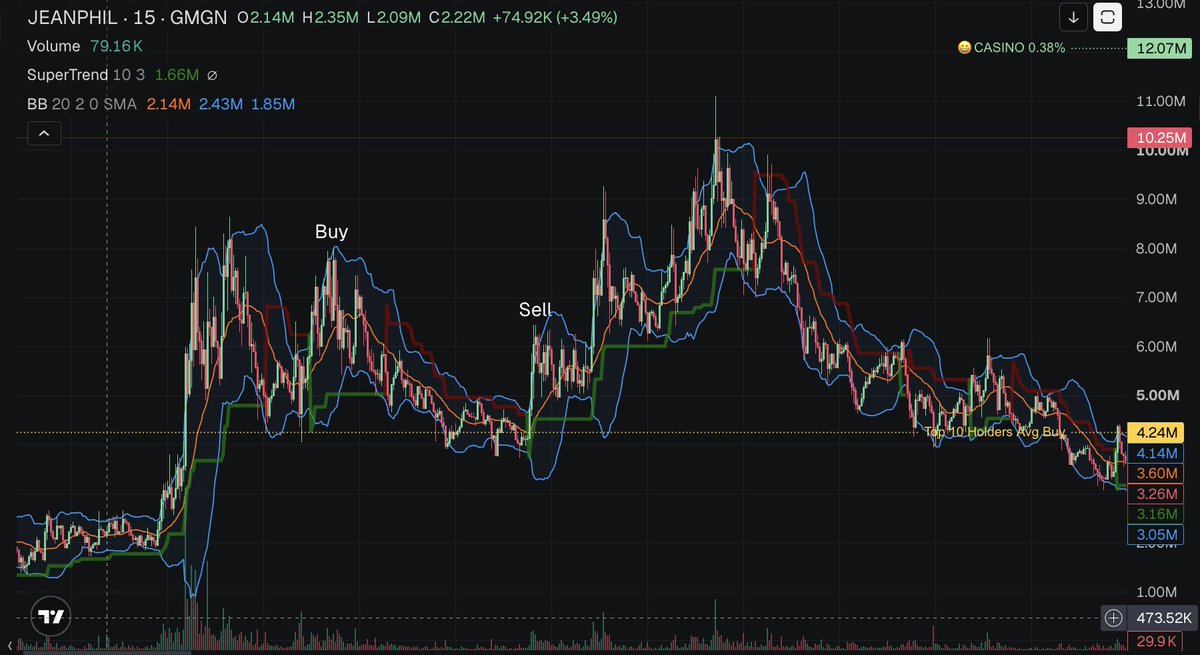
Most of traders situation
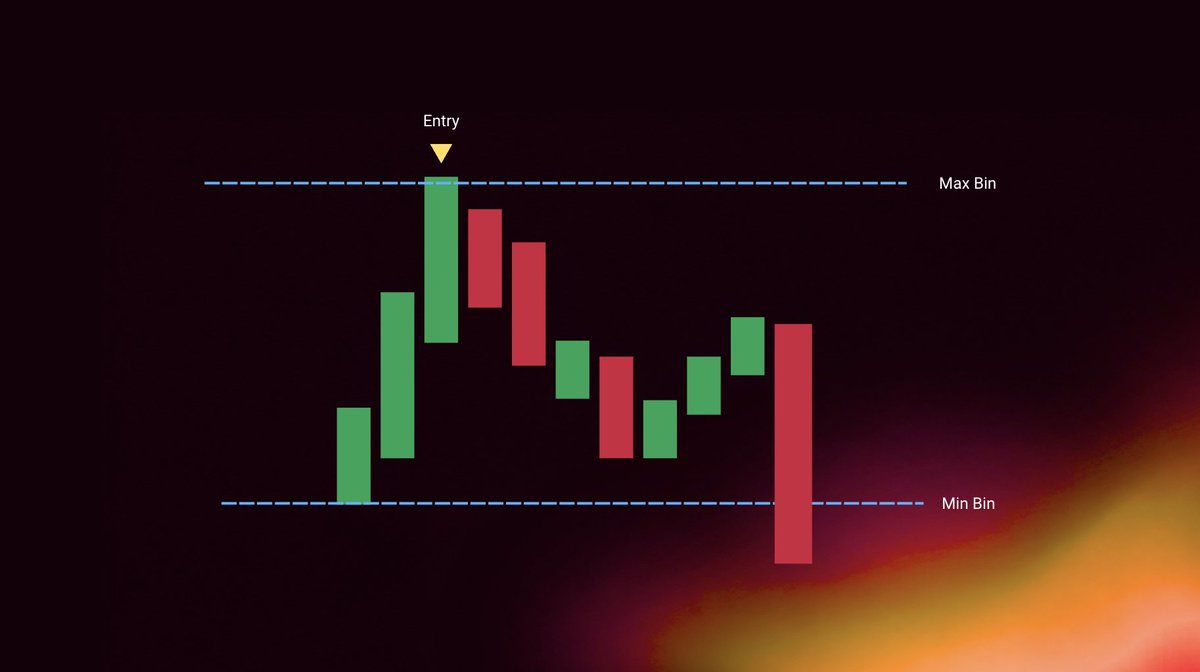
Buy high - sell low, you'll rekt when you trade, but with LPs, with the same entry and same exit as pictured above, you'll in profit.
Confused? Lemme explain
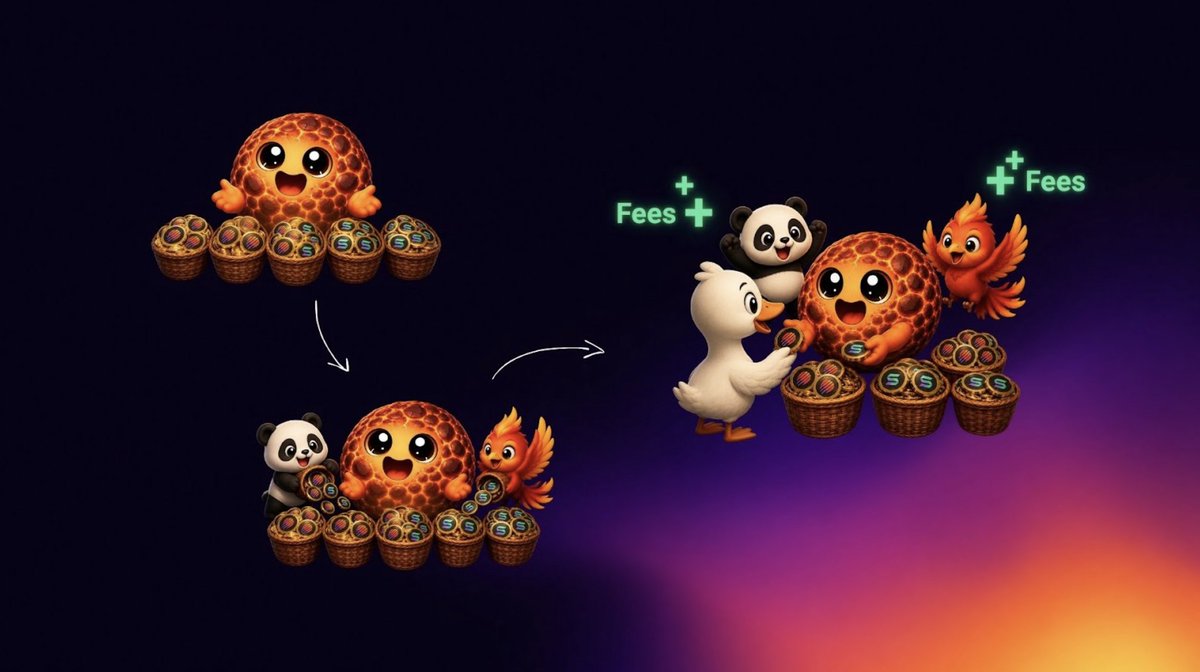
LPs illustrations.
Let's say you buying a tokens from @JupiterExchange or @gmgnai or @fomo your trade is gonna done through via a liquidity pool (LP) and every swap that made, you pay fees to whoever providing liquidity for you.
If you trade via centralized exchange, there's an order book that involve 2 participant, maker and taker. Maker is the people who put their assets, and taker who take another person assets (trade happens). But, taker and maker are paying the fees to exchange.
LPs on dex like @MeteoraAG, let you become the exchange, you can deposit your assets in specific pair and earn fees whenever people buy/sell tokens via your pool, but your positions must be in range in order to receive fees, because they need to use your assets and you rewarded with a trading fees.
AMM vs CLMM vs DLMM
What's the different with all of those 3, basically AMM (Automated Market Maker) and CLMM (Concentrated Liquidity Market Maker) had a few different
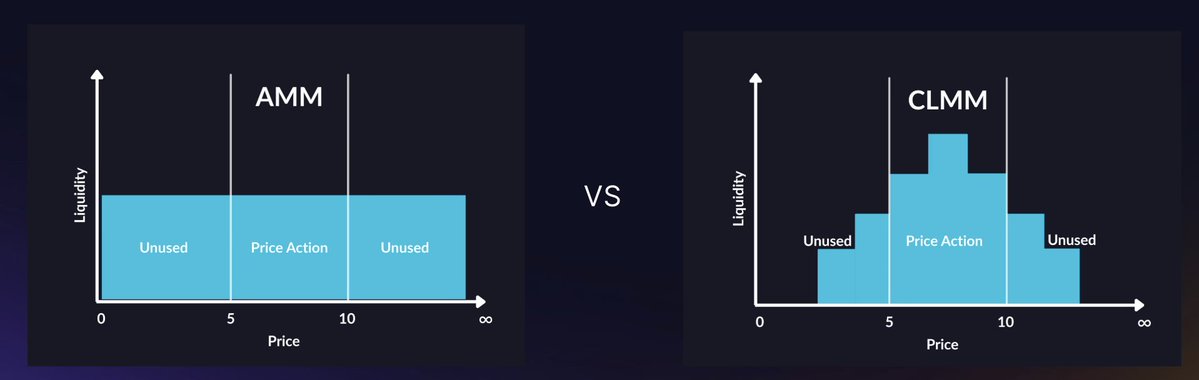
AMM vs CLMM
AMM won't let you to set a range based on price action, but CLMM allow you to concentrate your range in to price action. This means most of your liqudity is unused on AMM, but on CLMM you can maximize your liquidity to get used.
Remember? You earn fees when your liquidity is used. More used liqudiity - more fees earned.
Now, what the different between CLMM and DLMM - DLMM is dynamic, it's adjustable, shapeable, and let user putting their liquidity with 0 bins slippage.
Instead of using ticks like CLMM, DLMM on Meteora using bins. Bins is a place to put liquidity into a specific price, each bins can contain token X, token Y, or token X and Y, but only 1 bin is active (used) or the market price bin.
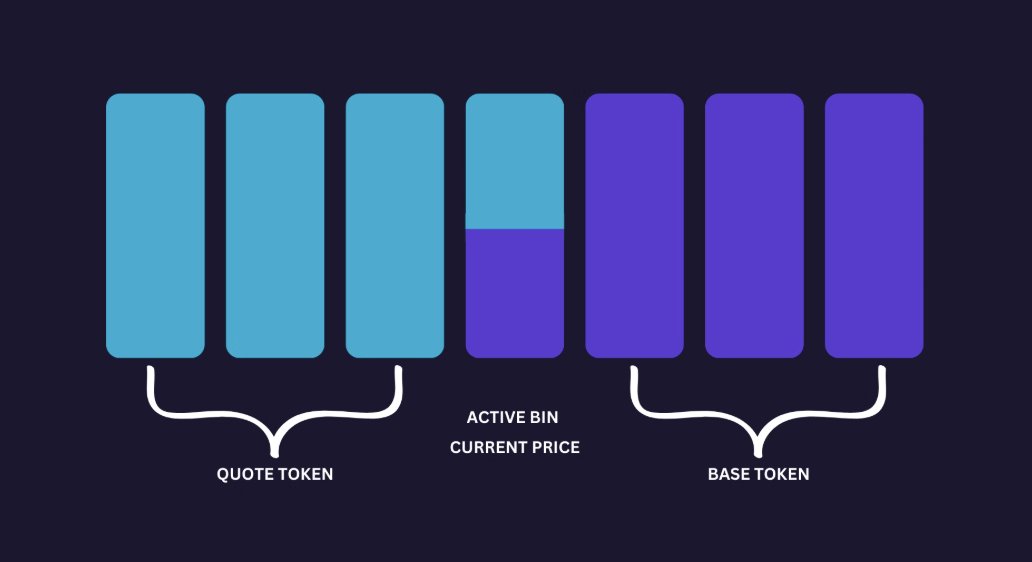
Single Sided vs Double Sided
When you depositing your liquidity in a liqudity pool, you can depositing single sided or double sided. Single sided means you only depositing one token.
$MET/$SOL - $MET is base token while $SOL is quote token, quote token is often more stable then the base token
Let's say you want to put into $MET/$SOL and you only had $SOL. you can depositing your SOL without buying $MET first in CLMM and DLMM. But on AMM you can't depositing only one token, you need both tokens, so in AMM you need to buy $MET first then depositing your $SOL and $MET.
Also remember this for later, when you depositing SOL only, we call it single sided sol, when you depositing base token only, we called it single side token.
Double sided is when you depositing both token, you need to have base token and quote in a pool you want to provide. Either you buy the token first or you had from somewhere else.
Spot vs Curve vs Bid-Ask
This is where the DLMM wins over CLMM, it has 3 different shape or strategy than can be used based on price action.
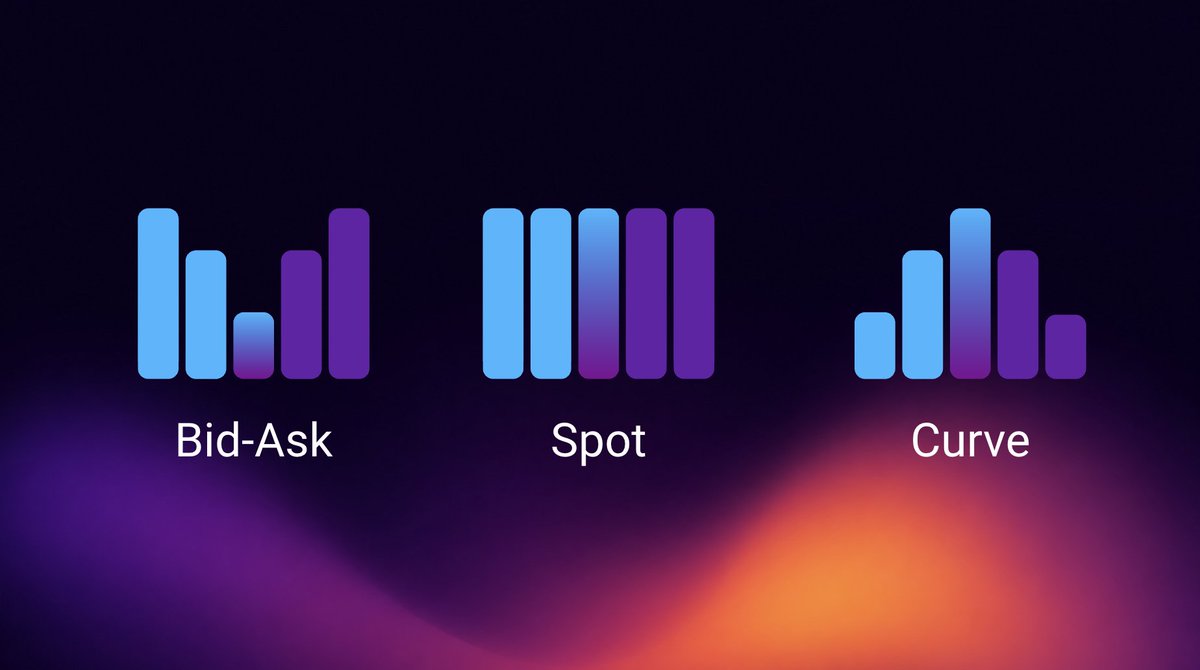
BA - SPOT - CURVE
- Spot, nothing special it's like clmm your liqudity is distributed evenly in each bins
Let's say you put $100 in 10 bins using spot, each bins gonna contain 10$, this strategy is often used when the price action is like this when the price action is not too volatile, maybe the price action is dumped on your middle range and go back near your entry.
We use single sided strategy here because it's the most profitable and consistent strategy for the rest of my LPs journey and most of people too.
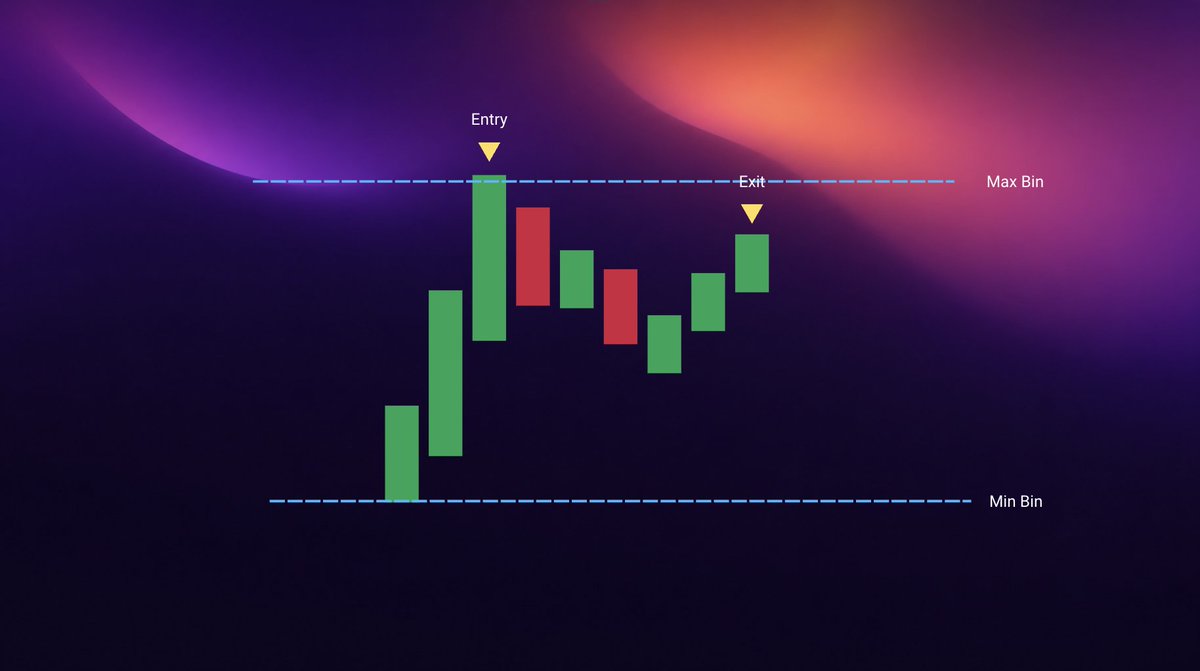
Ideal price action for SPOT
- Bid-Ask, this one is my favorite, the distribution is heavier on the edge, it means when you depositing single side sol, your liquidity is heavier on the cheaper price, when single side token, your liquidity is heavier on the higher price, very suitable for memecoin that very volatile
Bid-ask is the win if the situation like this, when you see a token pumped and topped and selling pressure start, use bid-ask, when the token dumped to near the edge of your lower bins, you will get more fees.
This is the illustration, when token dumped and not going back to your entry you still in profit. It's the most situation all the time of traders, buy high sell low.
With bid-ask you still get decent of profit. Bid-ask is like you buy the token all the way down if you play single sided sol, more buy amount when the token cheaper, and sell the token all the way up to higher price if you play single sided token.
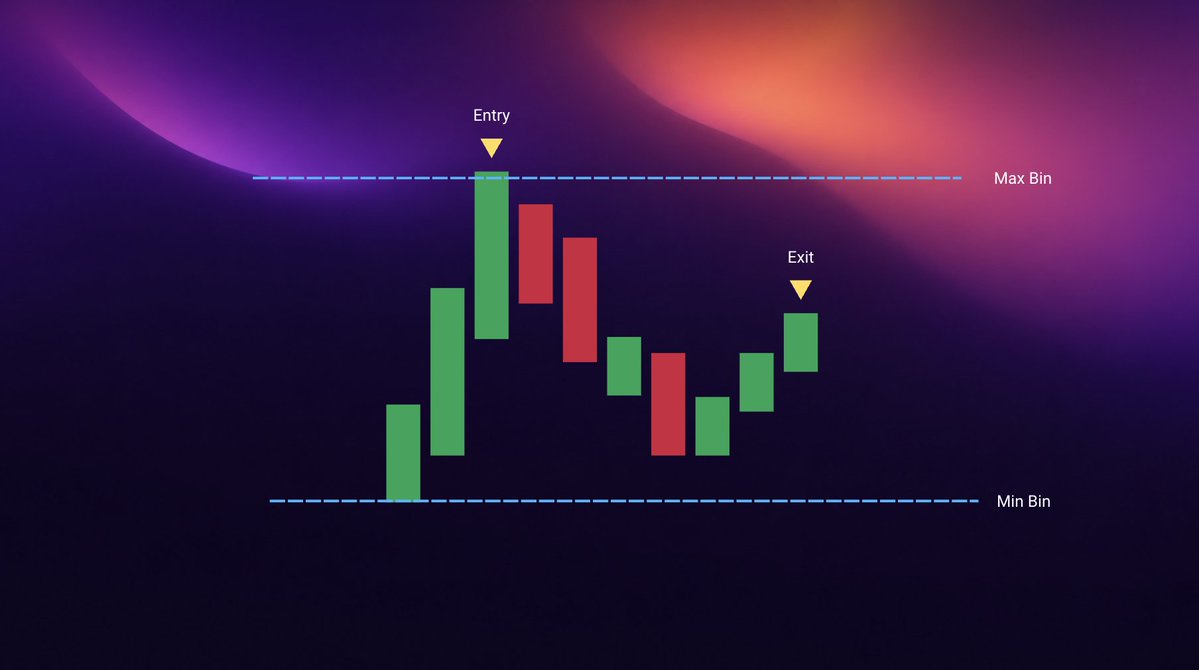
Ideal price action for bid-ask.
- Curve, it's the opponent of bid-ask your liqudity is concentrated on "right now" price, which suitable if you assume that the price action not gonna move far from current price
This is the ideal price action for curve, when the price isn't barely moving, You need to exit when at least on your entry price, because curve is considered to buy the token at current price when you single sided sol or sell the token at current price if you use single sided token.
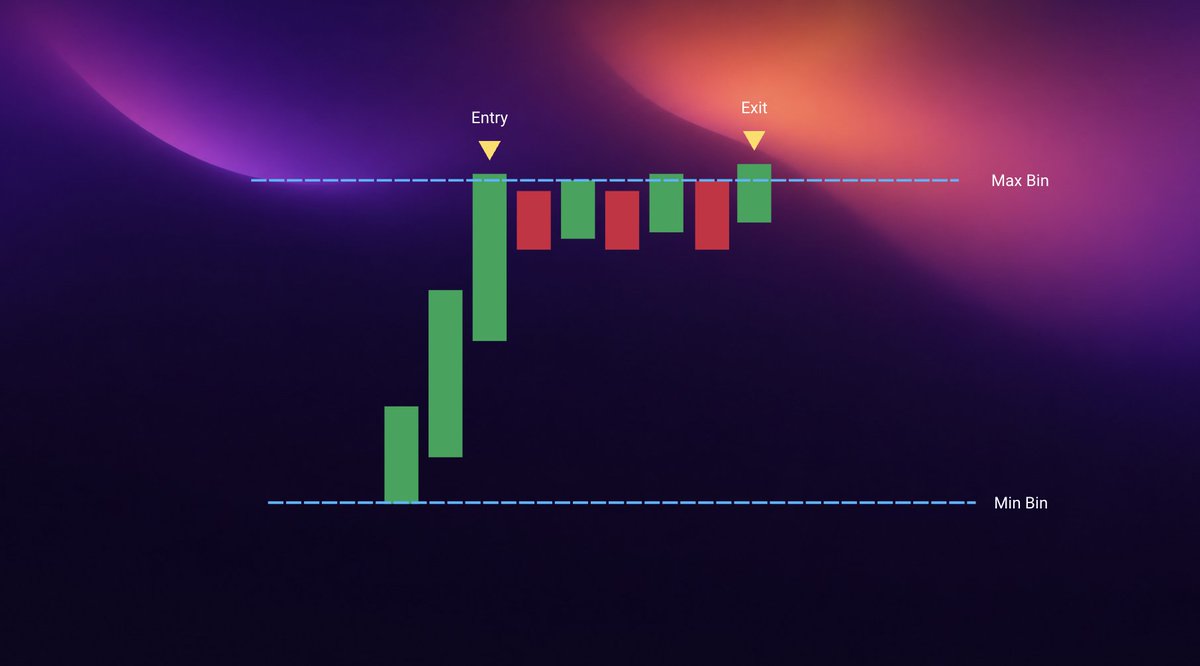
Ideal price action for curve
Hybrid Shape
Another wins for DLMM rather than CLMM is you can shape your liqudity as you want, you can use 2 strategy in one position.
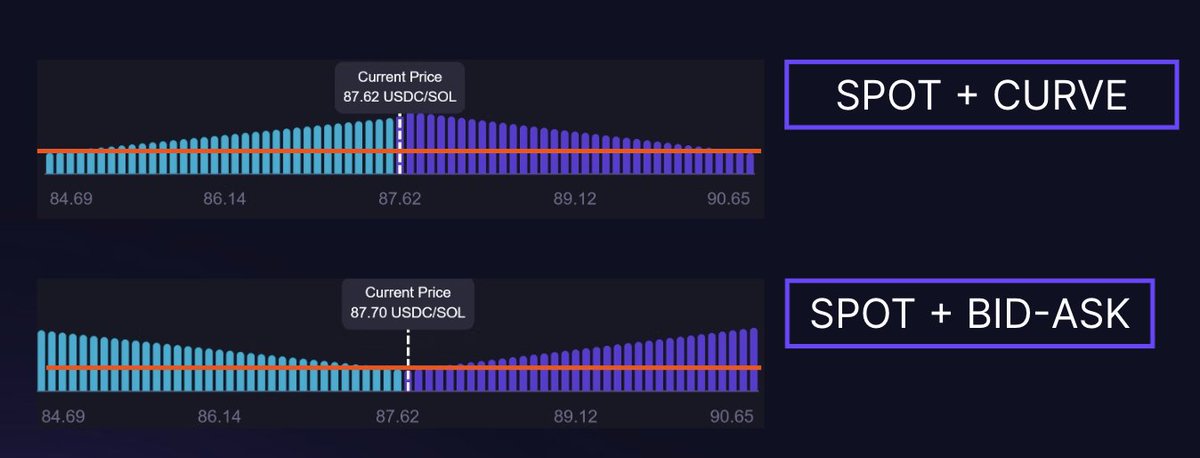
You can put spot + curve or spot + bid-ask, 2 of em is the most popular combination. But why you need hybrid or stacking strategy?
-
When you unsure about the price action, you gonna predict the price action is barely moving but gonna move a bit to middle range (curve + spot is the best combo) you get huge fees if the price barely moving but if the price go to your middle range you still get decent fees.
-
Same with spot+bid-ask you get decent fees when the price is only move from current price to middle of your range, but you get huge fees when near the edge of your range, because in the current price bid-ask not really generating much fees.
Range, Bins, and Bin Step
Most people are confused about how to set a range. It's actually simple.
If you play single sided SOL, aim for the nearest support or a strong support. Your range goes from the current price down to that support level. That's it. If the price dumps and holds at that support, your position is still in range and earning fees the whole way down.
Now, bins and bin step.
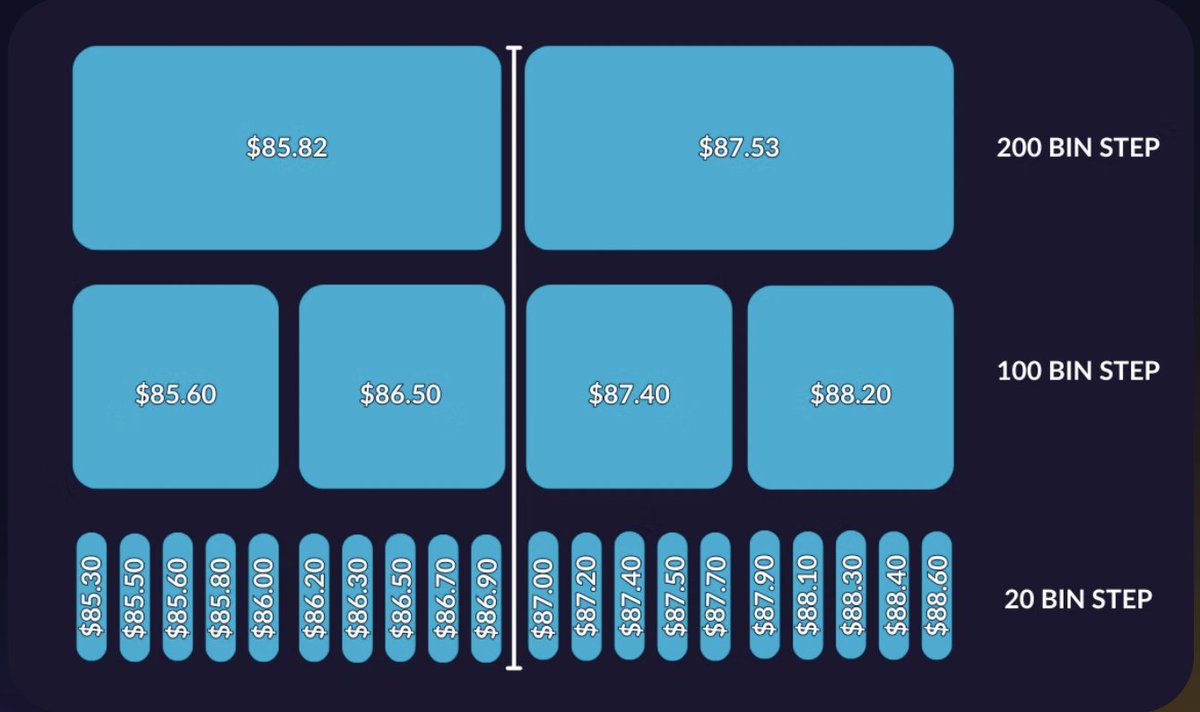
Bin step is the price gap between 2 bins. Bin step 100 means each bin is 1% away from the next one. The common bin steps are 20, 50, 80, 100, 125, and 200. The bin step is fixed by the pool, you can't change it. What you choose is the pool, and how many bins you use.
See the difference? On 200 bin step, one bin covers about 2% of price. On 20 bin step, one bin covers only about 0.2%. So with the same number of bins, a 200 bin step pool covers a much wider range than a 20 bin step pool.
Small bin step = bins packed tight, good for calmer tokens. Big bin step = bins spread out, good for volatile tokens.
Why does this matter for range? Because the same number of bins covers a different distance depending on the bin step.
So the flow is:
-
Find the support you want to cover
-
Check the pool's bin step
-
Set the number of bins so your range reaches that support
Tight or wide?
Tight range: more fees per $ while price is inside, but price leaves your range faster. Out of range = 0 fees.
Wide range: survives bigger moves, but your liquidity is spread thinner.
A volatile token needs a wider range. A calm one can use a tighter range.
Selecting the Best Pools
After you pick a token, you need to pick the right pool. Meteora is permissionless, so anyone can create a pool for any token.
That's why when you paste a CA into the Meteora search page, you'll see tons of pools for the same token. Look at the example below. Same token, same market cap, but 5 different pools with different fees, bin steps, TVL, and volume.
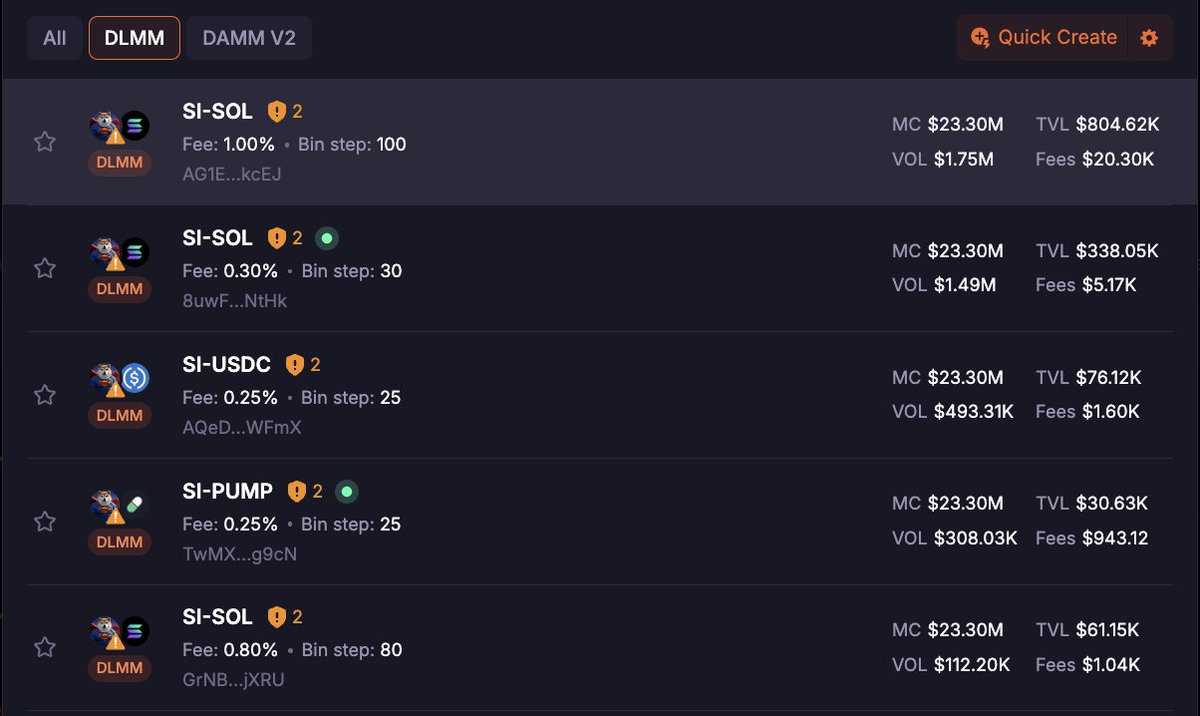
So which one do you pick? Lower base fee is often the best pool. Why? Because every router, like Jupiter, will route the trade to the pool where the trader gets the most tokens. A lower fee means the trader gets more tokens, so the volume goes there first. And no volume, no fees for you.
After the base fee, I check these:
-
Volume: is the pool actually getting trades, or is it a ghost pool?
-
Fees: how much has the pool generated?
-
TVL: how much liquidity is already sitting there? A pool with a lot of volume and small TVL means your share of the fees is bigger.
-
Bin step: does it fit how volatile the token is? A volatile token needs a bigger bin step so your range covers more distance.
How LPs Profitable
Remember the chart at the start? Buy high, sell low, you're rekt as a trader. As an LP, same entry and same exit, you can still be in profit. Here's why.
LP profit comes from 2 things:
-
Fees you earned from every swap that passes through your bins
-
What the price did to your position (the token you ended up holding vs the SOL you started with)
Let's say you deposit single sided SOL with bid-ask below the current price. Token dumps through your bins: every bin you sell SOL and buy the token, and every swap pays you a fee. Then the token bounces back up through the same bins: you sell the token back for SOL, and you get paid fees again.
Memecoins don't move in a straight line, they chop up and down all day. Every time price passes through your range, you collect fees. A trader needs to be right about direction. An LP just needs the price to keep moving inside the range.
Fees > loss from price movement = profit. That's the whole game.
Most Common Strategy
There are 3 strategies that very common in LPs, and I use the 1 and 2 the most.
1. Bid-Ask Flip
Simple version: you deposit single sided SOL with bid-ask. When your liquidity has turned into the token, you withdraw it. Then you deposit again, either in the same position or a new one, with token only.
Basically it's DCA-in, withdraw, DCA-out.
Step by step:
-
Deposit single sided SOL, bid-ask shape
-
Price dumps through your bins, your SOL slowly turns into the token (DCA-in) and you earn fees on the way
-
Once your liquidity is mostly the token, withdraw
-
Deposit again with token only, bid-ask (DCA-out). Same position or a new one.
-
Price bounces back up, your token turns back into SOL and you earn fees again
2. Quick In-Out
This one is fast. Look for a token with volume above 200k per 5 minutes. Deploy single sided SOL with a tight range, around -30%.
When the token is volatile, your liquidity gets used really fast. After a few dumps and pumps, you can take your liquidity out. Most of the time the holding time is around 2 to 15 minutes.
Why a tight range? Because the volume is already high, so you don't need a wide range to get fees. More of your liquidity sits where the trades happen.
3. Evil Panda Strat
Basically it's spot with range -90% to -95%, whenever the price dumped to -60% you still collecting fees, when token pumped and you had enough fees, you'll in green.
Most of beginner start with this strategy, read more here :
Whichever one you pick, decide your exit before you deposit.
Risk and Impermanent Loss
LPing is not risk free. Let's be honest about it.
Impermanent loss: your liquidity gets converted as the price moves. On single sided SOL, when the token dumps, your SOL turns into that token. If the token keeps dumping and never comes back, you end up holding a bag worth less than what you put in. Fees can cover it, or not.
Other risks:
-
Rug or dead token: if the token goes to zero, your position goes with it
-
Out of range: price leaves your bins, you earn nothing and your capital is stuck
-
Overnight risk: you sleep, the token nukes. I took a huge loss on Snowball like this, because I was greedy and didn't check the news before leaving a position overnight
-
Getting greedy: staying in after the profit is already there
How I deal with it:
-
Pick tokens carefully (see screening method below)
-
Decide my exit before I deposit
-
Don't leave a position I'm not comfortable losing
-
Size small enough that one bad pool doesn't hurt
You can't remove the risk. You can only choose which risk you take and how much.
Screening Method
The easiest way to screen pools as a beginner: you don't need a lot of tools. The Meteora pool discovery page is enough. Most people skip it because they're too focused on third party tools, but the page has been upgraded a few times and it's really good now.
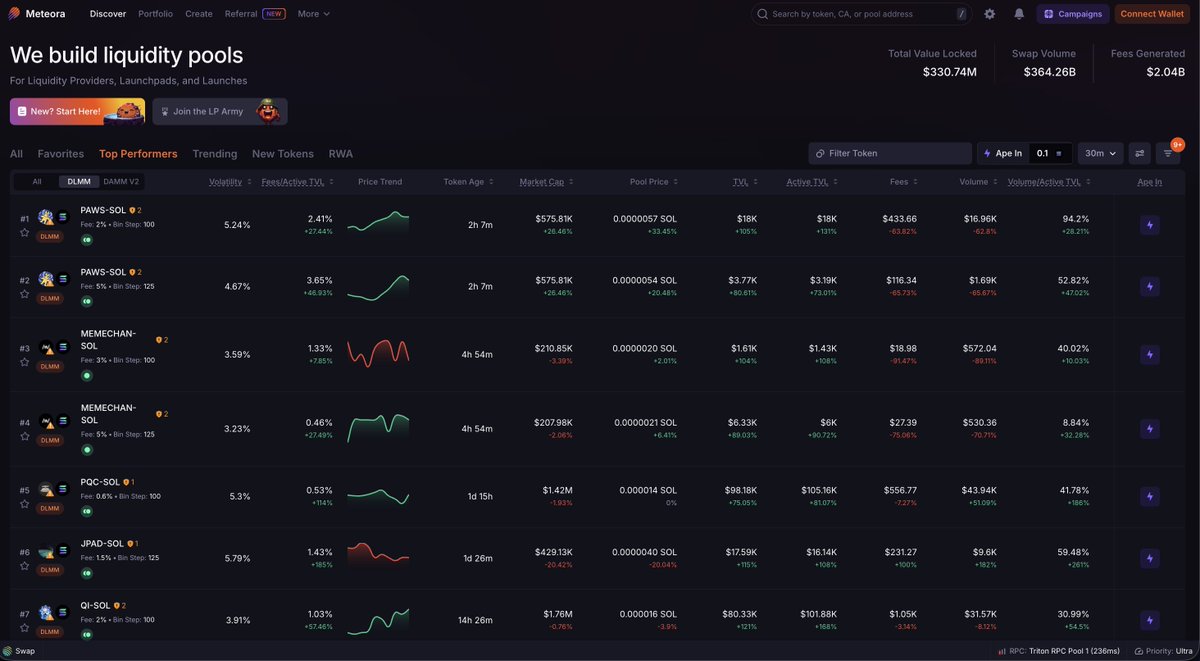
Here are the filters I use:
-
JupShield Safeguard on
-
Organic score min 60
-
No high supply concentration
-
Market cap min 200k
-
Holders min 791
-
Volume min 2,000
-
Active TVL min 2,000
Columns I keep on screen:
-
Price trend
-
Market cap
-
Fees/active TVL
-
Volume
-
Total LPs
-
Holders
-
Volatility
-
Open positions
-
Top 10 holders
With this filter and layout, you already remove around 70% of the noise: bad pools and most scam tokens.
For the category, pick New or Top. New if you love new pairs, Top if you don't want to be too degen. Timeframe is 30 minutes.
Then sort by fees/active TVL. This is the fees a pool generates relative to the liquidity that's actually active. High number = the pool is paying LPs well right now.
Next, check volatility. It tells you how wild the price swings are, which decides your strategy and how long you should hold. Volatility above 3% means big pumps and dumps, so you need a longer range.
I play single sided SOL only, so I'm hunting the downside. I look at the price trend and pick tokens that are going up, because a token that's pumping has a chance to drop, and then your position gets in range.
Then total LPs. I want at least 20 people LPing in the pool. Why? Because that's enough people who "might" have done their research on the token, so you can feel a bit safer. More LPs means fewer fees for you, but you're not alone when it's time to exit liquidity.
My sweet spot if I leave a position for a while: fees/active TVL above 0.2% and volatility between 2-4%.
Step by Step Providing Your First Position
Head to your favorite screener/dex like GMGN, FOMO, Meteora Discover, Fabriq, Tokleo, or any others that give you clear view of what trending now.
I will use GMGN because i've used it for a while and it give me clearer view whether this token is good for LPs or nah.
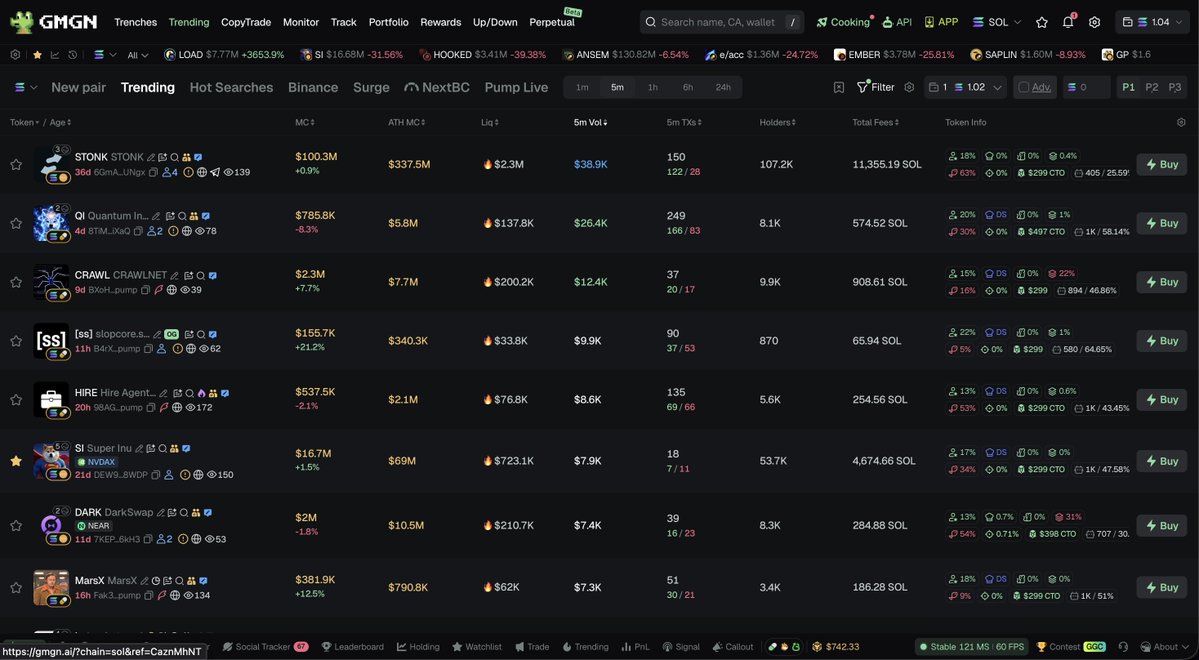
Trending page is all you need, apply your filter, this is my daily driver filter :
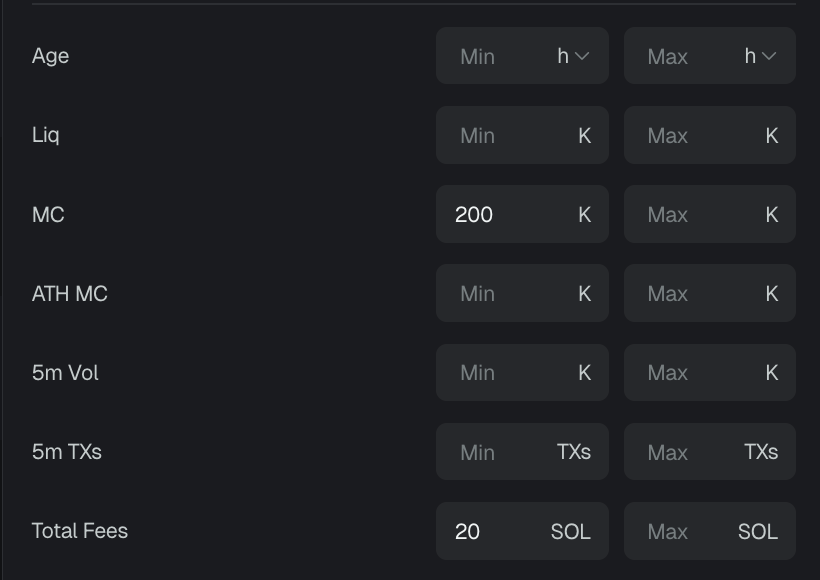
No fancy filter just mcap and total fees. That filter is for degen play and i sort it by the volume and i use 5m timeframe.
If you want safer play, you can raise the mcap to 3m mcap and total fees 50 sol, but raise the timeframe to 1h/4h.
Total fees give you clearer view whether the trader is real human or bot, bot usually doesn't pay much prio fees, but terminal user usually that using default setting usually pay slight higher fees.
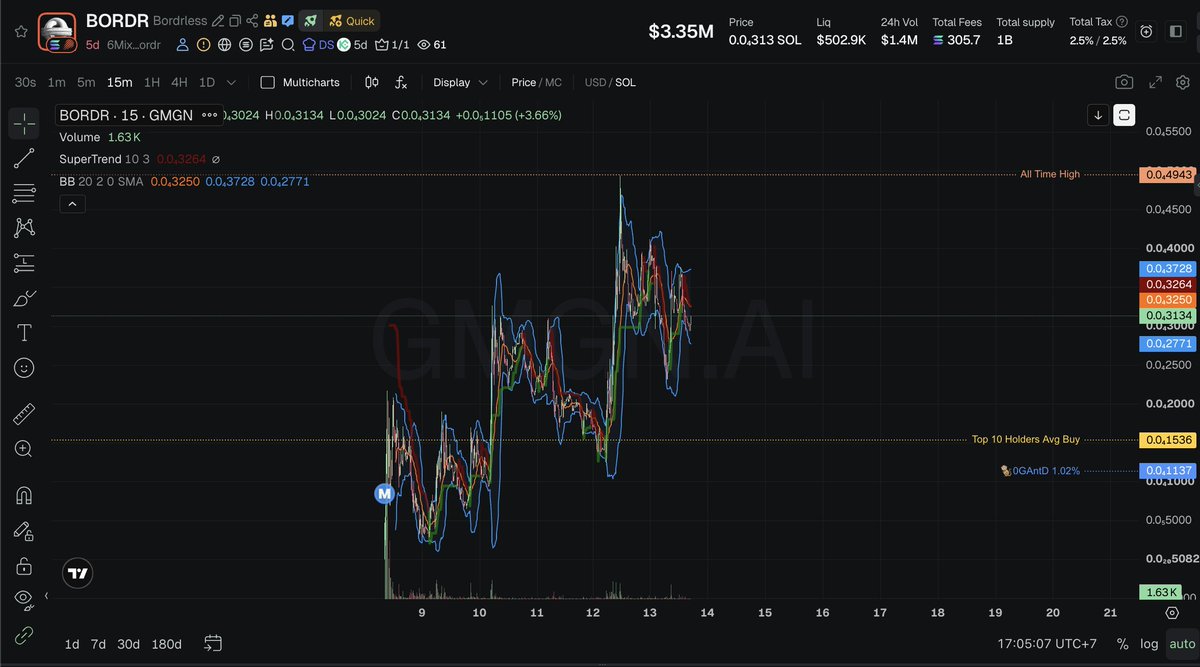
Check the price action is it uptrend or downtrend or sideways, this will help you to decided which strategy that you gonna use.
Downtrend and sideways or just made new ath use single sided sol bid-ask or spot depends on what you tryna to achieve, look for the strategy section.
I always use single sided sol bid-ask, because it's very safe and profitable proven for me for at least 2 years.
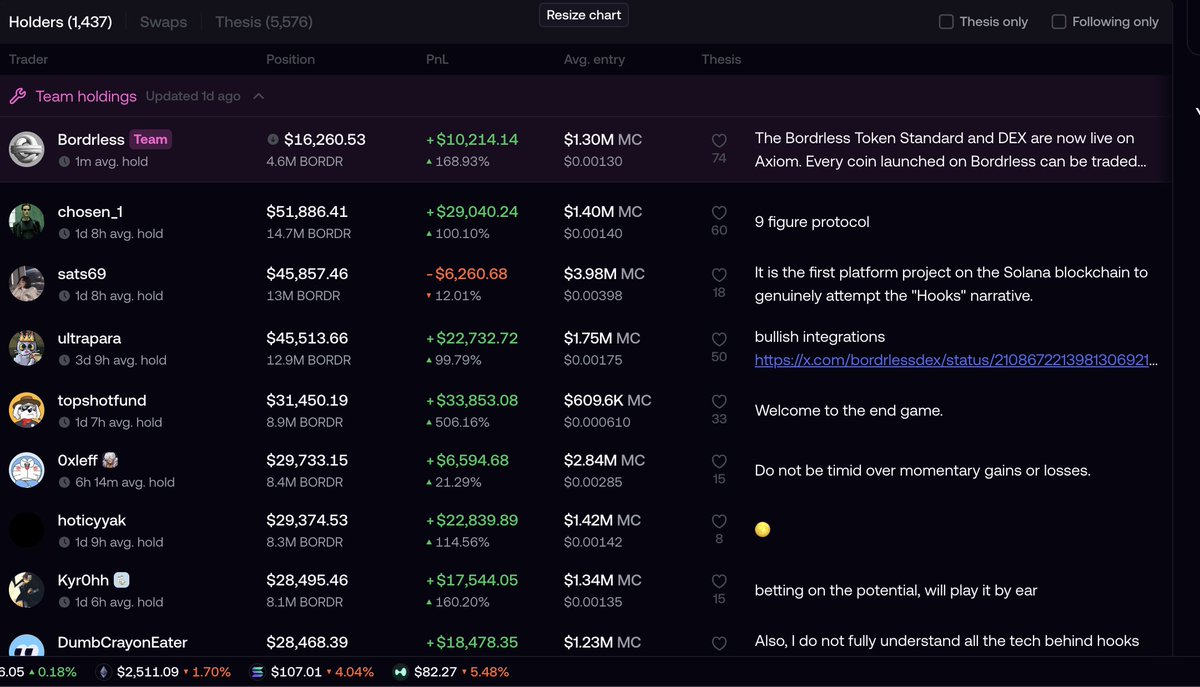
I also check the social is it active and check the fomo thesis, this will give you people or market sentiment to that token, if it bullish then good.
If you decided the token will survive, we go to meteora and looks for the best pool to add.
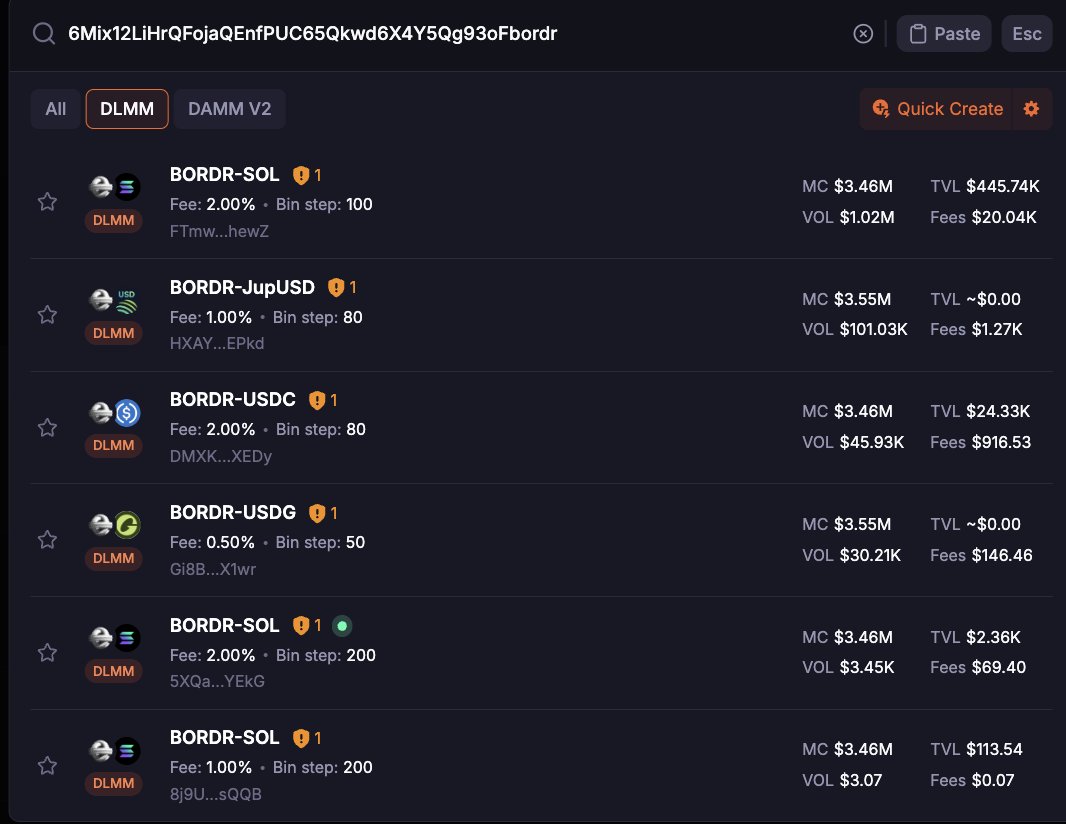
Mostly, the most highest tvl and lowest binstep and base fee is the best pool, if you look into this you can choose 80/2 if you had usdc or 100/2 sol if you had sol
That number refers to Binstep/Base fee. 100/2 means bin step 100 and base fee 2%, we use that on gc too make us easier to communicate.
Then click the pool page and and fill your assets, uncheck auto-fill if you doesn't want double sided.
I'll be filling usdc only here, for the range if doesn't do nothing, it's called default range, but for safer position we can look at the support.
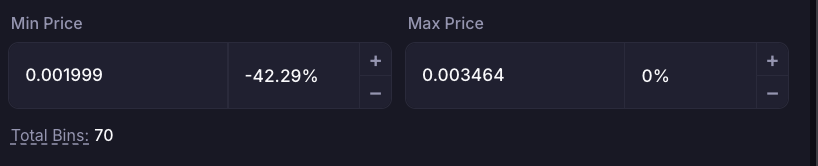
Default range is 70 bins
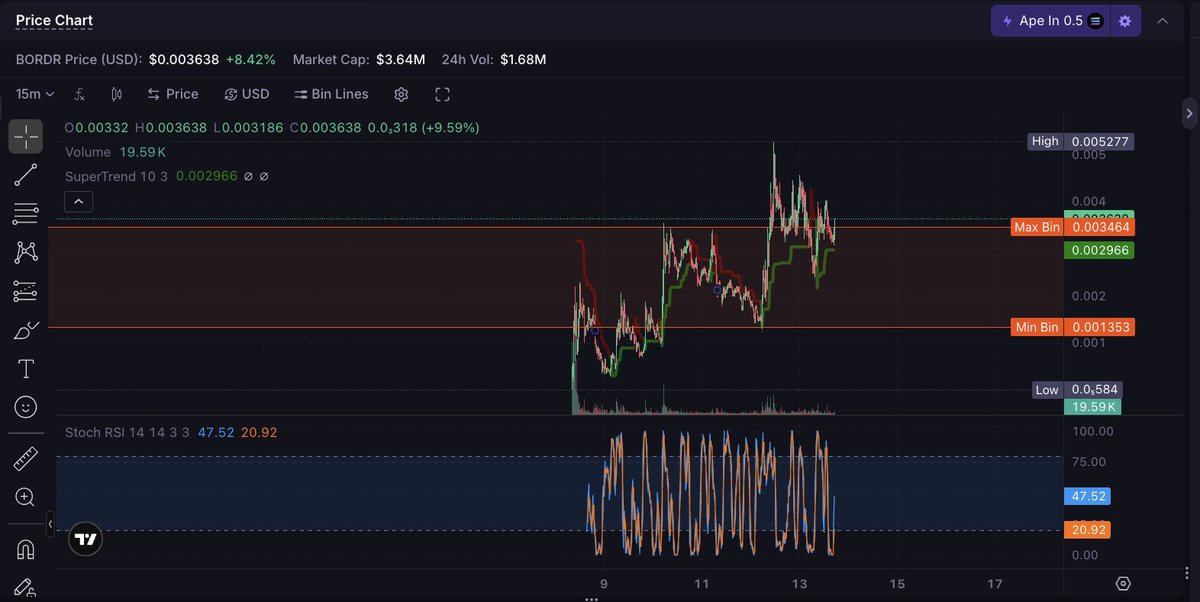
You can drag orange lines (if in PC) to the nearest support and just click create position.
There's a cost breakdown above create position button to check how much sol you need to create the position and check whether it's refundable or not.
There will be a warning when your position had non-refundable rent, usually new pool. So, make sure didn't pay it if you didn't want.
Your position gonna showed up below chart like this :
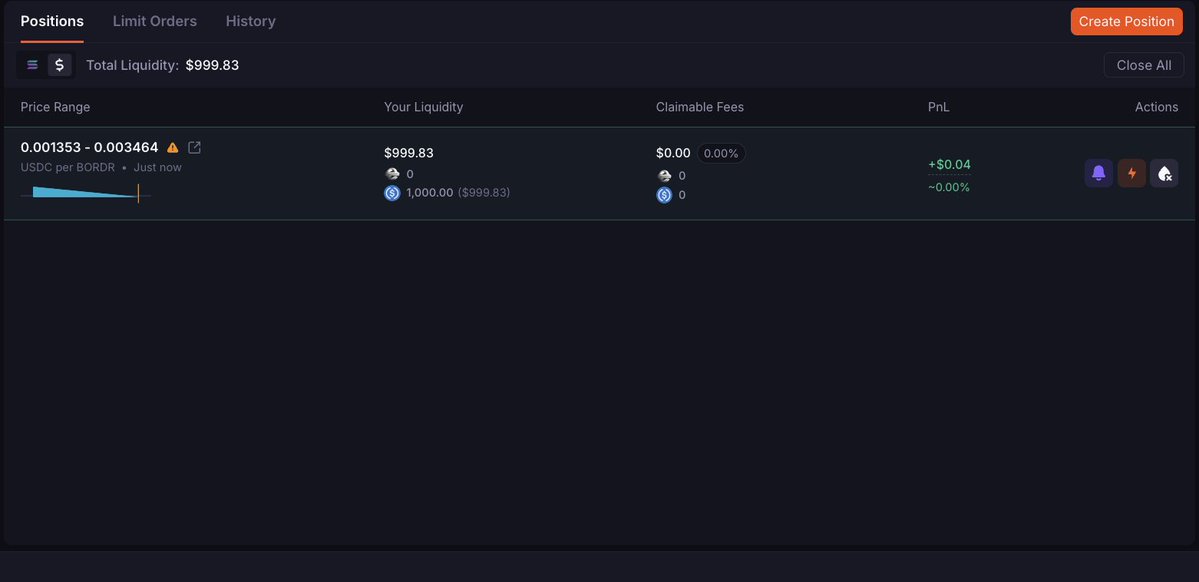
That's contain your range, your liquidity, claimable fees, on 0.00% it's called 24h fee/tvl which means what you earn if your position is in range for 24h and the price is stays on the same bin and same volume.
Active position gonna looks like this :
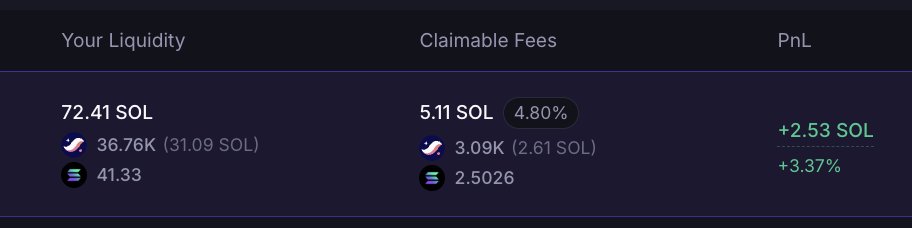
On that picture it means my position earn me 4.8% fees a day with pnl rn is around 2.53 sol, you can switch you want show it on sol or usdc depends on what quote are you using (this give you clearer pnl) since if you open SOL quote position and you use usd value, when the sol pump or dump it will affect your pnl.
When to Exit?
It's really depends on play style, are you quick in and out or multihours or even multi days.
The best time to exit is when your position in profit, single sided sol only or single sided usdc only usually give you 3-5% pnl if you play safe, but if you play degen you can achieve 10-20% pnl in a short time of window.
Volume is the king, more volume with lower tvl means the pool is printing much fees and divided with a few person. But, the caveat is the tokens gonna dump and you ended with loss instead of profit.
Sometimes high apr doesn't give you profit if the impermanent loss beat the fees you earned.
We play the longterm games so we need to survive.
When to Cut Loss?
In LPs, 7 of 10 people agreed that cut loss is the hardest part. When the token slow rugs and all you have is belief, your mental overrides your plan.
That’s why the plan has to be made before you deposit. Once you’re in the position, you’re not thinking clearly anymore. Every red candle gives you a new reason to stay, “it will bounce”, “the dev is still active”, “I’m already down so much”. You’re not analyzing the token at that point, you’re protecting your ego.
So I stopped asking “do I still believe in this token?” Belief is free, and it never runs out. Now I ask one thing: if I had zero position right now, would I deposit here at this price?
If the answer is no, why am I still in?
Your range tells you where you’re wrong. The volume tells you if anyone still cares. The news tells you if the story changed. When those signals say leave, leave, even if your gut says wait. Your gut was the one that got you into the bag in the first place.
You won’t get every exit right. Sometimes you’ll cut, and the token bounces 30 minutes later. That’s fine. A cut that was “wrong” costs you a little. A hold that was wrong costs you the whole position.
Cutting a loss feels bad for 5 minutes. Holding a dead bag feels bad for weeks.
We play the longterm game. You can’t win it if you’re not still here.
Community

LPing alone is slow. Learning from people who are already doing it saves you from a lot of expensive lessons.
In the community you can see other people's setups, ask why they picked a pool, share your wins and your losses, and get alerts when something is moving.
If you're from Indonesia, join @MeteoraIDN. Global, join @met_lparmy.
You don't need a big bag to start. A friend of mine started DLMM from 0.2 SOL. LPing doesn't need to be a lot.
Practicing DLMM with Playground
If you decided to practice more and more with real feel battlefield but without spending any bucks you can use LP Army Playground built by @AlekssRG, it give you same fees earned and IL understanding, just login with your github that joined LP Army server and you good to go.
[未转换内容,参见原始 JSON]
Smart Wallet Tracking
Same like trenching, LPs for me need smart wallet tracking if you still new, this will helps you what are position they open rn.
You can use LP Agent to search for Top LPers in a pool and then track it with Ray Green Wallet or GMGN, it will gives you notifications if they opening positions or close it.
With this you doesn't need to stare at the chart 24/7 and had kind of alerts if there's a good pool.
I usually split into 2 group, degen and multihours, degen group usually for fast-in fast-out and multihours for slow cook position.
To spot this you can check their avg hold time and check whether they opening position into new pair token or. mature token.
Sizing
I just write an article about sizing, how to increasing your positions overtime, read it here. It will help you decide when to increase your size and in what position demanding to level up your game.
Additional Tools
There's tons of third party tools that helps you improve your screening process, historical data views, realtime fee/tvl earned.
-
Fabriq (@FabriqTrade) - to check what pools printing rn with their fabriq score, more score more fees
-
LP Agent (@lpagent_io) - to check your performance overtime and check Top LPers and check who's in the pool rn
-
dlmmsim.xyz by @GeekLad to simulate impermanent loss
-
LP Pool Party (@LPPoolParty) - New tools in the hood, just think of fomo but for Meteora
-
Rocket Scan (@RocketScan_fun) - it helps you to watch new pools created for degen play, early = fees only to you.
Tips and Conclusion
LP is a longterm game, there's no instant thing in LPs, you need to stack your win brick by brick.
Don't rush, try every play or strategies that available on X or lparmy website. If you found a strategy that suits your screen time and risk profile, use it. When the strategy doesn't works overtime, it's simply the meta/market change, you need to adapt.
LPs is 80% token selection, if you start from trenching, degen play is the great idea, if you came from spot play and normies multi hours is your friends.
Don't look others PnL by value, but by percentage, value it's depends on tvl but percentage is token selection and skills.
In LPs 3-10% pnl is a great number if you play single sided sol/usdc only.