October Macro and Bitcoin/Crypto Ramblings
部分视频或图片暂未收录,已在正文保留提示;需要时可查看原文。查看原文 ↗
It has been two months since I wrote my prior article exploring the bull case for Bitcoin, which seems like enough time for an update on the state of things and how I'm thinking about the markets. As always these are my personal opinions which often change and not any kind of advice.
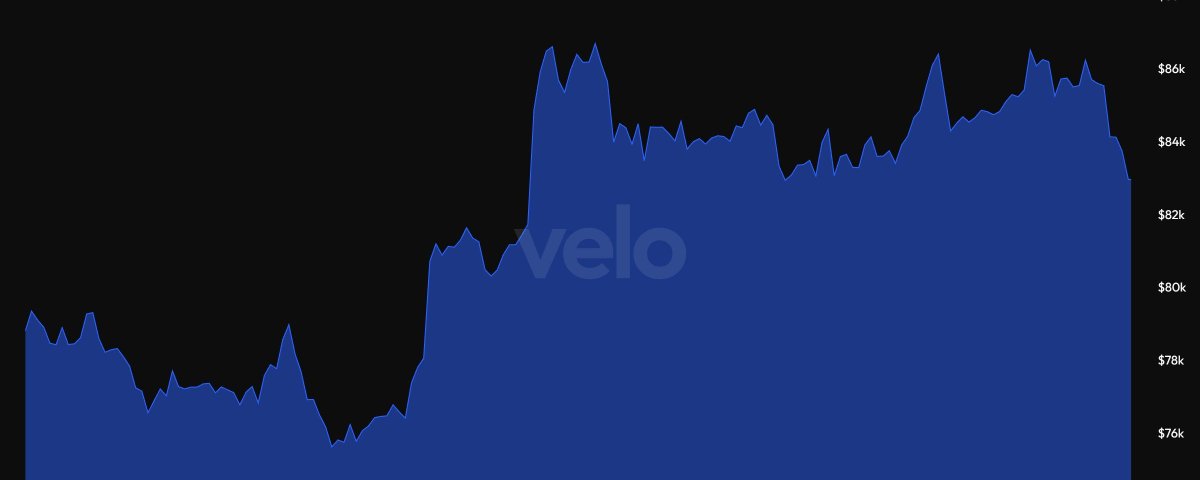
I definitely don't always get it right and was not expecting an impulse so soon, but since my last article published just under $65k, bitcoin underwent one of its biggest moves in a while, rallying about 40% in a month, briefly reaching over 50% off its cycle lows. There have also been some interesting developments on the macro front, which before diving into Bitcoin/crypto specifically, I thought were worth exploring & touching on.
Concerns in Macro Land?
On the macro front, the biggest story has been the long end of the yield curve. Over the past few weeks, the 30 year has finally broken out north of its 2023 highs around 5% and made a pretty sharp move towards 5.70%. The important question is why? Can the markets handle the move in rates & when would it matter?
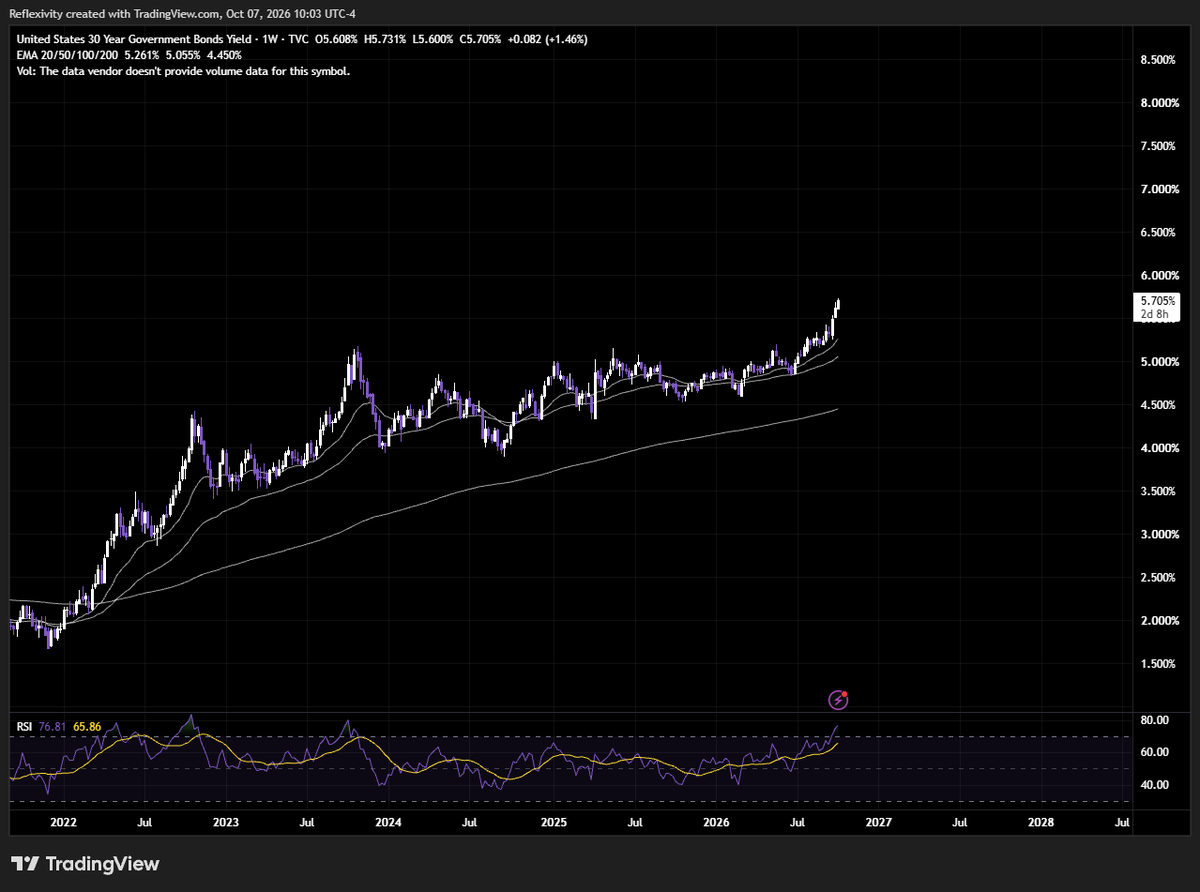
While it may be easy to oversimplify and tie the move to one variable, I believe this breakout is due to multiple factors.
Energy/Oil
On one hand, the conflict/war in Iran continues on, ~7 months in now. While oil longs were punished earlier this year, there may be reason to believe that we could start to see inflationary pressures from energy prices really start to materialize over the coming weeks/months without any resolution to the conflict. One thing I've learned is that being off on timing is the same as being wrong. Earlier this year being long oil made a ton of sense outright, but the problem with doing so was that the US and other countries around the world still had sizable strategic reserves that they were able to release onto the market to keep supply flowing and prevent the clearing price for oil from rising. In addition, the US has been running refiners at full capacity, nearing 100% (current dip in the chart below can be attributed to Fall maintenance). Chinese inventories are not widely published, but recently have also seen a premium in Shanghai oil to Brent, showing that they may be starting to refill reserves again.
If most countries have been pausing buying or selling strategic reserves and the US has been at full refining capacity for most of the year (with the exception of the current drawdown for maintenance), what happens to the clearing price once these reserves run dangerously low? As pointed out by my friend Quinn, what is the incentive for European countries (who are net importers) to continue releasing their reserves heading into the winter, to help someone who they have been very publicly politically butting heads with? If anything this could put them in a weaker position.
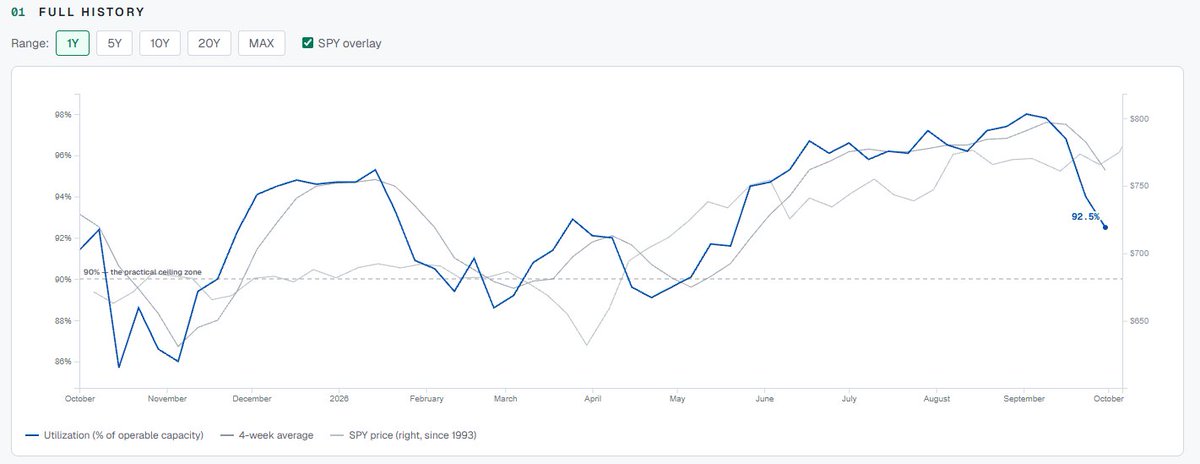
Chart: https://www.thetrading.tools/refinery-utilization
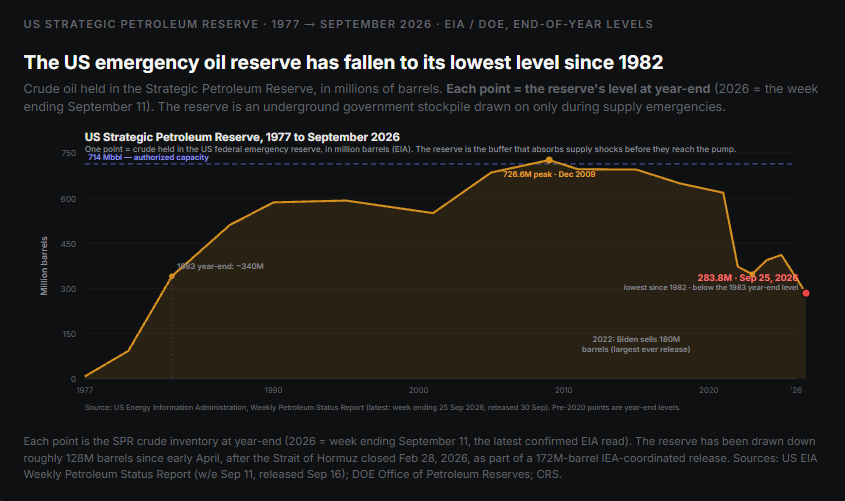
Chart: https://global-energy-flow.com/storage/oil/
Other interesting points to note, although I don't have a Bloomberg terminal, Jeff Currie stated on CNBC yesterday that the backend of the futures curve for brent is now rising, indicating that the market is viewing the supply/demand issues are more structural than they had been priced in.
Also interesting to note that the spread between Brent (global oil) and WTI (US oil) is at multi-year highs now as of this past week, indicating that there is a premium being placed on the US protecting the shipments that they have helped get back online through the strait, as well as a premium for shipping/capacity constraints on US refiners relative to globally available supply.
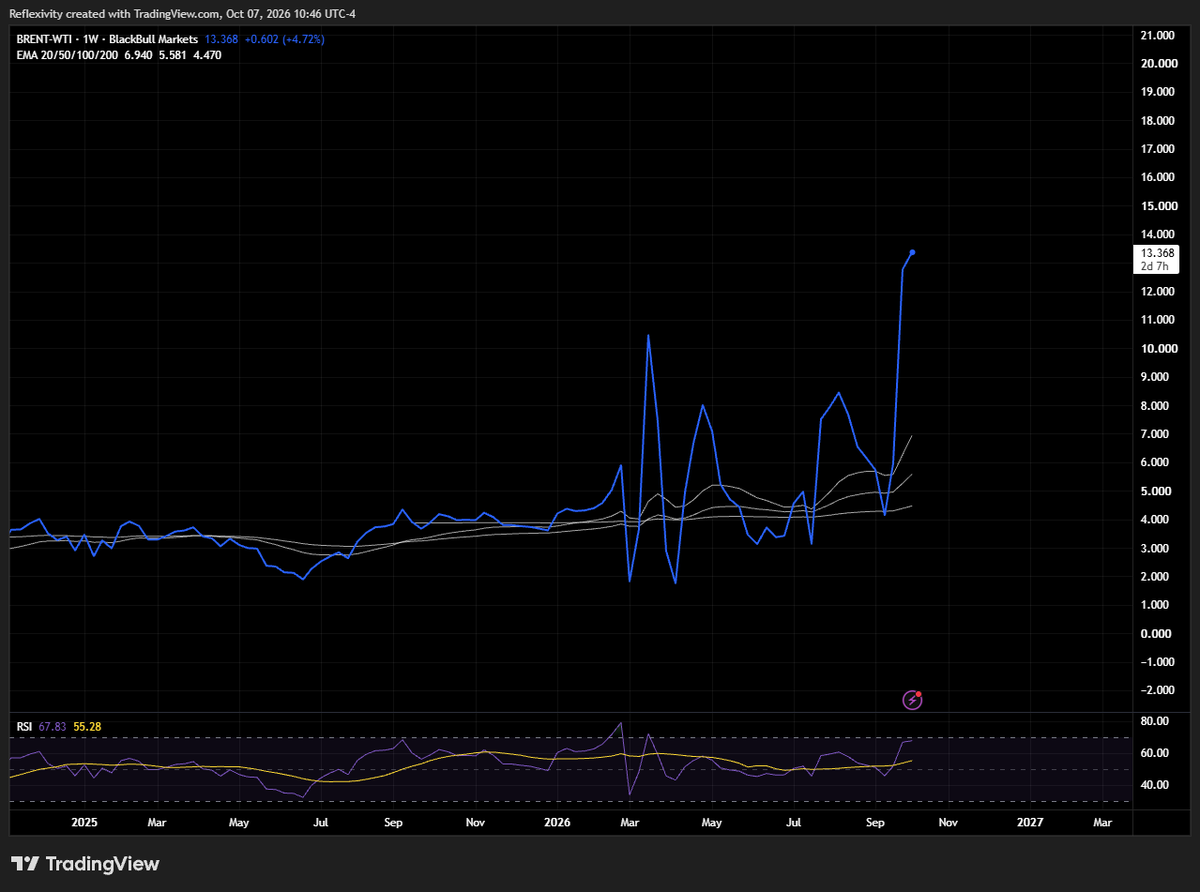
Am I an oil expert? No. Are there reasons to believe that energy prices likely have a floor until the conflict is resolved & this is worth being aware of? Probably. Views on oil are probably best expressed through Brent given the insulation to export restriction risk that WTI has.
*(disclosure I have hedged the BTC posn that I still have recently with oil exposure over the past week, subject to change) *
AI Capex
**Meanwhile, the economy continues to accelerate, primarily driven by AI capex.
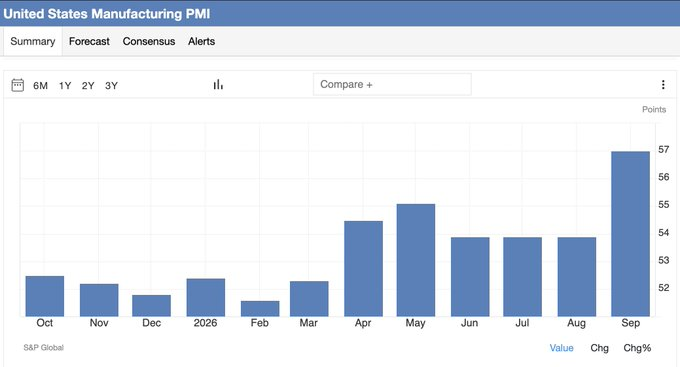
Source: x.com/fejau_inc, S&P Global
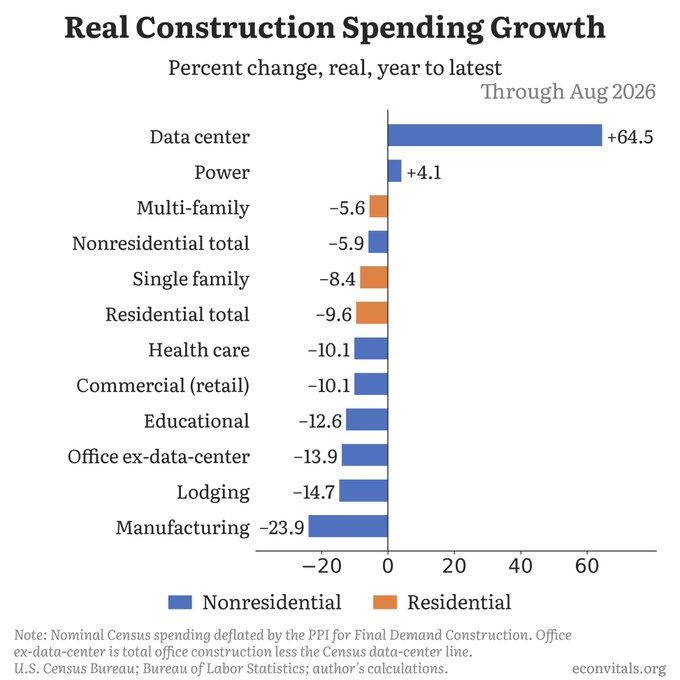
Source: econvitals.org
** **With the economy being run so hot, long end yields are finally catching up with nominal GDP. Smoothed and non-smoothed versions shown below. Based on this, yields appear to be approaching "fairer value", albeit with inflationary risk and govt trust risk still there.
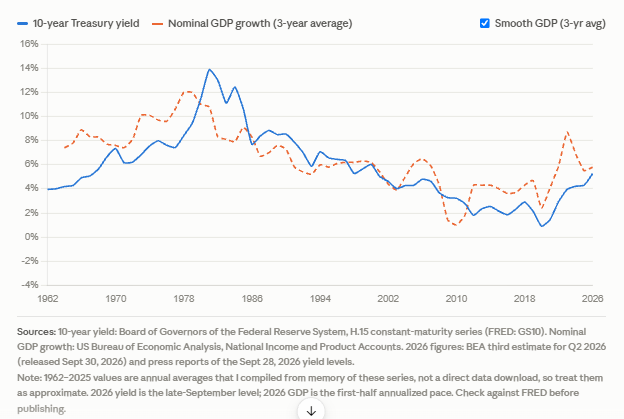
Created with claude
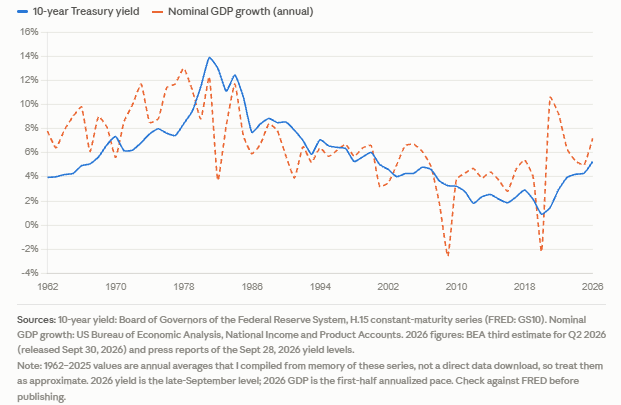
Created with claude
Trust in Government
**This one is difficult to quantify, but there is an argument to be made that part of the move in yields can be attributed to a general deterioration in trust in the US govt, particularly those in charge of spending. No politician seems to have the political willpower or true desire to cut spending, leaving the US (and other western countries even worse) with very high debt relative to economic output. Without any changes, the only reasonable conclusion would be that eventually the US will need to inflation or the economy run hot and induce a period of negative real interest rates to bring the debt load down in nominal terms. This would cause other sovereign actors to explore hard asset alternatives to long duration US debt, which is what we've seen recently with the rise in gold holdings.
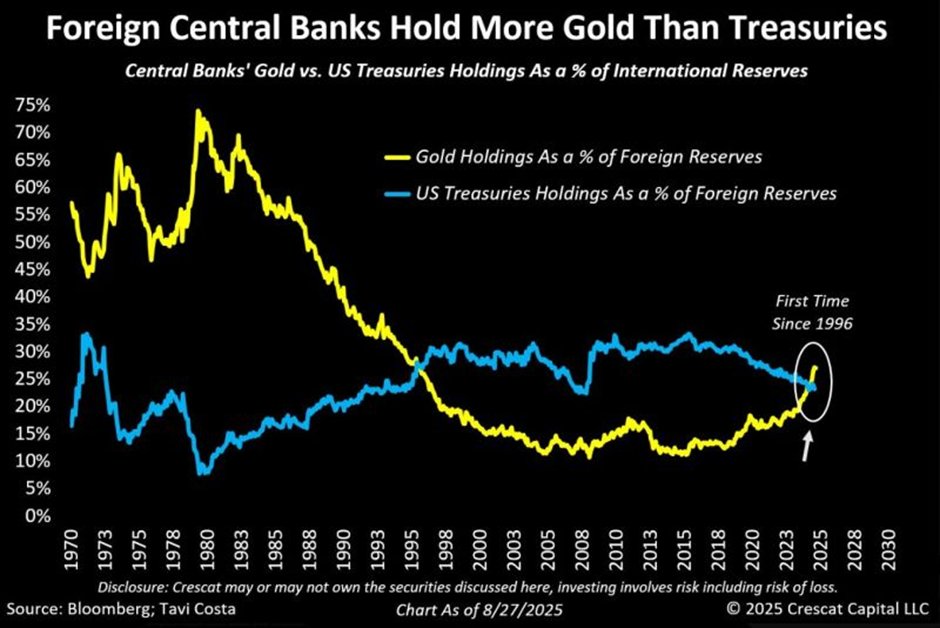
Sources: Bloomberg: Tavi Costa, Crescat Capital
Can the markets handle the move in rates/yields? 25 bps of FFR hikes and a 50 bp move in the long end perhaps yes, but if we are entering a hiking cycle based on inflationary pressures and assumption that AI capex remains relatively insensitive to rates, there comes a point where they do start to matter. Good chart from Warren Pies below on VC funding relative to rates: https://x.com/WarrenPies/status/2107241435686936827?s=20
There's a lot of circular thinking in macro and I am not an expert, but the important things to consider in my opinion going forward are the path for hikes that the market is pricing in relative to economic growth (AI) and the rate of change in yields & fixed income volatility. Each of these things have their own components to think through.
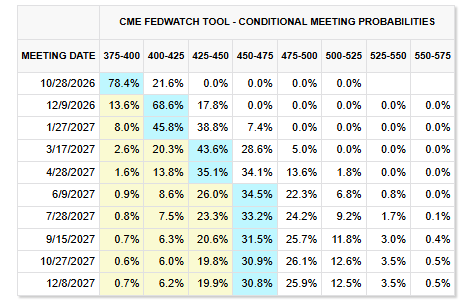
Source: CME
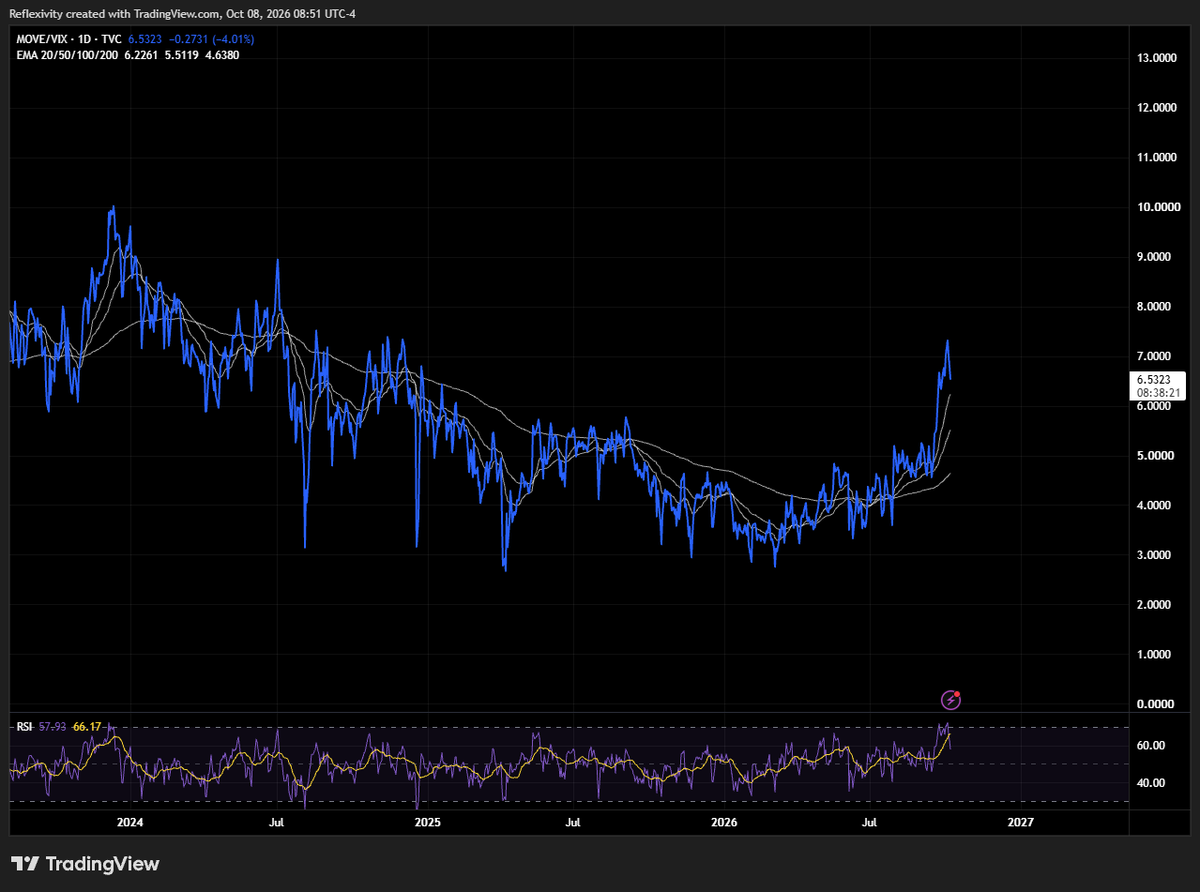
Move Index (fixed income volatility) / VIX (Equity market volatility)
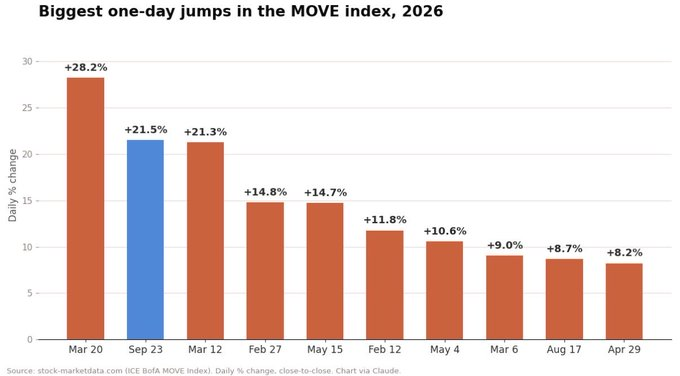
Source: Claude, sources in chart
Other Megatrends I'm paying attention to
**Outside of Bitcoin/crypto (which we will touch on in a moment) there are several other megatrends that are interesting to me. I would like to have some sort of exposure to these at some point, but need to find good entries for thematic ETFs and find having an edge to be difficult on individual names for some of these themes across various categories at the same time. Nonetheless I am trying to pay attention.
- Biotech fueled by AI
- Latin America
- Robotics
- Nuclear & alternative sovereign energy
- Re-onshoring of resource production and supply chains
- Quantum computing
- European defense
- In person events & human connection
Bitcoin & crypto
**In my last write-up I described the case for BTC, but where do we stand today? What other themes in crypto are worth paying paying attention to, and more importantly, allocating to?
While I reduced the aggressive BTC position that I was able to take before the impulse off the lows due to concerns around the fixed income market, I still have kept a good chunk to hold for a while. This is because I believe that the cycle lows are most likely in.
In this chart I asked claude to visualize rallies of 40% or greater off the lows and then add a time component on the X axis showing the days since prior all time high. The idea here is that the larger the impulse is and the deeper the impulse is into the bear market, the higher the likelihood becomes that the cycle lows are in. Based on this, there is an almost 90% probability that the cycle lows of <$60k are not broken.
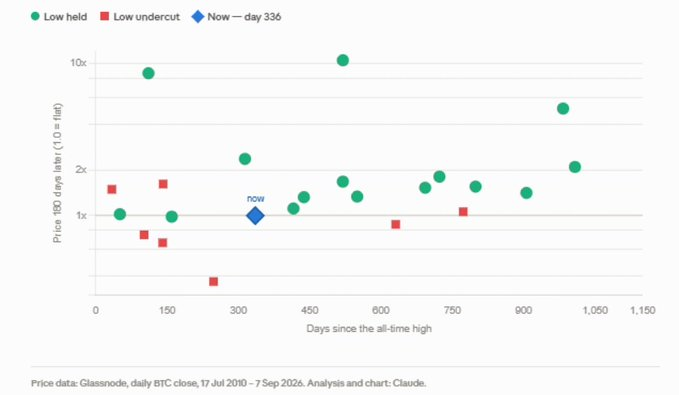
I would add some on-chain indicators, but I don't think a whole lot has changed over the past month. BTC is still in the lower bounds of valuation methodologies that I think are worth paying attention to, but not edging on the extreme deep value readings that it reached back in July/August.
Looking at higher time frame derivatives positioning across open interest relative to market cap, dated futures basis, and delta skew in the options market, not seeing any serious concerns with regards to froth in Bitcoin itself. The market seems to be mostly spot driven in recent months, meaning participants will likely be making decisions based on economic data and macro data points that could affect it. This is another reason why my base case is not that we retest the lows all the way down in the 60's or worse.
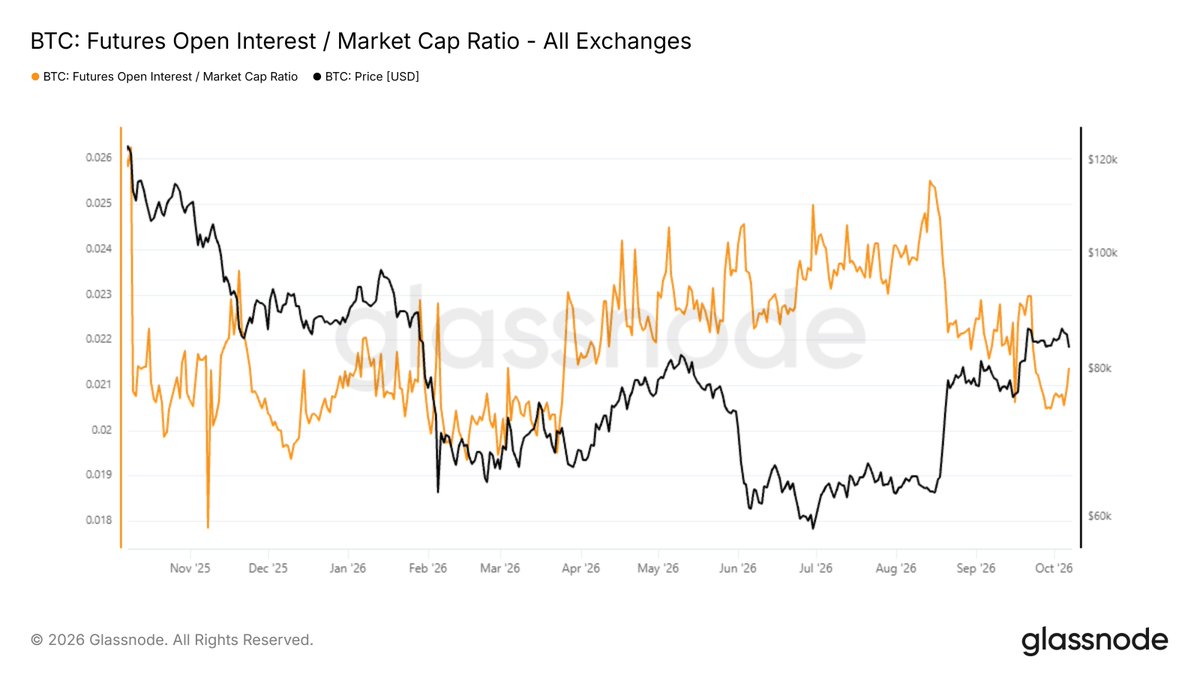
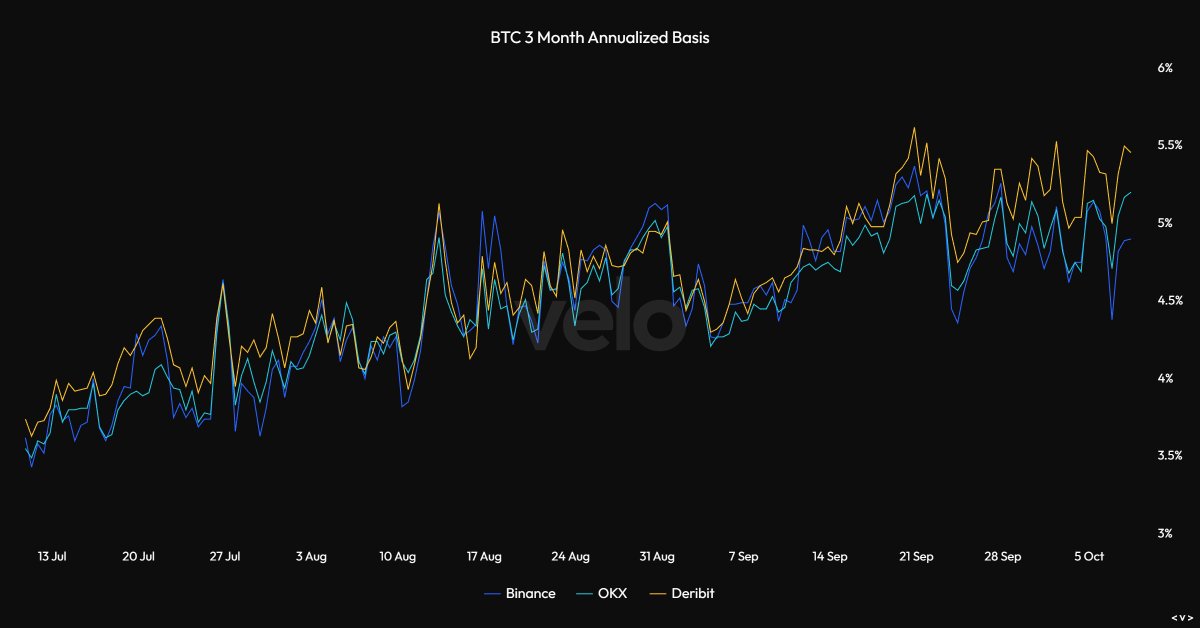
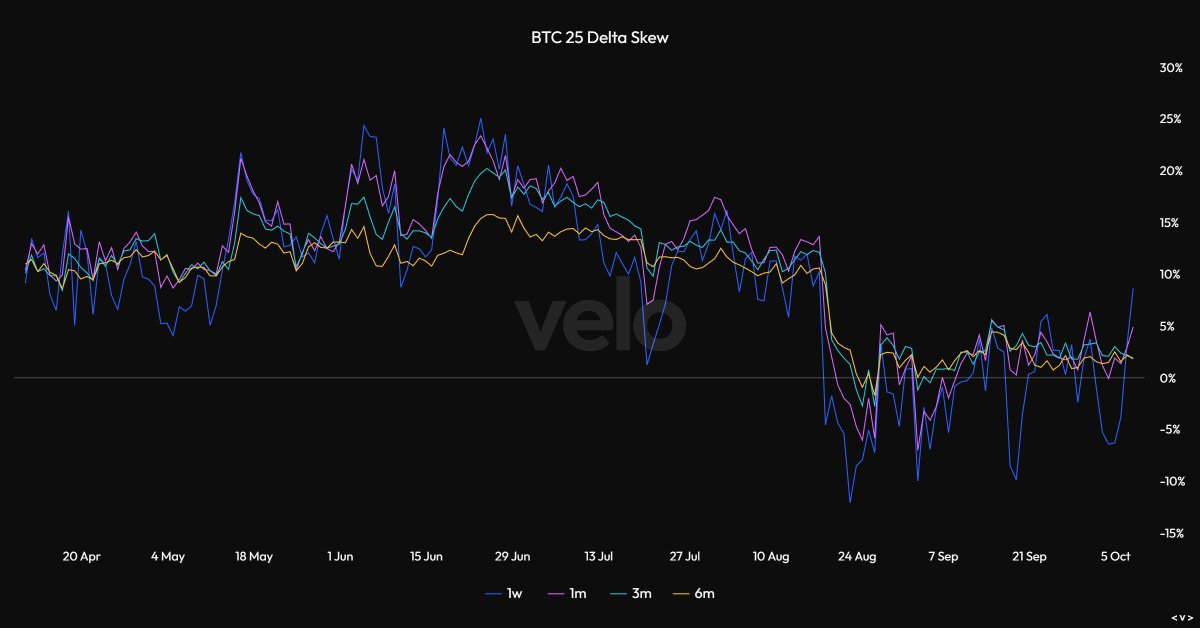
Locally, don't have a very strong view but skewing towards some caution. Nice bearish divergence on the daily that has been printed which is generally a decent signal. The lack of reaction yesterday/today so far at what should now be range lows is also not super encouraging. Not playing any local moves, but as mentioned I had reduced my position a few weeks back and would likely add if we come back into some of these moving averages or we get a clearing event based on some of the things brewing in bond vol, energy, credit spreads. If not, I am more than happy with the position I currently have.
Bigger picture, without some tail risk event from quantum, feel pretty confident that the worst for Bitcoin is behind it. An impulse through its 20/50/100 week moving averages has historically been a good signal, as cycle lows have never been retested after this has taken place.
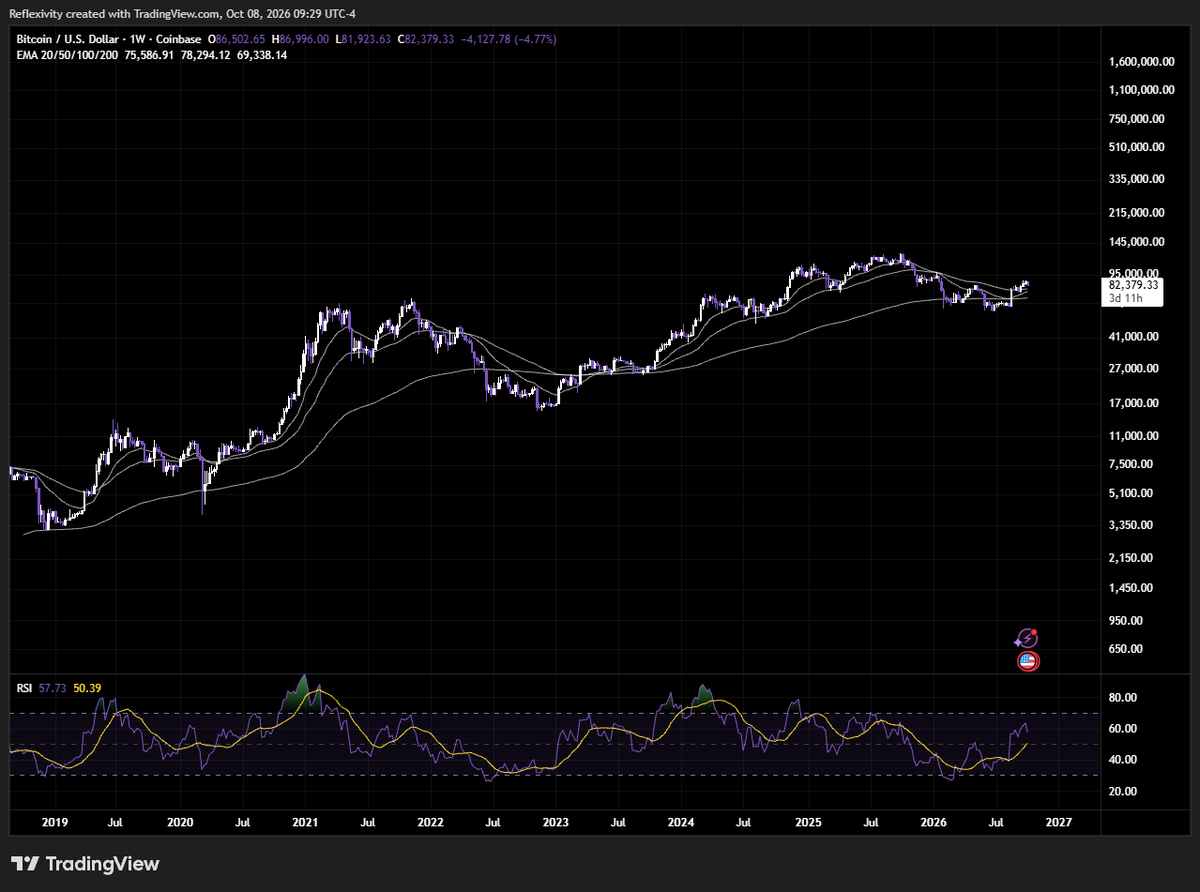
Outside of Bitcoin, I am starting to pay closer attention again to other crypto assets given where I think we likely are in the broader market cycle.
The biggest two trends at the moment I see are by far stablecoins, tokenization (including perpetuals), and could also throw payments in there as well. In my view I would go as far to say that stablecoins/tokenization are both national security priorities for the US, as the proliferation of stablecoins creates demand for US debt and tokenization perpetuates the insatiable demand for US capital markets. Interestingly, tokenized equities have now reached over 1% of stablecoin supplies, which is a trend I don't think I would fade.
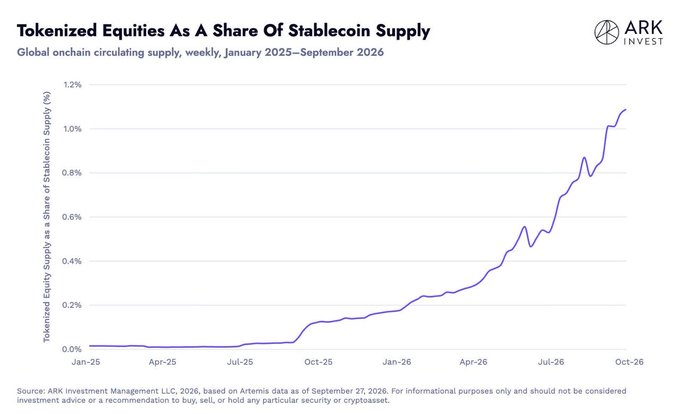
Source in chart
Tokenization of other asset types also seem interesting to me, but questions around ability to scale are important to consider.
In addition, I am paying attention to platforms that enable capital formation with some form of claims/rights for token holders. Platforms like MetaDAO and Umia come to mind (no position at the time of writing this in either of these), but I do think there are some questions around why a team would raise capital there instead of the traditional venture route. Nonetheless, I have started paying attention to new launches etc. Projects launched on these platforms seem very similar to liquid venture investing (and should likely be sized accordingly).
Other revenue generating assets such as HYPE continue to seem great, especially with regulatory tailwinds behind them. At this point, just hard to see how asymmetric something like HYPE is here at these price levels IMO. On-chain options seem interesting as one of the final primitives to allocate to, but unclear at the moment to me whether Hyperliquid will just devour this category as well.
Quantum continues to be top of mind, especially with Justin Drake's "bunker mode" post yesterday. Perceived quantum resistant assets likely do well over the coming year+, at least relative to other assets with no revenue/claims, but something like ZEC I think will need to start taking actual market share from Bitcoin for it to go north of $3-5k. Not to say that this can't happen, but it is a different bet than the liquid fund capital consolidation etc. that likely fueled its move from the hundreds of dollars to just under $2k recently.
The next 3-6 months are usually the window in the cycle where new shiny things start to emerge, so I have at least started to pay closer attention. The continued growth of things like tokenized equities & other assets makes this cycle really interesting, as trading volumes/AUM/interest being focused on non-crypto assets being traded on crypto rails could potentially smooth out cyclicality going forward. Long term though, I have a hard time holding anything but Bitcoin, given how clear the 5-10 year view seems based on various macro dynamics (excluding quantum tail risk).
Disclaimer: The content of this article reflects my personal opinions and is provided for informational and educational purposes only. It does not constitute financial, investment, legal, tax, or professional advice of any kind, and should not be relied upon as such. I may hold positions in assets mentioned in this article. I am not a licensed financial advisor, attorney, or accountant. Attribution for data sets are shown in each respective chart for relevant providers, I claim no ownership of these datapoints.
Cryptocurrencies such as Bitcoin are highly volatile and speculative, and investing in them carries significant risk, including the potential loss of your entire investment. Past performance is not indicative of future results.
Nothing in this article is a recommendation or solicitation to buy, sell, or hold any asset, security, or financial product. You should conduct your own research and consult a qualified, licensed professional before making any financial or legal decisions. Any actions taken based on this content are strictly at your own risk, and I accept no liability for any losses or damages arising from any reliance on it.