Become a $1M/yr FDE (Full Course)
文章目录
The forward deployed engineer playbook behind million-dollar paychecks
Some forward deployed engineers get paid a million dollars. Deploy agents that drive $5M, $10M or $25M of value for a company, and it will give you a slice of that pie.
Private equity already runs this play. Firms buy accounting firms, IT shops and law practices that run on people and old software, then put forward deployed engineers (FDEs) inside to rebuild the work with agents. Thrive Holdings had 35 engineers across 70 firms, and Vas cites results like tax returns done 30% faster at 98% accuracy.
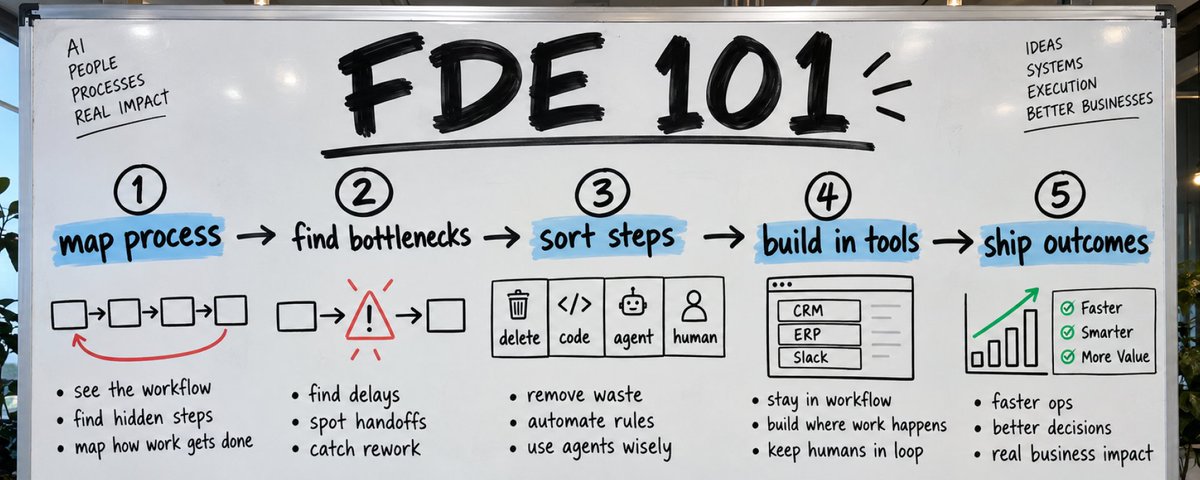
This guide breaks down his workflow: how to map the real process, sort every step, build inside the client's tools, sell the outcome, and land your first project.
Map the Real Process
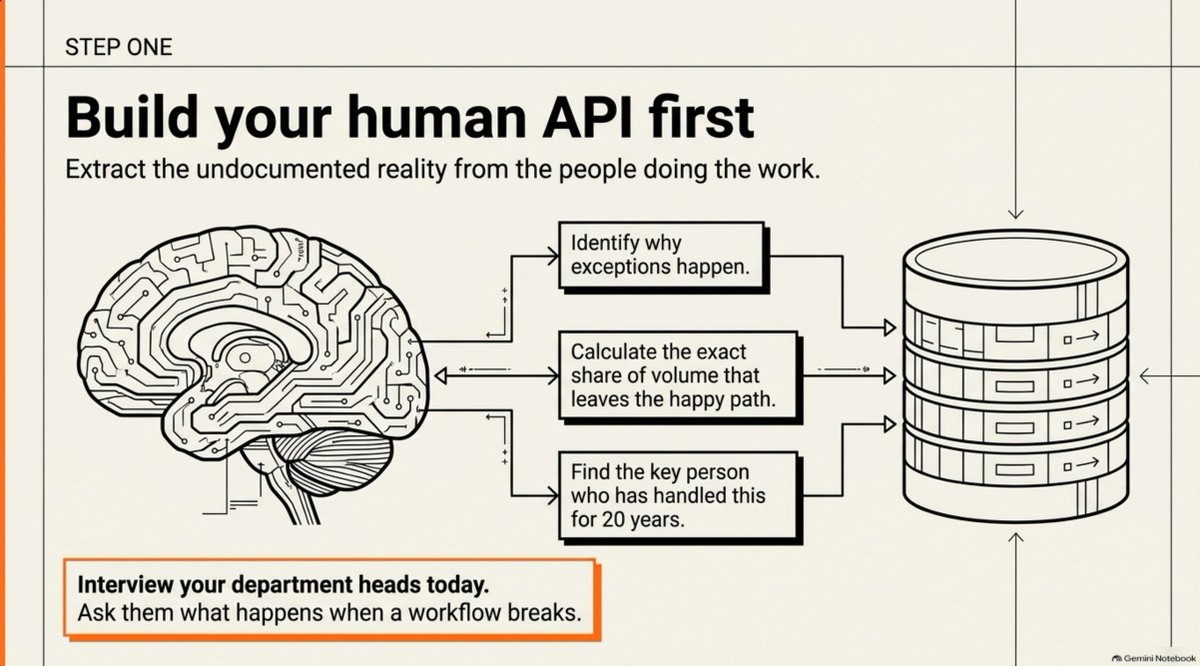
Build a "human API" before you build a single agent.
Start with your own life. You have five inboxes, four file stores and a stack of messaging apps. A client email goes to Gmail, and family texts land in iMessage or WhatsApp.
Now scale that up. One company Vas describes acquired eight others, runs in five regions and sits on 23 systems of record.
Chicago runs SAP, Salesforce and Workday. Toronto runs NetSuite, HubSpot and ADP.
Put AI on top of that and the mess runs faster.
How:
-
Interview the humans. Pick one department. In finance, talk to the heads of AP, AR, reconciliations, billing, banking and FP&A. The knowledge lives in their heads, often with one person who has handled it for 20 years.
-
Ask five questions. Why do you do it this way? Who decides? Which step is theater? What happens on an exception? How often?
-
Mine the systems of record. Get real-time access to Salesforce, NetSuite, Dynamics or Workday for 3 to 4 weeks. Track what data enters, how often people correct it, and use AI to find the pattern behind each action.
-
Read what lives outside the systems. SharePoint, Drive, Notion, Slack, Teams, Gmail and spreadsheets.
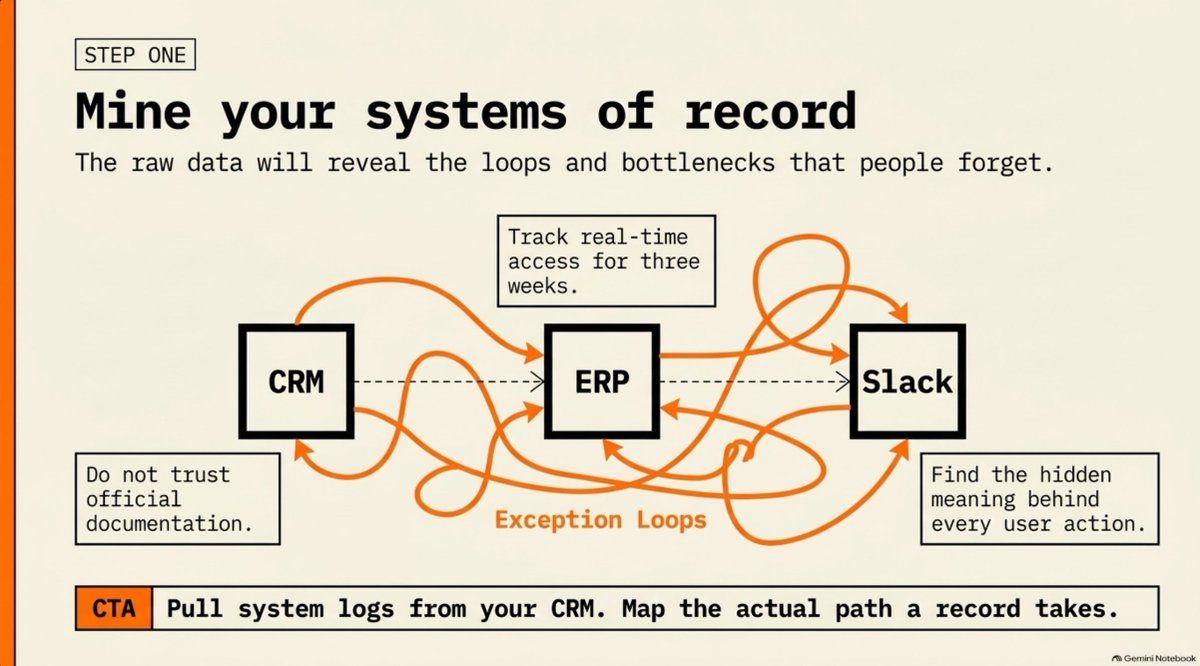
The split changes per company. A large company has 10 years of Salesforce history to mine. An SMB keeps most of it in people's heads.
Proof: A public software company with $5B in revenue and 150+ products brought Vas in through its CRO. An earlier consulting engagement (Vas believes it was Deloitte) had mapped its quote process as 7 steps:
Build quote → Submit → Deal desk → Approve → Send → Negotiate → Sign
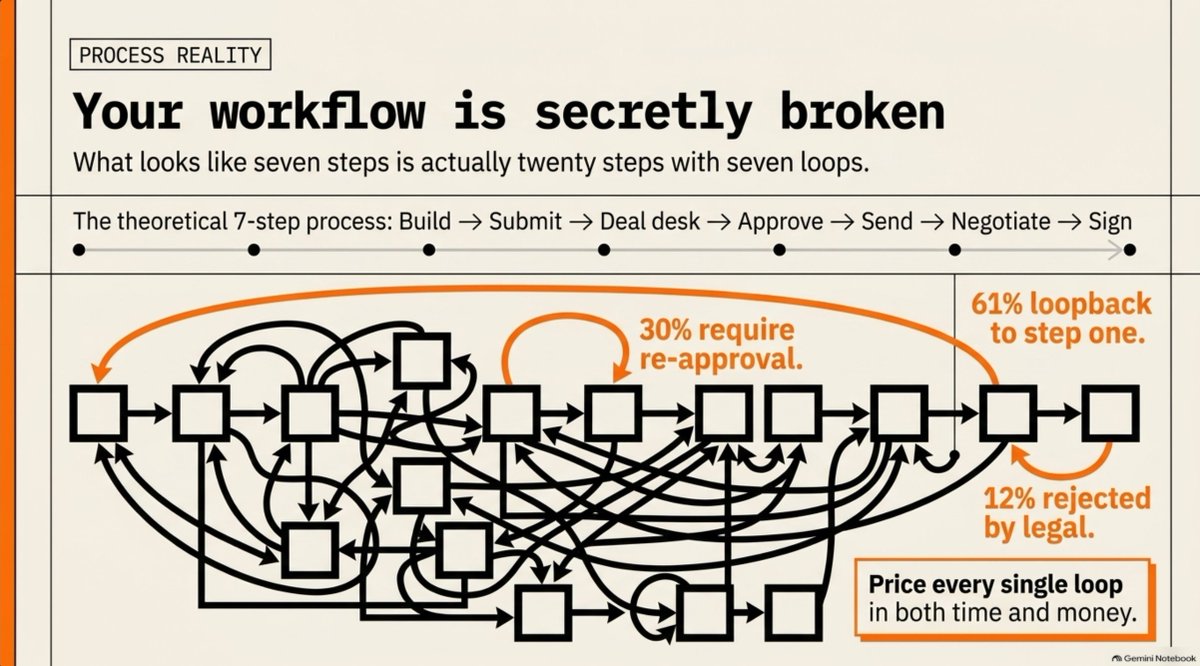
Process mining agents on the CRM found 20 steps and 7 loops.
61% of requests looped back early. Legal sent 12% back. 30% of the time, a new quote had to go through approval again.
CROs and CFOs tell Vas's team: "I feel like you understand our department better than we do."
Sort Every Step Into 4 Buckets
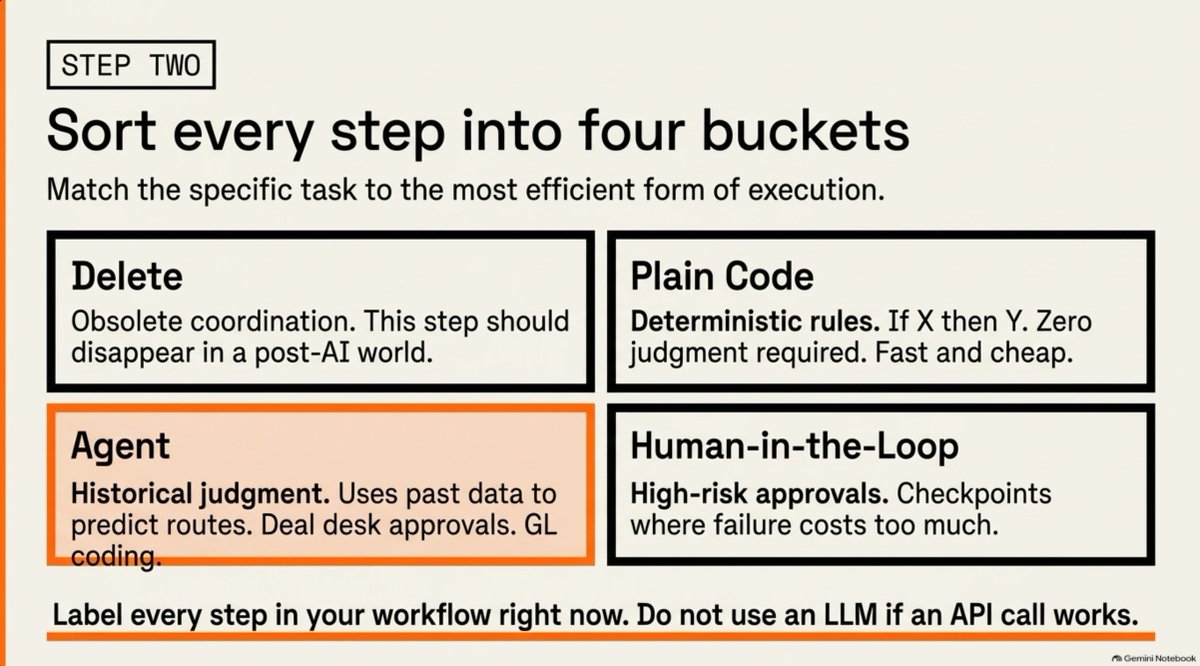
Every step gets one label: delete, plain code, agent or human.
-
Delete: The step should disappear in a post-AI world.
-
Plain code: If X, then Y. Use it when the step needs zero judgment. Variance means a switch case.
-
Agent: The step needs judgment and you have historical data. An invoice line says "monitors," so it's likely office supplies, except from certain vendors. Building a quote also fits here: who's the customer, what's the deal worth, what resources to assign.
-
Human in the loop: The step is too risky to get wrong. Approval, negotiation, signing and payment. An agent that pays invoices end to end opens the door to phishing scams.
In the sales example, five of the 20 steps went to agents.
Vas points to Michael Hammer, who wrote about this in Harvard Business Review in 1990. At one insurance company Hammer studied, an application took 22 days to move through the business and got 17 minutes of actual work. Make every step twice as fast and you save about 8 minutes, because the days pile up in the queues and handoffs between steps.
Build Inside Their Systems of Record
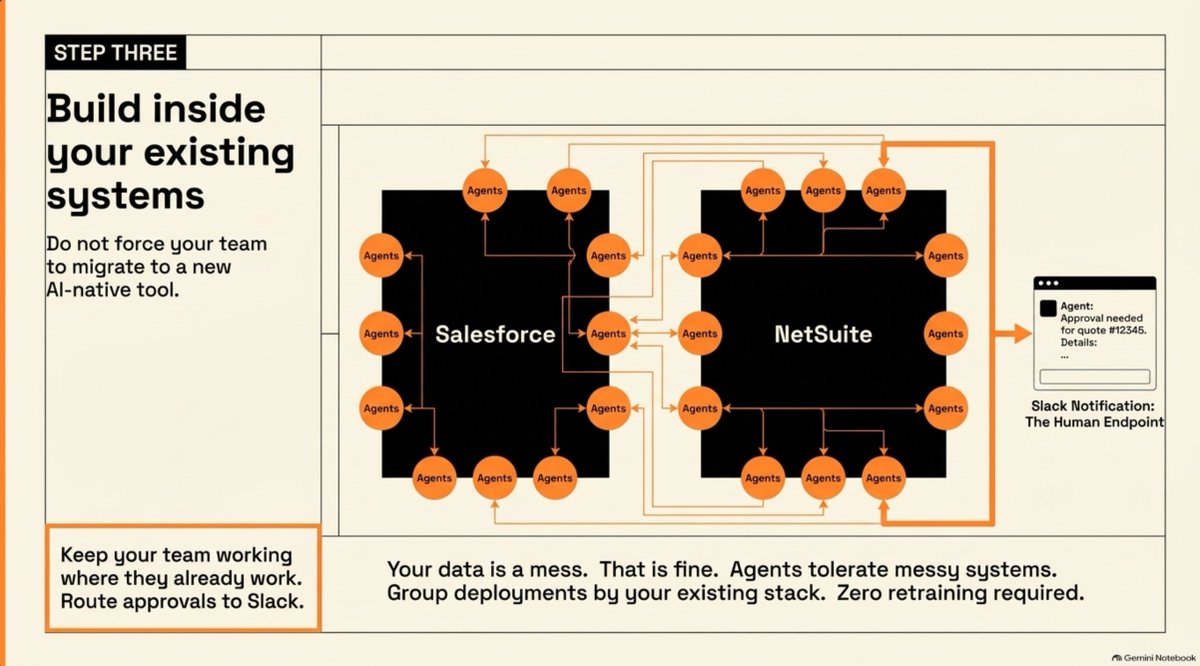
Put the agents in the tools the client already uses.
Vas's agents mine Salesforce and take action in Salesforce. When a human needs to approve something, it arrives as a Slack message. Staff keep working where they already work, so there's zero retraining.
Clients tell Vas they spent several years and millions of dollars moving from one ERP to the next, $10M in one case. Pitch that client a move to an AI-native CRM and, in Vas's words, "you've lost them." The exception is an SMB that has yet to adopt a CRM. Put them on one.
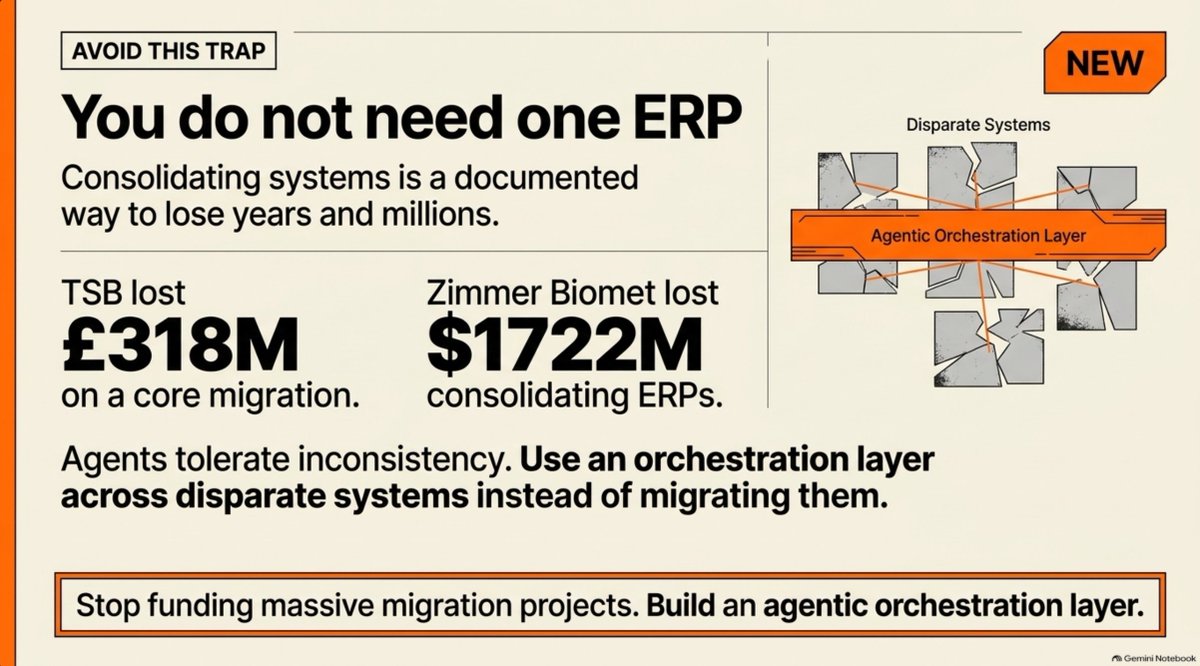
PE scale tactic: group by system of record.
A PE firm with 26 portfolio companies, 10 departments each and 10 workflows per department is thousands of workflows. Vas groups companies by their software:
-
5 companies on NetSuite → one track
-
4 companies on Dynamics → one track
-
Learn what each tool offers and where the gaps are
-
Connect it to the rest of the stack: Ramp, Brex, Blackline, Concur, Expensify
You solve the same problem several times, and you sell to the same buyer (the CFO) over and over.
Sell the Outcome in Numbers
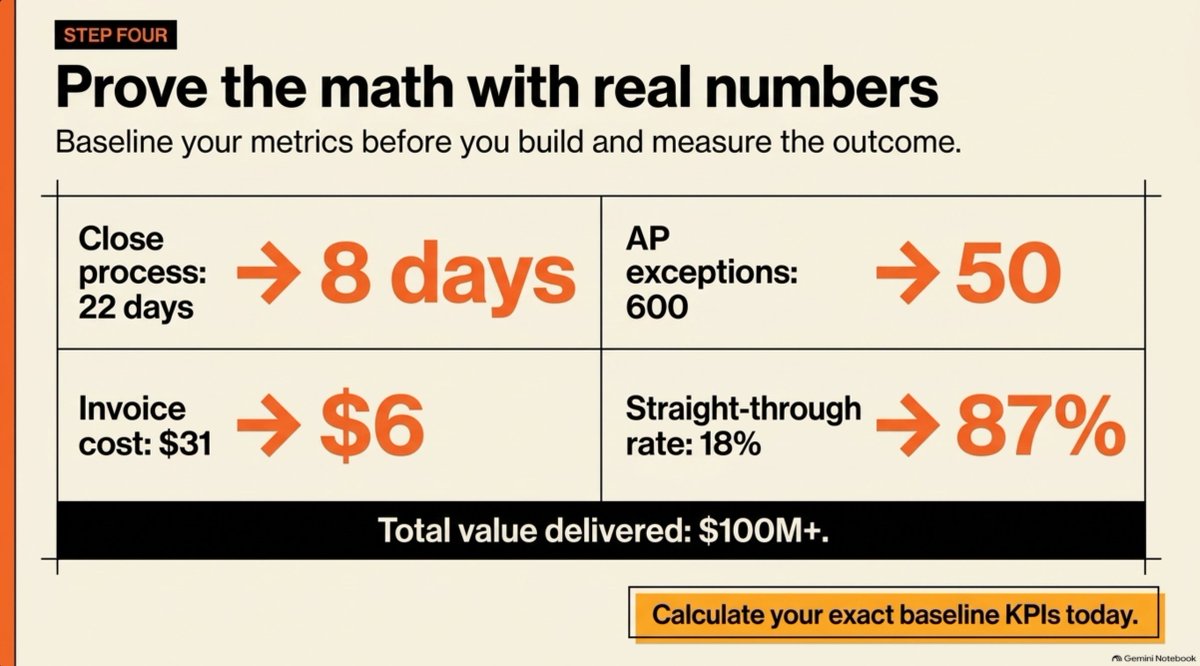
Map the mess, show the clean version, put a price and a KPI on each.
Vas delivers value in three buckets: cost savings, revenue uplift and risk mitigation. Match the bucket to the buyer.
-
CFO: Month-end close takes 22 days to 6 weeks. Bring it to 4 or 8 days with higher accuracy, at the same cost or less.
-
CHRO: Hire better people faster and train them quicker on day one.
-
Any C-suite: List the estimated monthly cost of each agent next to the process. I expect that number to come in shockingly low compared to people.
Baseline every KPI before you build. Six months later, show them the before and after.
Proof: An accounts payable workflow (anonymized). Vas's team mapped it in 2 to 3 weeks with interviews and process mining.
-
Process steps: 17 → 7
-
Cycle time: 24 days → 6
-
Exception loops: 6 → 1
-
Straight-through rate on invoices: 18% → 87%
-
Cost per invoice: $31 → $6 (an 80% reduction)
Much of that jump came from fixing the process itself. Vas says his Fortune 500 and Fortune 1000 clients usually reallocate their best finance people to higher-value work like FP&A.
Start smaller: A 60-person accounting firm Vas heard about had $12M in revenue, 400 clients and four systems. Every client sent books in a different format, including a photo of a notebook.
The firm said it had 6 steps. It had 14. Collections needed a re-ask 70% of the time, and a partner sent work back 35% of the time.
Price every loop in money and in time.
Pick the Model per Workflow
Benchmark every workflow against every model.
Most companies start on Microsoft Copilot, with Claude Code and Codex behind it. For an SMB, start in skill files.
Vas rarely needs a frontier model like Fable or Astra. His team runs Opus 4.8, Sonnet more often, GPT on lower thinking settings, open source models like Muse, and Grok. GLM, Kimi and Qwen belong in the toolkit too.
Enterprises have a strict aversion to Chinese models, so check before you pitch one.
Two streams of agents:
-
Sidekick agents: You chat with them and they get stuff done. Instinct, Dots, GrokBot and Muse sit here.
-
Background agents: They know the job, run all the time and ping you when they need you.
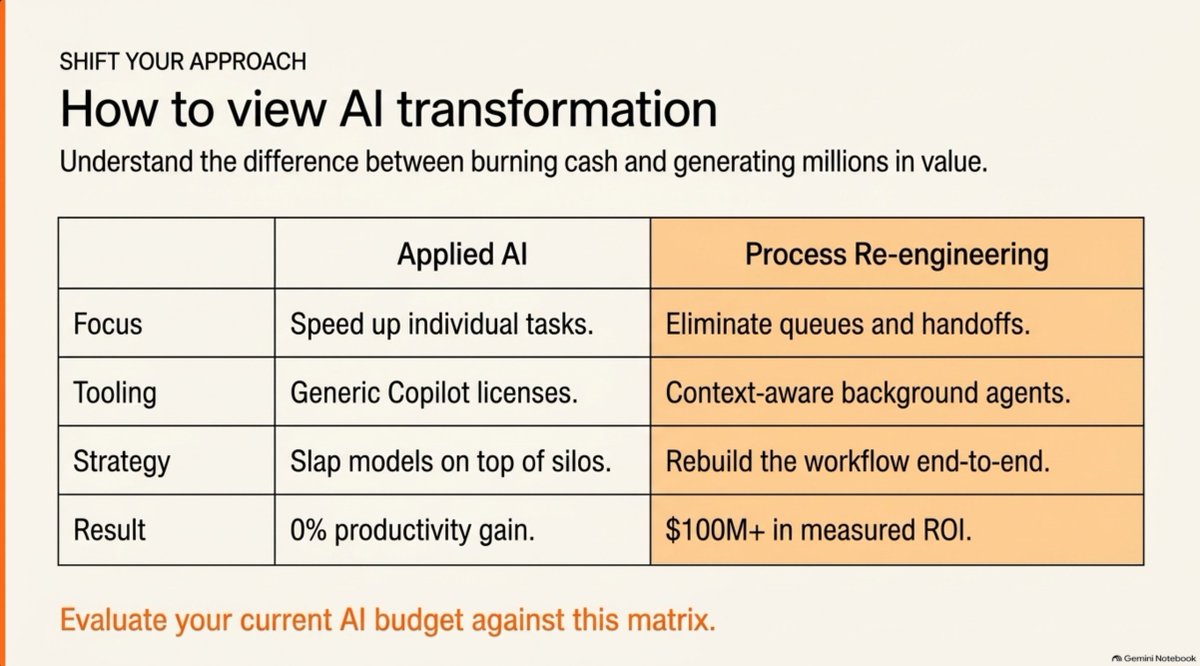
Sidekicks give 10 to 20% faster output. Background agents give 70 to 80% faster output with higher accuracy. Vas's team takes work off people's plates for that reason.
Become Three People in One
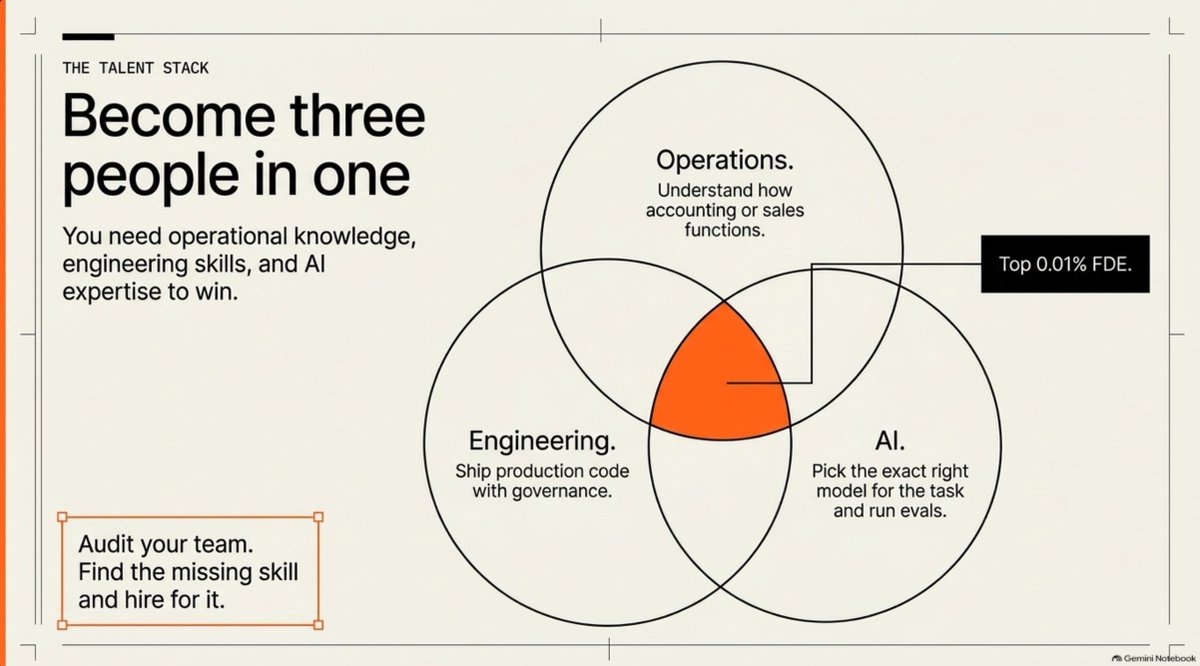
Top FDEs are exceptional at three jobs, plus communication.
-
How the work gets done. Study the systems of record (Salesforce, Dynamics) and what each one offers. Learn how accounting functions.
-
Production code. Ship agents that call into those systems with auditability, governance and security. A CS degree is optional with today's AI engineering tools.
-
The AI layer. Pick the model, decide what you can trust it with, test with evals, tune the setup that runs each model, and roll back when an agent takes the wrong action.
Then sell all of it to senior leadership. I think of this person as the NBA player of the field, the top 0.01%.
The pay follows the value. When I was young, a founder with several multi-billion dollar exits gave me advice: take the job closest to the money.
Drive $10M of value and a 10% cut is a $1M paycheck. Some PE firms give FDEs a share of the carry on the companies they transform.
Your First FDE Week
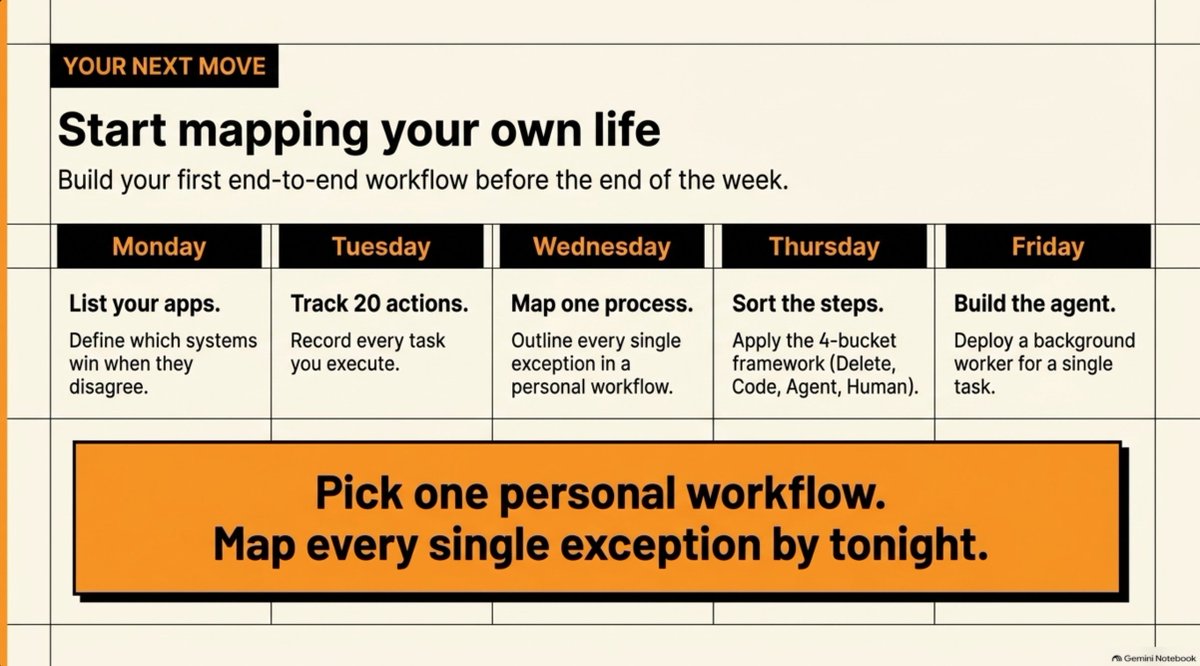
-
Monday: List every app that holds your stuff. Write which one wins, which ones disagree and how to route between them.
-
Tuesday: Write down 20 things you did last week. Paid a bill. Canceled a subscription.
-
Wednesday: Map one process step by step, with every exception. How you pay a bill, or how you submit an invoice as a freelancer.
-
Thursday: Sort every step into the 4 buckets. Delete, deterministic, agentic, human.
-
Friday: Reach out to SMBs through your network or cold outbound. Offer to fix one workflow end to end: skill files, a personal assistant, the agents and a timeline.
Do the first one for free if you have to. The experience pays for the next one at five or six figures.
For an internal team, run Monday to Thursday on your own company's systems and skip the outreach. Vas gives internal FDE teams the same playbook.
Final Thoughts
Vas runs every engagement on one rule from his own playbook: baseline before you build.
His engagements follow one timeline:
Audit and proofs of concept (4 weeks) → Build the agents (4 weeks) → Show what it was and what it is now (at 3 and 6 months)
Vas says most AI pilots fail because a team slaps AI on the business: a license rolled out to everyone, or an agent that misreads the workflow. His team maps the process, sorts every step, builds once, deploys everywhere and measures constantly.
Want to learn more? Read Vas's full article on X, follow @vasuman, and see his team's work at varickagents.com.
"We find the real process. We measure the time, baseline all of the KPIs." Vas, Varick Agents
Checkout the full episode:
Apple: https://podcasts.apple.com/us/podcast/become-a-%241m-yr-fde-full-course/id1593424985?i=1000792638739
Spotify: https://open.spotify.com/episode/6TFEiq0oezsbmj9ZwTOECX?si=8bca6a35ff4a413a
沿着这个主题继续读
从一篇文章,找到相关的教程、经验和阅读路径。