The Principles of Focus.
文章目录
You've been busy for the last half hour. You still haven't started what you sat down to do. First, you answered a message. It reminded you of an email. While replying, you opened another tab to look something up.
Each thing took only a minute or two.
Nothing dramatic happened. That's why it's so easy to miss. Most days, you don't lose focus in one big decision. You lose it in small moments that barely feel like decisions at all. And when you finally turn to what you meant to do, you have to find your way into it.
Meaningful work requires more than making time for it. You have to stay with it long enough to get somewhere. That's what this article is about. Seven principles for giving your attention to the things that deserve it.
I. Making Time Isn't Enough
Two people can set aside the same two hours to work on a project.
-
One spends most of that time on the project.
-
The other checks messages, answers a few emails, opens X, comes back, and spends the last 20 minutes trying to make up for the time they lost.
Both had two hours available. They didn't have the same two hours of attention. This is why an empty calendar doesn't guarantee that you'll get meaningful work done. You can make time for something and still give your mind to everything else.
Think about the work you're proudest of. It probably required more than showing up for a certain number of hours. At some point, you became absorbed enough to notice a problem, follow an idea, or see a connection that wasn't obvious when you started.
That kind of progress is hard to measure while it's happening. You may spend an hour thinking and have little to show for it. Then you write a paragraph that finally makes the rest of the article work. Time allowed you to reach that point. Attention allowed you to use it.
So when you plan your week, don't only ask whether you have enough time for what matters. Ask whether you're leaving yourself the kind of time in which you can actually think.
II. Every Switch Leaves Something Behind
Imagine you're halfway through writing a difficult section.
You've tried a few ways to explain the idea. You know why the first two didn't work, and you're beginning to see a better one. Then a message arrives.
It takes thirty seconds to answer. But when you return, the thought you were following is gone. You reread the last paragraph, remember what you've already ruled out, and try to find your way back in.
Psychologist Sophie Leroy studied what happens when people switch tasks before finishing the first. She called the attention that remains with the previous task attention residue.
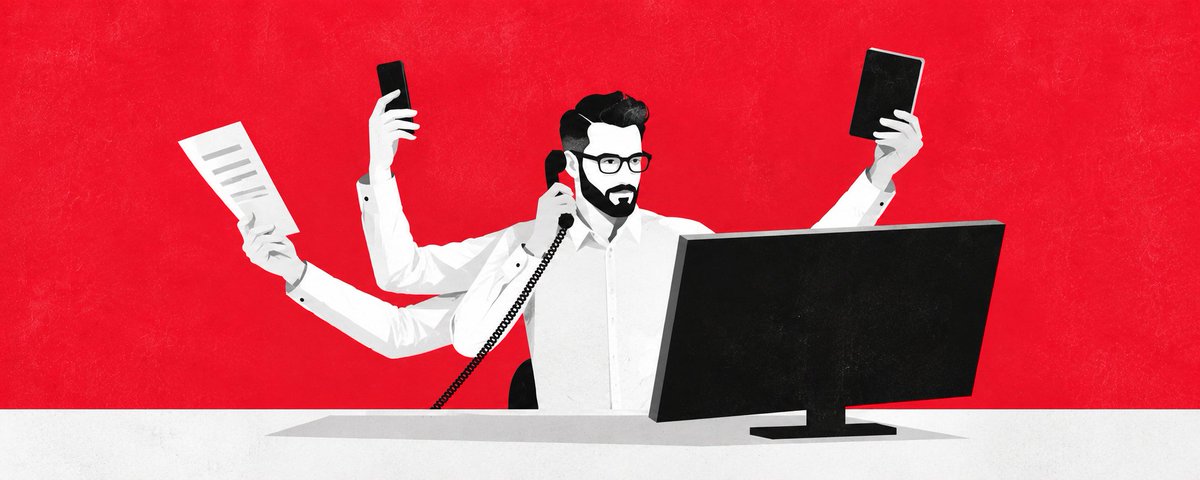
You've probably felt some version of it. You leave one task, but part of your mind is still there. Or you return to it and need time to rebuild the context you had before leaving.
A single interruption might seem too small to matter. Repeated throughout a day, those interruptions change what kind of work you can do. You spend more time getting back into things and less time moving them forward.
This doesn't mean you should never answer a message or change tasks.
It means switching costs time, even when the thing pulling you away takes only a moment. When you're working on something that requires real thought, give yourself a chance to finish a line of thinking before you leave it.
III. Decide What Deserves Your Attention
It's possible to have a perfectly quiet room, your phone in another room, and still struggle to focus. Sometimes the problem isn't distraction. It's that you haven't decided what matters enough to work on.
-
You open your laptop with six things you could do.
-
You make a little progress on one, remember another, then start wondering whether a third is more urgent. By the end of the day, you've touched everything and finished almost nothing.
Focus becomes easier when the decision is clear.
Not "*I need to be productive today." *
Something closer to: "I'm going to finish the first draft of this article before I check my inbox."
The task may still be difficult.
You may still want to avoid it. But at least you know what you're returning to whenever your mind starts looking for something else.
There's also a larger version of this decision.
-
You can become very focused on work that doesn't move you toward anything you care about.
-
You can spend months getting better at answering requests that should never have taken priority over your own plans.
So before you ask how to focus more, ask what deserves more of your focus. That question won't organize every hour of your day. It can help you recognize when you're giving your best attention to whatever happened to arrive first.
IV. Make the Right Choice Easier
You don't need to prove how disciplined you are every five minutes.
If your phone is beside your keyboard, your inbox is open, and every notification appears on your screen, you've made it easy for other things to interrupt you. Even when you ignore them, you still have to make that choice again and again.
You can remove some of those decisions before you begin.
-
Choose a time to answer messages instead of keeping them beside your work all day.
-
Put your phone somewhere you would have to get up to reach.
-
Close the tabs you don't need.
-
Turn off notifications while you work.
None of this will make you a different person. That's the advantage.
You can still get distracted. You can still decide to stop working. You've simply given a passing impulse a few more seconds to pass.
The same idea works in the other direction.
-
If you want to write every morning, leave the document open.
-
If you want to read more, put the book where you usually reach for your phone. Make the thing you chose easier to begin.
You don't have to make distraction impossible. Make it less automatic, and make returning to your work a little easier.
V. Get Comfortable With an Empty Moment
You're waiting for someone at a cafe. They're three minutes late.
What do you do?
If you're like most people, you reach for your phone before you've even decided to. There's no message you need to answer. You're simply waiting, and now you have a way to avoid feeling like you're waiting.
We can fill almost every gap in the day.
-
A video while eating.
-
A podcast while walking.
-
A feed while standing in line.
-
Another tab whenever work gets slow.
There's nothing wrong with enjoying any of these things. But it's useful to notice when you reach for them without wanting anything in particular.
Meaningful work contains moments that feel just as empty.
You write a bad sentence and don't know how to fix it. You read a difficult page twice and still don't understand it. You reach a point in a project where the exciting beginning is behind you and the result is still far away.
For a while, nothing seems to be happening.
If every slow moment sends you looking for something more interesting, you rarely get to find out what comes after it.
The next time you feel that urge, you don't need to turn it into a test of discipline. Notice it. Give yourself another minute with the page, the question, or even the silence.
Sometimes you'll decide you need a break. Sometimes you'll finally see what was bothering you about the sentence.
VI. Stay With the Problem
When you begin writing, the obvious points come quickly.
When you start solving a problem, you try the solutions you already know.
Sometimes they work. When they don't, you reach an uncomfortable point. You've used what you came in with, and you're not sure what to do next.
That's often when you want to leave.
But if you stay a little longer:
-
You start asking better questions.
-
You notice which part of the problem you've been avoiding.
-
You realize two ideas don't fit together, or that you've been trying to explain something you don't yet understand.
The work may feel slower at this point. It can also become more interesting.
This doesn't mean you have to sit at your desk until you find an answer. A walk or a proper break can help.
There's a difference, though, between stepping away after you've spent time with a problem and leaving the moment it asks more of you.
Give difficult things enough attention to become familiar with them. Then, when you return, you have something to build on.
VII. Your Life Follows Your Attention
Think about the last thing that stayed in your head for days.
-
Maybe it was a conversation you kept returning to.
-
A problem at work you started noticing everywhere.
-
An idea that made you see something familiar differently.
The more attention you gave it, the more you found in it.
That's how attention works over longer periods, too. A designer begins noticing why certain spaces feel good to be in. A founder starts hearing problems in ordinary conversations. Someone who cares about a friend remembers a small detail they mentioned weeks ago.
None of this happens in a single moment. You notice something, think about it, return to it, and gradually begin to see more.
The opposite can happen just as quietly.
-
You can spend an evening with someone and barely remember what they told you because your mind was elsewhere.
-
You can have an idea you're excited about, keep putting it aside, and eventually stop thinking about it at all.
Your attention doesn't only affect what you get done today. It affects what becomes familiar, what grows, and what slowly disappears from your life.
You won't always choose where your mind goes. You'll get distracted. Some days you'll be tired and have little attention to give. But you can notice where it keeps going, and decide whether that's where you want it to go.
What you return to, again and again, becomes your life.
- Hades.