慢就是快——币圈生存指南/Slow Is Fast—— A Survival Guide to Crypto
文章目录
我在2010年第一次知道BTC,从2017加入币圈后,从未离开。 我最早参与了2024年BSC的生态和ALPHA,深度参与了SOL的建设和MEME,我是第一个给ORDI和铭文撰写叙事的人。(The English version is at the bottom.) 再往前,GAMEFI,NFT,DEFI,FOMO3D,公链,ICO……我都以不同的身份参加了。 我下面将叙述一个你一定十分熟悉的场景: 凌晨两点,一个群里突然热闹起来。 有人发出一张十倍收益截图,有人宣布某个项目即将迎来“历史性时刻”,有人说机构已经入场,有人说这是普通人最后一次改变命运的机会。
屏幕另一端,你,一个刚进入币圈不久的人开始坐立不安。
你原本只是想看看,后来觉得不买就会错过;原本只准备投入一点,看到群里不断有人赚钱,又临时加大金额;原本告诉自己只参与几天,价格下跌以后,却开始研究这个项目未来十年的价值。
几个月以后,项目方完成了融资,交易平台赚到了手续费,做市团队完成了库存管理,早期投资人拥有了退出窗口,内容创作者获得了流量,推广者拿到了合作费。
只有你还在群里反复问一句话:
“这个项目到底还有没有希望?”
很多人以为,这只是一次投资失败。
其实这是一张完整的利益分配图。
所有人都参与了同一个项目,却从来没有在做同一门生意。有人靠发行赚钱,有人靠融资赚钱,有人靠手续费赚钱,有人靠服务赚钱,有人靠传播赚钱,有人靠低成本筹码赚钱。
而最后进入的人,只能依靠一件事赚钱:希望后来还有一个人,愿意用更高的价格接走自己的筹码。
这就是币圈最残酷、也最需要被看懂的真相:
币圈不是一群人围着同一个梦想努力,而是一群人围着同一笔资金,使用完全不同的方式赚钱。
散户之所以反复亏损,不只是因为判断不够准确,也不只是因为运气不好。
更深层的原因是,你从进入市场的第一天起,就没有弄清楚自己站在哪里、别人靠什么赚钱、自己的利润由谁支付。
你把项目方的事业,当成自己的投资;把机构的低成本筹码,当成自己的长期信仰;把KOL的商业内容,当成自己的研究结论;把市场暂时送来的上涨,当成自己永久拥有的能力。
你明明站在食物链末端,却把自己想象成了规则制定者。
我在这个市场里,见过了太多天才和热点项目的升起和陨落。我邀请你花1小时阅读这篇文章,我将用我的实践凝聚出的认知,告诉你一个道理:
在币圈,钱,是怎么流转的。你,究竟应该如何赚钱。
为什么,慢就是快。
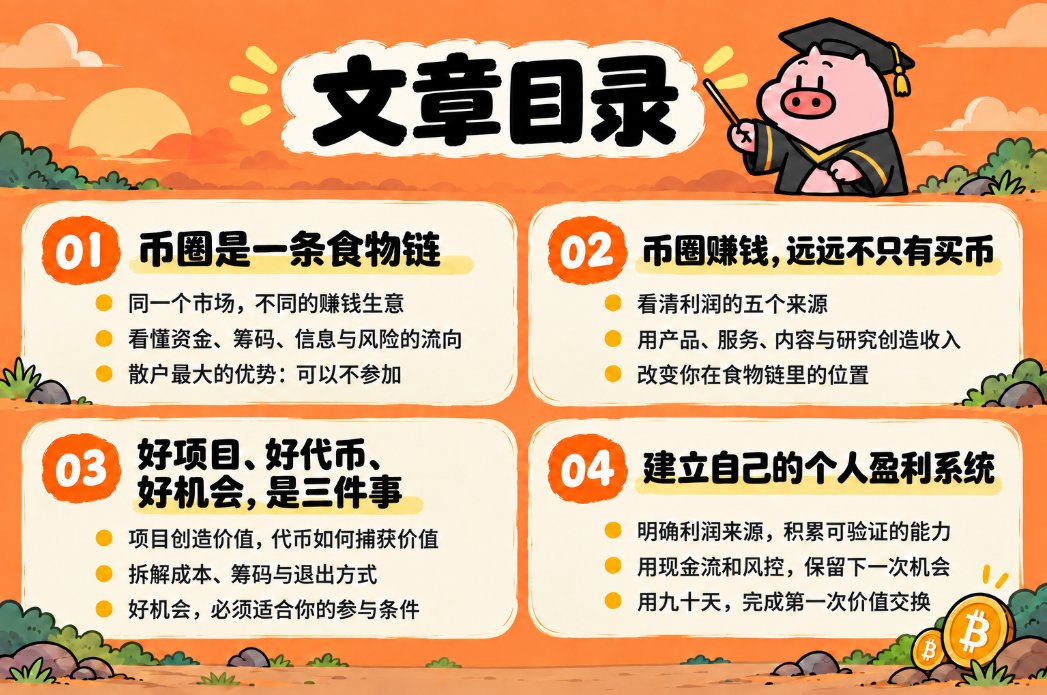
这篇文章不讲周期,不讲K线,也不提供任何代币名单。
我们只讲4件事:币圈为什么是一条食物链;币圈里为什么远远不只有买币一种赚钱方式;为什么好项目、好代币和好机会必须分开;以及普通人最终应该建立一套怎样的个人盈利系统。
因为真正决定一个人能不能长期留下来的,从来不是他猜中了多少次上涨。
而是他有没有从一个等待别人制造机会的人,变成一个能够创造、识别并留下利润的人。
一、币圈是一条食物链:你以为大家都在看涨跌,其实每个人都在做自己的生意
大多数散户进入币圈以后,眼睛里只有两种人:赚钱的人和亏钱的人。
这个分类太简单了,散户总是缺乏思考。
市场真正重要的区别,不是谁今天赚了,而是谁掌握规则、谁拥有筹码、谁控制注意力、谁能够完成退出、谁必须承担最后的结果。
一张K线图把所有人画在同一个画面里,却掩盖了他们完全不同的经济位置。 币圈的所有参与者是一条食物链,互相交叉,重叠,却又紧密联系。
项目方看到的不是一根K线,而是融资、团队工资、国库、生态预算、市场推广和下一阶段生存。
投资机构看到的K线,也不是一句“长期主义”,而是进入成本、基金期限、解锁安排、账面回报和退出深度。
交易平台看到的K线,是用户、成交量、手续费、资产质量和品牌风险。
KOL与媒体看到的K线,是注意力、流量、广告、合作、返佣、声誉和持仓。
普通散户看到的,诶,往往只剩下一个不断变化的价格。
于是一个极端不对称的局面出现了:上游参与者拥有多种利润来源,末端参与者却把全部希望压在“价格继续上涨”这一件事上。
当一个市场里,大多数人都能在你买入之前或买入过程中赚钱,你就必须警惕:你是不是那个负责让他们完成利润的人。
1.食物链不是阴谋论,而是不对称
很多人听到“食物链”,会立刻想到庄家设计骗局、机构联合收割、所有人都在针对散户。
真实世界没有这么简单。项目方会失败,机构会亏损,做市商会爆仓,交易平台也可能倒闭。处在上游不代表永远正确,更不代表所有参与者都在合谋。
食物链描述的不是善恶,而是不对称。
第一种不对称,是规则不对称。
有人能够决定代币怎么发行、筹码怎么分配、什么时候解锁、采用什么激励、哪些规则可以修改;另一些人只能在规则公布以后接受或者离开。
第二种不对称,是成本不对称。
团队可能用早期劳动换取筹码,机构可能在很低估值进入,顾问可能获得份额,推广者可能收取现金或代币。普通买家通常在关注度最高以后,拿着真实现金进入。
同一枚代币,在不同人手里根本不是同一种资产。
第三种不对称,是信息不对称。
上游知道规则为什么这样设计,知道预算还能维持多久,知道合作推进到哪一步;下游收到的往往是公告、媒体解释、社群转述和情绪加工以后的故事。
信息每向下传播一层,事实可能更少,情绪可能更多,价格也可能更高。
第四种不对称,是退出不对称。
项目方可以融资,机构可以分批兑现,服务商可以收取费用,KOL可以通过商业合作提前获得收入,平台每一笔成交都能收取手续费。
普通持有人常常只有一条退出路径:找到下一个愿意出更高价格的人。
第五种不对称,是风险不对称。
有人拿到的是工资、广告费、管理费和手续费;有人拿到的是锁仓筹码;有人拿着家庭储蓄承担全部价格波动。
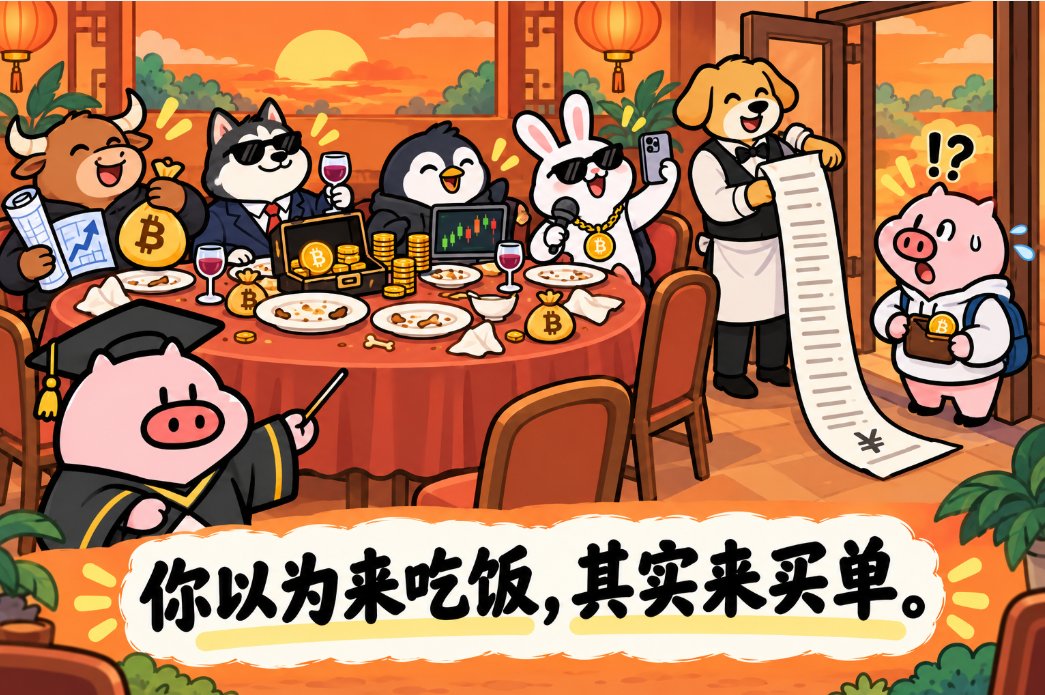
项目最后失败时,大家损失的不是同一种东西。
食物链真正残酷的地方,不是上游永远赢,而是同一场失败,对不同参与者意味着完全不同的代价。
2.市场这条食物链里同时流动的,不只有钱
看懂一件币圈事件,至少要看见四种东西在币圈市场的食物链转移。
第一是资金。钱从哪里进入,经过谁的账户,最后留在了哪里。
第二是筹码。低成本筹码从谁手里,转移到了谁手里。
第三是信息。事实由谁产生,经过谁的解释,被怎样包装,最后在什么价格到达普通人。
第四是风险。当故事没有兑现、补贴停止、需求下降时,损失最终落在谁身上。
很多项目的信息流非常漂亮:公告密集、合作不断、社群热闹、媒体刷屏。
但漂亮的信息流不等于健康的资金流,更不等于风险没有转移。
有时传播越成功,越方便低成本筹码找到新的承接者;有时社群越团结,越难容纳反面信息;有时项目越需要“所有人长期相信”,越说明某些参与者需要更长的退出时间。
一个故事可以是真的,同时仍然服务于某种利益。
一个项目可以努力做事,同时仍然需要卖出代币支付成本。
一个KOL可以真心看好,同时仍然拥有你没有的成本和退出条件。
我记得,我在出来开公司的时候,在我的笔记本上写下了一句我沉思很久的话: 成熟不是把所有人都想成骗子,而是不再假装利益不存在。
观点可以真诚,利益也可以同时存在。看懂利益,不是否定观点,而是给观点补上它缺失的上下文。
3. 同一句“长期看好”,可能属于五门不同的生意
项目方说长期看好,可能意味着产品需要时间,也可能意味着估值、融资和团队信心需要被维护。
机构说长期看好,可能确实认可行业,同时也会按照基金期限和解锁计划分批退出。
做市团队说长期看好,不妨碍它今天为了控制库存卖出。
KOL说长期看好,可能来自独立判断,也可能同时存在持仓、广告、顾问份额和流量激励。
散户说长期看好,很多时候只是因为价格已经跌破成本,他需要一个更长的故事,替自己取消原来的退出计划。
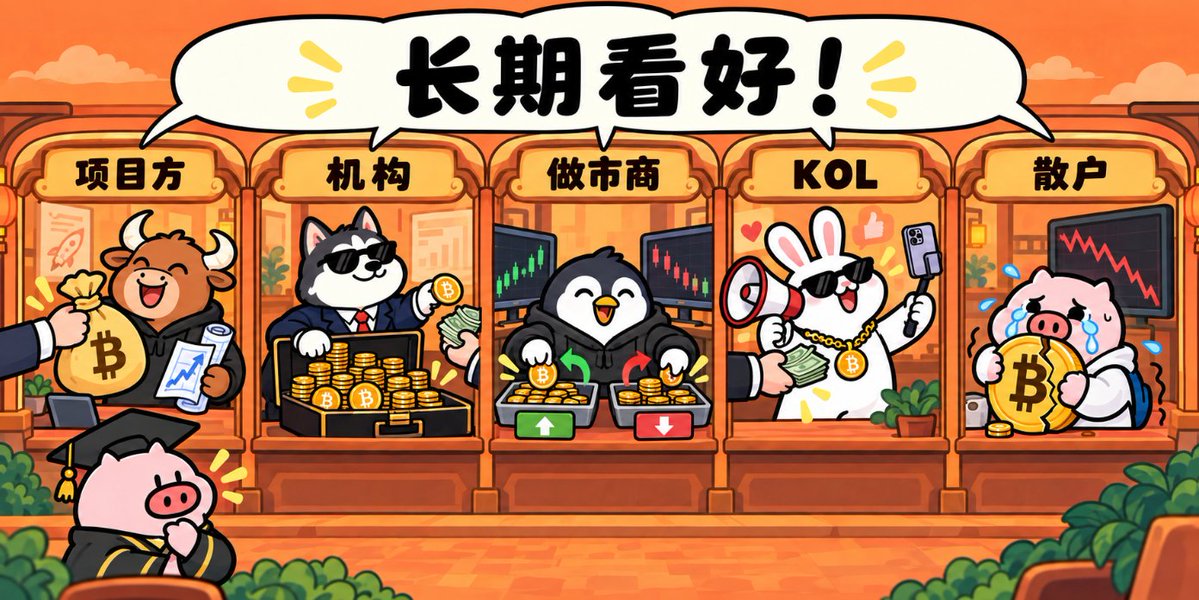
语言相同,利益结构完全不同。
所以分析任何市场观点,都应该先完成一项翻译:把“他说什么”,翻译成“他靠什么赚钱”。
一个主要靠手续费赚钱的人,需要市场持续成交。
一个主要靠融资和估值赚钱的人,需要市场持续相信。
一个主要靠广告和流量赚钱的人,需要持续制造内容与注意力。
一个持有大量低成本筹码的人,需要新的购买力和更顺畅的退出。
一个只会买币的散户,则需要价格不断上涨。
最后一种利润来源最单一,却最容易把自己想象成最坚定的长期主义者。
先拆一个人的赚钱路径,再听他的观点。先看一个人的退出路径,再听他的故事。
4.普通散户真正拥有的优势,是可以不参加
食物链并不意味着最下游的普通散户注定失败。
普通散户虽然没有发行权、低成本筹码和一手信息,却拥有一个被严重低估的权利:没有人强迫你成交。
项目方必须继续运营,机构必须完成投资,平台需要交易量,媒体需要内容,KOL需要持续表达,做市团队需要履行合同。
普通散户没有这些任务。
看不懂,可以不参加;利益结构不清楚,可以等待;付款者说不清,可以离开;错误出现,可以承认;这一轮没抓到,还可以保留本金迎接下一轮。
可惜很多人主动放弃了这项优势。
你因为害怕错过,把等待权交出去;因为重仓,把选择权交出去;因为公开站队,把认错权交出去;因为借钱和加杠杆,把时间权交出去。
最后,你明明是市场里最自由的人,却把自己变成了最不能离开的人。 对,写到这里,我想起传奇乐队“哪吒”的一句歌词——“你觉得恨,却离不开”
散户最大的优势不是比机构更聪明,而是机构必须做的事情,你可以不做。
市场不会因为你错过一个项目就把你淘汰。
真正淘汰你的,通常是你把一次普通机会想象成人生唯一入口,然后交出了以后所有选择。
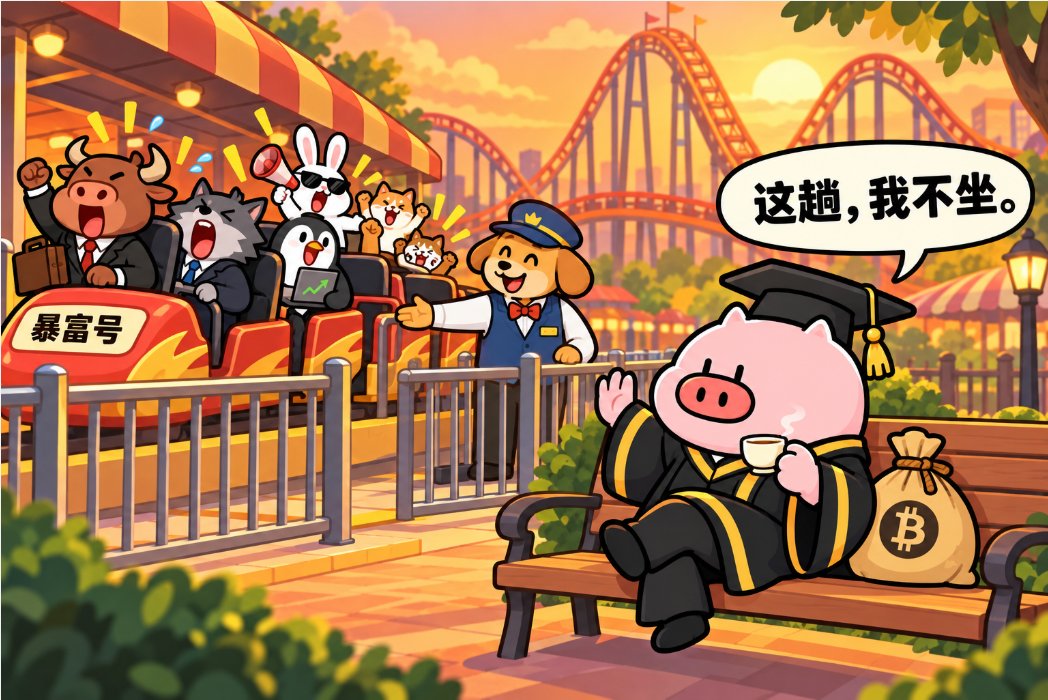
你有时候可以慢一点。有一个经典的韭菜三问叫做:“现在买啥?要割肉吗?还能追吗?”说到底,是散户在被市场传达的情绪掌控,完全没有自己的理性判断。
散户总是火急火燎的想翻身,认为眼前的机会就是改变他们人生的那一次机会。作为一个每个币圈热点都见证和参与的老玩家,我想告诉你的是:币圈是金融创新最快的地方,只要你不下牌桌,你的认知保持增长,你一定会见到属于你的机会。
慢就是快。
二、币圈赚钱的方式,远远不只有买币:别只做食物链最后的付款者
币圈最成功的一次认知塑造,是让无数普通人相信:进入这个行业,唯一有意义的动作就是拿现金购买代币。
于是医生不再研究医疗场景,设计师不再提供设计,程序员不再开发工具,销售不再利用渠道,懂语言的人不再做本地化,懂社群的人不再组织协作。
每个人都主动放弃过去积累的能力,把自己压缩成同一种人:等待价格拯救自己的人。
这是一件非常可惜的事。
币圈不是只有资产,也是一个由产品、技术、内容、研究、社群、运营、支付、法律、品牌、商务和全球协作组成的行业。
价格只是其中最响亮的一层,不是全部。
一个人如果只能在币价上涨时赚钱,他拥有的不是行业能力,只是大风刮来幻觉。你永远赚不到你认知以外的钱,除非你靠运气,但是你靠运气赚来的钱,往往会靠实力输回去
1. 先看清食物链里所有利润的五个来源
币圈玩法很多,但利润的底层来源并不复杂。
有人赚资产重新定价的钱。前提是未来有人愿意为资产支付更高价格。
有人赚资金和规则不一致的钱。前提是他有更好的工具、速度、资本和执行力。
有人赚手续费与撮合的钱。前提是他为交易、支付和合作提供便利。
有人赚项目补贴的钱。前提是项目愿意用预算购买用户、数据、传播、测试或早期行为。
还有人赚产品和服务的钱。前提是他真正解决问题,他有足够的真本事,让客户愿意持续付费。
前四种利润更容易受到行情、规则和补贴影响,更接近投机,是创造泡沫。最后一种通常更慢,却更接近一门能够积累的生意,更接近创造价值,是消除泡沫。当然,最后一种也更难。因为无论什么行业,能解决问题的人,能拥有真本事的人,总是最顶尖的0.1%
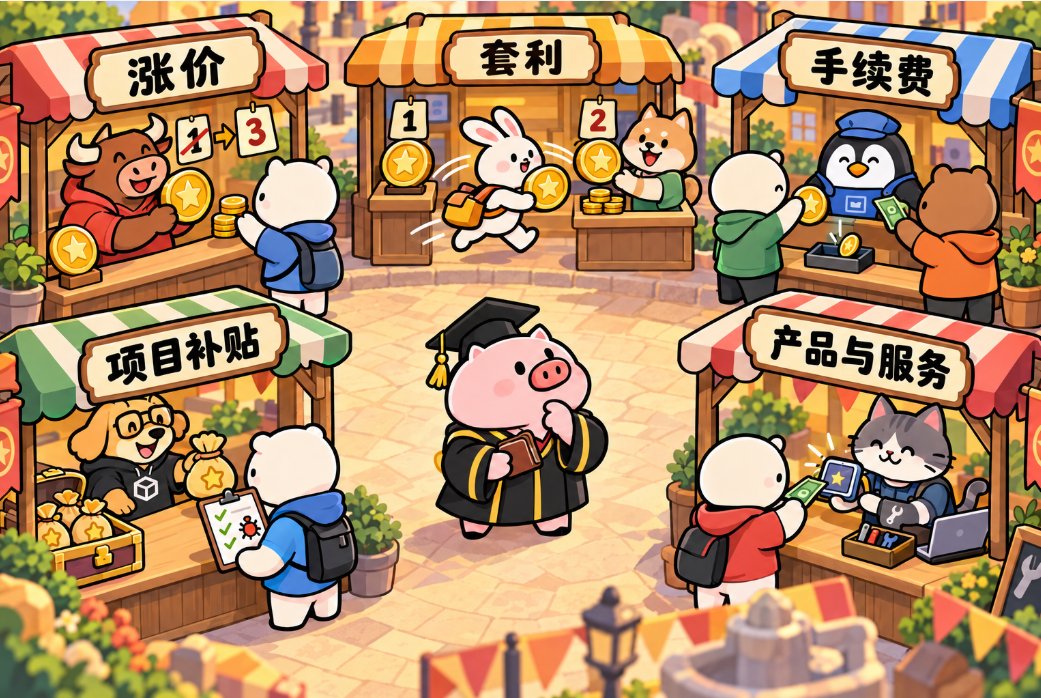
所以,这一轮周期的币圈乱象,很重要的一点就是,交易所和项目方错误的用人,比如高估了KOL的价值。以及很多靠前四种利润赚钱的人,把自己伪装成能够解决问题的人,去欺骗交易所和项目方。
回归正题本身,普通散户不需要否定买币,也不需要假装所有非交易收入都更高尚。
真正重要的是,不要只拥有一种付款者,不要把所有收入都绑定在同一个结果上。
收入来源很多,不等于真正分散;如果它们都依赖同一轮上涨,本质上仍然只有一份收入。
在币圈市场这条食物链里,你不要只有一种生态位!
散户为什么被叫做韭菜,为什么总是在输钱,根本原因就是食物链里生态位的脆弱,他们只是最底层的散户,没有任何其他能力。
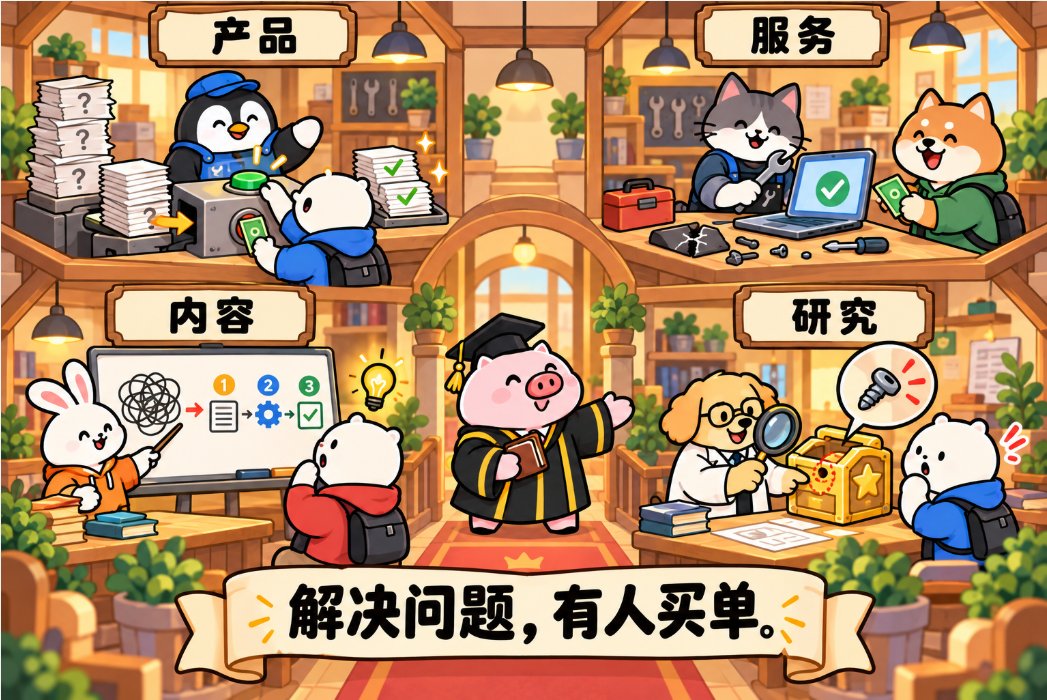
- 第一条路:做产品,赚解决真实问题的钱
钱包、数据工具、安全产品、支付系统、账户管理、社群软件、企业服务,都属于产品。产品的起点是发现一个真实、重复、有人愿意付费的问题。
新用户不知道怎样安全保存资产,项目团队每天整理大量社群反馈,不同链的数据难以统一,普通人无法看懂代币解锁和成本,跨境团队在支付与协作上效率很低。
这些都不是宏大叙事,却可能是真实需求。能够把一个具体问题解决好,比发明一个没有用户的新概念更值钱。
产品可能失败,但产品能力可以留下。代码、用户反馈、行业理解、交付流程和解决问题的记录,都能够进入下一次尝试。
最重要的是,做产品的过程中,会逼迫你去和其他币圈食物链的人产生交集,你会去被迫倾听他们真实的诉求,而不是沉浸在自己的幻想里。你会去了解和思考和你产生交集的人靠什么赚钱,去理解食物链的更高生态位,逐步成为他们。
好生意不是把一个故事卖给最多的人,而是把一个重复出现的问题,解决到有人愿意长期付钱。
3. 第二条路:卖专业服务,赚替别人节省时间和降低错误的钱
技术开发、设计、审计、运营、翻译、财务、法务、内容、视频、品牌、商务、招聘、客户支持,都可以进入币圈的服务链。
服务看起来没有百倍神话刺激,却是很多普通人真正进入行业的第一张门票。
客户愿意付费,通常因为你替他节省时间、降低成本、增加用户、完成交付,或者减少一次他无法承担的错误。
一个熟悉中文市场的人,可以帮助海外团队理解本地用户;一个优秀设计师,可以把复杂产品讲清楚;一个懂社群的人,可以把混乱的群聊整理成产品反馈;一个严谨研究者,可以替客户识别项目风险。
这些收入不需要所有代币都上涨,也不要求下一批人接走你的筹码。
它更接近真正的交易:你交付价值,对方支付资源。
希望下一批人用更高价格买走,是愿望;让一个客户因为你少走弯路而付费,才是一门生意。
恕我直言,在过去的三个大周期里,币圈的高生态位,比如交易所和项目方,需要大量的传统行业的专业服务,为此不惜花费大量的金钱。但遇见的问题往往是带来服务的传统行业从业者,非常的不专业。
他们往往对币圈表示出不屑,不理解,傲慢,鄙视等等情绪,拒绝了解币圈的专业知识,把币圈高生态位者给予的工作机会,当做捞钱的快速路。
币圈在下一轮周期里,这些不专业的传统行业服务者,都需要被淘汰出去。
4. 第三条路:做内容,但不要只做信息搬运
币圈变化快,没带大脑的韭菜多,所以永远需要人给出解释。
但随着信息搬运的门槛越来越低。把英文推文翻译一遍、把项目公告重新排版、每天重复“重大利好”,很难形成长期价值。
真正有用的内容至少完成一件事:替读者节省筛选时间,把复杂事情解释清楚,发现别人忽略的风险,提供可验证的证据,或者持续记录一个领域的真实变化。
内容创作者赚的是注意力和信任的钱。
注意力可以在一夜之间获得,信任只能在长期一致的记录里积累。
如果长期把广告伪装成观点,把持仓需求伪装成研究,把情绪伪装成结论,短期可能变现,未来每一条内容都要为过去透支的信用付款。
流量让人看见你,可信记录才让机会愿意留下来。
在上一轮周期,太多散户放弃思考,以为拥有流量的人就能带他们赚钱,太多KOL为了流量不择手段,交易所重用KOL,所以币圈在这一轮的末期,透支了信用。
玩弄流量者,必遭流量反噬。
5. 第四条路:做研究,赚判断与验证的钱
项目多、信息杂、真假难分,验证事实本身就是价值。
研究不是写一篇看起来很专业的报告,也不是堆满让人看了头疼的术语。
研究要回答真实问题:团队是否存在,产品是否可用,用户是否真实,合作是否得到对方确认,收入进入哪里,补贴停止以后行为是否持续,筹码怎样分配,规则能否被改变。
好的研究不保证永远正确。
它真正减少的是别人犯错的概率,并在判断错误时留下可以复查的过程。
公开修正一次完整的错误,比永远删除错误观点更能建立信用。
在真假难分的行业里,可验证本身就是竞争力,愿意修正本身就是信誉。
6. 第五条路:组织社群,赚降低协作成本的钱
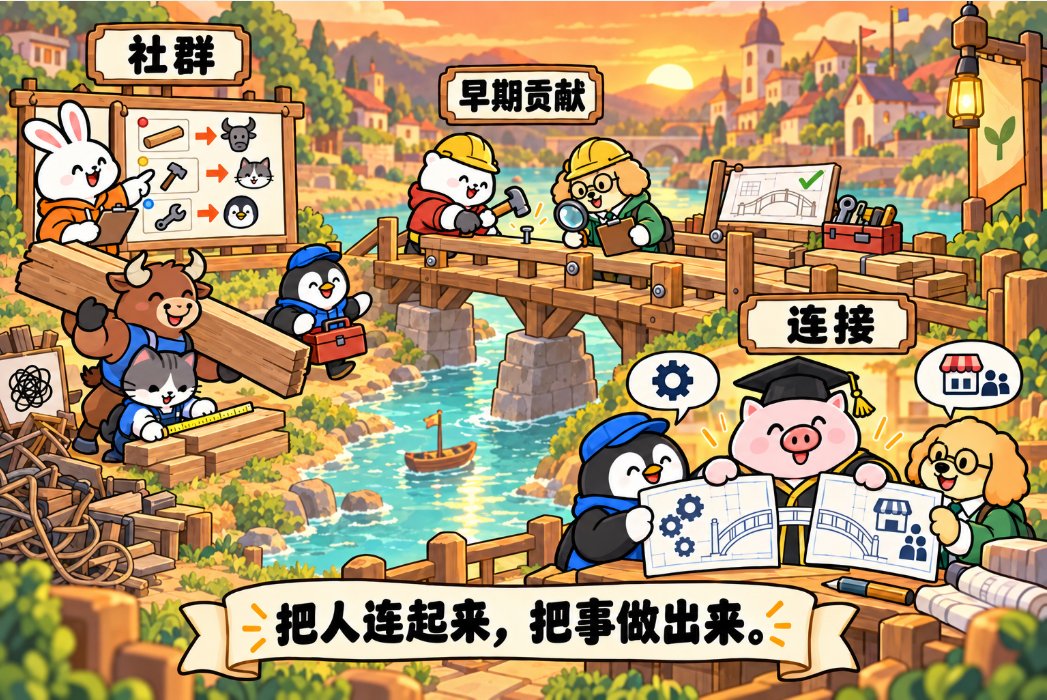
拉一个群很容易,建立一个能够完成事情的社群很难。
真正的社群价值不在人数,而在成员能不能找到合作伙伴,新人能不能快速理解必要知识,项目能不能获得真实反馈,错误信息出现时有没有人核验,有经验的人是否愿意留下来帮助别人。
是这个社群,为什么而建立,并且是否为此提供了价值。
如果一个社群除了转发消息、制造焦虑和互相喊口号,什么都不能完成,十万人和一千人没有本质区别。
社群组织者真正创造的是信任、秩序、匹配和协作。
他让原本互不认识的人能够更低成本地交换信息、能力和机会。
社群人数是流量,协作结果才是社群资产。
过去的这一轮周期,币圈的社群作用被极大降低了,优质社群极速下降。社群,作为币圈的最小组成单位,其实也是最重要的存在。如果你能把社群做好,你赚钱的路径也会非常多。
7. 第六条路:成为早期贡献者,赚建设和不确定性的钱
测试产品、提交反馈、参与治理、建设文档、翻译资料、帮助新用户、参加开发活动,都属于早期贡献。
项目可能通过工资、奖金、积分、代币或者空投奖励这些行为。
但必须分清两种参与。
一种参与真正帮助项目创造价值,奖励只是结算方式。即使最终没有空投,你仍然留下了作品、技能、关系和对行业的理解。
另一种参与只是项目用预算购买数据和热闹,参与者之间比拼谁能以更低成本制造更多账户和数据。规则改变以后,可能只剩下投入成本。
判断早期参与是否值得,不能只估算未来奖励。
最重要的标准是:奖励没有发生时,你是否仍然积累了可以带走的东西。
好的早期参与,让成功产生收入,也让失败留下资产。
在过去的一轮周期里,很多项目方和散户,把早期贡献这件事变成了单一的撸毛,而没有创造真正的价值。所以当流动性不佳,撸毛赛道破灭时,他们在食物链里脆弱的生态位,瞬间就土崩瓦解。
8. 第七条路:连接两个彼此不了解的世界
币圈是全球行业,不同国家、语言、文化、技术与商业体系之间,存在大量连接障碍。
懂技术的人不一定懂用户,海外团队不一定理解中文市场,传统企业想进入链上,却不知道从哪里开始;加密团队想进入现实商业,也可能缺少渠道、合规和交付能力。
能够连接两个世界的人,可以做本地化、商务拓展、企业顾问、支付整合、品牌合作和资源协调。
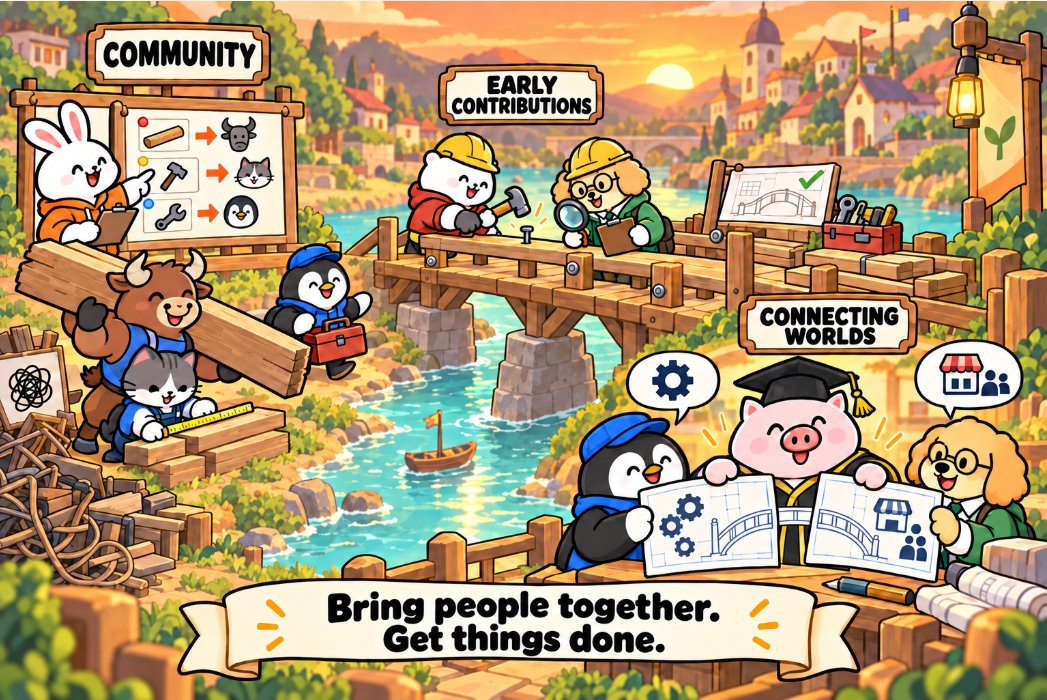
很多普通人的优势恰好藏在交界处。
你不需要在整个币圈比所有人聪明,只需要在两个圈子的交界处,比大多数人更理解双方。比如我有一个优秀的学生,是传统AI行业龙头项目的负责人之一,因为他也懂币圈,所以他能解决这两个圈子很多的难点,自然可以随便赚钱。
普通人的稀缺性,常常不来自单点天赋,而来自两种普通能力的罕见组合。
9. 买币不是错误,把自己只剩下买币才是错误
买币当然可能赚钱,也可能是资产配置和参与行业的一种方式。
但如果一个人进入币圈三年,除了账户余额,没有留下任何作品、能力、客户、信誉、关系和解决问题的记录,那么他的全部收获都依赖市场愿不愿意继续给出更高价格。
项目失败,投入归零;行业转冷,收入消失;规则改变,过去经验失效;热点迁移,又要从头追赶。
这不是复利,而是不断重新购买彩票。
钱不多的人,最不应该做的事情,就是只和别人比本金。
普通人真正应该积累的,是本金暂时买不到的资产:可信记录、长期作品、专业能力、真实关系、客户口碑和解决问题的历史。
当这些东西开始形成,资本才会主动寻找你,而不是你永远追着资本制造的故事奔跑。
当我在群里给学生们说币圈食物链的知识时,我会经常举一个例子:
把你在币圈想象成一场日式RPG游戏。每个食物链里不同的生态位,都是一个职业。比如僧侣是初始职业,战士也是初始职业,当你打怪把这两个职业都升级到20级后,你就自动合成了新职业:圣骑士!
一个1级的圣骑士,就能和2个30级,但是单职业的战士对抗。
比如你会做运营,也会做产品,你通过一两个项目磨炼了自己,你也行就能合成一个新的职业:项目方。
这也是币圈食物链和生态位的一种阐述方式。没有哪个圈子,是可以让你一蹴而就的。
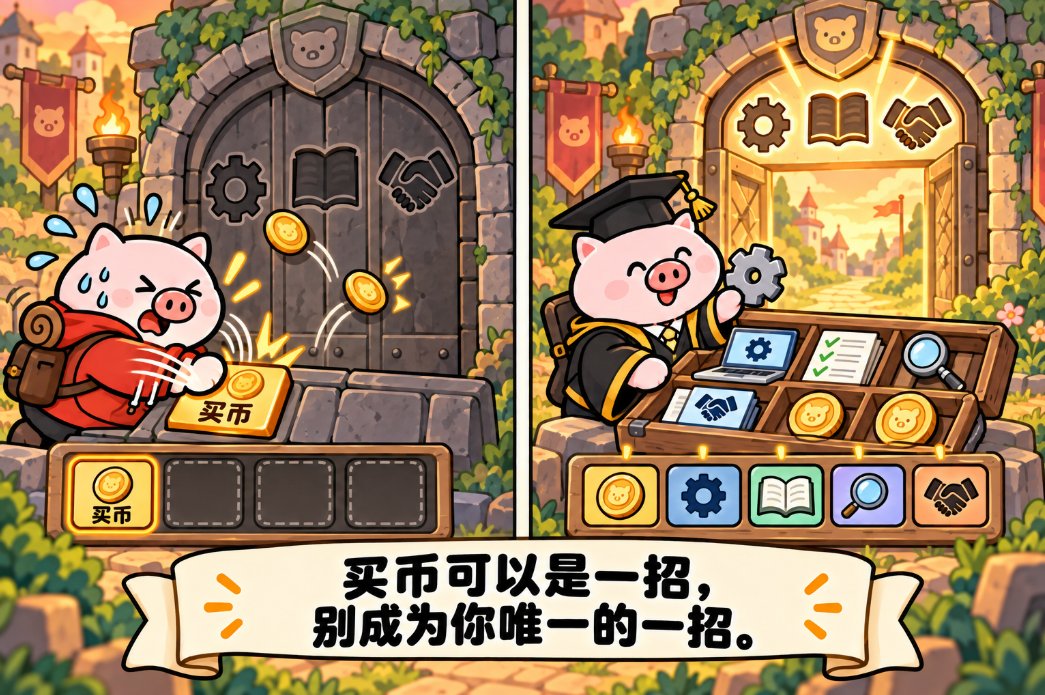
朋友,慢一点吧。慢慢去强化自己的经验值,见识和总结更多的项目,提高自己的认知。让自己在币圈这个食物链里,逐步走到高的生态位。
人类在700万年前还是能够直立行走的南方古猿,240万年前才会使用简单的石器,180万年前才会使用火和工具,才开始走向全世界,13.5万年前才出现现代智人,3万年前完成动物驯化,18世界工业革命开始,人类才征服世界。
人类的进化尚且如此,在充满聪明人的币圈,你更应该缓慢而稳步的进化,走上更高的食物链生态位。
博观而约取,厚积而薄发。慢就是快。
三:好项目、好代币和好机会,是三件不同的事
币圈最常见的一种逻辑错误,是看到项目做得不错,就直接得出代币值得买;看到代币上涨,又反过来证明项目优秀。
这相当于看到一家奶茶店生意很好,就认定它发行的任何“奶茶币”都值得高价持有。
奶茶店有客户、有收入、有品牌,证明的是这家店可能是一门好生意。
但奶茶币是否有价值,取决于它代表什么权利,顾客为什么需要它,店铺收入是否与它产生关系,供应能不能被无限增加,团队和早期持有人拿到了多少。
即使奶茶店很好、奶茶币也设计得不错,如果你在所有乐观预期都已经被计入以后,以极高成本参与,它仍然可能不是你的好机会。
项目解决“事情能不能做成”,代币解决“价值怎样被组织”,机会解决“以你的条件参与是否划算”。
这三个问题必须分别回答。
1. 好项目:它真的解决了一个问题
普通人判断项目,第一件事,先把宏大词汇拿掉。
不要先看它属于AI、DeFi、GameFi、RWA还是下一代互联网。
再看一件最朴素的事:谁,在什么场景下,使用它完成了什么真实行为。
用户越具体,需求越容易验证。
一个项目如果只能说服务“全球用户”和“未来十亿人”,却说不清今天谁在用、为什么用、使用以后得到了什么,它更像一份融资叙事,不像一个正在成立的产品。
真实项目通常能回答几个简单问题:用户是谁、原来的解决方式有什么痛点、用户在产品里持续做什么、没有奖励以后是否还会使用、现有方案是否更便宜更快更方便。
补贴可以帮助冷启动,但补贴买来的行为不能自动等于需求。
地址数、交易量、下载量和社群人数都可以被预算快速放大。
用户数量只能说明有多少人来过,补贴停止以后还剩多少人,才说明产品是否成立。
热闹证明项目会花钱,留存才证明用户愿意留下来。
好项目还必须能够生存。
团队工资、开发、审计、服务器、市场、生态激励都需要资源。一个项目可以依赖融资穿过早期阶段,却不能永远用出售代币代替商业模式。
交易量不是收入,收入不是利润,利润也不自动属于代币持有人。
项目有用户、有收入、有利润,只能证明它可能是一门好生意。
这仍然没有回答代币持有人得到了什么。
2. 好代币:项目创造的价值能够穿过规则,到达持有人
某VC老板在17年说过:代币不是天然的股票。
持有一枚代币,通常不自动意味着拥有公司股权、协议资产、固定分红权和剩余索取权。
代币可以用于支付、治理、质押、抵押、访问服务、手续费折扣,也可以通过回购、销毁和收入分配承接价值。
但“有用途”不等于“有价值捕获”。
一张会员卡可以有很多用途,却不一定会随着公司收入增长而升值。
判断代币,需要看项目价值能否穿过几道门。
项目先要创造价值,用户真的愿意使用。
项目还要捕获价值,能够获得费用、订阅、利差或其他可支配资源。
接着要把价值传导给代币,让代币形成真实而持续的需求,而不是只出现在宣传材料里。
最后,新增需求还要能够覆盖团队、机构、生态奖励和通胀带来的供应。
任何一段断裂,都可能出现“项目越来越好,代币却越来越弱”。
一个产品用户很多,但完全免费,项目没有捕获价值。
一个协议收入很高,但收入全部进入公司,代币只有象征性治理。
一个代币拥有回购故事,但回购金额远低于持续释放的新筹码。
一个生态看起来繁荣,但所有使用都依赖不断增发代币奖励。
价值不会因为项目优秀,就自动穿过空气进入代币。中间每一条规则,都可能把价值留给别人。
3. 同一枚代币,不同人拿到的也不是同一种资产
团队、机构、顾问、做市商、基金会、社区和普通买家,表面上持有同一个交易符号,实际拥有完全不同的经济条件。
团队可能用劳动换取筹码,现金成本很低;机构可能在低估值进入,同时拥有条款、信息和退出安排;顾问可能获得原始份额;做市商持有的可能是借币库存;空投参与者现金成本接近零;普通买家往往拥有最高的现金成本、最少的信息和最弱的议价能力。
他们都可以说长期看好,但“长期”对每个人的含义不同。
低成本的人下跌很久仍然有利润,高成本的人一次正常波动就可能伤害账户。
团队可以等待产品兑现,基金可能必须在期限内退出,国库可能需要出售代币支付运营,普通持有人却经常把别人需要退出的资产理解成自己应该坚定接住的信仰。
不要先判断一个参与者是好人还是坏人。
先看他的成本、权利、义务、时间和退出方式。
人设会变化,利益结构通常更诚实。
4. 好机会:好东西也必须配上合适的价格、条件与角色
好机会不是对项目发一张永久奖状。
它只描述一件具体事情:在某个时间,以某种身份、某种成本和某种风险参与,预期是否值得。
一个好项目,可能对应一个没有价值捕获的代币。
一个好代币,可能因为估值过高、供应持续增加、早期筹码成本太低,而暂时不是好机会。
一个项目和代币都不错,也可能不适合你的时间、资金、专业和社会身份。
反过来,一个项目的代币未必值得长期持有,你却可能通过提供技术、研究、内容和本地化服务获得收入;一个空投奖励未必值得投入大量资金,却可能值得用少量时间测试产品并积累经验。
同一个项目可以提供多种参与方式,最差的一种往往是:你没有任何优势,却承担了全部价格风险。
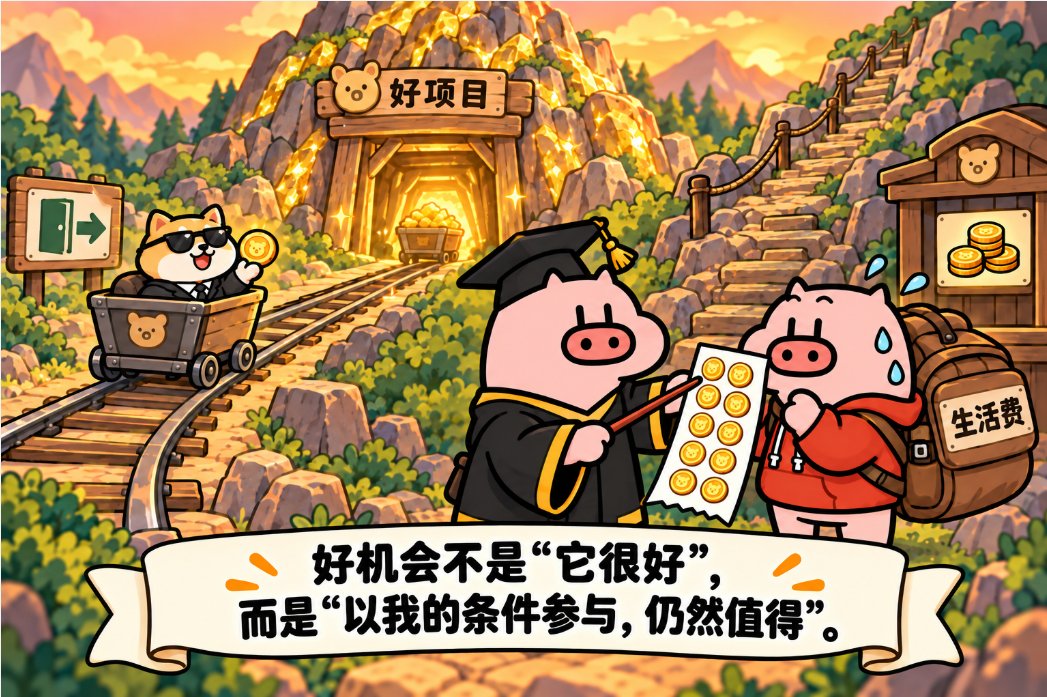
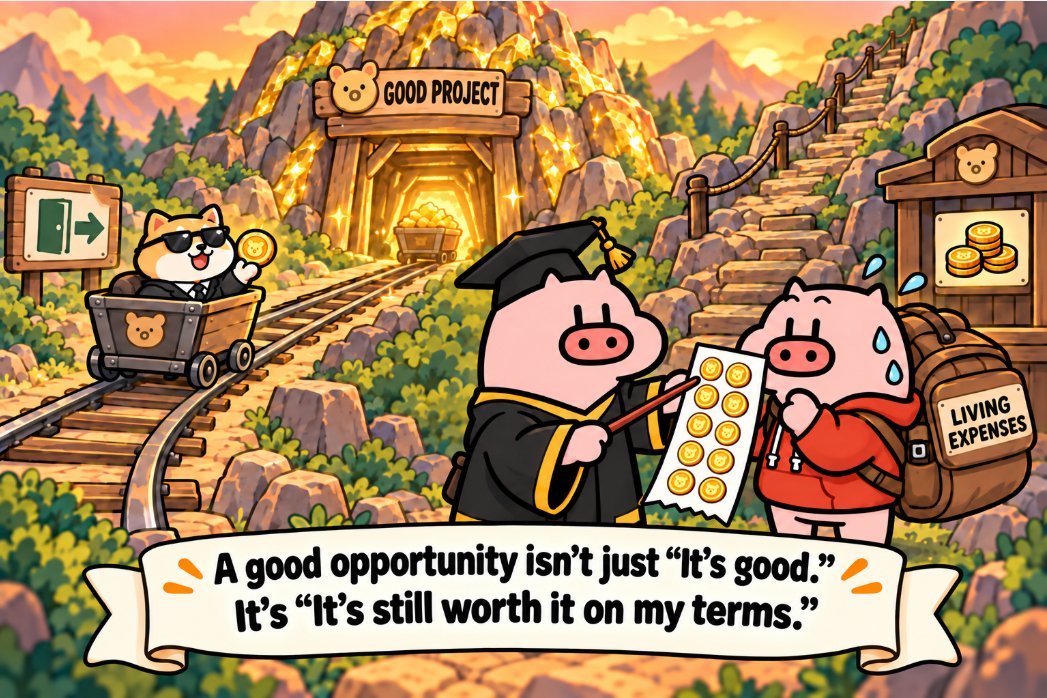
好机会不是“它很好”,而是“它以我的条件参与,仍然值得”。
5. 普通人看项目,先保留十二个常识
1. 没有代币奖励以后仍然有人使用,需求才更接近真实。
2. 项目收入增长,不代表代币持有人自动分享收入。
3. 代币有功能,不代表它能够形成持续净需求。
4. 单价低不代表便宜,流通量小也不代表上涨空间大。
5. 未来释放的筹码,最终需要未来真实需求承接。
6. 团队、机构、顾问、平台、KOL和社区成员的利润来源不同。
7. 融资能力可以延长项目寿命,不能替代真实商业模式。
8. 国库里大量自己的代币,不等于拥有同等金额的可用现金。
9. 回购、销毁、质押都要追溯资金来源和新增供应。
10. 社区不允许质疑时,信息质量通常正在恶化。
11. 一个项目值得使用、值得工作和值得购买代币,是三种不同结论。
12. 回答不清楚的项目未必是坏项目,但一定超出了你当前能够承担的认知范围。
这十二条常识不能保证抓住所有机会,却能够避开许多本来不应该承担的风险。
散户最宝贵的权利,不是比项目方更早知道答案。
而是没有人能够强迫你为一个自己不理解的故事付款。
四,普通人真正需要建立的,是个人盈利系统
看到这里,很多人仍然会寻找一个更直接的答案:下一步究竟应该做什么。
答案不是再找一个币,也不是再收藏一套方法。
普通人真正需要建立的,是一套属于自己的盈利系统。
这里的“盈利系统”不是二级交易领域里的交易系统,更不是几个指标。
它是一套个人经营方式:你决定自己站在食物链的什么位置,主要赚哪一种钱,向谁提供什么价值,愿意投入多少时间和资本,什么事情绝不做,怎样验证自己,怎样保留现金流,以及失败以后留下什么。
真正的盈利系统,不是教你每一次都赢,而是让你不需要用一次押中证明自己的人生。
1.给自己的利润命名
系统的起点不是收益目标,而是利润来源。
每一种钱都有不同的付款者、能力要求、时间结构和失败方式。
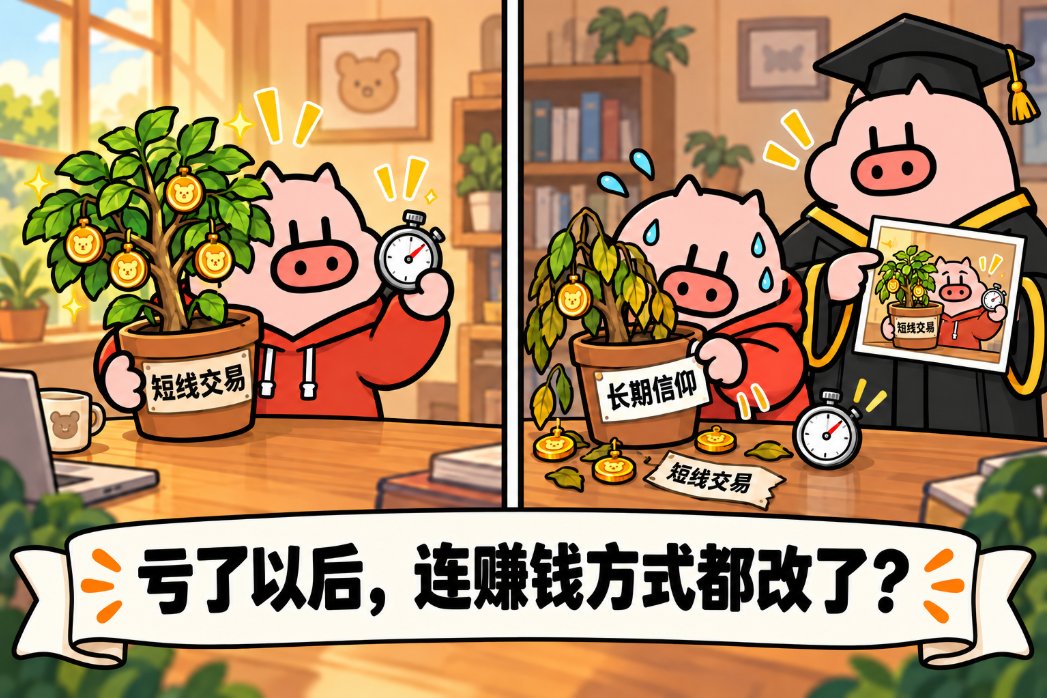
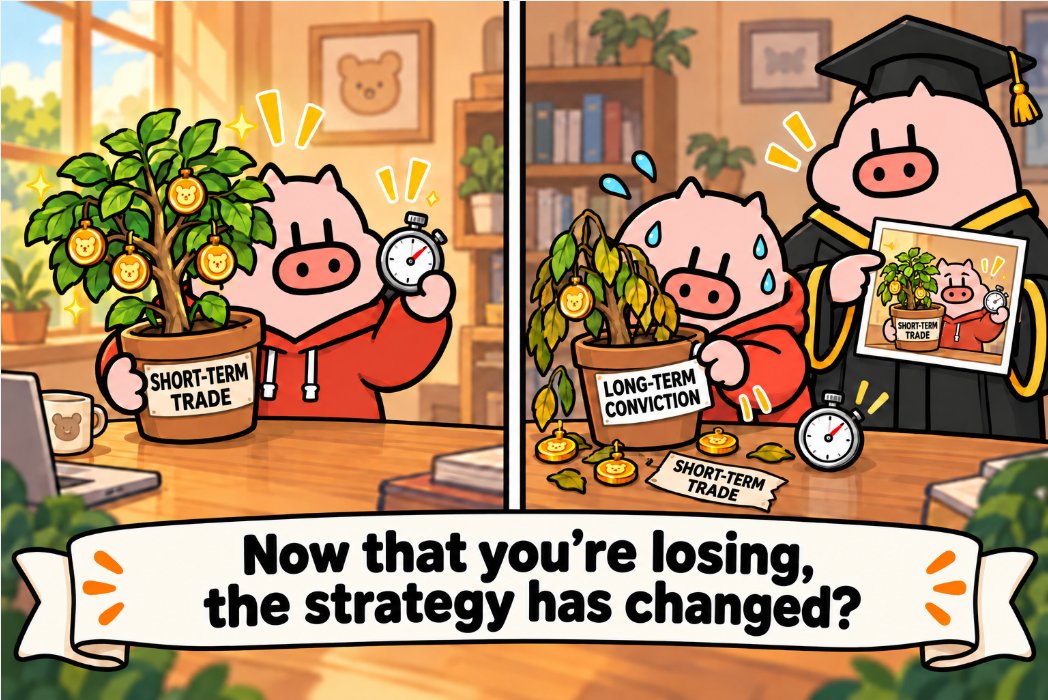
如果入场时说自己赚短期价格的钱,失败以后突然改成长期信仰,这不是策略调整,而是逃避结算。
如果一份工作用代币支付,就必须区分工资、风险补偿和对未来的期待。
如果一项空投依赖项目预算,就不能把阶段性补贴幻想成你的永久收入。
如果一篇内容主要依赖广告收入,就不能把商业需求伪装成完全中立的判断,不要自欺欺人。
先给利润命名,才能给风险命名。说不清赚哪一种钱,就只会在结果出现以后给自己编解释。
2.只选择一个主要赚钱位置
普通人最容易产生一种错觉:机会越多,赚钱概率越高。
于是今天做内容,明天研究空投,后天想开发工具,看到朋友做社区又立刻建群。每件事都碰一下,每件事都没有形成积累。
真正的优势来自重复。
选择研究,就持续研究同一个领域,建立固定信息源、验证方法和公开记录,比如专注研究某一公链生态。
选择内容,就长期服务一类读者,形成能够被识别的主题与表达,比如我的推特号。
选择产品,就围绕一个具体问题反复迭代,不跟着每周热点更换方向,比如gmgn。
选择服务,就积累交付流程、案例、客户口碑和复购,大多数币圈的AGENCY都没有做好。
选择社区,就先让少量成员完成真实协作,而不是追求群人数。
一个人当然可以拥有多项能力,但在一个食物链生态位里,最好只有一到两条的主要赚钱方式。
顺便一提,人的精力都是有限的。没有人可以同时当VC,当MM,当项目方的同时还能天天在推特上输出内容,现实里还花天酒地,这样的人只可能是骗子。
什么都做的人,看起来拥有很多机会,实际上没有一项能力完成了复利。
3.把成长变成别人看得见的证据
币圈从来不缺自称懂行的人。
真正稀缺的是能够留下证据的人。
你说自己懂项目研究,就持续发布可以复查的判断;你说自己懂社区,就留下把混乱社区运营好的记录……我不想打排比句了,好累。
证据不一定是漂亮的成功案例,一次完整的失败复盘同样能够建立信任。它说明你当时为什么判断,后来什么事实改变,下一次准备怎样调整。
记录你的能力成长,能非常有效的给币圈的大佬们展现你的能力,这才是真正最重要的简历。太多的币圈HR只招收名校毕业的人,而不注重币圈本身的能力了。
慢一点,一切的能力都需要积累和学习,也需要正确的记录和展现。
币圈最重要的能力,一个是赚钱能力,一个是发现问题和解决问题的能力。这两者互有交叉。
在一个人人都能表达观点的时代,能够留下可验证结果的人,才真正拥有位置。
4.建立稳定现金流,不要让梦想天天缺氧
很多人进入币圈以后,把所有收入都变成代币,把所有工作都押在一个生态,把所有关系都绑定在同一批项目上。
表面上,他有工资、有奖励、有投资,收入来源很多。
实际上这么做风险非常大,这些收入会在同一个行业的熊市或者低谷里一起缩水。
项目预算下降,工资受影响。同时,代币下跌,奖励失去价值,代币下跌后市场遇冷,客户进一步削减支出。如果你被套出幻觉,你甚至会加仓,导致投资亏损,个人又缺少现金。我在币圈的第一个牛熊,就是遇见了这样的情况。
数量很多,不代表真正分散。
对普通人来说,稳定现金流最大的意义不仅是支付生活,更是给判断留下耐心。在我漫长的币圈生涯中,有几次最痛苦的事情,其中之一,就是我明明知道BTC要涨了,却因为在2020的DEFI之夏来临前,没有现金付房租而被迫出售BTC。我希望大家,永远不要体会到这种感觉。
当你不需要通过下一个机会支付房租,就不会在每一次热闹里寻找救命稻草。当你能够拒绝不透明的合作,别人也更愿意尊重你的边界。
现金流不是梦想的对立面,而是梦想能够活得足够久的氧气。
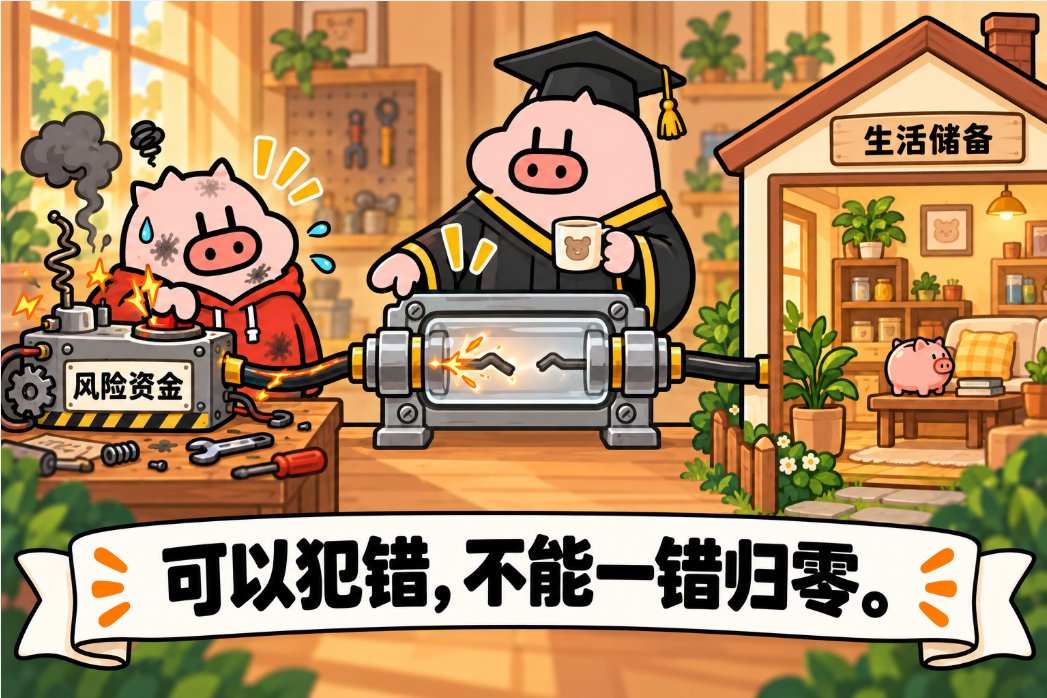
你必须系统的保护生活费、家庭储备、真正的救急资金和重新开始的资本。
任何要求你把这些东西一起押进去的机会,都不是在奖励勇气,而是在制造和利用你的焦虑。
5.给每一次参与项目或社群时你的身份
同一个项目里,你可以是用户、贡献者、员工、服务商、社区成员或者代币持有人。
每一种身份对应不同的权利、义务和收益来源。
最危险的状态,是所有身份混在一起。
因为喜欢产品,就替项目免费工作;因为替项目工作,就认为必须相信代币;因为公开看好代币,就无法承认项目问题;因为已经投入大量时间,又继续投入更多资金……不要笑,很多在项目方从业的年轻人就是这样翻车的。
最后,工作、投资、身份和自尊被绑成一个死结。他们不知道自己犯了什么错,也对项目的破灭不理解,最后遗憾的离开币圈。
参与任何项目以前,写清楚五句话:我现在是什么身份?我准备投入什么?对方承诺给我什么?这项回报由谁支付?合作在什么条件下结束。
角色写得越清楚,情绪越难临时篡改合同。
喜欢一个项目,不等于应该为它免费工作;替一个项目工作,也不等于应该把全部工资重新买回它的代币。
6.不用意志力管理风险,用结构管理人性
人在冷静时都相信自己足够理性。
真正的问题是,当别人连续赚钱、群里都在庆祝、你开始害怕错过时,未来的你会做什么。币圈最不缺的,就是焦虑和压力,而意志力在面对这两者时,往往最不可靠。
所以系统要提前设置摩擦。
生活资金与高风险资金要分开。任何临时增加投入都必须经过冷静时间。深夜、酒后、严重缺觉和家庭冲突后不做重大决定。无法向圈外家人解释清楚的投入,不使用影响生活的钱。连续出现计划外错误时,自动暂停新的风险。
这些规则不是软弱,而是在保护那个会疲惫、会冲动、会自我欺骗的自己。
这其实和做交易是异曲同工的,币圈本身就是一个高风险的地方,你在币圈一定要有自己的风控体系。
在做交易时,我们常常听见一句话:别人恐慌我贪婪,别人贪婪我恐慌。
这其实是一句废话。
因为你是不可能控制你的情绪的。诸如某些KOL说要靠吃雌激素来压制情绪的做法,全都是愚蠢至极的行为。你就是再冷静,面对你所有的钱上了一百倍杠杆满仓被套,即将爆仓,你也得发疯。
在二级交易里,你必须用一个精妙的系统去控制自己的仓位,让自己不直面情绪和风险。在整个的币圈生涯里,你也需要为自己的人生设置这一套系统。
成熟不是永远没有冲动,成熟是让冲动很难一次摧毁多年积累。
高级风控不是保证自己永远不犯错,而是提前取消错误摧毁一切的权限。
7.用九十天完成第一次价值交换
系统不需要从一个宏大计划开始。
普通人可以先用九十天,完成一次从旁观者到参与者的转变。
第一个三十天,只做选择。
列出自己的职业技能、语言、行业经验、每周可投入时间和愿意长期研究的方向。选择一个足够窄的交叉点,要细,要下沉,不要粗糙!
不写“研究Web3”,而是写“持续研究中文用户使用某类钱包遇到的问题”;不写“做币圈内容”,而是写“每周替普通用户拆解一个项目究竟怎样赚钱”。要逼迫自己去思考,思考你在币圈的经历,在这个过程中你遇见的可能产生需求的地方,所以要细!
这三十天不急着收费,也不急着发行任何东西。去阅读、使用、访谈和记录,找到至少二十个重复出现的真实问题。
第二个三十天,开始连续交付。
做内容,就发布四到八篇完整作品;做产品,就完成最小版本让真实用户试用;做社区,就让二十个人完成一次真实协作。
这一阶段最重要的不是数据漂亮,而是形成交付记录。
很多人永远停在学习,因为学习不会受到评价。只有开始交付,别人才能告诉你什么没用、哪里听不懂、什么真正值得付费。
第三个三十天,完成第一笔价值交换。
它可以是一份研究委托、一次咨询、一项设计工作、一个工具订阅、一场培训、一笔本地化合作,也可以是进入一个项目担任真正的贡献者。
第一笔收入的金额未必重要。它最重要的意义,是市场第一次用真实资源证明:你的能力不只存在于自我想象里。
完成以后复盘五件事:1是对方为什么找到你。2是他真正购买的是什么。3是哪部分交付最有价值。4是哪些步骤可以重复。5是下一次怎样降低成本并提高质量。
九十天不会让普通人一夜暴富。
但它能够完成一件比押中一个热点更重要的事情:证明你不只会向这个行业投入本金,也能够向这个行业出售价值。
币圈最好的一点是垂直,只要你有价值,老板们就会注意到你。只要你有价值,你就能用币圈这个杠杆,撬动更大的价值。
你们不会真以为“金融是最好的行业,而币圈是最好的金融业”这句话是开玩笑吧?
从未有一个行业如此垂直,从未有一个行业如此多机会,从未有一个行业孕育了如此多的暴富案例。
也从未有一个行业,能让我们这些普通人,在短短10年内学到这么多底层知识。
币圈的从业者们,骄傲的抬起你的头来!
8盈利系统的终点,是让自己不再站在最后一棒
市场永远会出现新的项目、新的故事和新的暴富样本。
普通人当然可能通过一个资产获得巨大财富。
但如果全部人生只能依赖一次押中,得到的不是系统,只是一张彩票。
真正的翻身,是即使没有押中那一次,你仍然能依靠能力继续获得机会。即使一个项目失败,你还有现金流和作品。即使行业进入低谷,你的家庭和生活没有一起被拖走。即使曾经犯错,你还保留本金、信誉与勇气重新开始。 我给了我每一个学生一件纪念品,那是《头号玩家》里主角被馆长赠与的复活金币,背面只有短短的两个词:“EXTRA LIFE”。
我不喜欢“复利”这个词,因为总是有太多骗子,拿巴菲特和这个词,去忽悠散户。我更喜欢说慢就是快,慢就是快不是每一轮都赢得最多。
慢就是快是很多轮以后,你仍然有本金、有判断力、有可信记录,也有下一次参与的资格。
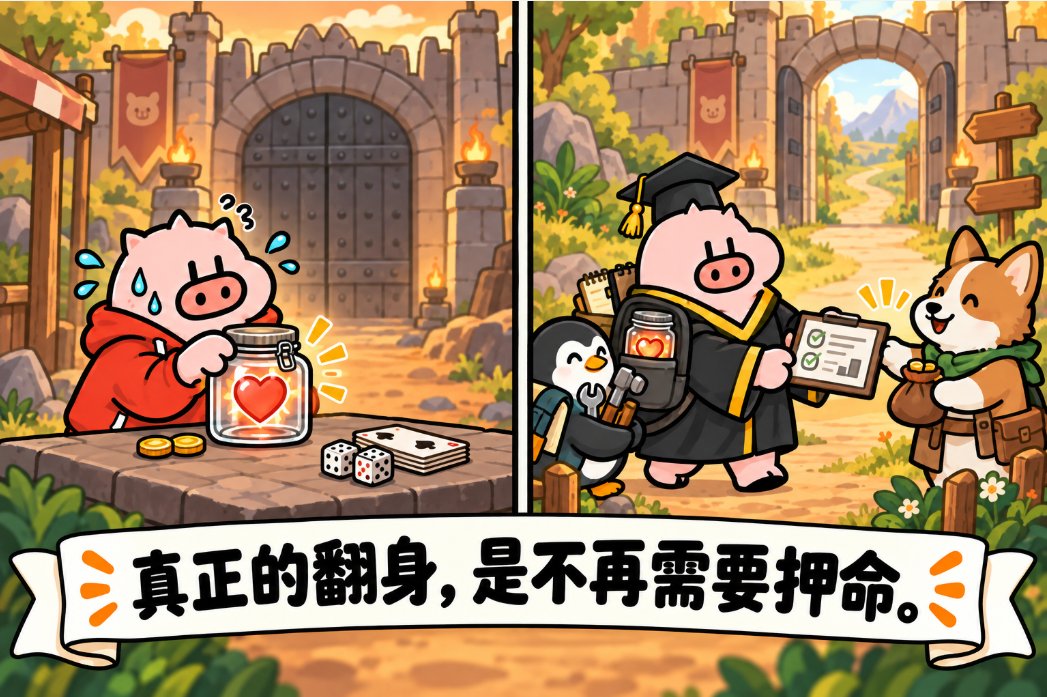
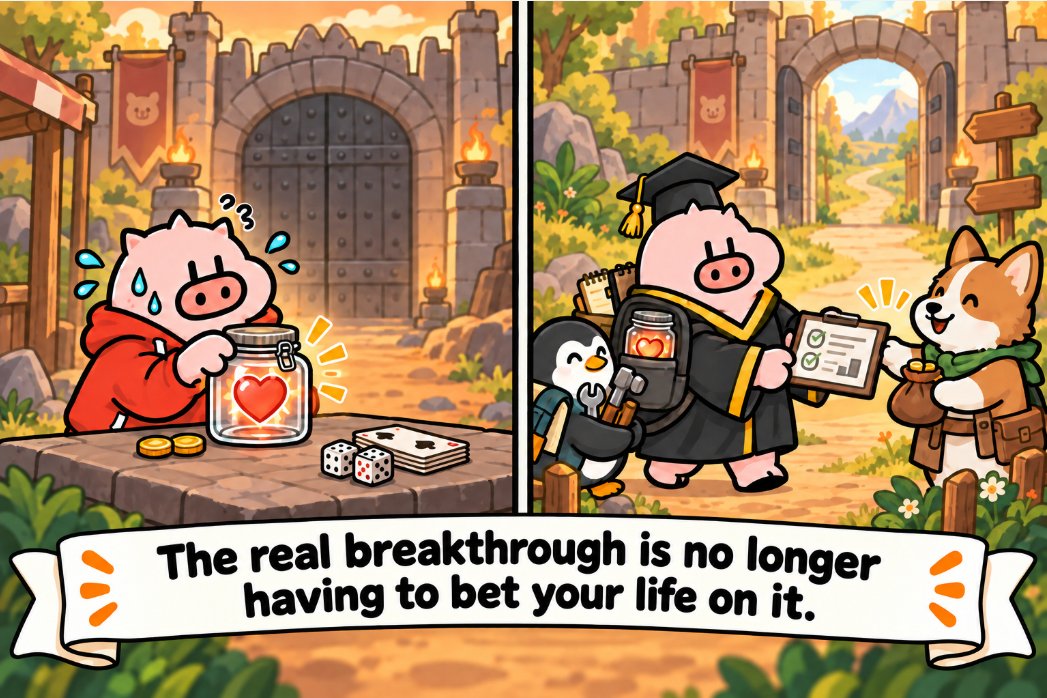
普通人真正的翻身,不是一次把命押对,而是逐渐让自己不再需要押命。
写在最后
币圈是一条食物链,每个人都有不同的生态位。
这句话不是为了让你恐惧市场,也不是为了把每一个人都想成敌人。
它只是提醒你:任何利润都有来源,任何观点都有位置,任何奖励都有付款者,任何故事最终都要有人承担结果。
当你只会购买代币,你常常站在食物链最末端,依赖后来者为你的判断付款。
当你开始做产品、做服务、做研究、做内容、做社区、做贡献和连接,你就在改变自己的经济位置。
当你能把项目、代币和机会分开,你就不会再用项目的理想替代代币的权利,也不会用代币的热度替代自己的参与条件。
当你建立个人盈利系统,你就不再要求一个热点同时解决收入、尊严、家庭和人生方向。
如果读完这篇文章,只需要记住十句话,我希望是下面这十句。
-
1. 币圈不是所有人围着同一个梦想努力,而是不同角色围着同一笔资金,使用不同方式赚钱。
-
2. 先拆一个人的赚钱路径,再听他的观点;先看他的退出路径,再听他的故事。
-
3. 食物链真正残酷的地方,不是上游永远赢,而是同一场失败,对不同参与者意味着不同代价。
-
4. 市场最残酷的奖励,是让一个错误的方法先赚到钱。
-
5. 仓位太重的人,没有观点,只有愿望。
-
6. 一个人如果只能在币价上涨时赚钱,他拥有的不是行业能力,只是行情许可。
-
7. 项目解决事情能不能做成,代币解决价值怎样被组织,机会解决以你的条件参与是否划算。
-
8.好机会不是“它很好”,而是“它以我的条件参与,仍然值得”。
-
9.普通人真正的翻身,不是一次把命押对,而是逐渐让自己不再需要押命。
-
10. 慢就是快。
如果你足够细心,你会发现,第四点我没有写到。那是因为本来这篇文章,是有五个段落的,其中之一是“散户到底在亏什么钱”。最后我删除了这一章,避免文章过长的同时,另一个原因是我以前写过的一句话:
“散户其实看过了太多KOL给他讲各种成功学,有本事的早就不做散户了,能脱离散户的只需要给点动力或者点一些关键,拽他一手就行。
*大多数人,一辈子就只适合当一个散户。不要成为韭菜就已经是他们最好的结局。 对他们而言,投资的本质,就是:
*** 韭菜,选一把镰刀。”
不要因为自己只是普通人,就相信唯一的出路是赌中一次。
朋友,慢一点吧。
整个币圈,都在和你说暴富!都在和你说百倍千倍!都在和你说合约杠杆!但是没有人会告诉你风险。
我从17年就在这个行业摸爬滚打了,在最深熊的2018和19年,几乎所有人都觉得这个行业已经彻底完蛋了的时候,行业孕育出了BTC新的上涨、伟大的DEX和DEFI之夏。我看过太多“牛逼交易员”、“天王级项目”和“行业闪耀天才”的崛起和陨落。
我最难熬的一个坎是519。
你们以为我519爆仓了吗?不,我519赚了很多。而且好几位大老板跟着我赚了个盆满钵满。那天晚上我躺在床上控制不住的想:如果我的本金再多一点,如果我去找那几位老板借一点钱,我今天就会直接财富自由。
我所有的理性都告诉我这是错的,但我就是控制不住这种念头。这种念头如同跗骨之蛆折磨了我整整一个月。跨过这个坎后,慢就是快四个字彻底融入了我的人生。
在币圈这个鼓吹暴富的地方,想要坚持长期主义,就必须不断告诉自己:机会一直会出现的。
每次错过一个“我本可以抓住”的机会,感性上都会很失望的对自己说“下次不会有这样好的机会了”,这就是短视,是情绪上头。
当你开始接受现实,看见不断出现的机会,你就会专注于提高自己的能力,提升自己在币圈食物链里的生态位。
你要静下心,选择性的放弃眼前诱人的机会,去做正确的事情提升自己,才能在未来更好的把握新的机会。这就是慢就是快。
这个过程是反人性的。
慢就是快,也是你能否在币圈真正把钱留下来的关键因素。
慢就是快,也是投机和投资的重要区别。
属于普通人的慢就是快,从来不是每天找到一个新机会。
而是每天让自己多一点不可替代。
等到下一轮浪潮到来时,希望你不再站在人群最后,拿着积蓄等待别人告诉你应该相信什么。
希望你已经拥有作品、能力、现金流、可信记录和真正的合作伙伴。
希望你不仅能够看见机会,也已经成为机会的一部分。
最后,再问自己一遍:
如果明天所有代币都停止上涨,这个行业里,还有谁愿意长期为我付钱?
能够回答这个问题,才是一个普通人真正开始拥有盈利系统的时刻。
朋友,慢就是快。

本文只讨论行业认知、职业选择与个人成长,不构成任何投资建议。
我是永远的真实,在你从此岸到彼岸的航程中,必将一而再,再而三的遇到我。——泰戈尔《礼物集》 ZTZZ,2026/09/22
-------------------------------
Slow Is Fast——A Survival Guide to Crypto
I first learned about Bitcoin in 2010. I entered the crypto industry in 2017 and have never left. I was among the earliest participants in the BSC ecosystem and Alpha in 2024, became deeply involved in building on Solana and in the meme-coin market, and was the first person to develop a narrative for ORDI and Bitcoin inscriptions. Before that, I took part in GameFi, NFTs, DeFi, FOMO3D, public chains, and ICOs in many different roles.
Let me begin with a scene you will know all too well.
It is two in the morning, and a group chat suddenly comes alive. Someone posts a screenshot of a 10x return. Someone announces that a project is approaching a "historic moment." Someone says institutions are already buying. Someone else calls it the last chance for ordinary people to change their lives.
On the other side of the screen, you, still new to crypto, start to feel restless. You meant only to watch, then FOMO convinced you that staying out meant missing the trade. You planned to put in a little, then sized up after watching people in the group make money. You told yourself it was a short-term trade. Once the price fell, however, you began researching the project's value over the next ten years.
Several months later, the project has closed its funding round. The exchange has collected trading fees. The market maker has managed its inventory. Early investors have found an exit window. Content creators have gained reach, and promoters have collected partnership fees.
Only you remain in the group, asking the same question again and again: "Does this project still have a future?"
Many people see only a failed investment. In fact, it is a map of how incentives and profits were distributed.
Everyone joined the same project, but they were never in the same business. Some made money from issuance, financing, fees, services, promotion, or low-cost allocations. The last buyer had only one path to profit: hope that someone else would later take the tokens at a higher price.
Crypto is not a group of people working toward the same dream. It is a group of people competing around the same pool of capital, with completely different ways to get paid.
Retail traders lose repeatedly for reasons deeper than bad judgment or bad luck. From day one, many never work out where they stand, how everyone else gets paid, or whose money must fund their own profit.
You mistake the founder's business for your investment. You turn an institution's low-cost allocation into your long-term conviction. You treat a KOL's sponsored post as research and a temporary rally as proof of permanent skill.
You stand at the bottom of the food chain while imagining that you make the rules.
I have watched too many geniuses and fashionable projects rise and fall. Give me an hour. I will use what experience has taught me to explain how money moves through crypto, how you can earn without becoming someone else's exit liquidity, and why slow is fast.
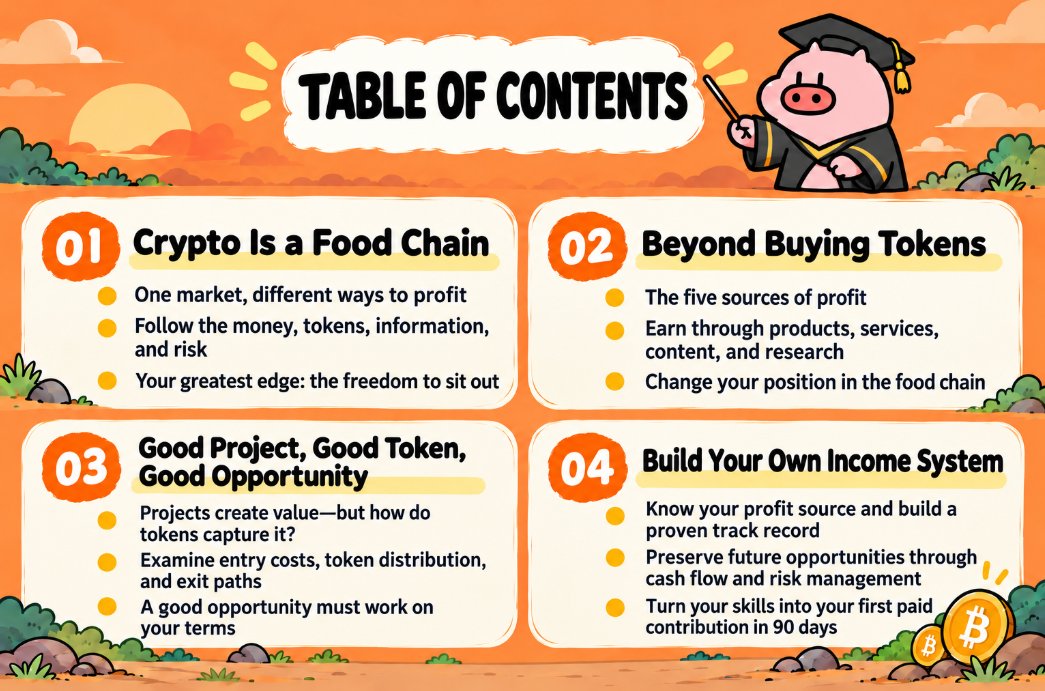
This essay does not discuss market cycles or candlestick charts, and it offers no list of tokens.
It addresses four questions: why crypto is a food chain; why buying tokens is only one of many ways to earn in the industry; why a good project, a good token, and a good opportunity are three different things; and what kind of personal profit system an ordinary person should build.
What determines whether you survive in this market is not how many rallies you call correctly.
It is whether you can stop waiting for others to manufacture opportunities and learn to create, identify, and keep profits yourself.
Part One: The Crypto Market Is a Food Chain
Everyone Sees the Same Chart but Runs a Different Business
Most retail traders see only two kinds of people: those who made money and those who lost it.
That is far too simple.
The important questions are who writes the rules, who owns the supply, who directs attention, who has a path to exit, and who is left holding the risk.
A candlestick chart puts everyone in the same picture while hiding their different economic positions. A project team sees financing, payroll, treasury assets, ecosystem budgets, marketing, and runway. A fund sees entry price, fund life, vesting, paper returns, and exit liquidity. An exchange sees users, volume, fees, asset quality, and reputational risk. Crypto influencers and KOLs see attention, reach, sponsorships, rebates, reputation, and their own bags. The ordinary buyer often sees only a changing price.
The result is extreme asymmetry. Participants closer to the source have several ways to profit. The last buyer is betting on one condition: price must keep going up.
When most people in a market can profit before or while you buy, ask a blunt question: are you turning their paper gains into realized profits?
1.The Food Chain Is About Asymmetry Not a Grand Conspiracy
The phrase "food chain" may suggest that whales design every scam, institutions conspire to dump on retail, and everyone is targeting you. Reality is not that simple.
Teams fail, funds lose money, market makers get liquidated, and exchanges collapse. A better position in the structure does not make anyone infallible, nor does it prove that everyone is colluding.
The food chain describes asymmetry rather than morality.
The first asymmetry concerns rules. Some people decide how a token is issued, how allocations are divided, when they unlock, what incentives apply, and which rules may change. Others can only accept the rules after publication or leave.
The second concerns cost. A team may earn tokens through early work. A fund may enter at a low valuation. Advisers may receive allocations, and promoters may be paid in cash or tokens. Retail usually arrives with real cash after attention has peaked. The ticker is the same; the trade is not.
The third concerns information. Insiders know why the rules were designed, how much runway remains, and how far a partnership has progressed. Everyone else receives announcements, media interpretations, community retellings, and stories filtered through emotion. At every step outward, there may be less fact, more hype, and a higher price.
The fourth concerns exits. Teams can raise capital; funds can realize gains in stages; service providers charge fees; KOLs earn through sponsorships; exchanges collect money on every trade. The ordinary holder may have only one exit: another buyer willing to pay more.
The fifth concerns risk. Some people receive salaries, advertising fees, management fees, or trading fees. Others receive locked tokens. Someone else puts family savings behind the full volatility of the price.
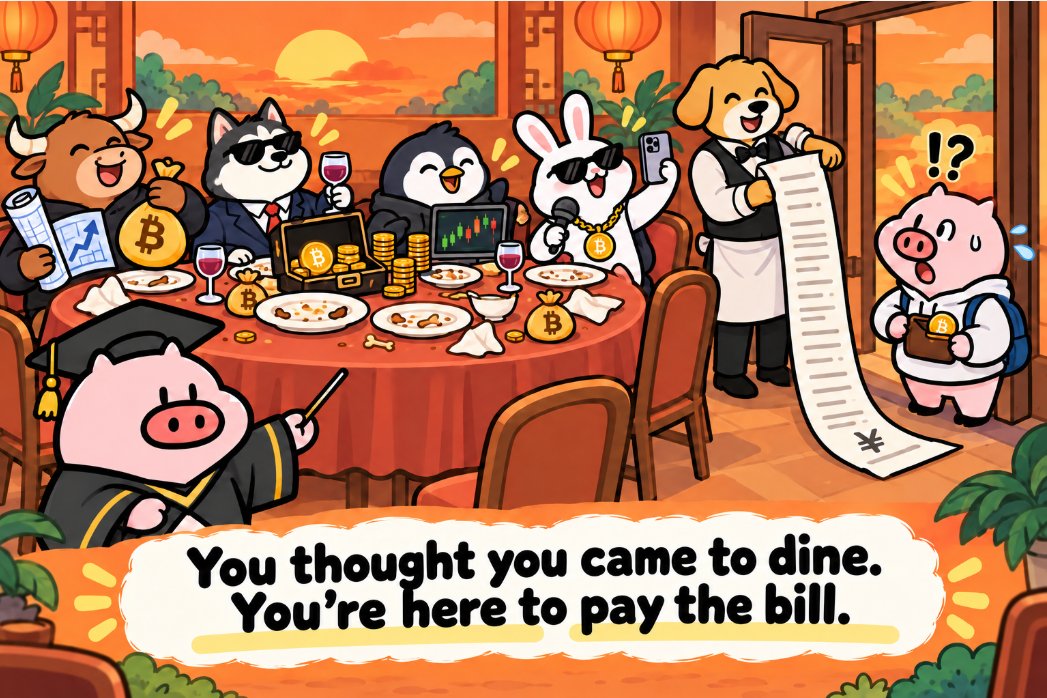
When a project fails, they do not lose the same thing.
The cruelty of the food chain is not that upstream always wins. It is that the same failure carries radically different costs for different particip ants.
2. Money Is Not the Only Thing Moving Through the Chain
To understand a crypto event, trace at least four flows.
-
Capital: Where did the money enter, whose accounts did it pass through, and where did it remain?
-
Tokens: From whose low-cost allocation did the tokens move, and into whose hands?
-
Information: Who created the facts, who packaged the narrative, and at what price did it finally reach retail?
-
Risk: When the story failed, subsidies ended, or demand declined, who absorbed the loss?
Many projects have beautiful information flows: constant announcements, new partnerships, lively communities, and wall-to-wall coverage. That does not prove a healthy capital flow, nor does it mean risk has disappeared. Successful promotion can help low-cost holders distribute into new demand.
A tightly united community may become hostile to contrary evidence. A project that needs everyone to "believe for the long term" may simply need more time to unlock and exit.
A story may be true and still serve an interest. A team may work hard and still need to sell tokens to cover expenses. A KOL may genuinely believe in a project and still be talking their own book, with an entry price and exit terms unavailable to you.
When I started my company, I wrote a sentence in my notebook after thinking about it for a long time: maturity does not mean treating everyone as a liar. It means no longer pretending that interests do not exist.
A view can be sincere and self-interested at the same time. Understanding the incentive does not invalidate the view; it restores the context the view leaves out.
3. The Same Words May Belong to Five Different Businesses
When a project team says it is bullish for the long term, the product may genuinely need time. The team may also need to protect its valuation, financing prospects, and morale.
A fund may believe in the industry while selling on its own fund horizon and vesting schedule. A market maker can be bullish and still sell today to manage inventory.
A KOL may hold an independent view while also holding tokens, taking sponsorships, receiving advisory allocations, and chasing engagement.
When a retail holder says the same thing, it often means the trade fell below cost and a bad trade has been renamed "long-term conviction."
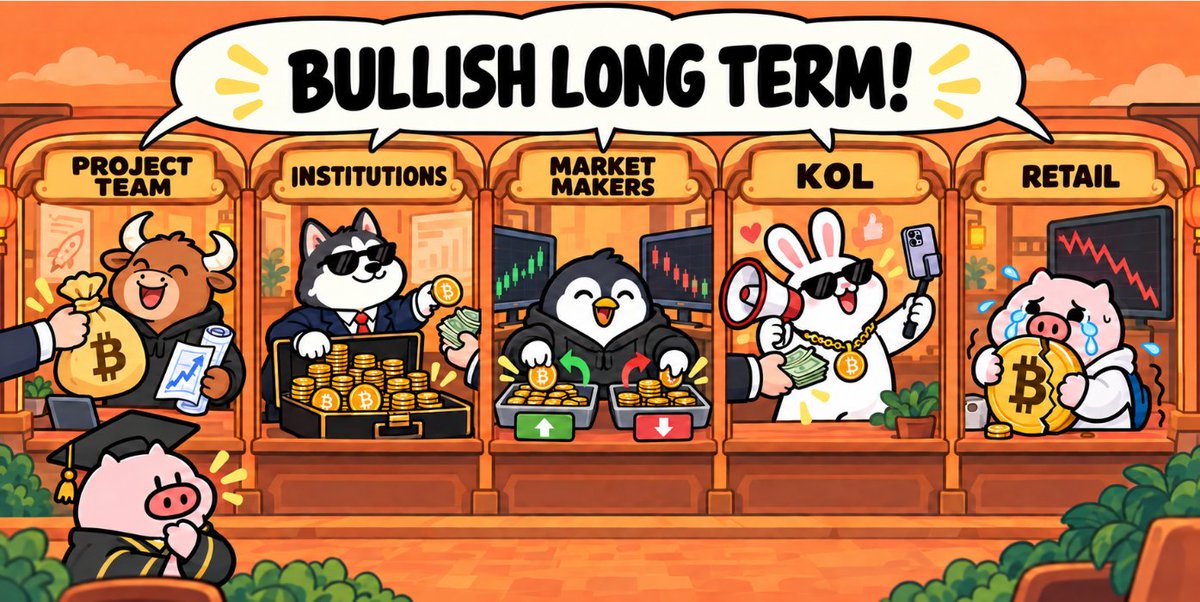
The words are identical; the incentives are not. Before evaluating a market opinion, translate "What are they saying?" into "How do they get paid?"
Someone who earns fees needs trading volume. Someone who earns from financing and valuation needs belief. Someone who earns from sponsorships and reach needs attention. Someone holding a large low-cost allocation needs fresh demand and an orderly exit. A retail buyer who only buys tokens needs price to rise.
The narrowest profit model often produces the loudest performance of long-term conviction.
Understand how someone gets paid before accepting their opinion. Understand how they exit before accepting their story.
4. Retail Has One Great Advantage The Right to Sit Out
Being downstream does not doom retail to failure.
You may lack issuance rights, low-cost allocations, and first-hand information, but you possess a badly underestimated right: no one can force you to take the trade.
Teams must keep operating. Funds must deploy capital. Exchanges need volume. Media companies need content. KOLs must keep posting. Market makers must perform their contracts. You have none of those obligations.
If you do not understand, stay out. If the incentive structure is unclear, wait. If no one can explain who pays, leave. If you are wrong, admit it. If you miss this round, preserve your capital for the next.
Many people voluntarily surrender this advantage.
FOMO takes away their right to wait. An oversized position takes away their right to choose. Publicly shilling a project takes away their right to admit error. Borrowing and leverage take away their time.
The freest person in the market becomes the one least able to leave. As the Chinese rock band Ne Zha sang, "You hate it, yet you cannot leave."
Retail's greatest advantage is not being smarter than institutions. It is the freedom to pass on trades that institutions are paid to make.
Missing one project will not eliminate you from the market.
What eliminates you is treating an ordinary opportunity as the only doorway your life will ever offer and sacrificing every future choice to it.

Retail traders keep asking three questions: "What should I buy now? Should I cut my losses? Is it too late to chase?" Those questions reveal a mind governed by market emotion rather than independent judgment.
People become desperate to reverse their fortunes and imagine that the trade in front of them must be the one that changes their lives. I have witnessed and participated in every major crypto trend. Few industries produce financial innovation this quickly. Stay in the game, keep improving your judgment, and more opportunities will come.
Slow is fast.
Part Two: Buying Tokens Is Not the Only Way to Make Money
Do Not Become Someone Else's Exit Liquidity
One of crypto's most successful acts of conditioning was convincing ordinary people that the only meaningful way to enter the industry was to swap cash for tokens.
Doctors stopped exploring medical applications. Designers stopped offering design. Developers stopped building tools. Salespeople ignored their distribution. Linguists stopped localizing products, and community builders stopped organizing collaboration.
People abandoned skills built over years and reduced themselves to one identity: the buyer waiting for price to save them.
Crypto is not merely an asset class. It is an industry of products, technology, content, research, communities, operations, payments, law, branding, business development, and global collaboration.
Price is simply its loudest layer.
If you can make money only when token prices rise, you do not have an industry edge. You have a bull-market tailwind. Luck can carry you beyond your understanding for a while, but it rarely lets you keep the money.
1.Five Underlying Sources of Profit
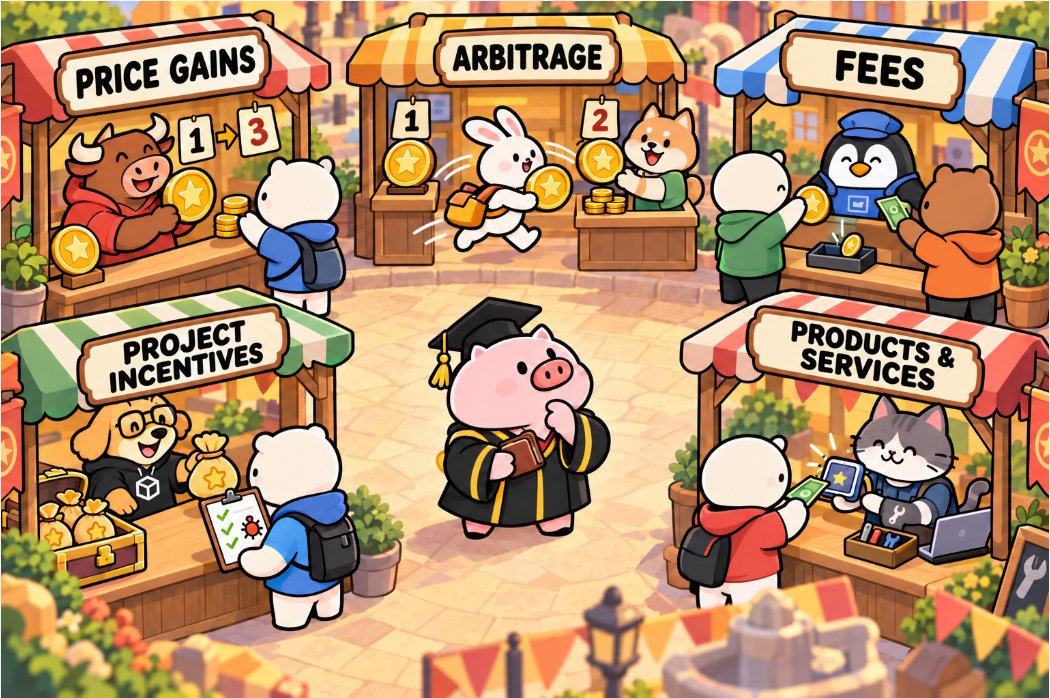
Crypto contains countless tactics, but the underlying sources of profit are straightforward.
Some people earn from asset repricing, which requires a future buyer willing to pay more. Some exploit mismatches in capital, markets, and rules, which requires better tools, speed, capital, and execution.
Some earn fees for facilitating trades, payments, or partnerships.
Some earn subsidies because projects pay for users, data, publicity, testing, or early activity.
Others sell products and services that solve real problems well enough for customers to keep paying.
The first four depend heavily on markets, rules, and subsidies. They sit closer to speculation and can inflate bubbles. The fifth is usually slower, but it can compound into a business by creating durable value. It is also harder. In every industry, people who genuinely solve problems are rare.
One source of disorder in the latest cycle was poor hiring by exchanges and project teams, including an inflated view of KOL reach. Many people who profited from the first four paths also repackaged themselves as problem-solvers and sold that image to exchanges and teams.
Retail need not reject token investing or pretend that every non-trading income is morally superior.
The point is to avoid relying on one payer or tying every income stream to the same market outcome.
Several sources of income do not equal diversification. If all of them depend on the same bull market, economically they are one income stream.
More important, do not occupy only one niche in the crypto food chain.
In Chinese crypto circles, retail traders are often called "chives": they are harvested, grow back, and are harvested again. The metaphor is harsh, but the underlying point is that a buyer with no other way to create value occupies a fragile position.
2.Path One :Build Products
Wallets, data tools, security products, payment systems, account management, community software, and enterprise services are all products. Every product begins with a real, recurring problem that someone will pay to solve.
New users do not know how to secure assets. Teams spend every day sorting community feedback. Data from different chains is difficult to unify. Ordinary users cannot interpret unlock schedules or token costs. Cross-border teams struggle with payments and collaboration.
None of these is a grand narrative, but each may be a real demand. Solving one concrete problem is worth more than minting a new concept with no users.
A product may fail, but product-building capability remains. Code, user feedback, industry knowledge, delivery processes, and a record of solving problems all carry into the next attempt. Building also forces you to meet people in other parts of the food chain, listen to real needs rather than your fantasies, and understand how those people earn. That is how you climb into a stronger niche yourself.
A good business does not sell one story to the greatest number of people. It solves a recurring problem well enough that people keep paying.
3.Path Two :Sell Professional Services
Development, design, audits, operations, translation, finance, law, content, video, branding, business development, recruitment, and customer support all belong in crypto's service economy. Services may lack the excitement of a 100x token, but for many people they are the first real entry into the industry.
Clients pay because you save time, reduce costs, bring users, complete delivery, or prevent a mistake they cannot afford. Someone who understands the Chinese market can help an overseas team understand local users. A strong designer can explain a complicated product. A community specialist can turn chaotic chat into product feedback. A rigorous researcher can identify project risk.
This income does not require every token to rally or a later buyer to take your bags.
Hoping that someone will buy from you at a higher price is a wish. Getting paid because you saved a client from a costly detour is a business.
Over the past three major cycles, exchanges and project teams, participants with real budgets and leverage, spent heavily on traditional professional services.
Too many providers were deeply unprofessional. They treated crypto with contempt, refused to learn the industry's specialist knowledge, and saw every engagement as a quick cash grab.
The next cycle should leave those providers behind.
4.Path Three :Create Content but Do More Than Relay Information
Crypto changes quickly, and many retail participants outsource their thinking, so clear explanation will always be valuable. Yet information relay has become cheap. Translating a tweet, reformatting a project announcement, or repeating "huge catalyst" every day does not create lasting value.
Useful content does at least one thing: saves readers time, explains complexity, identifies overlooked risk, presents verifiable evidence, or records real change over time. Creators earn from attention and trust. Attention can arrive overnight; trust accumulates through a consistent record. If you disguise advertising as opinion, your bags as research, or emotion as analysis, you may monetize today, but every future post must repay the credibility you spent.
Reach gets you noticed. A trustworthy record keeps opportunities coming.
In the previous cycle, too many retail traders stopped thinking and assumed that large accounts could make them rich. Too many KOLs chased engagement by any means, and exchanges rewarded them. By the end of the cycle, the industry had spent much of its credibility. People who game attention eventually get gamed by it.
5.Path Four :Do Research
Projects are numerous, information is chaotic, and fact is hard to separate from narrative. Verification is valuable in itself. Research is not a polished PDF or a pile of jargon.
It must answer real questions. Does the team exist? Does the product work? Are the users real? Has the other party confirmed the partnership? Where does revenue go? Does behavior continue after subsidies stop? How are tokens allocated? Can the rules be changed?
Good research does not guarantee perfect accuracy. It reduces the probability of error and leaves a process others can review when the conclusion proves wrong. Publicly correcting a well-documented mistake builds more credibility than quietly deleting every bad call.
In an industry where truth and fiction are hard to distinguish, verifiability is a competitive advantage and the willingness to correct yourself is credibility.
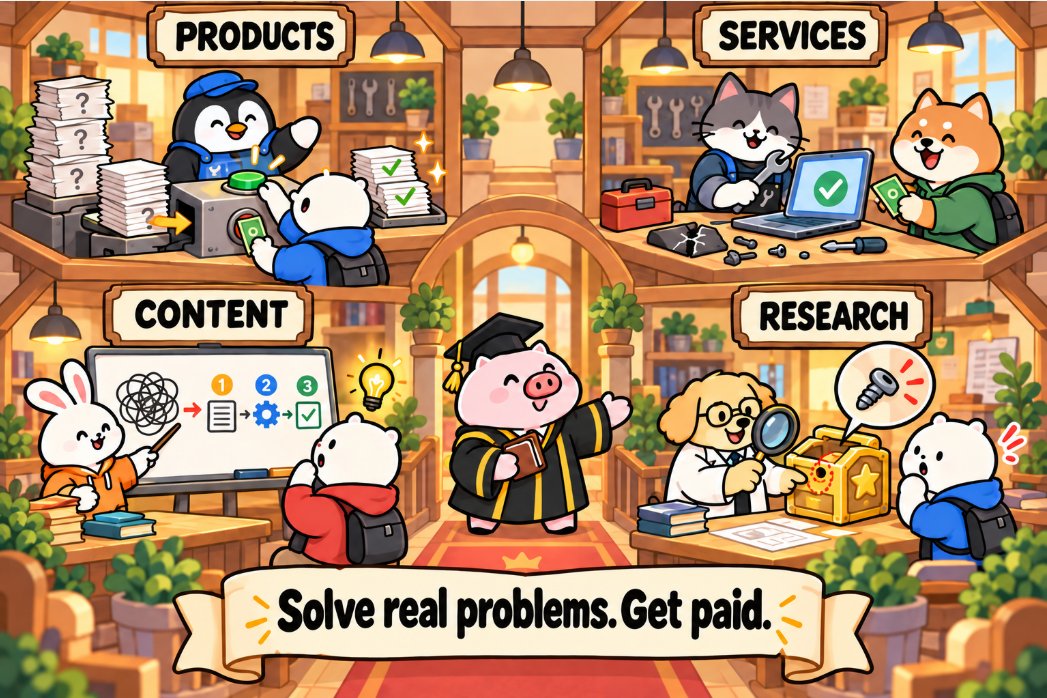
6.Path Five :Organize Communities
Opening a chat group is easy. Building a community that accomplishes things is hard.
Its value is not its headcount, but whether members find collaborators, newcomers acquire essential knowledge quickly, projects receive real feedback, misinformation is checked, and experienced members choose to stay and help. Why was the community created, and has it delivered that value?
If a community does nothing beyond forwarding messages, manufacturing anxiety, and chanting slogans, there is little difference between one hundred thousand members and one thousand.
A good organizer creates trust, order, matching, and collaboration, allowing strangers to exchange information, skills, and opportunities at lower cost.
Membership is traffic. Results produced through collaboration are the community’s real assets.
The role of communities declined sharply during the last cycle, and many high-quality communities disappeared. Yet a community remains crypto's smallest, and perhaps most important, organizational unit. Build one well and it can support many ways to earn.
7.Path Six :Become an Early Contributor
Testing products, reporting problems, joining governance, writing documentation, translating materials, helping new users, and attending developer events are all early contributions. Projects may reward them through salary, bonuses, points, tokens, or airdrops.
Distinguish two forms of participation. In the first, your work genuinely creates value and the reward is merely a form of settlement. Even if no airdrop arrives, you retain work, skills, relationships, and industry knowledge. In the second, a project spends budget to purchase activity and data while participants compete to generate more accounts at lower cost. Once the rules change, only the costs remain.
Do not evaluate early participation solely by estimating a future reward. Ask what you can carry away if the reward never arrives.
Good early participation produces income if the project succeeds and leaves you with assets if it fails.
During the last cycle, many teams and users reduced early contribution to airdrop farming without creating value. When liquidity dried up and the farming trade stopped paying, that fragile position disappeared with it.
8. Path Seven :Connect Worlds That Do Not Understand Each Other
Crypto is global. Countries, languages, cultures, technologies, and business systems contain countless barriers.
Technologists may not understand users. Overseas teams may not understand China. Traditional companies may want to go on-chain without knowing where to begin, while crypto teams entering real-world business may lack channels, compliance knowledge, and delivery capability.
People who connect these worlds can provide localization, business development, corporate advice, payment integration, brand partnerships, and resource coordination.
Many ordinary people are most valuable at an intersection.
You need not be smarter than everyone in all of crypto; you need to understand both sides of one boundary better than most. One of my strongest students leads part of a major traditional AI project. Because he also understands crypto, he can solve problems between the two industries and make money almost at will.
Scarcity often comes not from one extraordinary talent, but from a rare combination of two ordinary abilities.
9.Buying Tokens Is Not Wrong Reducing Yourself to Exit Liquidity Is
Tokens can make money and can be part of asset allocation or industry participation.
But if, after three years in crypto, you have nothing beyond an account balance, no body of work, capability, clients, reputation, relationships, or record of solving problems, everything you gained still depends on the market offering a higher price.
When a project fails, the investment goes to zero. When the industry cools, income disappears. When rules change, experience becomes obsolete. When attention moves, you start chasing again.
That is not compounding; it is repeatedly buying lottery tickets.
People with little capital should be the last people to compete solely on capital.
Build assets that money cannot immediately buy: a trustworthy record, a body of work, professional capability, real relationships, client references, and a history of solving problems. Once those exist, capital can find you. You no longer have to chase every narrative capital manufactures.
I often explain the food chain to my students through a Japanese role-playing game. Each niche is a class. A monk and a warrior are basic classes; train each to level twenty and they may combine into a new class—a paladin. A level-one paladin can fight two level-thirty warriors who each know only one class.
If you understand operations and product, and sharpen both through one or two projects, perhaps your combined class becomes “founder.”
No industry lets you reach the top in a single step.
Slow down. Build experience points, examine and review more projects, deepen your understanding, and climb toward a stronger niche.
Human evolution itself took millions of years: upright australopithecines appeared roughly seven million years ago; simple stone tools about 2.4 million years ago; mastery of fire and tools about 1.8 million years ago; modern humans roughly 135,000 years ago; domestication tens of thousands of years ago; and the Industrial Revolution only in the eighteenth century.
If human progress was that gradual, then in crypto—an industry full of smart people—you must evolve steadily as well.
Observe broadly, take selectively, accumulate deeply, and release sparingly.
Slow is fast.
Part Three :A Good Project a Good Token and a Good Opportunity Are Different Things
Crypto’s most common logical error is to see that a project is doing well and conclude that its token is worth buying—or to see a token rise and treat that as proof that the project is excellent.
That is like seeing a thriving bubble-tea shop and concluding that any “bubble-tea coin” it issues deserves a high valuation. Customers, revenue, and brand strength may prove that the shop is a good business.
Whether its coin has value depends on the rights it represents, why customers need it, whether shop revenue reaches it, whether supply can expand without limit, and how much the team and early holders received.
Even if both shop and coin are sound, buying after every optimistic expectation is priced in may still be a bad opportunity for you.
A project asks whether the work can succeed. A token asks how value is organized. An opportunity asks whether participation is worthwhile on your terms.
1. A Good Project Solves a Real Problem
Strip away the grand labels first. Do not begin with AI, DeFi, GameFi, RWA, or “the next generation of the internet.” Ask the plain question: who used the product, in what situation, and to accomplish what real action?
The more specific the user, the easier the demand is to verify. A project that claims to serve “global users” or “the next billion people” but cannot say who uses it today, why they use it, and what they gain looks more like a financing narrative than a working product.
A real project can usually answer: Who are the users? What was wrong with the old solution? What do users repeatedly do in the product? Would they continue without rewards? Is the solution cheaper, faster, or easier than alternatives?
Subsidies can start a network, but purchased behavior is not automatically demand. Addresses, transaction volume, downloads, and community membership can all be inflated rapidly with budget. User count tells you how many came; retention after incentives end tells you whether the product works.
Activity proves that a project can spend money. Retention proves that users choose to stay.
A good project must also survive. Payroll, development, audits, servers, marketing, and ecosystem incentives consume resources. Financing may carry a project through its early stage, but selling tokens cannot replace a business model forever. Volume is not revenue. Revenue is not profit. Profit does not automatically accrue to token holders. Users, revenue, and profit may prove that the business works; they still do not tell you what the token holder receives.
2. A Good Token Transmits Project Value to Its Holders
As one venture-capital founder put it in 2017, a token is not automatically equity.
Holding one does not normally grant corporate ownership, protocol assets, fixed dividends, or a residual claim.
A token may support payment, governance, staking, collateral, service access, or fee discounts. Buybacks, burns, or revenue distributions may transmit value. Yet utility does not equal value capture. A membership card can have many uses without appreciating alongside company revenue.
Project value must pass through several gates. First, the project must create value through genuine use. Second, it must capture value through fees, subscriptions, spreads, or other controllable resources. Third, some mechanism must transmit that value to the token and create real, sustained demand rather than a sentence in marketing material. Finally, new demand must absorb supply released by teams, funds, ecosystem rewards, and inflation.
A break anywhere can produce a project that improves while its token bleeds. A free product may have many users but capture no value. A protocol may earn substantial revenue while the company keeps it and the token receives only symbolic governance. A token may promise buybacks far smaller than its continuing unlocks. An ecosystem may look prosperous while every use depends on newly issued rewards.
Value does not float through the air into a token because a project is excellent. Every rule in between can divert that value to someone else.
3.The Same Token Is Not the Same Asset in Every Hand
Teams, funds, advisers, market makers, foundations, communities, and retail buyers may hold the same ticker under completely different economic conditions. Teams may exchange labor for tokens at little cash cost. Funds may enter at low valuations with contractual rights, information, and exit plans. Advisers may receive original allocations. Market makers may hold borrowed inventory. Airdrop farmers may have near-zero cash cost. Retail buyers often have the highest cash cost, least information, and weakest bargaining power.
All may claim to be bullish for the long term, but "long term" means something different to each. A low-cost holder may remain profitable through a prolonged drawdown; an ordinary move can badly damage a high-cost account. Teams can wait for a product to mature. Funds may have deadlines. Treasuries may have to sell tokens to fund operations. Retail holders often turn an asset someone else needs to exit into a conviction they feel obliged to defend.
Do not begin by deciding whether a participant is good or evil. Examine cost, rights, obligations, time horizon, and exit route.
Public personas change. Incentive structures are usually more honest.
4.A Good Opportunity Requires the Right Price Terms and Role
A good opportunity is not a lifetime award presented to a project. It answers a narrower question: at a particular time, in a particular role, at a particular cost and risk, is the expected outcome worthwhile?
A good project may have a token with no value capture. A good token may be a bad opportunity because valuation is too high, supply keeps increasing, or early holders entered too cheaply. A good project and token may still be unsuitable for your time, capital, expertise, or social position.
Conversely, a token may not deserve long-term ownership while the project offers paid work in technology, research, content, or localization. An airdrop may not justify substantial capital, yet a small investment of time could be worthwhile for testing a product and gaining experience. One project can offer many forms of participation. The worst is usually the one in which you bring no advantage and assume all the price risk.
“It is good” does not make a good opportunity. “It remains worthwhile under my conditions” does.
Twelve Rules Retail Should Remember
-
Demand is more likely to be real when people continue using a product after token rewards end.
-
Growth in project revenue does not mean token holders automatically share that revenue.
-
A token can have functions without generating sustained net demand.
-
A low unit price is not the same as a cheap valuation, and low circulating supply does not guarantee upside.
-
Future unlocks ultimately require future real demand.
-
Teams, funds, advisers, platforms, KOLs, and community members have different profit models.
-
Fundraising can extend a project’s life; it cannot replace a real business model.
-
A treasury holding a large quantity of its own token does not possess the same amount in usable cash.
-
For buybacks, burns, and staking, trace both the source of funds and new supply.
-
When a community prohibits doubt, information quality is usually deteriorating.
-
“Worth using,” “worth working for,” and “worth buying the token” are three different conclusions.
-
A project that cannot answer these questions is not necessarily bad, but it is beyond the risk your present understanding can support.
These rules cannot capture every opportunity, but they can prevent many risks you never needed to take.
Retail's most valuable right is not knowing the answer before the team. It is the freedom to refuse to pay for a story you do not understand.
Part Four :Build a Personal Profit System
The answer to "What should I do next?" is not another token or another bag of tactics. It is a personal profit system.
This is not a trading system for the secondary market or a handful of indicators. It is a way of operating: where you stand in the food chain, what kind of money you primarily earn, what value you provide and to whom, how much time and capital you will commit, what you will never do, how you will validate your ability, how you preserve cash flow, and what remains after failure.
A real profit system does not teach you to win every time. It removes the need to prove your entire life with one correct bet.
1. Name the Profit
A system begins with the source of profit, not a target return. Every type of money has a different payer, skill requirement, time structure, and mode of failure.
If you entered for a short-term move and renamed the loss "long-term conviction" only after the trade failed, that is not a strategy adjustment. It is refusing to close the books. If a job pays in tokens, separate salary, risk compensation, and a bet on the future. If an airdrop depends on project budget, do not mistake a temporary subsidy for permanent income. If content depends on advertising, do not present commercial demand as neutral judgment.
Name the profit before you name the risk. If you cannot say what kind of money you are trying to earn, you will invent an explanation only after the result appears.
2. Choose One Primary Position
People assume that more opportunities mean a higher probability of profit.
Today they create content, tomorrow farm an airdrop, the next day plan a tool, and then open a community because a friend did. They touch everything and compound nothing.
Advantage comes from repetition.
If you choose research, study one field repeatedly and establish stable sources, validation methods, and a public record, perhaps around one chain's ecosystem. If you choose content, serve one type of reader and develop a recognizable subject and voice, as I did on Twitter. If you choose products, iterate on one problem instead of pivoting with every weekly narrative; GMGN is one example. If you choose services, accumulate processes, cases, references, and repeat clients, something most crypto agencies fail to do. If you choose community, help a small number of members complete real collaborations before chasing member count.
You may possess many abilities, but within one niche you should generally have only one or two primary profit models. Human energy is limited. No one can simultaneously be a VC, market maker, project founder, daily Twitter creator, and full-time party animal. A person claiming all of that is probably a fraud.
People who do everything appear to have many opportunities, but none of their abilities has had time to compound.
3. Turn Growth into Visible Evidence
Crypto has no shortage of self-proclaimed experts. What is rare is evidence. If you understand project research, publish calls that others can revisit. If you understand communities, leave a record of turning a chaotic one into something useful. I could keep producing parallel examples, but honestly, I am tired.
Evidence need not be a clean success story. A complete post-mortem can build trust by showing why you made the call, which facts later changed, and what you will adjust next time. A public record of your progress is the strongest resume you can show industry leaders. Too many crypto recruiters select prestigious degrees while ignoring demonstrated crypto competence.
Slow down. Every ability requires learning, accumulation, and an honest record. Crypto's two most important abilities are making money and finding and solving real problems. They often overlap.
In an age when everyone can publish an opinion, the person who leaves verifiable results earns a real position.
4. Build Stable Cash Flow
Many people convert all income into tokens, place every job in one ecosystem, and tie every relationship to the same projects. They appear to have salary, rewards, and investments—many sources of income. In reality, all can contract together during a bear market.
Project budgets fall and salaries suffer. Token prices fall and rewards lose value. A colder market pushes clients to cut spending. If being trapped makes you delusional, you may double down, increasing investment losses just as cash disappears. That happened to me during my first bull-and-bear cycle.
A long list of correlated income streams is not diversification. Stable cash flow does more than pay bills; it buys time for judgment. One of the most painful moments in my crypto career was knowing that Bitcoin would rise but having to sell before DeFi Summer in 2020 because I needed rent money. I hope none of you ever experiences that feeling.
When the next opportunity does not have to pay your rent, you stop treating every excitement as a lifeline. When you can reject an opaque partnership, other people respect your boundaries.
Cash flow is not the enemy of a dream. It is the oxygen that lets the dream live long enough.
Protect living expenses, family reserves, genuine emergency funds, and capital for starting again. Any opportunity demanding all four is not rewarding courage; it is manufacturing and exploiting anxiety.
5. Define Your Role in Every Project and Community
Within one project you may be a user, contributor, employee, service provider, community member, or token holder. Each role carries different rights, duties, and returns. The most dangerous state is allowing them to blur.
You like the product, so you work for free. Because you work there, you feel obliged to believe in the token. Because you shilled it publicly, you cannot admit the project's problems. Because you invested time, you invest more money. Do not laugh; many young project employees have failed this way. Work, investment, identity, and pride tighten into a knot. They can no longer isolate the mistake, understand the collapse, or leave the industry without regret.
Before joining any project, write five sentences: What is my role? What will I contribute? What has the other party promised? Who pays the return? Under what conditions does the arrangement end?
The clearer the role, the harder it is for emotion to rewrite the contract.
Liking a project does not mean you should work for it free. Working for a project does not mean you should spend your entire salary buying its token.
6. Manage Human Nature with Structure Not Willpower
When markets are calm, everyone believes they are rational.
The real question is what your future self will do when everyone else appears to be printing money, the group chat is euphoric, and FOMO takes over. Crypto never lacks anxiety or pressure, and willpower is weakest exactly when you need it most.
Build friction in advance. Separate living money from high-risk capital. Require a cooling-off period before any unplanned increase. Make no major decision late at night, drunk, severely sleep-deprived, or after a family conflict. If you cannot explain an investment to a family member outside crypto, do not fund it with money that affects daily life. After repeated unplanned errors, suspend new risk automatically.
These rules are not weakness. They protect the version of you who gets tired, impulsive, and capable of self-deception.
Trading requires the same principle. "Be greedy when others are fearful and fearful when others are greedy" is empty advice if it assumes you can command emotion at will. Some KOLs have even discussed taking estrogen to suppress emotion, an utterly foolish idea. However calm you think you are, a fully leveraged position approaching liquidation can make you lose your mind.
In trading, a precise system controls position size so that emotion never faces unlimited risk. Across an entire crypto career, life needs the same protection.
Maturity is not the absence of impulse. It is making it difficult for one impulse to destroy years of accumulation.
Advanced risk control does not guarantee that you never make a mistake. It removes the mistake’s authority to destroy everything.

7. Complete Your First Exchange of Value in Ninety Days
A profit system need not begin with a grand plan. Use ninety days to move from observer to participant.
During the first thirty days, choose. List your professional skills, languages, industry experience, weekly available time, and subjects you could study for years. Select a narrow intersection. Be specific. Do not write "research Web3"; write "study the recurring problems Chinese users encounter with a particular class of wallets." Do not write "create crypto content"; write "explain each week how one project actually makes money." Review your own experience and identify where the same needs kept appearing. Go narrow.
Do not rush to charge money or issue anything. Read, use products, interview people, and keep records until you identify at least twenty recurring real problems.
During the second thirty days, deliver continuously. Publish four to eight complete pieces of content; build a minimum product and put it in front of real users; or help twenty community members complete a genuine collaboration. Beautiful metrics matter less than a delivery record. Many people remain students forever because learning is not judged. Only delivery lets other people tell you what is useless, what is unclear, and what deserves payment.
During the third thirty days, complete the first exchange of value. It may be commissioned research, consulting, design work, a tool subscription, training, localization, or a genuine contributor role inside a project. The amount of the first payment is less important than what it proves: for the first time, the market has used real resources to confirm that your ability exists outside your imagination.
Review five questions afterward: Why did the client find you? What did the client truly buy? Which part of the delivery created the most value? Which steps can be repeated? How can you reduce cost and raise quality next time?
Ninety days will not make you rich overnight. It can prove something more important than catching a trend: you can sell value to this industry, not merely feed it capital.
Crypto has unusually short paths between useful work and decision-makers. Create real value and the right people can notice quickly.
"Finance is the best industry, and crypto is the best part of finance" was never entirely a joke.
Few industries offer this many opportunities, this many cases of rapid wealth, or this much practical education within a decade.
People who genuinely work in this industry should hold their heads high.
8.The End Goal Is to Stop Being Exit Liquidity
New projects, narratives, and overnight winners will always appear. An ordinary person may indeed become rich through one asset. But if an entire life depends on one correct bet, that is not a system. It is a lottery ticket.
Real upward mobility means that even if you miss that bet, your ability continues to create opportunities. If a project fails, you retain cash flow and work. If the industry enters a downturn, your family and life do not fall with it. If you make a mistake, you retain capital, credibility, and the courage to begin again.
I gave every student a keepsake: the extra-life coin from Ready Player One. Its reverse carries only two words: “EXTRA LIFE.”
I dislike the word "compounding" because too many fraudsters invoke Buffett to sell retail another story. I prefer "slow is fast." It does not mean winning the most in every round. It means that many rounds later, you still have capital, judgment, a credible record, and the right to play again.
Real upward mobility is not betting your life correctly once. It is gradually reaching the point where you no longer need to bet your life.
Final Thoughts
Crypto is a food chain, and everyone occupies a different position.
This idea is not meant to make you fear the market or treat everyone as an enemy. It is a reminder that every profit has a source, every opinion comes from a position, every reward has a payer, and every story eventually leaves someone holding the bag.
If buying tokens is your only move, you often stand at the end of the chain and depend on later buyers to fund your thesis. Build products, sell services, conduct research, create content, organize communities, contribute, and connect people, and your economic position changes. Separate the project, the token, and the opportunity, and you stop mistaking a project's ideals for a token holder's rights or a token's popularity for a good entry. Build a personal profit system, and you stop demanding that one narrative solve your income, dignity, family responsibilities, and direction in life all at once.
If you remember only ten sentences, remember these:
-
1. Crypto is not everyone working toward the same dream. It is different roles earning in different ways around the same pool of capital.
-
2. Understand how someone gets paid before accepting their opinion; understand how they exit before accepting their story.
-
3. The food chain is cruel not because upstream always wins, but because the same failure imposes different costs on different people.
-
4. The market’s cruelest reward is allowing a bad method to make money first.
-
5. A position that is too large leaves no room for an opinion, only a wish.
-
6. If someone can earn only when token prices rise, they have no industry edge; they have the market's temporary permission.
-
7. A project asks whether the work can succeed; a token asks how value is organized; an opportunity asks whether participation is worthwhile on your terms.
-
8. A good opportunity is not “It is good,” but “It remains worthwhile under my conditions.”
-
9. Real upward mobility is not betting your life correctly once, but gradually reaching the point where you no longer need to bet your life.
-
10. Slow is fast.
Careful readers may notice that I never wrote a fourth item in an earlier sequence. This essay originally had five sections, including one called “What Retail Is Really Losing Money On.” I removed it partly to control the length and partly because of something I once wrote:
"Retail has already heard too many success sermons from KOLs. Those with real ability stopped being ordinary retail long ago. People capable of leaving that position may need only a little motivation, a few key insights, or a hand pulling them upward.
Many others, however, will remain retail. Their best outcome is simply to avoid being harvested again and again. To borrow the Chinese crypto metaphor, their investing often amounts to a chive choosing its own sickle."
Do not believe that, because you are ordinary, your only way out is one winning gamble.
My friend, slow down!
The entire crypto market sells overnight wealth, 100x and 1,000x returns, perpetuals, and leverage. Almost no one sells patience or risk control.
I have fought my way through this industry since 2017. In the deep bear markets of 2018 and 2019, when almost everyone thought crypto was finished, the industry was preparing Bitcoin's next advance, great decentralized exchanges, and DeFi Summer. I have watched countless "elite traders," "kingmaker projects," and "industry geniuses" rise and fall.
My hardest psychological hurdle came on May 19. Did I get liquidated that day? No. I made a great deal of money, and several major investors following me made fortunes as well. That night, lying in bed, I could not stop thinking: If only I had started with more capital. If only I had borrowed from those investors. I could have reached financial freedom that day.
Every rational part of me knew that thought was wrong, but I could not suppress it. It tormented me for an entire month. Once I crossed that hurdle, the words “slow is fast” became part of my life.
In an industry obsessed with sudden wealth, anyone committed to the long term must repeat one thing: more opportunities will come. Each time you miss a trade you "could have caught," emotion whispers, "There will never be another one this good." That is FOMO pretending to be analysis.
Once you accept that opportunities keep arriving, you can focus on ability and improve your position in the market. Calm down. Deliberately pass on attractive trades. Do the work that makes you better. That is how you become capable of taking better opportunities later. That is why slow is fast.
The process runs against human nature.
Slow is fast is also the key to keeping what you make in crypto, and one of the lines separating a repeatable process from a lucky trade.
For an ordinary person, slow is fast never means finding a new trade every day. It means becoming a little harder to replace every day.
When the next wave arrives, I hope you are no longer at the back of the crowd, holding your savings and waiting for someone else to tell you what to believe.
I hope you already have work, capability, cash flow, a credible record, and real partners.
I hope you can do more than spot an opportunity. I hope you have become part of one.
Ask yourself one final question:
If every token stopped going up tomorrow, who in this industry would still pay me for the long term?
The moment an ordinary person can answer that question is the moment a personal profit system truly begins.
My friend, slow is fast.
“I am the eternal truth. On your voyage from this shore to the other, you are destined to meet me time and again.”— Rabindranath Tagore, 《Lover's Gift》 ZTZZ,2026/09/22
This essay discusses industry understanding, career choices, and personal development. It does not constitute investment advice.