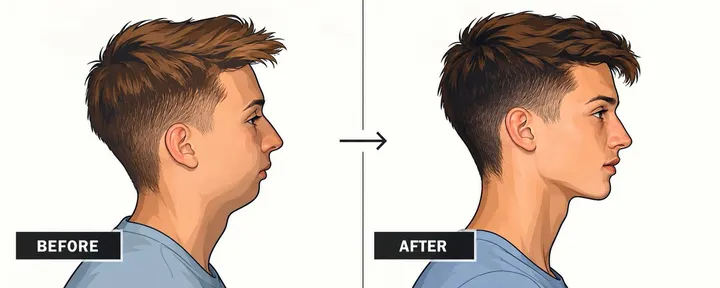
Aim your addictive personality at something worth winning

文章目录
I've never met a successful person who wasn't an addict.
And I can say that because I was one. The Hunter Biden type. Cocaine, alcohol, and women ran my life for years. But this same addiction that nearly killed me 15 years ago is the same one that built everything I have today.
At almost 45 I own multiple successful companies, I'm in better shape than most 25 year olds, my marriage has never been better, and I have two wonderful kids.
I did not become a different person to accomplish this.
And I recently got a rather uncomfortable reminder of that.
After years of being clean from my old addictions, I found myself addicted to Kratom. Specifically, those Feel Free drinks you can buy at 7-Eleven and others.
I was ashamed and I kept justifying at the same time. It's not cocaine or OxyContin. It's something you can buy at a convenience store. It's got vitamins, turmeric, black pepper.
How bad could it really be?
But there was another voice telling me I was addicted to something I couldn't stop taking, while preaching health to other people. I felt like a fraud.
When I finally quit, the withdrawals were worse than anything I'd experienced from the substances I'd previously been addicted to. At 19 days sober, I remember feeling two things simultaneously: ashamed to be an addict again, and incredibly proud that I'd managed to overcome it again.
I mention this because addiction isn't something I defeated once, 15 years ago, and never had to think about again. It's a part of my personality that I still have to understand and direct.
Most self-improvement advice treats addiction as a bug in the code that needs to be obliterated through breathwork, meditation, Ayahuasca, etc. They tell you to purge and become a monk who desires nothing. I wouldn't wish this form of castration to my worst enemy.
You don't need to kill the addiction.
You need to transfer it. And today I'll talk about how.
What is addiction?
Addiction, stripped of its moral baggage, is just an extreme capacity for repetition.
A functioning addict never missed a day to take a hit. At least, I never did. My entire life was organized around the pursuit. I solved problems so monumental to keep this pursuit alive. I persisted through gnarly consequences that would make a normal person quit.
I started with ecstasy at 19, and then I spiralled into oxycontin and other painkillers. I used to literally snort them with cocaine, and I'd always drink some form of booze to wash it all down. This went until I was 31.
For several years in my mid-20s, I managed four of the biggest nightclubs in Milwaukee. We'd close the clubs at 2 a.m., and then the afterparties would begin. Drugs everywhere, girls, drinking, cocaine. The whole sex, drugs, and rock and roll thing.
I even played in an adult dodgeball league with friends who were also using. We'd drink, do cocaine, and play dodgeball. Fantasy football was another excuse to get together, drink all weekend, and do drugs.
There was a lot of fun involved, which is something people don't always understand about addiction. That's part of what makes it so difficult to leave behind.
This is objectively elite behavior, but it's aimed at the worst possible target.
When I got clean, this compulsion never disappeared. It's here, but aimed at the best possible target. Today, I can't go a day without training or building or showing up. It's the same all-or-nothing mentality just pointed at a better goal.
Societal advice for this type of intense behavior is to calm down, find balance, and do things in moderation. Well, for people like me and many others, this advice is poison. Some of us are binary. We are on or off. Telling me to find balance and have, for example, just one drink is like telling a thief to steal just $100 from a one million pile.
If this is you, you should stop fighting your nature and use it to your advantage. Before I show you how I did this, we need to discuss The Void.
The Void Problem
Many people who attempt to quit an addiction fail. Why?
Because they remove the addiction and leave the void it was filling. You may stop smoking, but start eating, Or quit drinking and start scrolling. Or quit scrolling and start gambling on Polymarket and call it market prediction.
When I first got clean, the biggest challenge was just replacing the time and staying busy.
Just think about it for a second.
Nowadays, my weekends aren't super jam-packed. There's not as much work so you generally have more time to chill with family. We go to dinner together, we go work out, I'm coaching my daughter volleyball as she pursues greatness there -- then I'm helping friends with their brands and creating/planning content --but that's probably 6 hours of the day.
What to do with all this other time?
So you think back to the time when you were drinking and you're like: oh yeah, that's what I did on Saturdays and Sundays. I watched football and I drank, and it was all weekend long. I was literally at the bar drinking, finding cocaine, watching football, partying, girls, all of that.
There's so much time you waste as an addict.
Previously, I would have filled that time with a substance. Now I have to fill it with something else. I've been training more, reading more, and journaling.
Throughout all this, I realized the addiction is an answer to a question you're afraid to ask, some version of: what am I supposed to do with all this energy and why does ordinary life feel like it isn't enough for me?
Vices tend to stick because they're efficient. They compress meaning, challenge, ritual, and relief into a single repeatable act. This is why they are difficult to remove. You have to substitute them with something equal.
I also had to change my environment. There was no way I could continue hanging around the same friends I was drinking and doing cocaine with every weekend and expect my life to change.
I had to tell people I genuinely loved that I couldn't hang out with them anymore. Not because I thought I was better than them, but because I knew exactly where that environment would take me. For me, the new environment was the gym. And that decision changed pretty much everything.
This substitution only works if the new pursuit can absorb the full voltage.
-
You need to structure your day around a new daily ritual
-
Then you need escalation, i.e. progress. With addiction, you always feel some hence this new habit needs escalation too -- otherwise it becomes boring.
-
It needs identity. Old addiction gave you one (even if you despised it). The new one has to give you identity you are proud of.
-
Finally, it needs stakes. A pursuit with no consequences isn't interesting.
If you miss any of these, the void will overtake you.
The hierarchy of obsessions
Before we talk about how to direct your addictive/obsessive personality toward building, you must know that all obsessions are not equal.
I have a hierarchy, and I've spent a lot of time on all of its three levels:
-
At the bottom is consumption without production. Alcohol, weed, drugs, doom-scrolling. You pay with your life force. This phase will take everything from you if you don't fight back.
-
In the middle you have obsessions that improve you, but end with you. This is self-improvement: training, reading, learning, but for its own sake. This is good for you, and it's necessary. This is a process of metamorphosis. But this is where a lot of ex-addicts get stuck. Their body becomes the new drug and the mirror is the new dealer. Once you complete this phase, you need to level up.
-
At the top are obsessions that improve you and lives of people around you. Raising a family well is a huge one. Building successful companies and impacting lives of millions of people is another great one. This is where you start to see compounding. This is why I'm going harder at 45 than ever before.
What's interesting is that I can trace almost my entire adult life through these three stages.
When I first got into fitness, I started seeing progress almost immediately. My body was changing. I was looking better, feeling better, getting stronger. And I became addicted to that progress.
Then I started posting online. At first, almost nobody watched my stuff. Then three people would engage with a post. Then 30. Then 300. Then 3,000.
Each small improvement gave me something new to chase.
I went and got six fitness certifications in six months. More progress. More knowledge. More credibility. More opportunities.
Eventually, the same obsession that had gone from drugs to fitness started going into business. I was building companies, growing an audience, and creating things that could genuinely improve other people's lives.
I became addicted to seeing how much progress I could make as a human being.
You don't have to jump straight to the top, but you gotta keep leveling up. Each obsession is a part of life, and the only rule that matters is that the next one has to give back more than it takes.
How to turn your addictions into success
I want to make something clear before getting into the practical stuff.
When I was at my lowest, I had friends overdosing and dying around me. I genuinely believed that if I continued living the way I was, I'd probably be dead within five years.
I had two options: continue down that road or pull myself out of the ashes.
I was incredibly fortunate to have something that made the second option worth fighting for. My daughter.
She became my reason to change, but I still had to change what I did every single day.
If you have an addictive personality, you have only one sequence to follow.
-
First, get honest about what current obsession gives you. Whatever it is: it can be women, cheap sex, masturbation, weed, cocaine, social media, video games. What do these offer? Relief? Ritual, identity, escape or pursuit? Whatever they offer, this is your job description for its replacement.
-
Second, pick a pursuit which can deliver the same. It has to be hard enough to escalate for years + visible enough so that you can build identity around. For example, can you start a business and decide to make $100k in the first 12 months? It's very possible. Next year, the goal can be one million. Then 5 million. Then 10. It escalates for years (more money) and its visible (you'll drive a better car, wear better clothes, move into a better apartment, etc.)
-
Third, go all in immediately. You don't need 66 days to form a habit or whatever bullshit self-improvement gurus preach. You need to make a decision and refuse to re-negotiate it. Burn the bridges.
-
Fourth, protect the streak. Track your wins religiously. And when the pursuit stops scaring you, embark on an even scarier one. Remember, boredom is the relapse trigger.
That last point is extremely important.
Try to make progress somewhere every day. It could be training, learning something new, spending time with family, reading, or working on one of your businesses.
I think the reason this has worked so well for me is that progress itself becomes rewarding. You do something difficult, you improve, you see the result, and suddenly you want to do more.
That was the pattern that took me from drugs to the gym, from the gym to social media, and eventually from social media to building companies 7 companies.
You were never broken
The self-help industry wants you to believe that having an addictive/obsessive personality is a disorder that you have to manage.
I'll offer you a different frame: it's a surplus to be directed.
I'm not saying addiction is some kind of superpower, or that getting sober is as simple as finding a new hobby. I've been through addiction more than once, and I know how gruesome it can get. Sometimes you need professional help, and there's nothing wrong with that.
But I also know that the intensity I once directed towards destroying myself is the same intensity I now bring to everything I care about.
I still have that obsessive personality. I don't think it's ever going away. And honestly, I no longer want it to. I just want to keep getting better at directing it toward building.
If you've been at the bottom of addiction/obsession, you already have the proof of extreme capacity for repetition. You can do one thing every single day regardless of the cost. You can literally reorganize your entire divine existence around a single pursuit.
That's the hard part, and you have it. Now, you just have to aim better.
You already have a concrete proof that you can burn for something.
Just decide what deserves the fire, and ignite.