Setting the Record Straight on the Recent Witch Hunt Against Pixxel
Okay, this has gone on long enough, I think.
I thought I'd take the high road and ignore the noise. But when insinuations and lies are repeatedly passed off as facts, a response is in order. Not only the targeted attacks on Twitter, we've also been on the receiving end of targeted Wikipedia edits, anonymous emails to our government customers, and repeated attempts to cast doubt on our ownership, technology and credentials. So much so that AI chatbots like Grok are now using other tweets as sources to now start spewing out incorrect facts based on incomplete information!
My cofounder has received threats to his family in his DMs. I've been called a "traitor", accused of "selling our soul", of being "bought by American PE", and even had people claim that "the CIA is running Pixxel" and many unsavoury things I'll not mention here but attaching some screenshots at the end if you want to have a taste of what we have been subject to by this attack the last few days. As an Indian born to a muslim family, having my nationality and patriotism questioned is unfortunately nothing new. I've seen this before. But I will not stand by while lies are spread about a company we've spent eight years building, or while the extraordinary efforts of 300+ Indians who have gone above and beyond to design, build, launch and operate Indian satellites are undermined by baseless insinuations.
They've dedicated years of their lives to building critical technology for this country. Their work deserves better than this. So let's get some facts straight.
First, Pixxel is Indian-HQed, Indian owned, Indian-managed and Indian-controlled.
Our primary Indian entity was incorporated in 2018, before any international Pixxel entity existed. It is not a subsidiary of any US entity and is our primary entity for executing Indian government, space and defence programs. It was founded by two Indian citizens, @kshitijgokul and myself. In case our names weren't enough of a clue, we're from Chikkamagaluru and Akola, respectively. Born and raised in India, educated here, and built our company here. The claim that Pixxel is US-controlled has been repeated so often that it is now being mistaken for fact even by AI chatbots like Grok, Claude et al. If you want more detail, our largest shareholders by percentage are Indians (the founders + other investors), followed by Singapore, then UK and then the US. No international investor has unilateral control over the company beyond customary investor protections, and none has decision-making authority over our sensitive Indian government programs.
Yes, we incorporated a US entity too, a few months after our Indian entity, to serve American and international customers. And we do it proudly too as Indian designed and developed technology is being used by some of the most sophisticated customers in the world. It certainly won't be our last international entity either. We intend to build a global space company rooted in Indian engineering. That means selling Indian technology worldwide, hiring internationally, establishing local entities where required, and complying with each country's laws.
A lot of recent flak came out of the announcement of Pixxel Federal. The Board of Directors and CEO we recently announced are exclusively for the recently set-up Pixxel Federal, our US Government focused subsidiary. Their authority is limited to that entity and its US operations. They have NO control over Pixxel's Indian government programs, Indian operations or businesses elsewhere.
We are a private company and we haven’t put out our exact corporate structure anywhere yet. All I can say is that not a single public snapshot of our corporate structure is completely accurate. Makes sense because its all piecemeal conjecture. But in the last few weeks, everyone, for some reason, has decided to take disparate and disjoint half-views and become experts on how Pixxel is set up globally. Some have their ulterior reasons for it of course. When we IPO in India in a few years (not too far away), our entire corporate structure will be publicly disclosed for anyone to scrutinise. Until then, anyone who wants to independently assess these claims can look at the ironclad eligibility and contractual requirements of the Indian government contracts we've already won, including the stringent obligations around Indian ownership, management and control.
I find it remarkable that we celebrate foreign multinationals establishing Indian subsidiaries, but when an Indian company expands overseas, its nationality suddenly becomes questionable. What exactly does "Make in India for the World" mean if we question the nationality of Indian companies the moment they actually start selling to the world?
Second, let's talk about government contracts.
Space and defence are among the world's most tightly regulated industries. Sensitive Indian government contracts require stringent diligence concerning ownership, management, control, security and technical capabilities. Do people seriously believe the Government of India awards sensitive defence and space contracts without examining these things? I can’t speak about the exact due diligence undertaken for obvious reasons but it is super thorough. Are we suggesting that the agencies responsible for these checks somehow missed what a few people on the internet claim to have discovered from selectively reading incorporation records? That our company isn't Indian, its founders don't control it, or that we don't own our technology?
Question us on facts. Scrutinise us all you want. But selectively interpreting corporate filings and passing off speculation as established fact isn't scrutiny. It's misinformation. There are sound reasons for maintaining distinct entities across jurisdictions in highly regulated industries: national security, export controls, licensing, customer confidentiality and sovereign operational requirements. We take these obligations seriously everywhere we operate.
Third, our Indian government technology and intellectual property are sovereign.
All IP developed for Indian government projects is held in India, under Indian ownership and control. It is designed and developed by Indian engineers, for Indian missions, within Indian entities and under Indian laws. No foreign entity has ownership, control or decision-making authority over these programs or their IP. These aren't theoretical assurances. They are requirements reflected in the actual contracts we execute.
Lastly, Indian-designed satellites and their underlying IP do not automatically become subject to US ITAR restrictions merely because Pixxel also has an American entity. Where foreign-origin components or technology carry applicable export-control obligations, we comply with them. Having an international presence does not mean surrendering sovereignty over Indian-developed technology.
Fourth, having international entities is how you build a global business (and it’s a good thing!)
We can talk about "one entity", "no shortcuts" and "clean governance" all we want. But having one entity isn't some extraordinary achievement in governance, and having several isn't evidence of questionable patriotism. The real challenge is building technology that works, operating satellites reliably in orbit, winning paying customers and exporting that technology around the world. A press release doesn't need international subsidiaries. A real global business does.
The Tata Group, Aditya Birla Group and Reliance all operate through separately incorporated US entities and subsidiaries across numerous countries. This is standard practice for Indian multinationals. We have many levels to go before reaching their scale, but we certainly aspire to.
It's disappointing that some would rather question the legitimacy of others than demonstrate their own capabilities. India needs more companies building world-class space technology, and competition is healthy. But it should be based on technical merit, execution and delivery. Our government customers are more than capable of evaluating companies and their technology on merit. We have confidence in their diligence and judgment.
Ultimately, reputations in this industry are earned through years of engineering, successful missions and delivering on commitments. Those are the standards we intend to hold ourselves to.
I really do wish other companies the best even if they might want us to fail and hope that they can get satellites up to orbit quick, finally see them work and be able to sell data globally. India needs as many such companies as we can get.
Tldr; To summarise, three things should be clear:
-
Pixxel is Indian-built and Indian-led. Our Indian entity predates our US entity and executes our Indian government programs.
-
Our Indian government technology remains sovereign. These programs and their IP are under Indian ownership and control.
-
We build in India for the world. Our international entities help us take Indian technology to global markets.
But I know many will not read through the nuances of what I have described and it won't matter to them even if they do. Doesn't matter. Come at me as much as you want. Make as many accusations as you like. Question my intentions, attack my character, and try to tear down what we're building. I can take it. But understand one thing. None of it will make me or @kshitijgokul or the Pixxel team work any less hard, dream any less boldly, or believe any less fiercely in what India can become. We have chosen to dedicate our life to building things that matter for this country, and no amount of noise or malice will change that. There is far too much to build, too much to achieve, and too much at stake to be distracted by those who would rather pull others down. You can spend your time trying to diminish what we're doing. we'll spend ours making India a country that the world cannot afford to underestimate. And we have no intention of stopping.
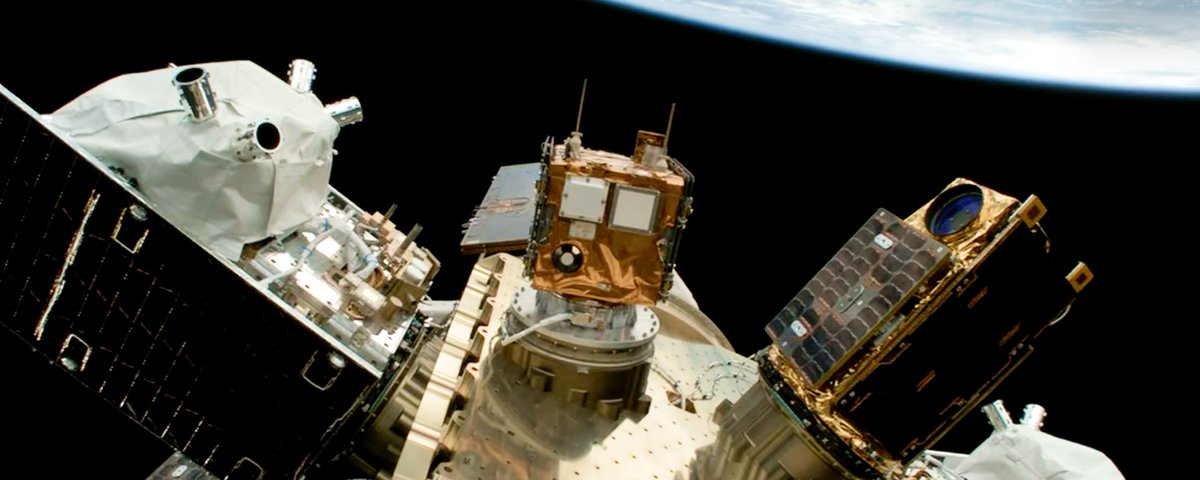
Anyway, there are working satellites in orbit with real imagery beaming down that need our attention and many more launching very soon. Back to work.
*Trigger warning below*

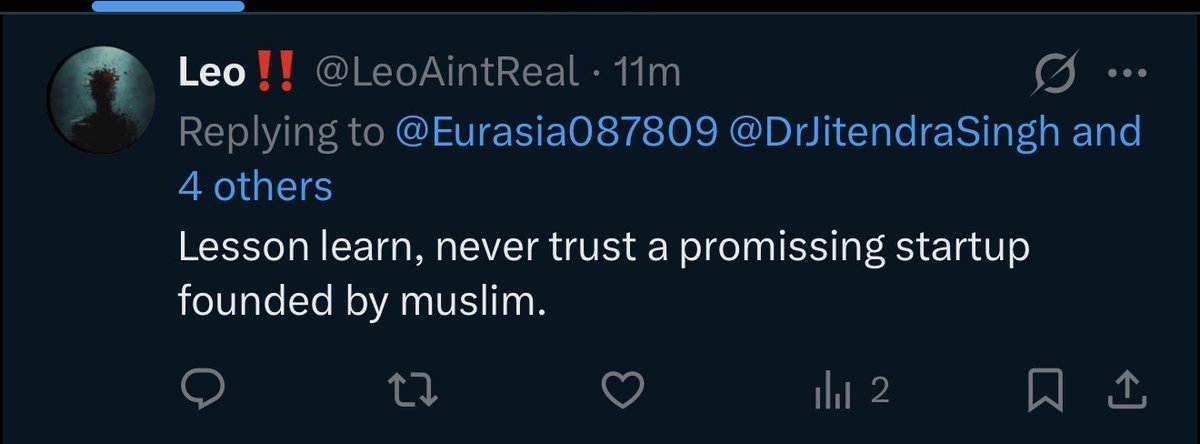

There are many more but you get the gist :)