you have to expose yourself to luck.

文章目录
During my first few years in this space, I used to hear a certain type of comment that, although not necessarily ill-intentioned, would bother me a little.
"Man, you got so lucky."
"How did you manage to pick that one? It had a 0.001% chance of working out, and it actually did."
Comments like these made me feel as though people were dismissing my efforts. As if the results I had achieved were simply a product of chance rather than the decisions I had made, the time I had invested, or the risks I had been willing to take.
But after taking a step back and looking at things more objectively, I realized something.
THEY WERE RIGHT.
I GOT LUCKY.
And there's nothing wrong with that. I got incredibly lucky, and denying it would be ridiculous.
But that got me thinking about another question: why did I seem to have so much more luck than other people? Was it simply random? Did chance decide to favor me instead of everyone else?
Well, maybe there was some of that. After all, we can't control every variable that influences an outcome. However, I believe the biggest factor was something else entirely.
I PUT MYSELF IN SITUATIONS WHERE LUCK COULD FIND ME.
I exposed myself to places, people, opportunities, and situations where something extraordinary could happen. And by doing so, I increased my chances of being in the right place when luck finally showed up.
Most people who didn't achieve the same results weren't necessarily less intelligent, less capable, or less hardworking. Many of them simply never put themselves in a position where those things could happen in the first place.
And I think that distinction is incredibly important.
WHAT DO I MEAN BY LUCK?
Before going any further, I think it's worth explaining what I mean when I talk about luck, because not everyone understands the word in the same way.
In my view, luck is when external factors beyond our control end up working in our favor.
Some token is going to do a 1,000x.
Some product is going to become a trend and start selling thousands upon thousands of units every day.
Some underdog team is going to beat an opponent with odds of 1.01.
And the same thing happens in practically every area of life.
Extraordinary things happen all the time. Their probabilities are often difficult to calculate, and their outcomes frequently depend on factors we cannot control. The problem is that we don't know in advance which opportunities will materialize, when they will happen, or who will benefit from them.
We can't decide which token will multiply in value by a thousand, which product will become the next big trend, or which team will pull off an upset. We can't control the wind that pushes a golf ball into the hole at just the right moment, either.
But there is something we can do.
We can develop our skills to anticipate these events, identify opportunities before others do, or build strategies that allow us to take advantage of them when they happen. We won't always get it right, of course, but we can improve our ability to recognize opportunities and put ourselves in a position where we stand to benefit if things go our way.
And here's an important distinction: the goal isn't to control luck, but to improve our position relative to it.
Extraordinary events will continue to happen regardless of what we do. The real question is whether we'll be in a position to benefit when they do.
THE MORE I PRACTICE, THE LUCKIER I GET.
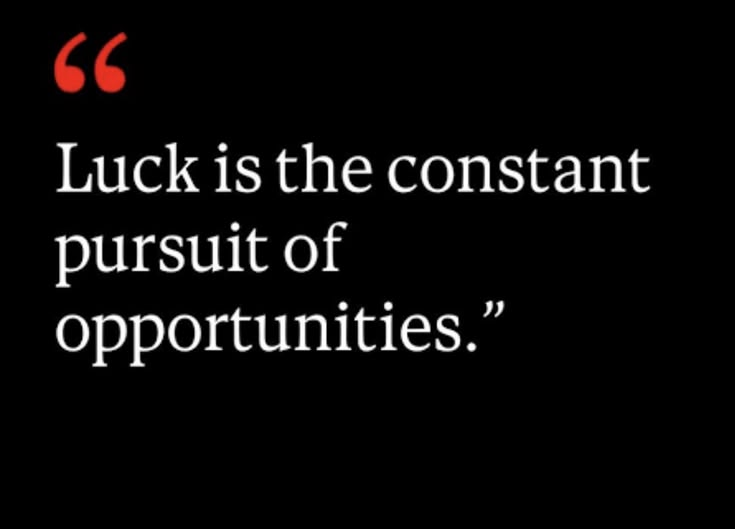
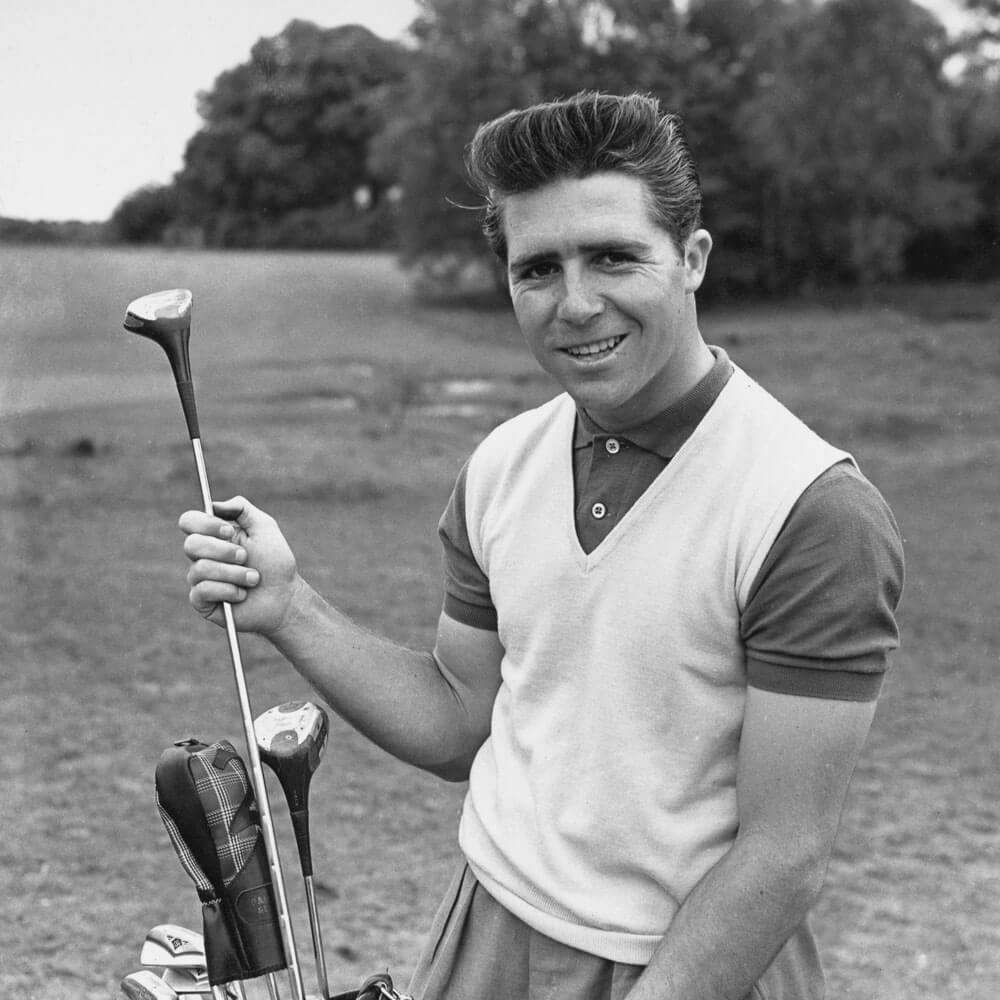
This brings to mind a quote attributed to Gary Player, the legendary professional golfer:
"The more I practice, the luckier I get."
It might sound like one of those motivational quotes people repeat without thinking too much about it, but I believe there's a much deeper idea behind it.
Think about golf. During a single shot, countless factors outside the player's control can influence the outcome. Wind direction and speed, humidity, the way the ball bounces, or even tiny irregularities in the grass can make a difference.
And the higher the level of competition, the more significant those small differences can become.
Imagine a golfer hitting an extraordinary shot. He calculates the trajectory, controls his power, executes the swing perfectly, and sends the ball rolling toward the hole until it stops just two centimeters short.
At that exact moment, a small gust of wind pushes the ball just enough for it to drop into the hole.
We could say he got lucky. And we'd be right.
But here's the interesting part.
That tiny gust of wind only made a difference because the golfer had already hit an extraordinary shot. Luck played a decisive role, yes, but it needed everything else to be in place before it could produce that result.
If I had attempted the same shot, I probably would have ended up twenty meters away from the hole. Even if I had received exactly the same help from the wind, I would have been nowhere near the same outcome.
The luck wouldn't have disappeared. My lack of skill would simply have made that little advantage practically irrelevant.
LUCK WAS THE DIFFERENCE BETWEEN AN EXTRAORDINARY SHOT AND A PERFECT ONE. NOT BETWEEN A TERRIBLE SHOT AND A PERFECT ONE.
And I believe this same logic applies to far more things than we realize.
LUCK NEEDS OPPORTUNITY.
Think about something as ordinary as meeting your girlfriend.
You might think that meeting your girlfriend in a city with hundreds of thousands of people was pure luck. And to some extent, it was. But a series of decisions also made that encounter possible. You started socializing more, going out with your friends, making an effort to meet new people, and having conversations with women. Every one of those decisions increased your chances of crossing paths with that person.
You had no idea who she would be or when you would meet her, but you were creating the conditions for it to happen.
And the exact same thing applies to money.
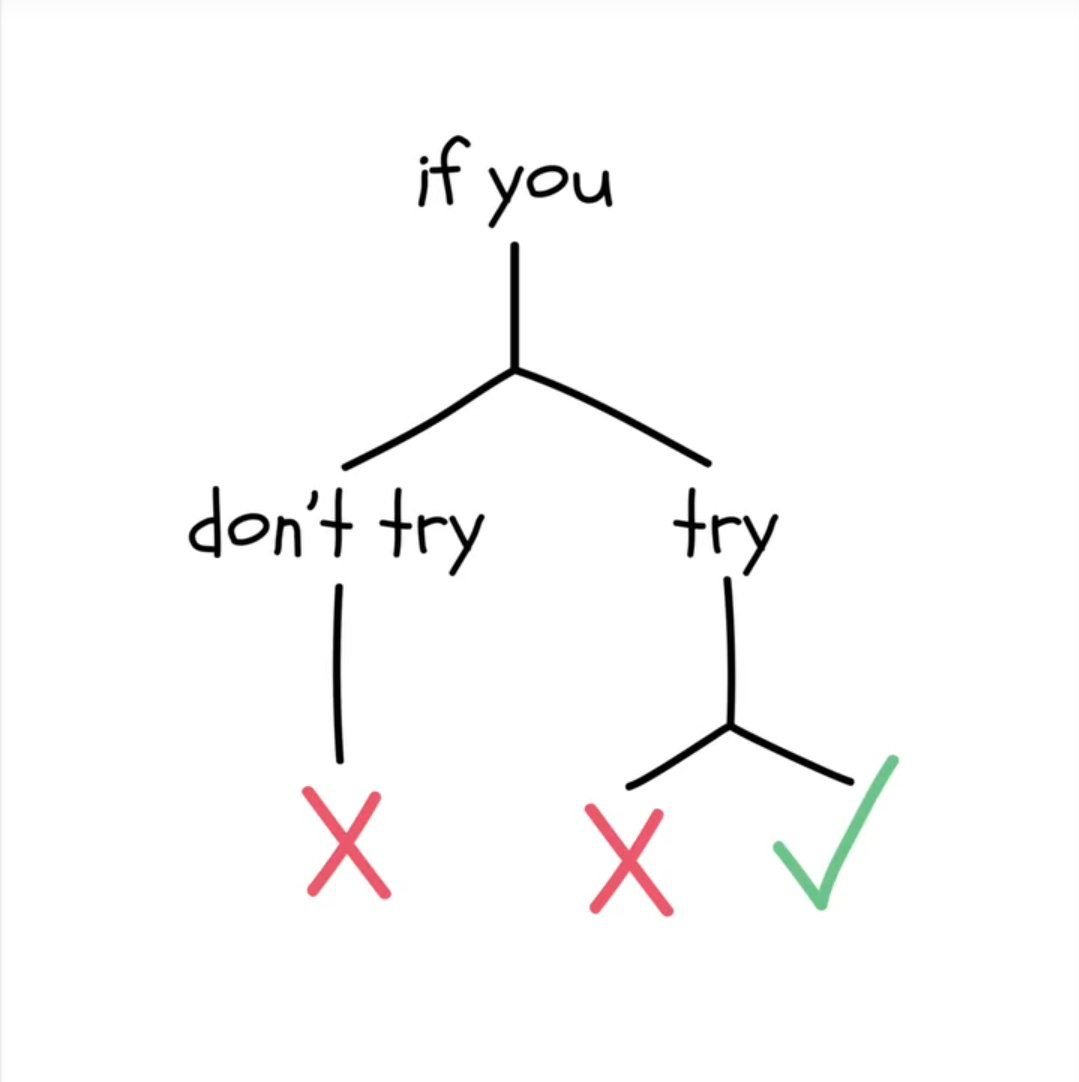
That friend of yours who made a 1,000x on a token probably spends hours scanning projects and looking for opportunities. Maybe he got lucky with that particular token, but for that possibility to exist in the first place, he had to expose himself to hundreds of opportunities that led nowhere.
Your friend who landed an amazing job had probably spent years building a solid resume, learning through underpaid jobs, developing valuable skills, building a reputation, and meeting interesting people in his industry.
Then, on some random Tuesday, an incredible job opening comes along. Great pay, excellent growth opportunities, and everything he could ask for. Your friend already had most of the groundwork done. He had the skills, experience, and connections needed to take advantage of that opportunity.
Was he lucky? Absolutely.
But he had also spent years preparing himself to benefit from that luck.
What about you?
How many times have you come close to an incredible opportunity without even realizing it? How many dream jobs have you missed out on because you didn't have the skills needed to get them?
Your friend had put himself in a position where luck could work in his favor. Maybe you hadn't.
And if you keep building that position, exposing yourself to new opportunities, and improving your abilities, you increase your chances of eventually being the person who's in the right place at the right time.
That's why I'll repeat this as many times as necessary: YOU NEED TO EXPOSE YOURSELF TO LUCK.
How can you do that?
Constantly improving your skills.
Getting closer to people who are already where you want to be.
Preparing yourself to take advantage of opportunities when they arise.
Keeping up with the latest trends in your industry.
Being more disciplined than the average person.
Trying again and again, even when you don't see immediate results.
Building a mindset focused on growth and finding opportunities.
And let me tell you something else: it's possible that luck has already come looking for you, but you weren't ready when it showed up.
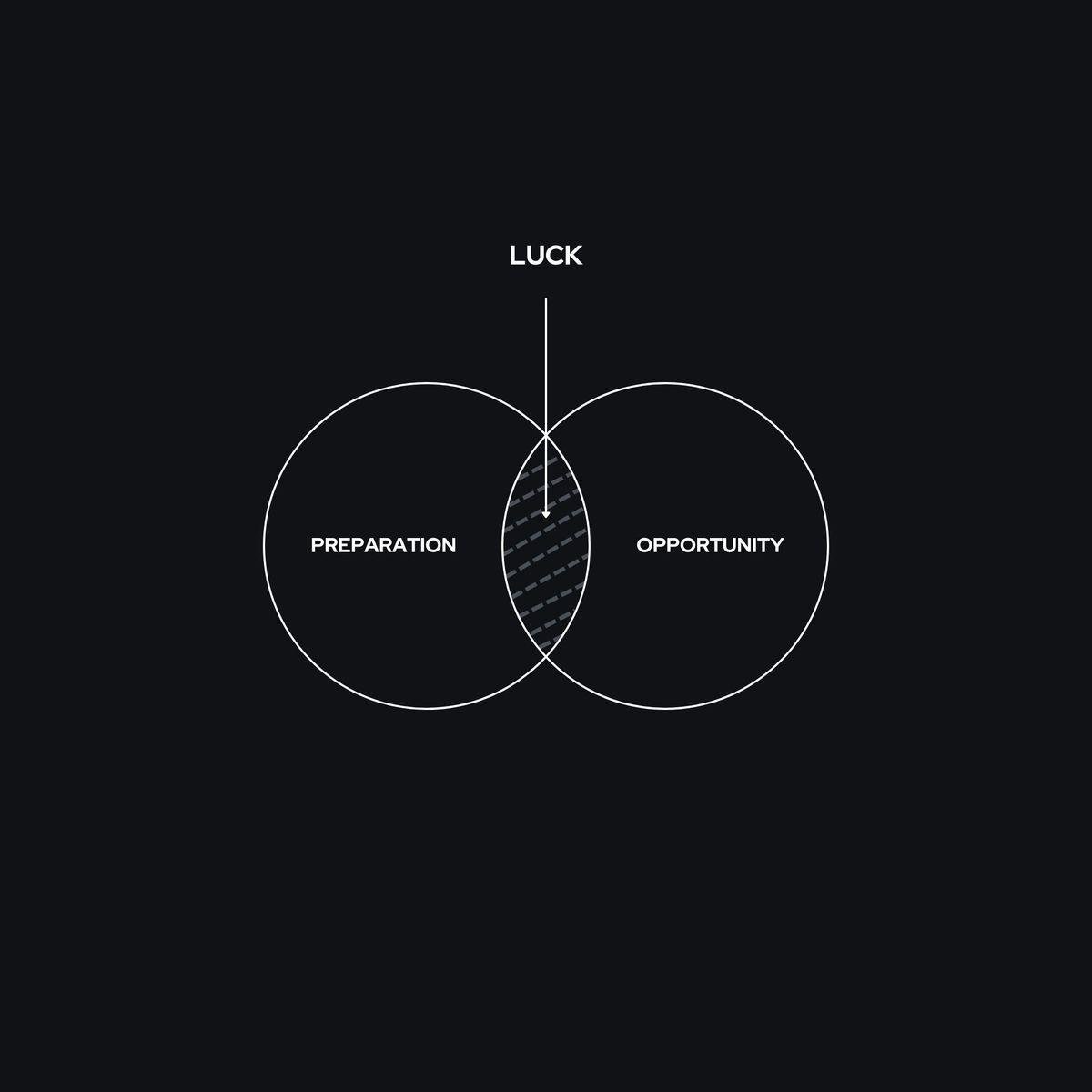
If someone offered you your dream job tomorrow, or someone came along willing to fund your business idea, would you actually be ready to take advantage of it? Do you have the knowledge, discipline, and ability to handle that opportunity?
Most people have dreams and ambitions, but many wait until an incredible opportunity comes along before they start acting like the person capable of taking advantage of it. They promise themselves that when the time comes, they'll work harder, become more disciplined, and develop the skills they need.
But that's not how it works. If the opportunity of a lifetime showed up tomorrow, you wouldn't have time to suddenly become the person you need to be to make the most of it. That preparation starts long before you have any guarantee that it will pay off.
And this doesn't just apply to business or money. You see it happening in sports all the time.
You've probably heard someone say, "This guy is so lucky. Every rebound falls right into his hands." But a lot of what looks like luck from the outside is actually the ability to read the game, anticipate your opponent's movements, and position yourself where you're most likely to recover the ball.
When Ben Shelton hits a serve like a missile and lands an ace that clips the line by just a few millimeters, there's also an element of luck involved. Tiny variations can be the difference between a winning serve and a ball that lands out.
But Shelton didn't reach that level by accident. Behind that serve are years of training, thousands of repetitions, and a level of technical skill that most of us couldn't even begin to replicate.
He's probably been lucky on countless points throughout his career. But we're talking about him because he put in the work needed to reach a level where luck can turn an extraordinary serve into an ace. For us, who are terrible at tennis, that same bit of luck would hardly make a difference.
And that brings us back to the same principle: luck can be the small factor that turns an extraordinary result into an even better one, but first, you need to be capable of producing an extraordinary result in the first place.
You can't choose when luck will show up, and you can't guarantee that it will work in your favor. But you can work to make sure you're ready when it does.
Don't wait for an opportunity to show up before you start preparing. Get ready so that when it finally comes, it doesn't catch you unprepared.
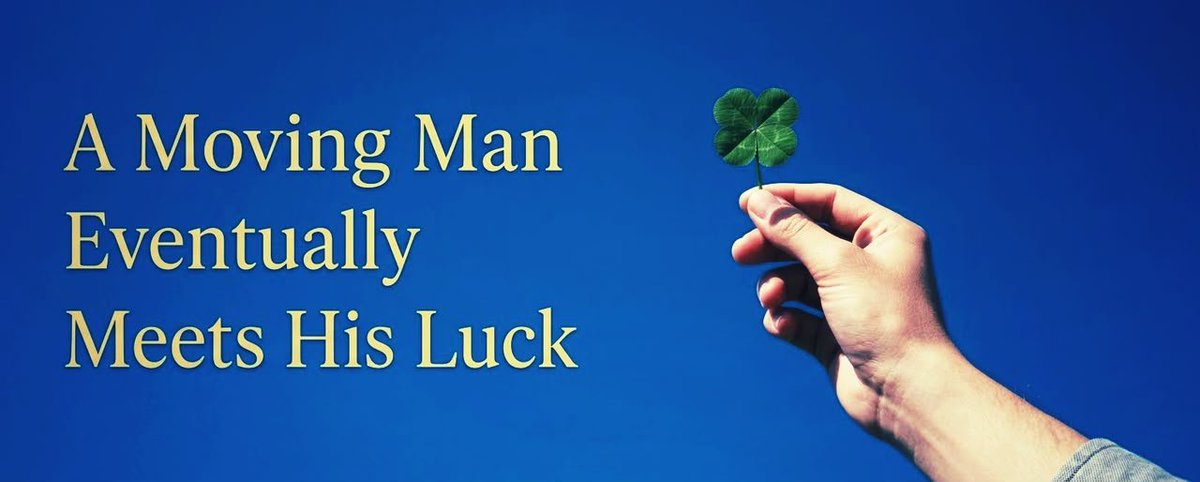
HOW TO INCREASE YOUR "LUCK SURFACE AREA."
Don't be a dickhead: Being a genuine individual will get you far when it comes to connecting with people. As social beings, most people have an intuition for bullshit and for others who are just looking to extract value.
Pursue things you are deeply passionate about: Because for a while, the juice will not seem like it's worth the squeeze, and the grit required to weather this will be a good test of belief + passion for what it is you're pursuing.
Put yourself out there: If no one knows who you are & what you bring to the table, you have effectively put a tremendous damper on the opportunities at your disposal. There is no such thing as a perfect start. The best time to start is now.
enjoy the process: The man who loves walking will get further than the man who loves the destination
Make your worth clear: Make it so that it is impossible to recreate the value you offer or create unless someone has lived through your life, spent the time & lived through unique experiences to acquire wisdom & the skillsets you have mastery of.
Thanks for reading. I hope you enjoyed the article. If you'd like to share some feedback, talk about your own experiences, or suggest a topic for future articles, I'd love to hear from you. I'll also leave some of my other articles here in case you find them useful.