Stocking Up on Food When You Don’t Have Money or Space
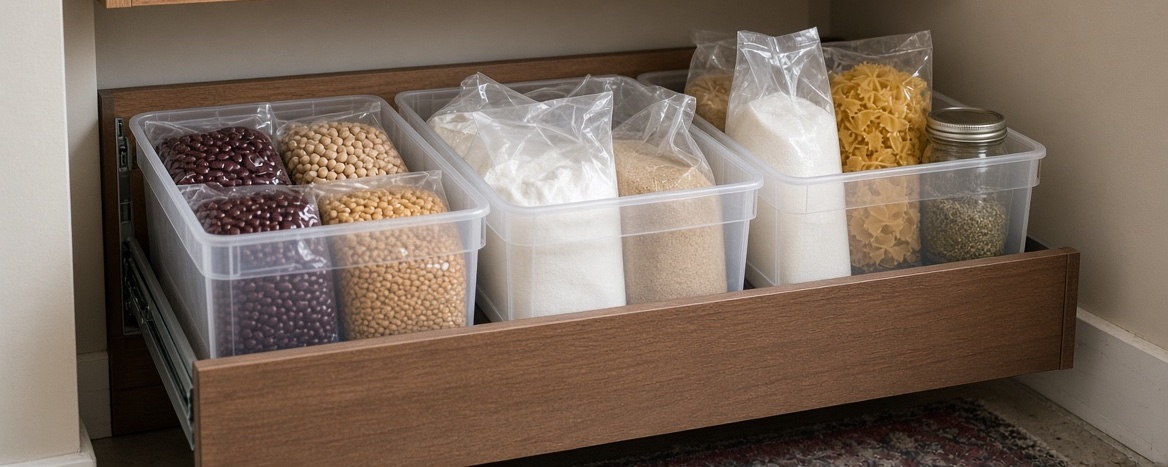
You don’t need a bunker or a credit card to stop being one bad week away from an empty fridge.
Most people think preparedness means dropping hundreds of dollars on freeze-dried meals and gadgets. It doesn’t. For a lot of us, it’s just slowly building a little food buffer and a few practical supplies so a job loss, a price spike, or empty shelves don’t immediately turn into a crisis. You can do this with almost no money upfront and almost no extra space. You just have to be deliberate about it.
Why a food buffer matters more than people think
When money gets tight or the supply chain hiccups, the first thing that gets stressful is food. The person who already has a few weeks of staples they actually eat is in a completely different position than the person who has to buy every single meal at full price while the shelves are thin or the prices are stupid. A small pantry doesn’t make you a prepper. It makes you less fragile.
How to build a food supply without spending a fortune
Start with what you already eat and buy one extra when it’s cheap. That’s it. No bulk warehouse trip required at first.
Focus on calorie-dense, versatile staples that last. Rice, dried beans, oats, pasta, potatoes (or instant potatoes), peanut butter, cooking oil, flour, sugar or honey, canned tomatoes, canned beans, and canned meat if it’s on sale. These store well, stretch meals, and don’t require special gear. A 20-pound bag of rice or a few bags of beans when they’re on sale is often cheaper per calorie than anything else in the store. Buy the extra when it’s on sale, not all at once. When rice or beans drop in price, grab one more bag than usual. When peanut butter is on sale, get an extra jar. Rotate: eat the oldest first and replace it. Over a few months this quietly turns into a real buffer without a big hit to the budget. Watch the generics and the clearance. Store-brand rice, beans, and canned goods are usually fine. Clearance canned goods with decent dates are often half price. Freeze bread or meat when it goes on deep discount and you have room. Personally I store ZERO "survival" type freeze dried meals. They are a HUGE waste of money and are a marketing scheme to get scared people to spend a LOT of money fast. Use what little space you have. A couple of plastic bins under the bed, a shelf in a closet, or the back of a cabinet will hold a surprising amount of rice, beans, and canned goods. Vacuum-seal bags or just good airtight containers keep pests out. You don’t need a dedicated pantry. Preserve the cheap stuff. If you find a big bag of apples, tomatoes, or whatever is in season for almost nothing, learn one simple method: freeze it, dehydrate it in the oven on the lowest setting, or water-bath can high-acid foods if you already have jars. Even a few jars or freezer bags of something you grew or bought cheap adds up. The goal is 2–4 weeks of calories you can actually cook and will actually eat. That’s realistic on a tight budget. You can expand later.
Other low-cost supplies that punch above their weight
Food is the foundation, but a few other things reduce how often you have to spend money when things get tight:
Basic first-aid supplies you can build from sales and generics (bandages, pain reliever, anti-diarrheal, electrolyte packets). Hygiene items bought on sale and rotated (soap, toothpaste, toilet paper, feminine products if needed). One extra pack when it’s cheap is enough to start. A couple of cheap but durable tools: a manual can opener that isn’t garbage, a good knife, a lighter or matches, and duct tape. These last years. Water: even a few clean jugs filled from the tap and rotated, plus knowing how to make water safer if you ever have to, covers a lot of short disruptions. None of this requires a big shopping trip. It requires noticing when something you already use is on sale and grabbing one more.
The actual method
Pick one or two staples this month. When they’re on sale, buy the extra. Learn two or three meals that use mostly those staples so you’re not stuck with food you don’t know how to cook. Store it somewhere dry and out of the way. Eat and replace. That’s the whole system.
You don’t have to do it perfectly or all at once. A little food in the cupboard that you know how to turn into meals is already more preparation than most people have. The ones who start this before the money gets tight or the shelves get weird are usually the ones who sleep better when it happens.