The 4 Archetypes of Man: The Unconscious Patterns Secretly Guiding Your Life
文章目录
men are haunted by the vastness of eternity.
there seem to be so many paths, so many directions in which one can go, and so we ask ourselves: what is the best way to live this life?
is it about power? as nietzsche put it: life is a constant quest of accumulating more and more power and ruling it according to your will?
or, stemming from the greek thought: life is all about knowledge. learning your whole life so that you can finally know thyself.
yet another path, followed by the greatest artists the world has ever seen: life as a canvas of your vision. imagining & feeling deeply, then expressing it through your own creation.
or maybe it is not about you at all, but devoting yourself to a cause greater than yourself, serving the higher good like the medieval ideal of a knight.
the true answer is: none of them and all of them at once.
every man shares the same universal patterns, buried deep in the collective unconscious.
that’s why, across thousands of years, civilizations from different continents that never had contact with each other carved the exact same symbols, painted the same figures and told the same myths.
but in every man, there is one dominant pattern. an inborn compass in his psyche that steers his actions and directs his fate.
conscious free will, as we like to believe we’re driven by, is only half of the story. the second half was imprinted in you as a pattern long before you were born.
think about your childhood: you probably had certain heroes you were drawn to. it could be a certain story, certain music or a certain game. this is an inborn archetype speaking the loudest when it’s not yet buried in the noise of adult life.
most people however never become conscious of their dominant archetypes. more so, they live the exact opposite of how they were meant to live.
the man meant to rule ends up ruling no one, not even himself.
the man meant to fight ends up fighting the people closest to him.
the man meant to create ends up chasing the next hit.
and to be honest: it’s hard to blame them.
we live in a society that has less and less self-awareness. it is believed that every problem can be solved with more effort, but working harder without self-knowledge only makes one drown even deeper in his misery.
the true problem is the lack of a far more subtle type of work: the inner work, or what carl jung called the confrontation with the shadow, which nowadays is a lost art. recognizing, confronting and integrating the patterns that were instilled within you long before you were born. instead of fighting against your nature, you recognize it and integrate it into your conscious mind.
they don’t teach you this in the school system. they don’t teach you this in a work environment. so today, I’m about to teach you this.
it’s 6AM as I write these words. my lab is buried under the material of the last days’ research.
rays of the rising sun fall on a flat-open man and his symbols by carl jung.
beside it, a whole stack of books: king, warrior, magician, lover by moore and gillette. johnson’s inner work. and on top of it all, a time-worn, utterly destroyed copy of the corpus hermeticum.
black coffee went cold as I went through a bunch of notes I’ve taken throughout the days of research, in handwriting even I can’t read now...
we’re about to go through all that, and answer once and for all:
what archetypes really are, what the 4 main expressions of them are, and lastly: what steps one should take in order to recognize and integrate them.
let’s get into it.
I. THE ARCHITECTURE OF A MAN’S PSYCHE: THE COLLECTIVE UNCONSCIOUS & ITS ARCHETYPES
“the thing that hath been, it is that which shall be; and that which is done is that which shall be done: and there is no new thing under the sun.” — ecclesiastes 1:9
THE ANALOGY OF A CAVE: THE 3 LAYERS OF THE PSYCHE
in 1909, carl jung dreamt of a house.
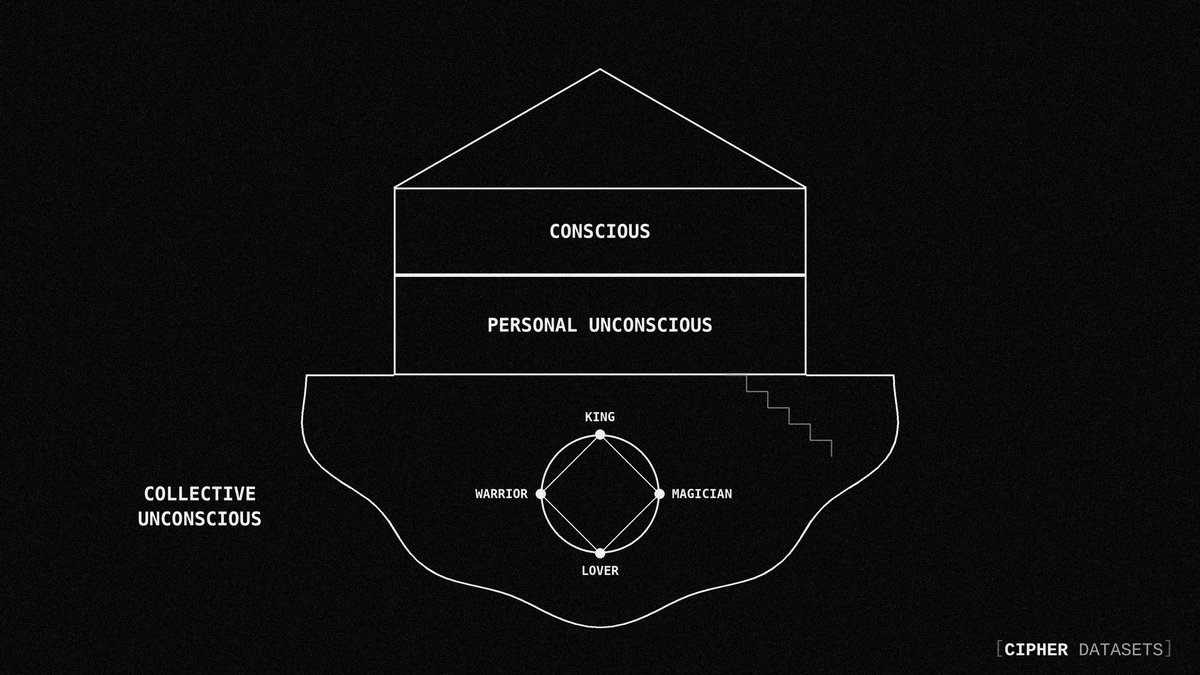
he found himself on the upper floor, a lived-in salon furnished in rococo style, with fine old paintings on the walls. as he went down the stairs, he entered the dark, cold medieval rooms: old furniture, dim light, red brick floors. even further below: a vaulted cellar and the ancient roman foundations of the house. and at the very bottom, a cave scattered with prehistoric bones and skulls.
the dream stayed with him for years, until he built on it his life’s work: the theory of the collective unconscious.
he interpreted the upper floors as the personal unconscious of a man’s psyche. everything you lived through, felt and buried deep inside your own, personal subconscious database.
even though forgotten, these past experiences are still present in you and silently steer your actions from the shadow.
the further down you go into the layers of the psyche, the older they get, until you reach the cave at the very bottom, which represents the collective unconscious: the deepest, most ancient layer, shared by EVERY man who ever lived.
THE SECRET OF COLLECTIVE UNCONSCIOUS
the most fascinating part of this theory is that, throughout millions of years of evolution, our ancestors left a universal imprint rooted deep in our psyche.
every fear, every instinct, every image that kept them alive was passed down to you. not as a memory, but as a pattern.
that’s why, across thousands of years, civilizations from different continents that could never possibly have met share the same myths, appearing in different forms.
a great flood that wipes out mankind: utnapishtim in mesopotamia, manu in india, the popol vuh of the maya.
a hero who descends into the underworld and returns: inanna, orpheus, the maya hero twins.
a giant tree holding the whole world together: yggdrasil of the norse, the sacred ashvattha of india, the great ceiba of the maya.
different times. different continents. the same patterns.
THE HIDDEN ARCHETYPES WITHIN THE COLLECTIVE
the word itself comes from the greek. archē, the origin. typos, the stamp.
literally: the original imprint. the seal from which every copy is struck.
jung didn’t invent it. he was simply the first to study it in the psyche, plainly and systematically.
in the poimandres, the first book of the corpus hermeticum, nous shows hermes the archetypal form that existed before the beginning of the world.
centuries before that, plato called them forms: eternal patterns behind everything that exists. jung simply brought them inside the psyche.
to name it plainly, an archetype is an inborn pattern in the psyche that shapes how you perceive yourself and the world around you.
think of a bird building its first nest. no one ever taught it how. the pattern was there before the bird was.
jung saw the psyche the same way. the archetype is to the mind what instinct is to the body.
yet despite the fact that archetypes are collective and shared among all humans, some are stronger and some weaker, depending on a man’s inborn nature and on what his life awakens in him.
jung compared it to the structure of a crystal. every crystal is unique, yet all grow along the same invisible axis. the axis decides the shape before the crystal even exists. life decides what it becomes.
and this is where the 2 layers meet.
what you live through in your personal unconscious decides how the archetype from the collective one comes to life.
what life awakens, you can live. what life wounds, leaves a shadow.
THE DISTORTION: HOW AN ARCHETYPE TURNS INTO A SHADOW
as we come into this world, the archetype within takes its purest form: unrepressed, unsuppressed, raw.
we act on these inner urges freely, and they express themselves in everything we do.
a child shouts without shame. cries without shame. fights without fear. asks a thousand questions a day. spends countless hours in its imagination and expresses its wildest visions through drawings, sandcastles and more.
with time however, the world begins to cast its own curse, slowly repressing the raw archetype within.
the school system and teachers demanding obedience, parents telling us to become someone we’re not, friend groups we want to fit into, and a society that rewards masks over being your true self.
we’re gradually becoming less driven by the urges from within, and more by the expectations of the external world, which leads to repression and traumas in the personal unconscious.
the shadow is exactly that: everything we were forced to bury, sinking into the personal unconscious and wrapping itself around an archetype from the collective unconscious.
but the imprint itself never breaks. it was there before you, and it will be there after you.
it can only distort.
an archetype lived consciously flows through you in its fullness, but an archetype buried in the dark can split itself in two: an active pole and a passive one.
one grabs too much of its power. the other gives everything away.
the ancients had a cure for this. every culture had its rites of initiation, the trials that turned a boy into a man.
today they’re gone. and so most men never become men. they stay boys with jobs, beards and bills, run by patterns they don’t even know exist.
there are countless different archetypes. jung himself said: “there are as many archetypes as there are typical situations in life.” but of them all, some stand at the very centre of the psyche.
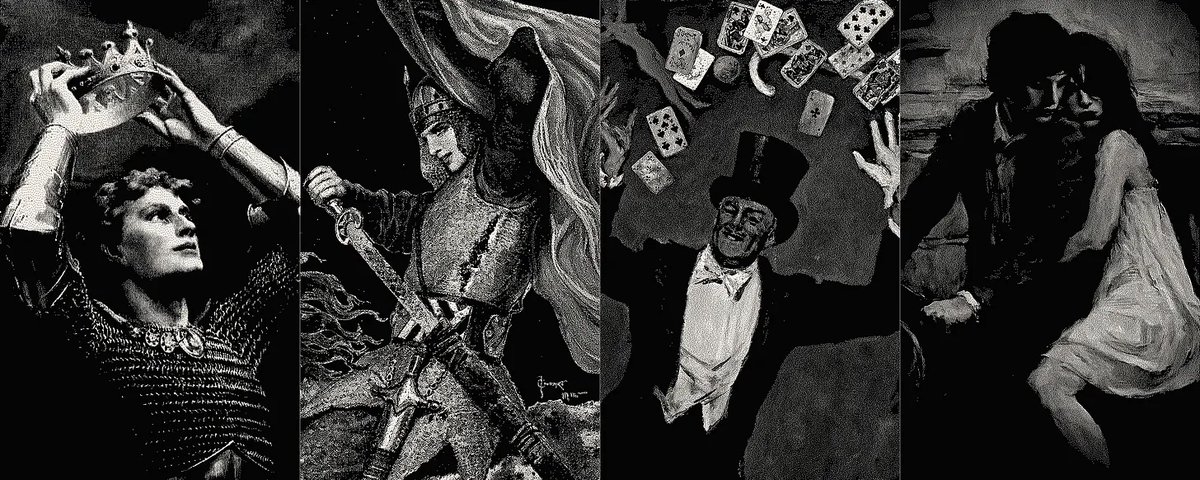
in 1990, the jungian analyst robert moore and douglas gillette mapped the mature masculine psyche into 4 archetypes, all of them present in every man, one of them dominant.
let’s go through all of them, and the 2 shadows each of them casts.
II. THE 4 ARCHETYPES OF A MAN
THE KING: “I AM…”
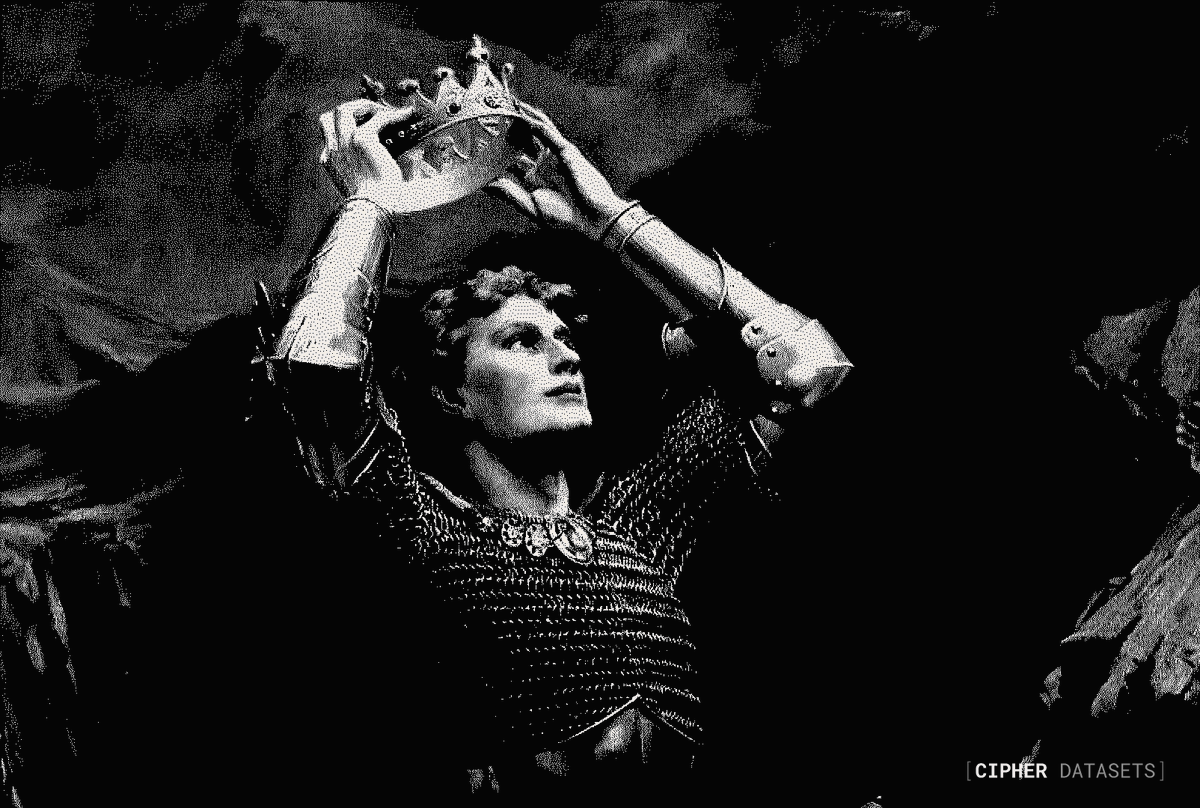
the highest archetype of a man, the one that is a balanced mixture of all the others.
the one who connects action, knowledge and empathy in service of justice and order.
emanating a calm, almost magnetic presence, the king is a natural magnet to loyalty. people flock to him, so that he does not have to chase power himself. he is called to it.
it’s no coincidence that in the ancient world, kings were seen as divine. rulers executing divine will through their earthly mandate.
in ancient egypt, pharaohs were literal gods on earth, the living horus. and the japanese word for emperor, tennō, literally means “heavenly sovereign.”
although he possesses the highest power and rules over his people, the true king never uses it to satisfy his ego.
this means that he must detach the crown from the man himself.
naturally ambitious and decisive, the king always prioritizes his people and his realm over himself.
this however doesn’t mean that the king is always nice. he can also be ruthless and uncompromising if the situation demands it.
perhaps the greatest example of this archetype in its pure form was the roman emperor marcus aurelius.
the most powerful man in the world spent his reign fighting a plague and long wars on the danube frontier, and at night, he wrote notes to himself in greek, never meant to be read by anyone.
in them, he kept reminding himself: “see that you are not made into a caesar.”
when he took the throne, he insisted on sharing it with his adoptive brother lucius verus. the crown was never his. he served it.
the shadow: tyrant / weakling.
power is the heaviest thing a man can carry, and that’s why it’s so hard to keep his crown intact.
most of the rulers history remembers are the tyrants. the men who use their kingly energy to feed their ego, rising to power only to use it for their own benefit.
caligula was welcomed in 37 AD as a beloved young emperor. within a few years, he was demanding to be worshipped as a living god. suetonius even reports he planned to make his horse a consul.
the other, opposite pole of the king is the weakling. the man with no centre and no self-esteem whatsoever.
he is full of traumas and insecurities, spending his whole life chasing power only to prove something to others.
most of the time, he does not succeed even in that, as he gives his power away to anyone who promises to carry it for him.
THE WARRIOR: “I WANT…”
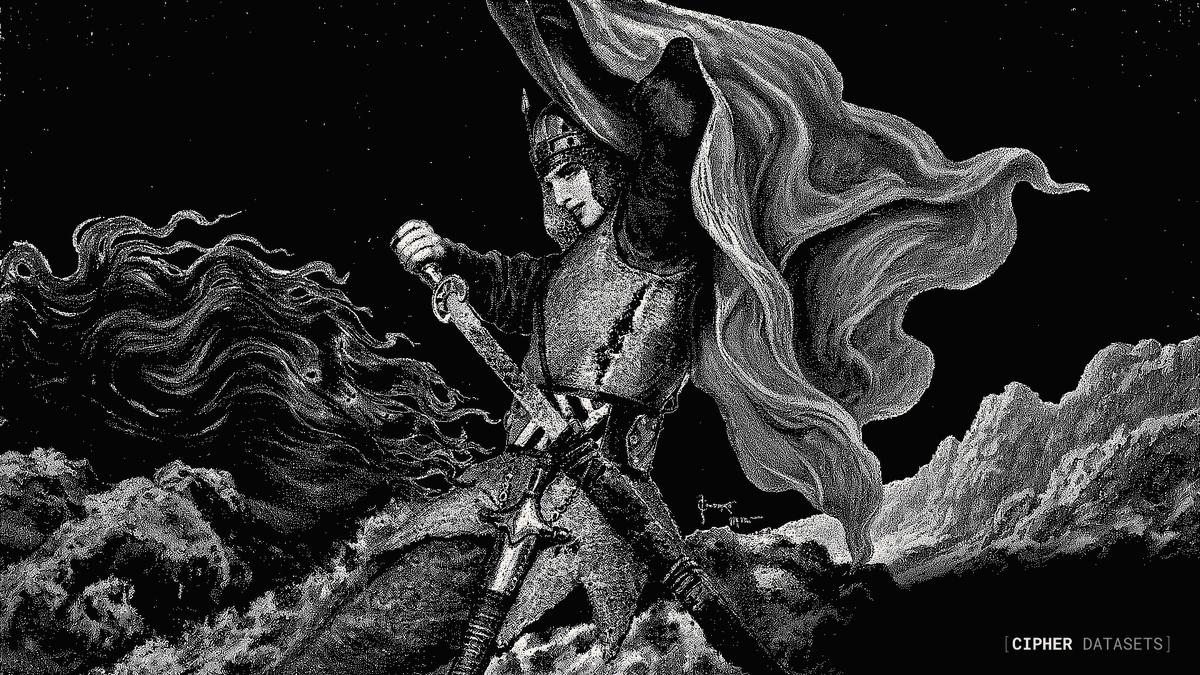
the archetype of action. the one who knows what he wants, and has the discipline to take it.
his energy is aggression, but not the blind, destructive kind. it’s a stance toward life: alert, awake, ready to move.
he has clarity. he sees the target, and nothing else.
he has discipline. he trains his mind, body and spirit until skill itself becomes instinct.
and above all: he serves something greater than himself. a king, a cause, a vision. that’s what separates a warrior from a brute.
the secret of the warrior is that he lives with death as his adviser. he is fearless in his pursuits, because he has conquered death itself.
the samurai’s hagakure opens its teachings with: “the way of the samurai is found in death.” they meditated on their own death every morning. not to become morbid, but to become free. a man who has already accepted his death has nothing left to fear.
perhaps the purest example of this archetype was miyamoto musashi.
he fought his first duel at 13, and by his own account, more than 60 more without a single loss. at the end of his life, he withdrew into a cave and wrote the book of five rings. a week before his death, he wrote 21 precepts for the way of walking alone. no luxury. no attachment. no regret.
the shadow: sadist / masochist.
cut off from a cause, the warrior’s energy turns against everything around it.
the sadist is the warrior without a king. his aggression has nowhere to go, so it turns into cruelty, contempt for weakness, the workaholic who burns himself and everyone around him to the ground.
the masochist is the warrior asleep. he takes every hit, says yes to everyone, lets the world walk all over him. no boundaries. no fire.
and they are the same man. what the masochist swallows, the sadist one day spits out.
homer showed both in one hero.
achilles, the greatest warrior of the greeks, spent most of the trojan war sulking in his tent while his comrades died. then his friend patroclus fell, and achilles killed hector and dragged his body behind his chariot.
the greatest warrior of all was also a broken one, because the only cause he ever served was his own glory.
THE MAGICIAN: “I KNOW…”
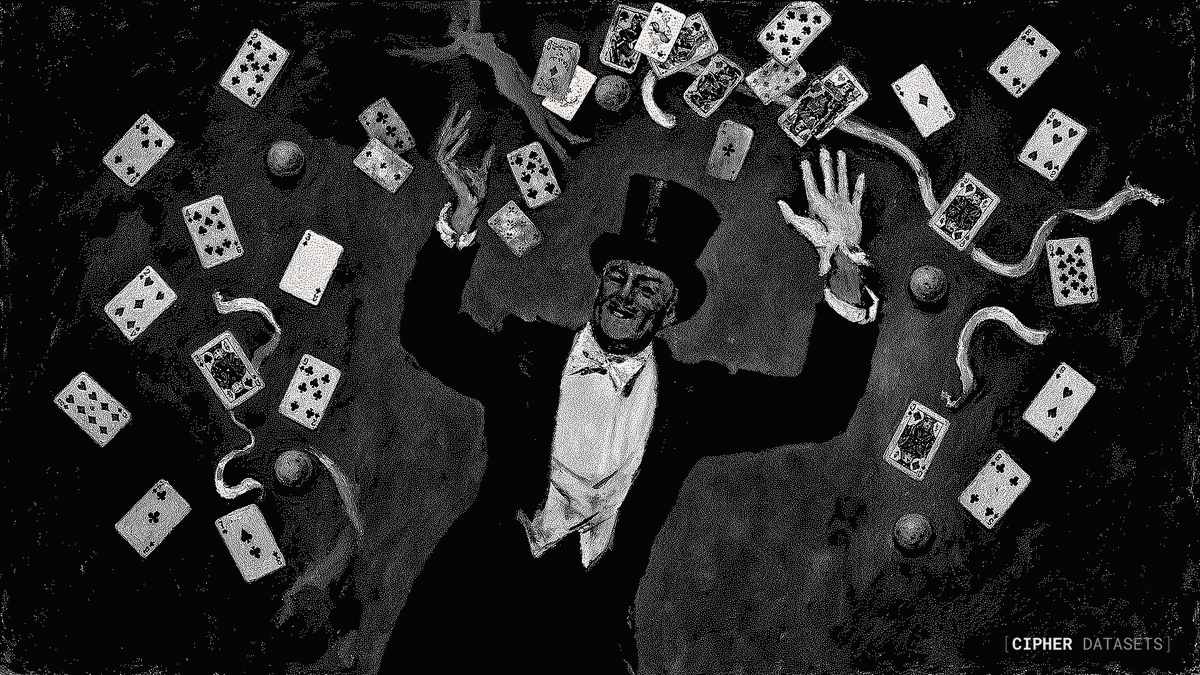
the archetype of knowledge. the one who sees what others can’t.
where the king rules and the warrior executes, the magician understands.
he is the master of hidden forces: he understands the hidden laws of nature, the mechanics of the mind, the patterns behind the visible world.
shamans, priests, alchemists or today’s scientists. all are living expressions of this archetype.
his greatest gift is awareness. the ability to step back, see the whole board, and act instead of react.
and that’s why he guides others through their own transformations. every initiation in history had its magician: the elder who led the boy through the trial, and brought him back a man.
the ideal of the magician was immortalized in the arthurian legends through merlin.
he guided arthur from before his birth, hid him away as a child, and arranged the trial of the sword in the stone that revealed him as the rightful king. then he stood beside the throne as his counsel.
the magician’s knowledge always serves the king, or in modern terms: a higher cause.
the shadow: manipulator / denier.
cut off from the king, the magician’s knowledge loses its purpose.
the manipulator turns knowledge into a weapon. he keeps information to himself, uses it to control people, and keeps others small so that he stays above them. cold, calculating, detached from everything human.
rasputin, the self-proclaimed holy man, gained the trust of the russian imperial family through his apparent power over the young heir’s illness, and used that trust to steer the court from the shadows.
the denier is the opposite. he wants the status of knowing, without its responsibility. he plays dumb, avoids decisions, hides behind innocence. “I didn’t know” is his favourite sentence.
and here’s what connects them: both misuse knowledge. one weaponises it, the other runs from it.
the true magician does neither. he knows, and he serves.
THE LOVER: “I LOVE…”
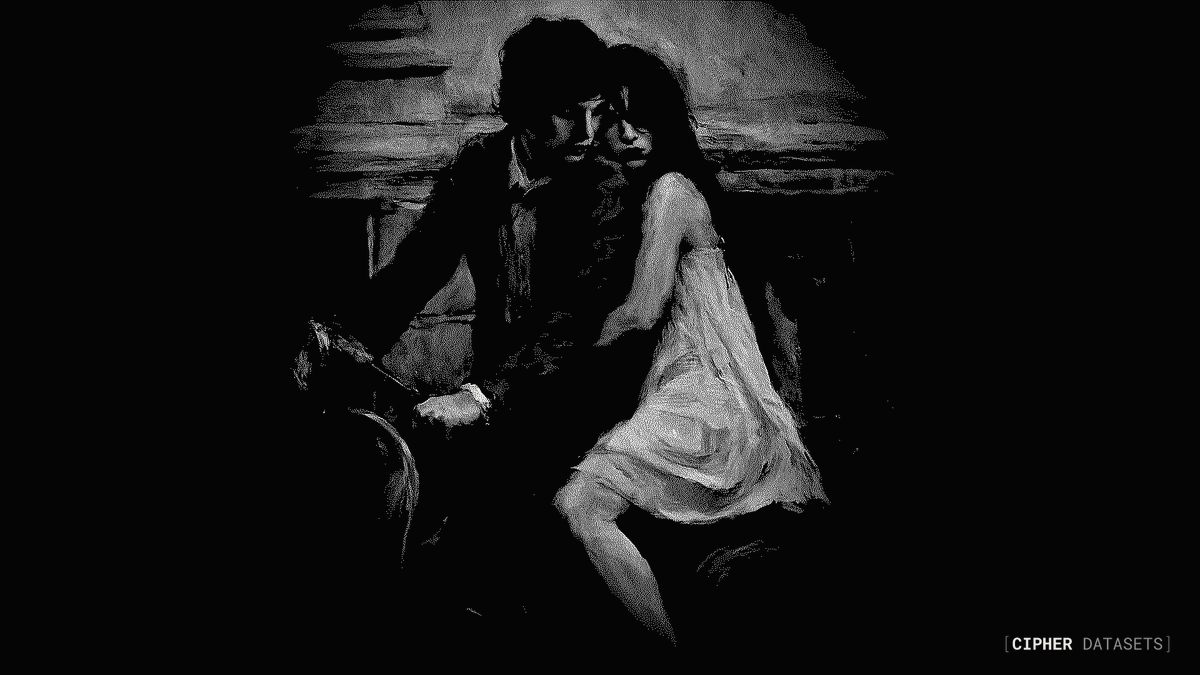
the archetype of aliveness. the one who feels everything, deeply.
he is passion, sensuality, beauty. the taste of food, the sound of music, the touch of another human being. the feeling of being one with life itself.
he is the artist, the poet, the aristocrat of the soul who can’t stop creating because he feels too much to keep it inside.
the lover has no boundaries. that is his gift, and his danger at the same time. without the warrior to contain him, he drowns in his own feeling.
perhaps the purest example of this archetype was rumi, the 13th-century persian poet and mystic.
for years he was a respected scholar and teacher of law. then, in 1244, he met the wandering dervish shams of tabriz, and his whole world broke open. when shams disappeared a few years later, rumi poured his grief into tens of thousands of verses of poetry, still read across the world 8 centuries later.
the scholar became the lover. and the lover became immortal.
the shadow: addict / impotent.
cut off from his true connection, the lover’s energy has nowhere to flow.
the addict chases it endlessly. sex, food, alcohol, the next scroll, the next high. always more, never full, because what he’s looking for can’t be consumed.
mark antony, one of the greatest generals of rome, lost himself in the pleasures that egypt’s queen cleopatra offered him.
he lost himself so much in her that in the middle of the decisive battle of actium, he abandoned his own fleet to follow her ship.
he quickly lost the war, and soon after, his own life.
the impotent lover is the opposite. flat, numb, cut off from life entirely.
no joy, no desire, no colour whatsoever. he goes through his days without feeling a thing.
and here’s what connects them: both have lost the real connection. one tries to flood the emptiness, the other has stopped feeling it altogether.
the true lover does neither. he feels everything deeply, and gives it form through his own creation.
so those are the 4 universal archetypes of a man. look carefully, and you will surely spot traces of each in yourself. the question is not whether these archetypes are real, but whether you live them in their original form, or in their shadow.
III. HOW TO INTEGRATE YOUR ARCHETYPE
“if you bring forth what is within you, what you bring forth will save you. if you do not bring forth what is within you, what you do not bring forth will destroy you.” — gospel of thomas, saying 70
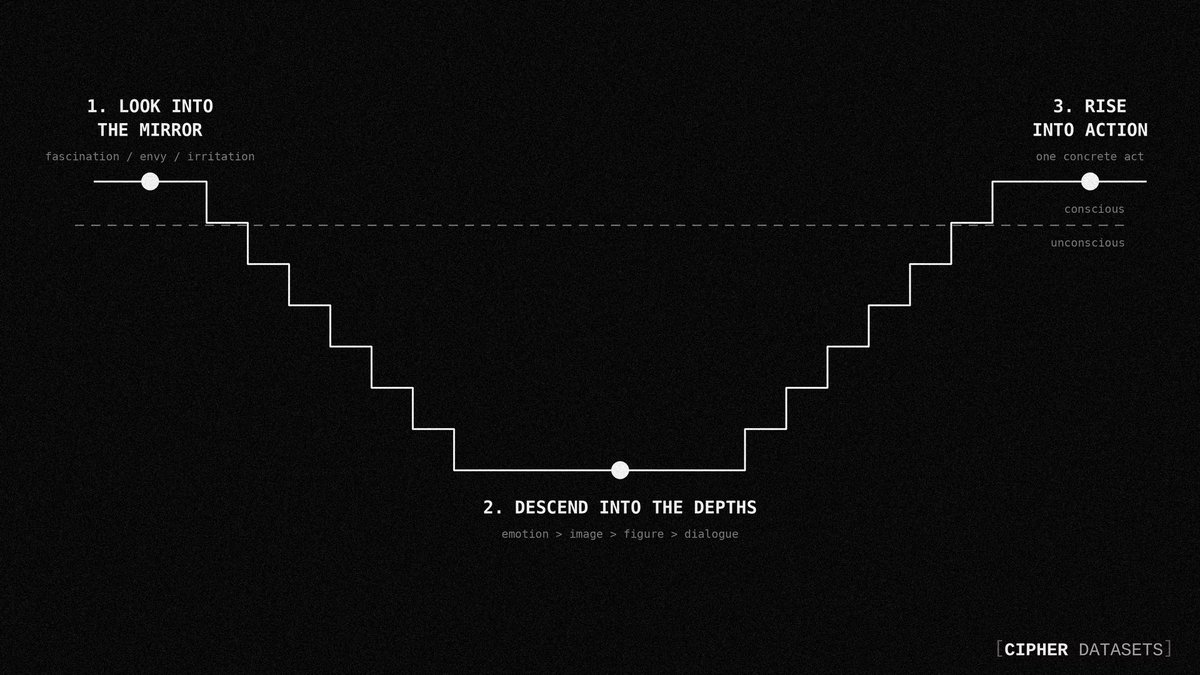
- LOOK INTO THE MIRROR
chances are, that by now, you are already well-aware of your dominant archetype (and the possible shadow it casts on your psyche).
but if not, there are 3 mirrors that will show it to you.
according to carl jung, as well as many other traditions before him, the archetype speaks the most directly in childhood.
in this short period of time, yet incredibly formative, we tend to show an unfiltered, inborn fascination towards certain qualities.
one boy lines up his soldiers and gives them orders. another fights everything that moves. one takes his toys apart to see how they work. another draws for hours, lost in his own world.
but it does not end with childhood. the same pattern, which appears as pure fascination in childhood, can take many forms in our adult life, more often than not: envy.
envy points you to what you’d want for yourself, yet believe you cannot have.
yet another sign one should pay attention to is the moment of overreaction: sudden irritation towards others. it points to the opposite: the shadow, which you don’t want to become, yet somehow you see your reflection in it.
the stronger the emotion, the closer it is to you.
as carl jung said: “everything that irritates us about others can lead us to an understanding of ourselves.”
look well into your own psyche as well as your reactions to others, and you’ll know which archetype is yours, and which pole it lives in.
- DESCEND INTO THE DEPTHS (active imagination)
“and if you gaze long into an abyss, the abyss also gazes into you.” — friedrich nietzsche, beyond good and evil
now, we go deeper with a method authored by carl jung himself.
after his break with freud in 1913, his mentor of 6 years and the man who opened the doors of psychoanalysis to him, it was safe to say jung lost everything: his friends, his colleagues, his place in the psychoanalytic world.
in his own words: “it would be no exaggeration to call it a state of disorientation.”
he isolated himself almost completely.
as he later recalled, it was the darkest, but also the most important period of his life.
every day he sat in stillness, descended into his own depths and... TALKED to the figures in his head.
according to jung, every emotion that you stay with long enough will take form: images, voices, or figures talking to you.
jung’s own was philemon, an old man with the wings of a kingfisher. they walked the garden together, and philemon taught him that thoughts live in the psyche on their own, like animals in a forest.
that is the side of your subconscious that speaks only when free from any stimulation.
free from the waking constraints, the subconscious begins to loosen and you can access it consciously.
the key to integration is not running away or turning from your fears, but looking them straight in the eye, and speaking back to them.
ask it questions. understand where it came from, what it wants from you, and most importantly: how you can integrate the darkest parts of your unconscious and use them for the greater good.
how can you take your passion and tenderness, lost to addictions, and pour them into your own creation?
how can you take the raw will of the tyrant within you, and turn it to the service of others?
only once you know your own shadow can you begin working on it in the physical world.
- RISE INTO ACTION
the last and key step of jung’s technique is closing the encounter with one concrete action.
if the encounter stays purely in your head, it fades into fantasy over time, and changes nothing whatsoever.
jung himself warned that understanding the images is not enough. insight, as he put it, “must be converted into an ethical obligation.”
the main law of your unconscious mind is that it relies on proof: every action you take in the physical world is a proof of the specific identity you’re building, for your unconscious mind.
there however needs to be a clear distinction between deliberate, conscious action and just acting out, which pretty much means you’re living out your shadow impulses.
say: you meet the tyrant deep within you and go out trying to dominate people even more. that’s possession, or ego inflation, so that your shadow controls you, instead of you controlling the shadow.
after every encounter with your unconscious, you need to make a conscious analysis and draw one action you can take in order to adjust it.
say you met the wounded archetype of the king: make this one decision you’ve been postponing this whole time.
as you succeed with it, put your own life in order. then work on the greater good, helping put other people’s lives in order.
if you met the starving archetype of a lover, go out and spend one evening in pure presence, with no goal whatsoever. begin working on your own creation, and incorporate it into your routine and lifestyle with time.
but it all begins with one concrete, individualised decision drawn from the dialogue with your unconscious.
thoughts are seeds, but action is always the vehicle through which this inner work is given its eternal form.
you can do all that meditation, journaling, shadow work, but if it never leaves your head, it will stay there, as yet another fantasy stuck in your unconscious mind.
our great war is a spiritual war, and the only way to win it is by confronting your own demons.
-Cipher.
ps. this publication runs on 2 layers.
you’ve just read the free part, the surface of what I have to offer.
in the paid archive on Substack I go deeper: the hidden mechanics of the mind, the full step-by-step protocols, and the esoteric practices I use myself.
you can find the entire archive of over 20 in-depth protocols HERE, + there are new ones coming every week.
so if you want to join the inner circle and access my deepest work, hit the upgrade button below.
*see you on the other side *→ https://cipheron.substack.com/subscribe