How to automate distribution with Opus 5.5
文章目录
Anyone can build a product in a weekend now... the hard part is getting people to see it, and i've been handing more and more of that job to Opus 5.5 inside Claude Code
because building got easy, and getting noticed didn't
a good product nobody hears about is still a product nobody buys
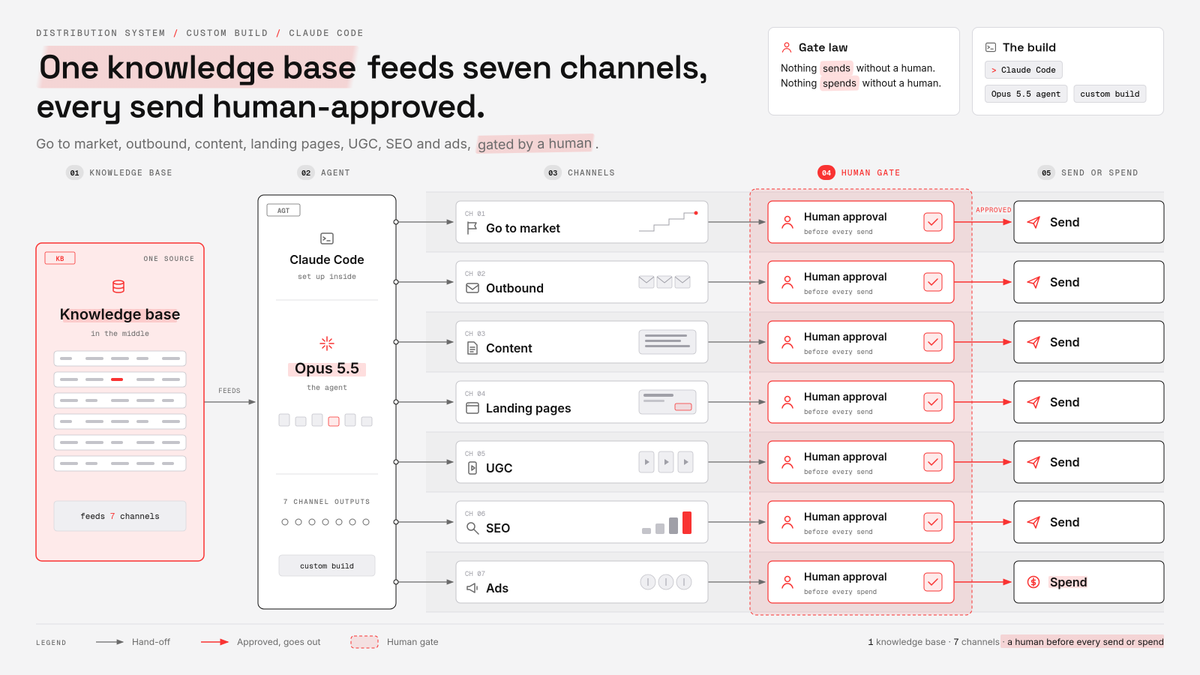
so in this one, i'm giving you ONE system that handles distribution for you: go to market, outbound, content, landing pages, UGC, SEO and ads
the whole thing runs on three simple rules:
-
look at what's working before writing anything
-
judge every channel on sales and signups, never on views
-
nothing gets sent or paid for until you say yes
if you just want this running fast without building anything, start with Viktor in the next section
everything after that is my own build, set up inside Claude Code with Opus 5.5 doing the work
the fast and easy route: Viktor
i'll be straight with you, the Claude Code build below is awesome, but plenty of you don't want to build anything, you just want distribution handled while you run the business
for you there's Viktor... he's an AI employee who joins your Slack or Microsoft Teams like a new colleague
you message him in a channel the same way you'd message a person, he goes and does the work on his side, and he comes back with the finished thing: the research, the drafts, the sheet, the report
what i like about him for this:
-
you connect your tools once, most of them in one click
-
you ask for things in plain English, no setup language
-
you set a weekly job once and he repeats it on his own
-
nothing goes out until someone on your team approves it
-
your whole team sees his work, so nobody starts from zero
the only real setup is picking which tools to connect, and you don't need ten of them... here's the ONE i'd plug in for each part of this article:
-
research and go to market: Apify
-
outbound email: Apollo.io
-
X: Typefully
-
Instagram and TikTok: Blotato
-
YouTube long-form: YouTube
-
landing pages built for SEO: Wordpress
-
lead capture forms: Typeform
-
email sequences: Kit
-
SEO: DataForSEO
-
ads: Meta Ads
-
SaaS payments: Stripe
-
ecommerce store: Shopify
-
courses and communities: Whop
then you just type what you want, something like: every monday, find what's trending in my niche, write five posts for X with the sources attached, and wait for my ok
and that's your setup done
try free at @viktor_com... $100 in credits, no card
my Claude Code build on Opus 5.5
building it yourself gives you full control, your data stays on your computer, and nobody can change the system on you
i run it in Claude Code with Opus 5.5 as the model, because this work is mostly long research, careful writing and checking pages against a brief, and that's what it's best at
the whole setup is one folder on your computer, and that folder is the brain of your distribution agent:
-
a brief: your business, your offer, who buys, what counts as a win
-
a knowledge base: an Obsidian vault, basically a folder of notes
-
a log: what went out, how it did, what changed this week
-
a rules file: what the agent does alone and what needs your ok
the knowledge base sounds fancy but it's just markdown files linked together, that you and every agent can read
then you connect your tools... almost every tool in this article has an API, which just means a door that lets Claude Code use the tool for you once you give it a key
keep those keys in a separate settings file in the folder, never in the brief, and only give each part the keys it needs
then you put it on a schedule with a cron job (an alarm clock for your computer) that wakes Claude Code up and tells it which job to run
the mistake i see all the time is one giant assistant with one endless prompt trying to do everything
so my rule is one agent per job, every agent reads the same notes, and every agent writes down what it did in the log
before building any of it, open Claude Code in the folder and let it interview you:
interview me about my business, my offer and my buyers before we set anything up
ask about goals, pricing, current channels, tools i pay for, what a good week looks like and what i refuse to automate
save everything you learn into brief.md and one note per topic in the vault
that one conversation writes half your brief for you
go to market
this comes first, before any channel touches anything
if your offer is fuzzy, no channel will fix it... it'll just spread the fuzzy version faster
so start by writing down what you sell and what counts as a win for you: a signup, a booked call, or a purchase
then pick how you sell, because that picks your channels:
-
the product sells itself through a free trial or a free plan
-
that means content, SEO and a great first experience matter most
-
or a person closes the deal on a call
-
that means outbound, ads and direct outreach matter most
once that's written, the agent does the research:
-
find the competitors your buyers compare you with
-
grab their pages, prices, offers and the claims they repeat
-
find the posts and ads in your niche that got real engagement
-
collect the doubts and words buyers use in the comments
-
write one note per competitor and one note on how you're different
that last note is the one every other agent reads, so go through it line by line and fix it yourself
it's tempting to go after every channel on day one, but i'd pick two or three where your buyers already spend time and forget the rest for now
a lazy brief gets you confident work in the wrong direction
emailing and outbound
this is where automation can hurt you the fastest, because a few careless weeks can wreck the email domain you send from
the workflow itself is simple:
-
find and filter prospects in Apollo
-
send them to a sending tool like Instantly
-
run a short sequence of emails
-
sync every reply back to your CRM
all of these tools have APIs, so one agent can run the whole chain once you give it the keys
what makes people actually read your first line is writing to a company right after something happened:
-
they just raised money
-
they posted a job for the role you replace
-
they hired a new head of marketing
-
their website hasn't changed in ages
so the daily job is simple: find the reason to reach out, write it down in a note, and write a first line that's about them
then the boring part that keeps you out of spam:
-
set up SPF, DKIM and DMARC on every domain you send from (your email provider walks you through it)
-
add a real one-click unsubscribe link
-
warm up new inboxes for at least 2 weeks before real sends
-
keep it to around 30 emails a day per inbox
-
grow your volume slowly, never in big jumps
-
stop following up the second someone replies or bounces
every cold email also needs your real address and an unsubscribe you respect, that's the law in the US, even when you email businesses
i also have the agent check Google Postmaster Tools every morning, it shows if your emails are landing in spam, and if things look bad it sends less the next day
and the rule in my rules file: the agent writes and lines up the emails, but i approve every new sequence before the first send
content creation: X, Instagram, TikTok and YouTube long-form
if you ask an AI for a viral post with nothing else, it gives you the average of everything it has read... and the average of everything is boring
so i flip the order: first collect what's working on each platform right now, then let the agent write from that
one warning though: just because something went viral doesn't make it true
the weekly loop in Claude Code:
-
find what's working in your niche this week with Last30Days
-
pull the best accounts and posts in full
-
turn every video into text
-
let the agent spot the patterns that fit your offer
-
write the batch with the source posts attached
-
wait for your approval
X: drafts go to Typefully, as posts, threads or articles, and you follow X's automation rules
that means no copy-pasting the same post across accounts, no bot replies to strangers, no automated likes or follows, or your account gets hidden or banned
Instagram and TikTok: one clean video, then a different hook and caption for each app
the same video can do great on Instagram and flop on TikTok, so the agent tracks how many people stay past the first second and how much of the video they watch, not just views
posting goes through Blotato or Ayrshare, and Ayrshare can hold a post until you approve it
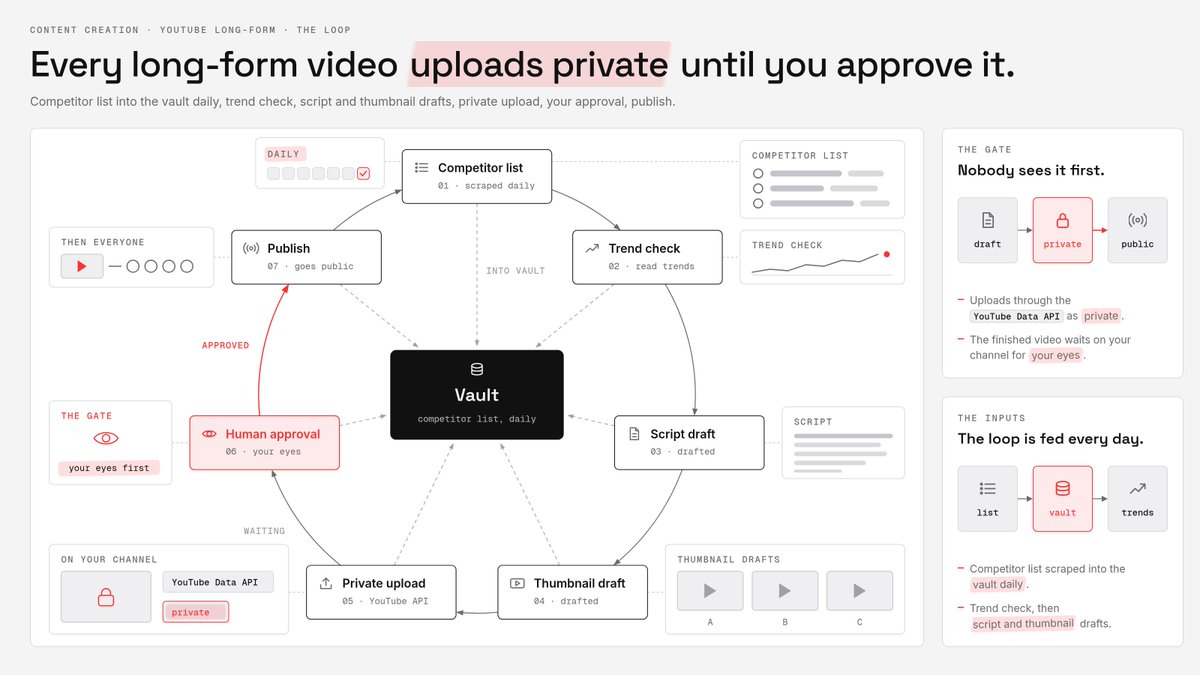
YouTube long-form is my favorite part of this whole system, and the workflow is three steps:
-
scrape thumbnails, transcripts and titles from a list of competitors
-
check every day which topics are trending in your niche
-
write scripts and make thumbnails using the knowledge base built every single day
every video it scrapes becomes a note in the vault: the title, the thumbnail, the transcript, the hook, how it's built
so the vault grows every day, and every script the agent writes pulls from a big pile of real examples plus whatever blew up this morning
infinite inspiration, and you're sure to post about what's trending
the upload goes in as private, so the video sits on your channel waiting for you to check it before anyone sees it
landing pages, email sequences and lead capture
all that attention has to land somewhere, and this part decides whether it was worth anything
keep it small: one page that sells one thing to one kind of buyer, plus one page that sends people to it
Webflow and Typeform both let Claude Code build pages and forms for you, so the whole thing can be made from your folder
i let the agent write the page from the positioning note and the buyer doubts it collected, then i rewrite the headline myself before it goes live
then what happens after someone signs up, and here speed is everything:
-
the form tells your system someone signed up
-
you get a ping
-
the lead lands in your CRM or a sheet
-
a welcome email goes out right away
-
the follow-up emails take over
for a SaaS free trial, i'd start with this sequence:
-
a personal welcome from the founder
-
a quick "need help?" email
-
three emails, each showing one way to use the product
-
a last email that changes depending on whether they paid or not
whatever email tool you pick, set up your sending domain first, Kit walks you through it
the agent writes the sequence, you approve it once, then it only touches an email when the numbers say it's not working
AI UGC
UGC means those videos of a regular person talking about a product, and this is the part that feeds both your posts and your ads
the first job is finding ads that already sell, and i mean what they say, not how they look
every winning ad gets a note in the vault: the hook, the order of the beats (hook, problem, how it works, proof, call to action), the type of person on camera, the product angle
the vault comes before you make anything, because every script the agent writes comes from it
then the script length, because the words set the pace:
-
people talk at about 3.5 words per second
-
so a 30 second ad is about 105 words
-
the agent counts them, never guesses
then the person on camera... if you describe them in words, you get a different face every time
so you make a character sheet first, a close-up and a full-body shot, and every clip uses those images
the rule that saves me the most redos: the person can hold the product but never change it, or you get a second bottle or a sixth finger
i make the clips with Seedance on Higgsfield, using the images for the face and an audio sample for the voice, and i keep every clip prompt short
i make the hook clip first, then everything else at the same time, because the hook's voice becomes the voice for every other clip
for organic posts, the same setup builds an AI influencer: find what's going viral on TikTok and Instagram in one niche, build one face, post everywhere
two things you can't skip:
-
a fake person praising your product can count as a fake review, and the FTC can go after that
-
mark AI content as AI where Meta and Google ask you to
SEO
this is where "sales, not views" matters most, because SEO is where agents love chasing traffic that never buys
so the agent's first job is to find ONE page where ranking higher would actually make you money
checking the whole site gives you a pile of small problems and no idea which one matters, so we stay narrow
the agent opens Google Search Console first to see how each page shows up in Google, then DataForSEO to see who ranks for the searches that page could win
then it checks the page you picked:
-
can Google find it and read it
-
does it answer what people actually searched
-
is it better than what ranks above it
-
does it push people toward buying or signing up
search is two things now, Google and the AI tools that answer questions and cite websites, and the basics work for both
then the weekly loop, where agents get dangerous if you let them change everything at once:
-
pull this week's search numbers and sales into the log
-
compare with last week
-
suggest ONE change on ONE page
-
you approve, it goes live, you wait a week
one change a week feels slow, but it's the only way to know what actually worked
ads
i open ads last, after the page and the emails prove they convert, because paying for traffic to a page that doesn't sell just loses money faster
the research starts in the Meta Ad Library, a free site where you can see every ad running on Facebook and Instagram
asking what competitors are doing is too vague... asking which hooks the best story ads in your niche are using this month is something the agent can actually answer
for every good ad it finds, the agent writes down the structure and leaves the words behind, you copy the skeleton, never the script
then the long-form ad itself, built in Claude Code:
-
give the product a real role in the story, so the story breaks without it
-
write the story like you'd tell it to a friend first
-
turn it into a song in Suno only once the story works
-
lock the characters, products and places before making anything
-
make it scene by scene in Seedance, timed to the song
then the numbers... Claude Code can create campaigns in Meta and Google, pause them, and read how every ad is doing
my guardrails:
-
every new campaign is created paused, so nothing runs before i look
-
the agent checks the numbers daily and points out the losers
-
it can pause a loser on its own, but it can never raise a budget
-
budget and strategy stay with me
when Meta, Google and Shopify all show different numbers, pick ONE as the truth in your brief and make the agent report from that one
and every ad still gets reviewed by Meta and Google, so no wild promises and no fake reviews, Google can shut down an account without warning
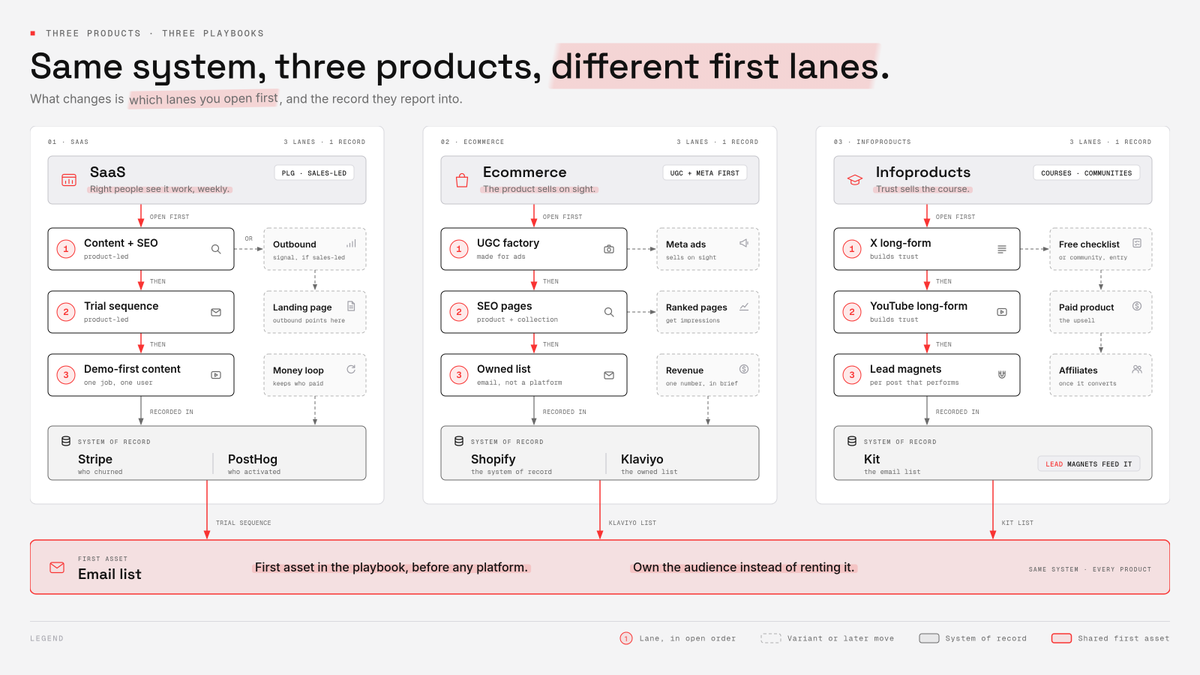
three products, three playbooks
the system is the same for everyone, what changes is where you start
SaaS:
-
if it sells through a free trial: content, SEO and the trial emails first
-
if it sells through calls: outbound first, then the page it points to
-
show the product doing one job for one type of user
-
connect Stripe and PostHog so the agent sees who uses it and who leaves
the goal is the right people seeing your product do its thing every week, and keeping the ones who already pay
ecommerce:
-
UGC and Meta ads first, because people buy what they can see
-
Shopify as the source of truth, Klaviyo for your email list
-
SEO on product pages that already show up in Google
-
one revenue number everyone trusts, written in the brief
courses and communities:
-
X and YouTube long-form first, because people buy from someone they trust
-
every post that does well gets a freebie that grows your email list in Kit
-
a free checklist or free community first, the paid product after
-
affiliates once it sells, they promote it for a cut
the goal here is owning your audience instead of renting it, because if your whole business lives on someone else's platform, one change on their side can wipe it out
that's why your email list comes first, before any platform
your first weeks
here's the order i'd follow if i was starting from zero today, without skipping to the fun part
week one: the folder, the interview, the brief, the go-to-market research, and every tool connected with your approval rules set before anything runs
week two: the landing page and the email sequence, because every other channel sends people there
week three: your first channel, the one your playbook above says to start with
after that, add one channel at a time, and only when the last one passes one test: did it do its job this morning without me asking
the approval rules i'd copy into your rules file on day one:
-
research, drafts and reports run without asking
-
anything that gets posted waits for your ok
-
anything that sends an email waits for your ok
-
anything that spends money waits for your ok
-
passwords, payments and account settings stay with you
the day these rules annoy you is the day they save you
and if you read all this and thought you'd rather skip the setup, Viktor is the fast way in
one AI employee in your Slack or Teams, your tools connected once, jobs typed like a message to a coworker, nothing sent without your ok
thank you Viktor for making this one possible
try free at @viktor_com... $100 in credits, no card
paid partnership