How to build a content machine with Opus 5.5 (Full Course)
文章目录
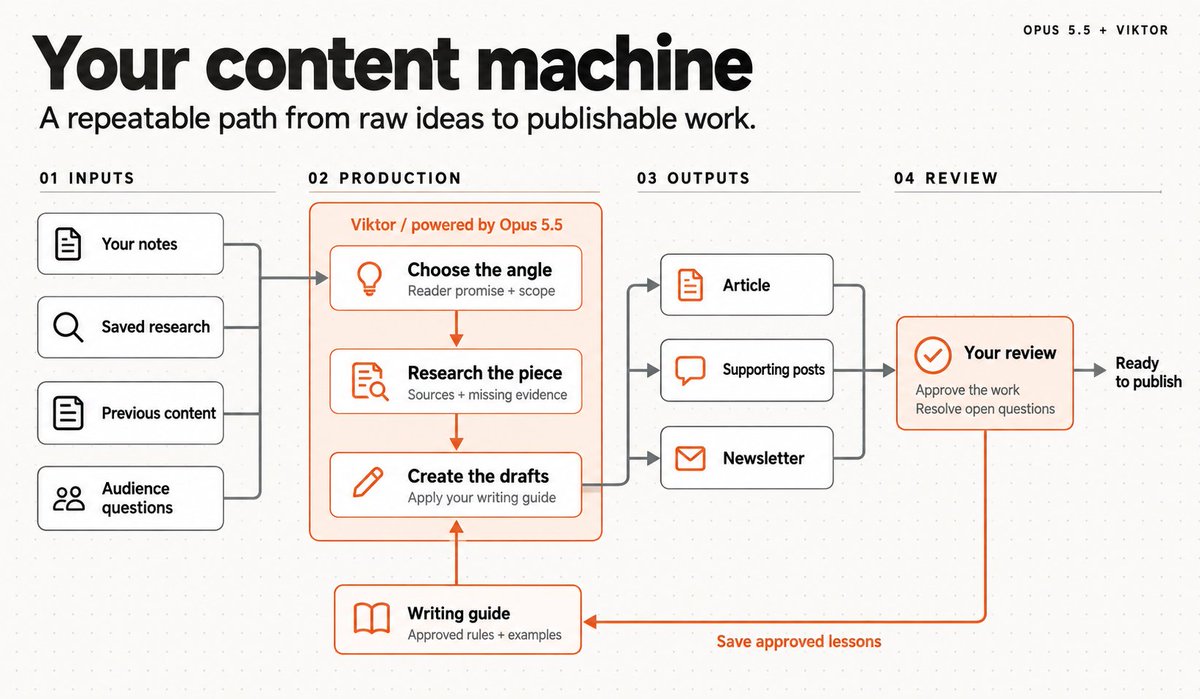
i'm going to show you how to build a content machine with Opus 5.5 that turns your ideas, research and expertise into articles, posts and newsletters in your own voice.
from finding your next topic to having a finished batch ready for your review.
the research, the writing guide, the article, the supporting posts, and the weekly routine that keeps everything moving.
the goal is to stop rebuilding your content process every time you want to publish something.
here's what we'll build:
-> a home for your ideas, research and best work -> a writing guide built from examples you actually like -> an editorial process that brings you useful pitches -> a workflow that takes a chosen idea through research and drafting -> a distribution package where every post has something different to say -> a recurring job that prepares the next batch for your review
we'll use content about AI, content creation, growth, marketing and technology as the running example. you can adapt the same setup to your own subject.
1. give the system something worth working with
before you connect anything, collect the material you normally wish AI already knew.
a few pieces you're proud of. notes from something you tried. questions your audience keeps asking. research you saved because you had an opinion about it.
include examples you like for different reasons. one might have a strong opening, another might explain something difficult clearly, another might contain a useful walkthrough.
write a sentence beside each explaining why you chose it.
performance data can help too, if you have it. keep the post text alongside the numbers so the system can see what readers were responding to.
if you're starting from zero, use your own notes and examples of writing you admire. label outside examples as references, so their experiences and claims don't become yours.
the point is to give the system enough context to make useful choices before asking for a month of content.
2. set up Viktor as your content employee
this is where Viktor fits.
he gives you a place to delegate the work, connect the tools holding your material, and continue the conversation in Slack.
Opus 5.5 is available in Viktor's model picker. select it for this workflow.
start with the tools this job needs: somewhere to read your source material and somewhere to save drafts. you can add other connections when the work calls for them.
in Viktor's Integrations screen, connect the app holding your content. complete its authorization, then ask him to list the files in the folder you want to use. that confirms he can actually reach the material.
if you're starting with uploads, ask him to name the files he received. a message saying “use the attached article” doesn't help if the attachment never arrived.
create a dedicated Slack channel for the work and give him this standing brief:
You help me create content about AI, content creation,
growth, marketing and technology.

My readers are creators, marketers and founders who want
practical ways to use AI in their work and businesses.

Help me turn my ideas, research and experience into useful
X articles, posts and newsletter drafts.

Read the source material and writing examples I provide.
Confirm which files you can access before using them.

Lead with what the reader can achieve.
Use plain language, short paragraphs and specific examples.
Use lowercase prose and -> for arrow bullets.

Keep research references separate from publication drafts.
Do not put external URLs in publication drafts.

Never invent my experience, test results, quotes or numbers.
Flag missing evidence and decisions that need my judgment.

Save drafts separately from published work.
Ask before publishing, sending messages or spending money.

Confirm the working folder and draft location with me.
tell him the actual folder names when you send this. the brief needs somewhere concrete to point.
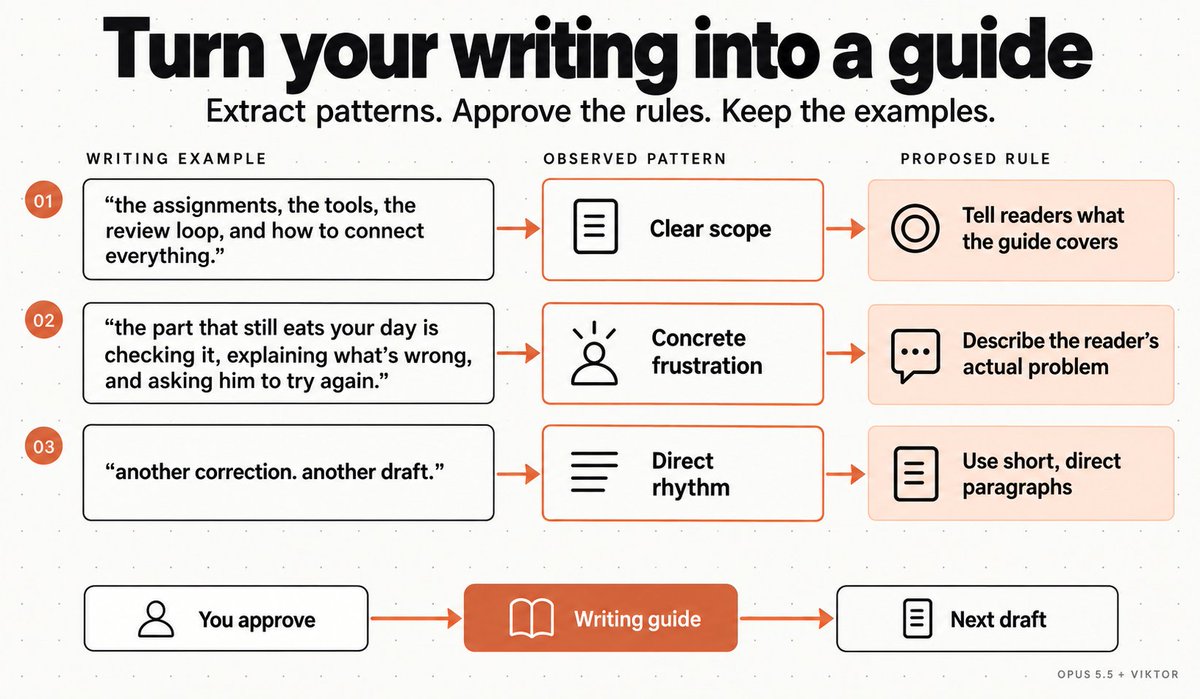
3. turn your examples into a writing guide
“write in my voice” leaves too much open to interpretation.
you want a guide that explains the decisions behind your writing: how you introduce a topic, what makes an example useful, and which phrases you would cut.
ask Viktor:
Read the writing examples in our source folder.

Draft a writing guide covering:
-> how I open a piece
-> how I explain an idea
-> how I use examples and personal experience
-> paragraph length and formatting
-> how I introduce tools
-> how I close and use calls to action

For each proposed rule, show an excerpt that supports it.
Separate repeated patterns from things that appear once.

List any contradictions for me to resolve.
Show me the guide before saving it as standing guidance.
read the guide before approving it.
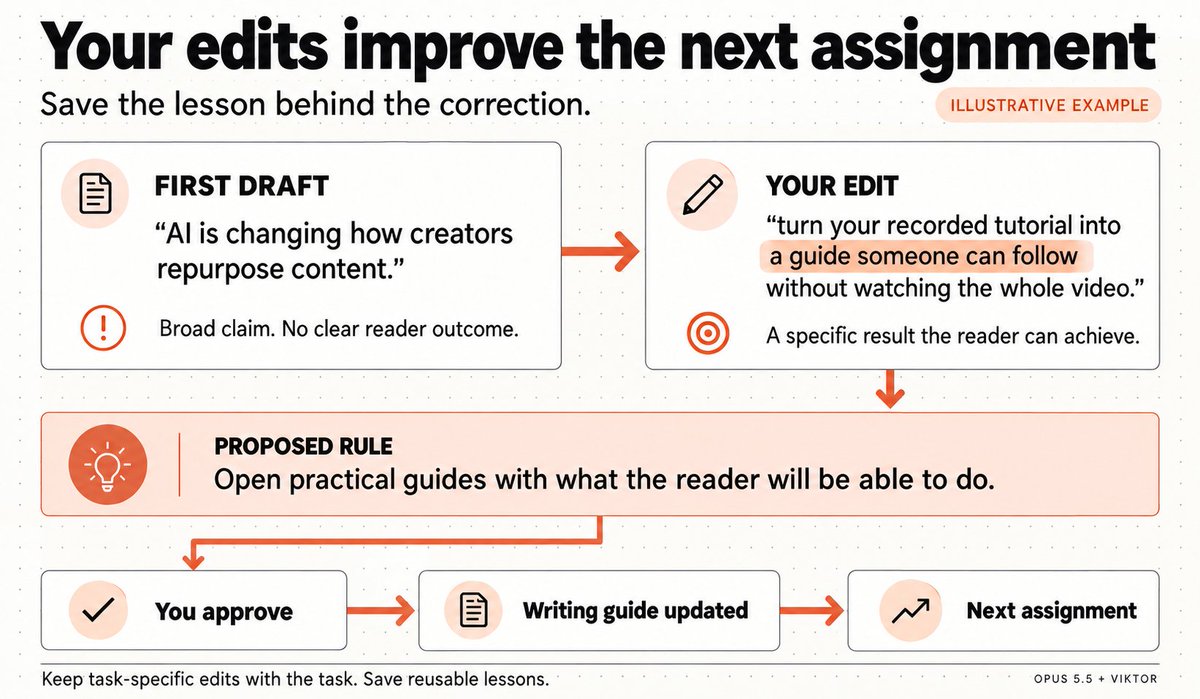
if it says you write “engaging, insightful content,” ask for something you can use. a better instruction would be: “open practical guides with what the reader will be able to do.”
then ask for a short sample using the guide. correcting a paragraph is easier than correcting a full article written around the wrong assumptions.
4. build an idea inbox with context
saved links are more useful when you preserve why you saved them.
when you drop something into your content channel, add the observation or question that caught your attention.
for example:
“this workflow looks useful, but the setup seems harder than the actual task. could we test a simpler version for someone who doesn't code?”
that gives Viktor an angle to investigate.
use this instruction for incoming material:
Keep an idea inbox in our working folder.

For each item, record:
-> the original note or source
-> why I saved it
-> the reader problem it might address
-> my own observation, if I supplied one
-> what we would need to research or test
-> whether it overlaps something I've already published

Keep tentative ideas separate from approved assignments.
Do not turn every saved item into a draft.
now the inbox contains possible articles with reasons behind them.
5. ask for pitches you can actually choose between
give Viktor a small editorial assignment before asking him to write.
Review our idea inbox, published work and available analytics.

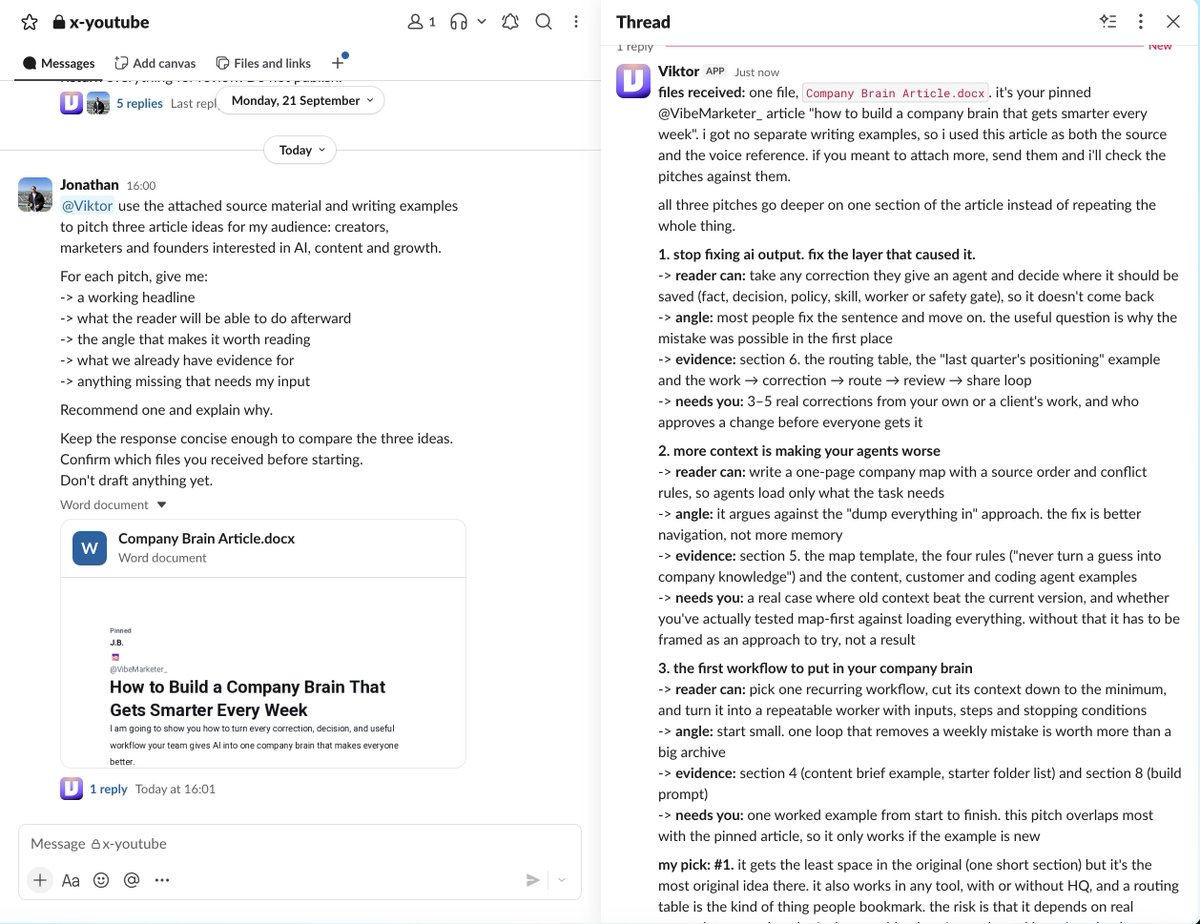
Pitch three possible articles for my audience.

For each, include:
-> a working headline
-> what the reader will be able to do afterward
-> the central argument
-> what makes it different from my previous articles
-> the source material we already have
-> what still needs testing or a personal example
-> a short proposed outline

Recommend one and explain the choice.
Treat performance patterns as clues, not proof of what will work.

Do not draft the articles yet.
three is a starting point for a manageable shortlist. adjust it to your workload.
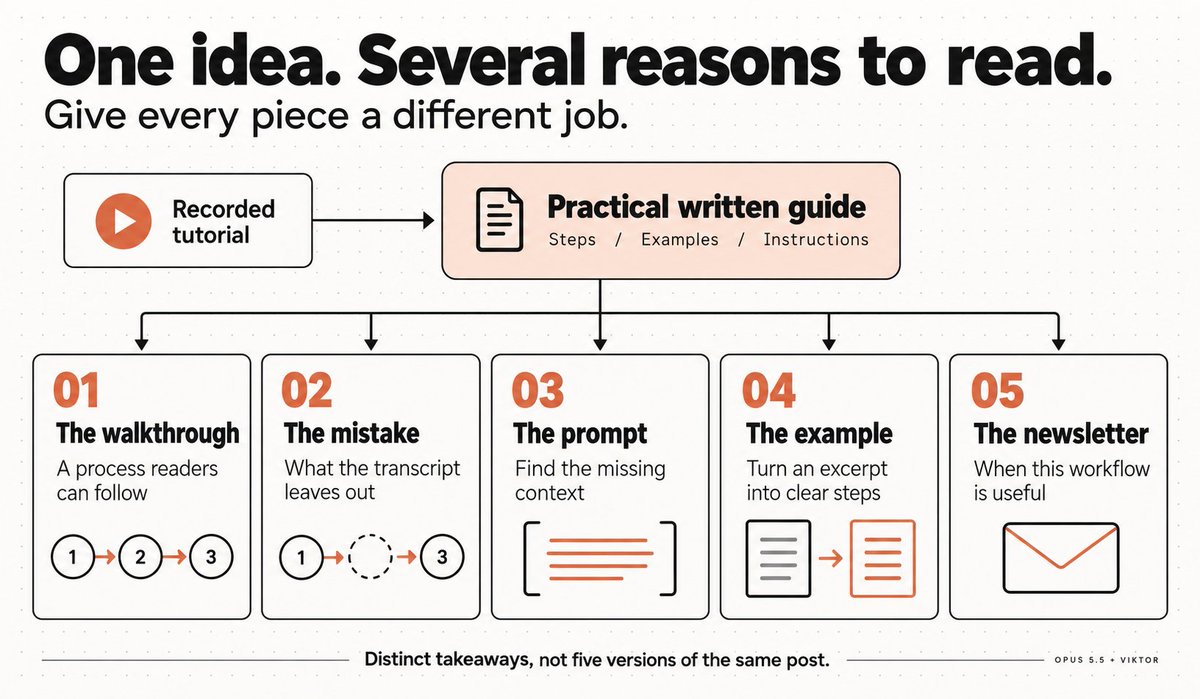
for our example, imagine choosing an article about turning a recorded tutorial into a practical written guide.
that's a clear assignment: take something you've already explained and help a reader follow it without watching the entire recording.
the topic also gives us several different supporting posts later: the process, a mistake to avoid, a prompt and an example.
if you're missing a recording, choose another idea with material you do have. don't let the system invent a walkthrough just because the headline sounds good.
6. build the source notes before the article
once you've selected the idea, ask Viktor to prepare the research and structure.
for the tutorial example, provide the transcript, your notes and any screenshots or files needed to understand what happened.
then send:
Prepare the source notes and outline for our chosen article:
turning a recorded tutorial into a practical written guide.

Use the transcript and supporting files I provided.

Identify:
-> the reader's starting point and intended outcome
-> the steps actually shown in the recording
-> explanations that depend on something visible on screen
-> prerequisites or missing steps
-> claims that need checking against current documentation
-> where my own observations add something useful

Keep a source reference for factual claims in the research notes.
Mark gaps instead of inventing the missing actions.

Propose an outline in the order a reader would follow it.
Return any questions that block an accurate walkthrough.
a transcript may say “click here” without telling you where. that's something to resolve with the recording or a screenshot.
the outline should make that missing step visible before it gets buried inside a confident explanation.
7. produce the main piece, then the distribution
once the outline and evidence are ready, give Viktor the production assignment:
Use the approved outline, source notes and writing guide
for this assignment.

Prepare:
1. One X article with a clear reader promise, prerequisites,
   numbered steps, copyable instructions and a useful close.
2. Three headline options that accurately describe the article.
3. Up to five supporting X posts, each with a distinct takeaway.
4. One newsletter draft explaining why the topic matters and
   what the reader can apply.
5. Visual briefs for the steps that need a diagram or screenshot.

Keep source notes separate from publication copy.
Use only personal experiences I supplied.
Flag instructions that still need a real-world test.

For each supporting post, name the idea it contributes.
If the material supports fewer than five useful posts, say so.

Save the package in the agreed review location.
Do not publish or schedule anything.
the supporting posts should give readers different reasons to care.
for this example, one could explain how to turn transcript sections into steps. another could show why “click here” is a problem. a third could share the prompt for finding missing context.
those are separate takeaways from the same subject.
five introductions saying you can repurpose a video would give you a bigger queue without much more value.
8. make the handoff easy to review
ask Viktor to deliver the work with a short index:
-> the article and headline options -> the supporting posts and their individual angles -> the newsletter draft -> the visual briefs -> unresolved questions and untested instructions
before delivery, have him check the package against the brief.
Review the package before handing it back.

Check that:
-> the opening promises something the article actually teaches
-> each step has enough detail for the intended reader
-> important factual claims have supporting source notes
-> personal experience comes only from my supplied material
-> each supporting post contributes a different idea
-> formatting follows our writing guide

Correct issues you can resolve from the existing evidence.
Return missing evidence and editorial decisions to me.

Include a short change summary and unresolved-items list.
Keep the original brief and standards unchanged.
then read the work yourself, especially the opening, examples and instructions.
the system can check for missing pieces. you still decide whether the piece has something worth saying.
for a practical walkthrough, follow the steps once before publishing. that's how you find the instruction that sounded clear until someone tried it.
9. save the edits that should carry forward
when you correct a draft, explain the reason when you can.
“use this headline” fixes one article.
“the headline should describe what the reader can build, because this is a practical guide” gives Viktor something to apply again.
after your edits, send:
Compare my edited version with your draft.

Separate:
-> changes specific to this article
-> corrections to facts or instructions
-> possible reusable writing rules

For each proposed reusable rule, show the before and after
and explain where the rule should apply.

Ask me to approve additions to the writing guide.
Keep the approved examples beside each rule.
some edits belong to one piece. others should change how the next assignment starts.
keeping that distinction makes the guide more useful over time.
10. make the proven parts recurring
run the process manually on one real assignment first.
check whether Viktor can access the material, whether the pitches are useful, and how much editing the finished package needs.
then set up a recurring editorial check-in. a small starting job might be:
Every Monday at 09:00 Europe/Oslo, review new items in our
idea inbox and the latest available content analytics.

Bring me three article pitches with the reader promise,
available evidence and anything we would need to test.

Include outstanding drafts awaiting my review.
Do not create duplicate assignments for work already underway.

Wait for my topic selection before producing a new package.
Do not publish or schedule content.

Confirm the recurring task's schedule and destination.
use your own timezone and cadence. one strong article may be the right workload; the system doesn't need a daily quota to be useful.
when reviewing performance, compare pieces with similar goals and give them comparable time to gather results. a launch post and a detailed tutorial have different jobs.
track your editing time too. if every draft still needs rebuilding, revisit the brief, examples or topic selection before increasing output.
your first week
start by collecting your writing examples and source material.
connect the working folder, confirm Viktor can read it, and approve the writing guide.
then choose one idea with enough evidence behind it. take that idea through the outline, article and supporting posts.
review the package, run the instructions, and save the corrections you want carried forward.
once that works, put the pitch meeting on a schedule.
you now have a repeatable path from an idea you saved to a piece you can publish, with the research and drafts waiting in the same place.
start with one piece of knowledge you keep meaning to turn into content. give Viktor the material and ask him for the first three pitches.
Try free at @viktor_com. $100 in credits, no card. Full link in my first reply.
Paid Partnership
沿着这个主题继续读
从一篇文章,找到相关的教程、经验和阅读路径。