How I’d Build a Personal Brand With AI if I Started Today (Full 90-Day Playbook)
文章目录
I grew my X account to 35,000 followers in nine months.
If I had to start from zero today, I’d build my personal brand around a system that helps me find worthwhile ideas, turn my experience into useful content, and learn from every week of publishing.
I’ll walk you through that system, then give you a 90-day plan and the instructions to build your own.
The goal is to become someone the right people remember when they need help with something you understand.
For me, this has led to consulting opportunities, podcast invites, paid collaborations, and insane networking opportunities I never would have had access to before I started posting on X. Building my brand on X has literally changed my life.
Here’s what we’ll build together:
-
a clear reason for people to follow you;
-
a way to research what’s working in your space;
-
a bank of your own stories, opinions, and examples;
-
a repeatable process for creating and distributing content;
-
a weekly review that makes the next batch better.
You can build each part as you read.
How AI helps with the work behind every post
Building a personal brand involves a surprising amount of work before you publish anything.
You study other accounts. Save interesting posts. Try to understand why one worked. Search your notes for something useful to add. Draft an opening, rewrite it, and decide whether the idea belongs on X, LinkedIn, or Instagram.
Then you publish, look at the response, and start the whole process again for the next post. Doing this can literally be a full-time job, which we want to avoid.
That’s where I’d bring in Stanley, an AI assistant built for this kind of content work. I’d use it to find successful posts in my niche and break down their structure, giving me a researched starting point for what to make next.
From there, I could send a voice note about a project, a mistake, or an opinion I wanted to share. Stanley would help shape that material into a draft in my voice. I’d refine it, publish it, and use its performance analysis to help plan the next round.
That’s what makes this exciting: one person can get help with the research, writing, and analysis behind a consistent publishing operation. Your experience feeds the content, and each round gives you more to work with.
The system I’d build
The whole process fits into one loop:
Choose your audience → research → add your experience → create → publish → review.
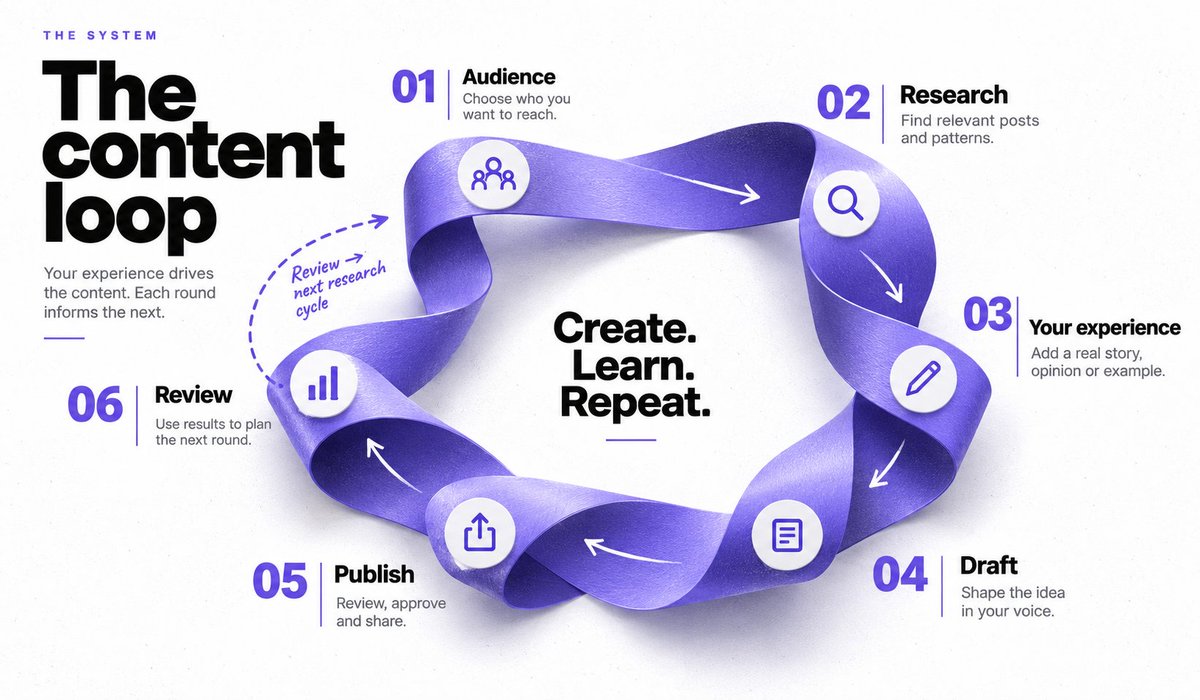
Stanley helps with the research, preparation, and analysis. I’d supply the experience, choose the angles, and review the finished work.
For the walkthrough, let’s use an example: an operator who wants to attract small-business owners by showing them practical ways to use AI.
You can substitute your own expertise. The decisions stay similar whether you understand fitness, design, finance, or running a local business.
1. Give people a clear reason to follow you
I’d start by writing down three things:
-
Who do I want to reach?
-
What recurring problem can I help them solve?
-
What have I done that makes my advice useful?
For our example, “I post about AI” leaves too many decisions open. You could spend the week covering model releases, generated films, research papers, and robot demos.
A more useful starting point would be:
I help small-business owners put AI to work in their everyday operations, using practical builds they can understand and adapt.
Now you have a way to choose ideas. A walkthrough of preparing a customer proposal fits. An unrelated model benchmark probably needs a much clearer business application before it belongs.
I’d give Stanley this instruction alongside my background:
Help me define the starting direction for my personal brand.

Ask me about my experience, the people I want to reach,
the problems I can help with, and the opportunities I want
my content to create.

Then suggest three possible directions. For each, explain:
- who would follow me;
- what they would expect to learn;
- which parts of my experience support it;
- five posts I could credibly make.

Ask for missing information. Don't invent credentials or results.
Choose a direction you can support with real examples. Then make your profile explain that promise clearly enough for a new visitor to understand.
2. Research the space before building the calendar
Once I knew who I wanted to reach, I’d study the content already reaching them.
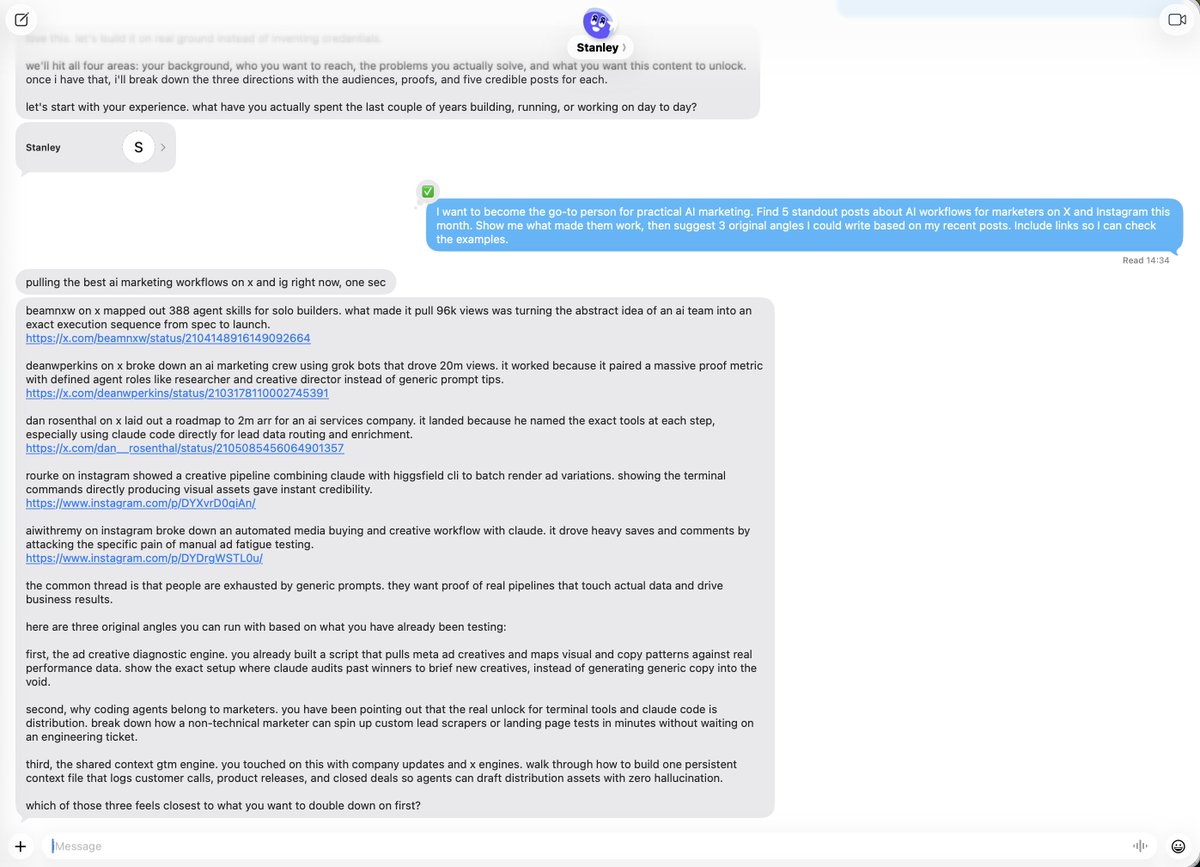
Stanley’s Instagram discovery workflow can surface top-performing content in your niche. Start with a simple request:
Show me today’s top performers in my niche.
Then narrow the research around the audience and problem you chose. For our example, I’d look for content about business workflows, customer service, proposals, and repetitive administrative work.
I’d keep a small shortlist and inspect each reference for four things:
-
The problem: What does the audience recognize immediately?
-
The opening: What gives them a reason to keep reading or watching?
-
The delivery: Is it a demonstration, story, comparison, or checklist?
-
The payoff: What can someone understand or do afterward?
Where the data is available, compare a post with the creator’s usual performance. A large view count means more when you know the account’s normal range.
You’re still making a judgment. A post may perform because of the creator’s reputation, a timely event, or an entertaining delivery you don’t want to reproduce.
For each promising reference, I’d ask:
Break down the audience problem, opening, structure, and payoff.

Separate what is directly observable from your hypotheses
about why it performed.

Suggest three ways I could explore this problem using my own
experience. Tell me what example or evidence each idea needs.
Keep the source link beside your notes. You’ll want to revisit the original when deciding whether the idea holds up.
3. Build the bank of material that makes the content yours
Research tells you which problems attract attention. Your own work gives you something useful to say about them.
I’d create a simple document with five sections:
-
projects I’ve worked on;
-
mistakes and what changed afterward;
-
questions people repeatedly ask me;
-
opinions I can explain and defend;
-
examples, screenshots, and results I can share.
An Obsidian note works well. So does a plain document. Provide the relevant material to Stanley when developing a draft.
If you’re starting with no published content, this is especially useful. You can supply a voice note explaining a project, a piece of writing you like, or a detailed answer to a customer question.
Suppose your research turns up a popular post about saving time on proposals.
If you’ve built a proposal workflow, explain which inputs it needs, where the first version failed, and what a person still has to review. Those details give the reader something they can use.
If you haven’t built it, you have a useful project to try before writing the walkthrough.
I’d ask Stanley to interview me before drafting:
Help me develop this idea from my own experience.

Ask one question at a time about what happened, what I tried,
what went wrong, and what I learned.

Find the specific details that would make this useful to my
audience. Keep missing evidence visible.

Once we have enough material, propose an outline for my review.
Over time, that document becomes a growing supply of material you can return to from different angles.
4. Build a few series you can keep making
I’d give the first month three recurring series.
For our AI operator, they could be:
One useful build. Show a business process and how to improve it.
One mistake explained. Share a failed attempt, the reason it failed, and the correction.
One decision made easier. Help the reader choose between approaches for a specific situation.
That gives you several ways to cover the same area of expertise while delivering a different benefit each time.
Turn each selected idea into a short brief before drafting:
Who is this for?
What will they get from it?
What is my main point?
What example supports it?
What should they do next?
I’d ask Stanley to develop a first batch across those series using the research and personal material already collected.
Read the briefs together. If three posts make the same point, change the substance before spending time on their openings.
5. Turn the briefs into a publishing routine
I’d choose one primary platform to learn first, based on where my audience spends time and the kind of content I can make well.
For each brief, I’d ask Stanley for a draft and a few opening options. Then I’d review the substance before polishing the language:
-
Is the main point clear?
-
Is the example accurate and specific?
-
Does the post deliver what the opening promises?
-
Would I say this to someone who asked me for help?
When a draft misses, explain the correction precisely.
“This sounds generic” gives little direction. “Explain which documents the proposal workflow needs and show where the owner checks pricing” gives the next draft a concrete job.
Keep the useful corrections with your writing examples and bring them into future briefs.
Once a piece is strong, consider another format. A detailed walkthrough might support a short checklist for X, a LinkedIn post about the business decision, or an Instagram script showing one step.
Each version needs its own payoff. Someone should benefit even if they never see the longer piece.
For the first month, I’d aim for three substantial posts a week on the primary platform. Add adaptations when they’re useful and manageable.
Leave time to answer thoughtful replies. A question you hadn’t anticipated can become the most useful follow-up you make that week.
6. Review the work every week
I’d keep a simple record of the topic, format, available performance data, audience response, and effort required for each post.
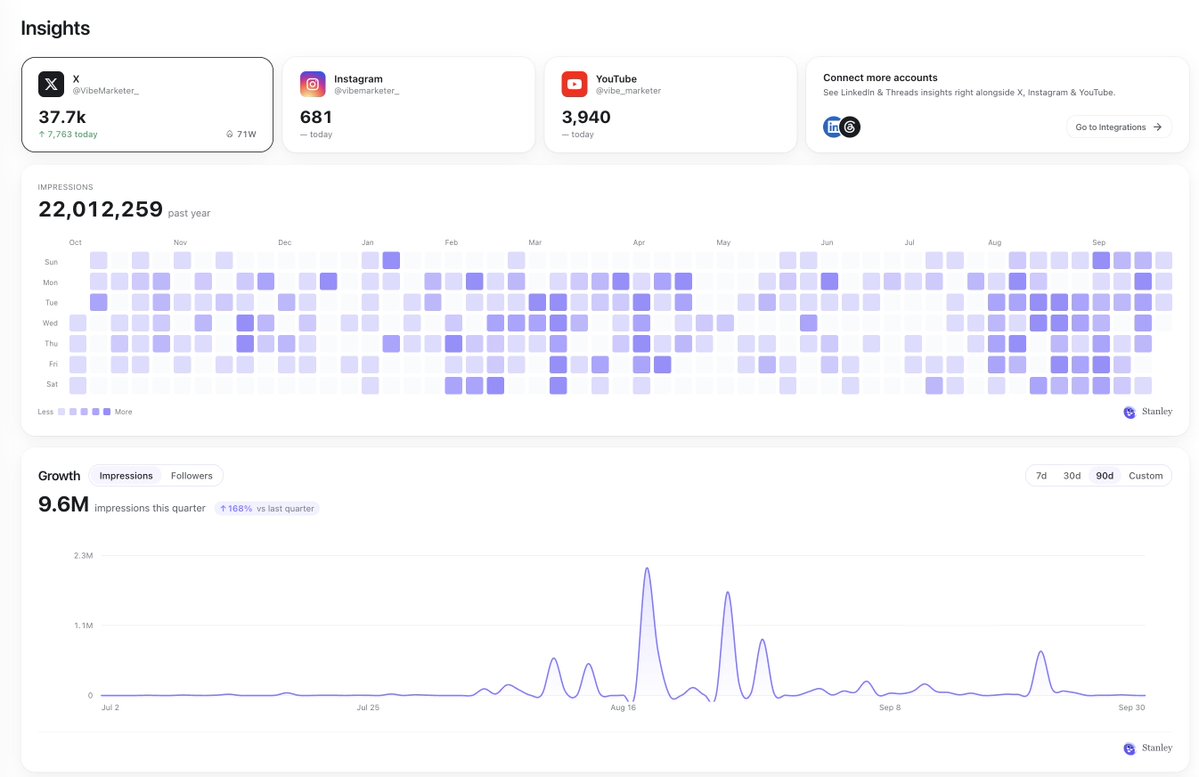
Then I’d ask Stanley:
Review the posts and performance data available for this week.

Compare topics, openings, and formats. Identify promising
patterns, but don't treat one successful post as proof.

Tell me what data is missing. Suggest:
- one idea worth developing further;
- one thing to change;
- one new experiment.

Connect each recommendation to the evidence behind it.
I’d also review the conversations myself. Did the people I want to reach ask questions? Did anyone try the method? Were they interested in the work I want to be known for?
A broad post can reach many people without helping you decide what to build next. A smaller post can expose a specific problem your audience wants solved.
Use both the numbers and the conversations. Keep some room for new experiments as you develop the ideas that show promise.
My first 90 days
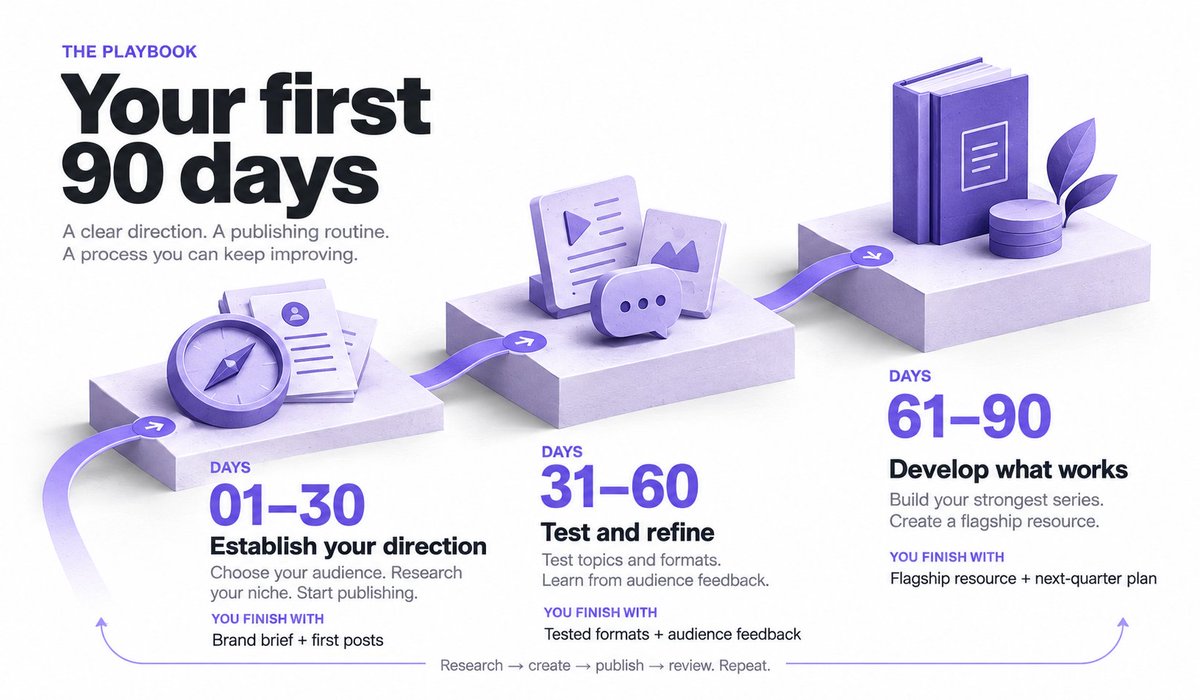
Days 1–3
Choose the audience, objective, and initial direction. Gather my own material.
What I’d finish with: A brand brief and source document.
Days 4–7
Research relevant posts, select promising angles, and define three series.
What I’d finish with: A shortlist and the first content briefs.
Week 2
Create, review, and publish three posts. Participate in the responses.
What I’d finish with: Published work and an initial review.
Week 3
Publish the next batch, including a follow-up to a real question.
What I’d finish with: Better examples and clearer audience feedback.
Week 4
Continue publishing, review the month, and choose the next experiments.
What I’d finish with: A working routine and a plan for month two.
Days 31–60
Test different approaches within the three series. Use audience questions to develop deeper examples and review the results each week.
What I’d finish with: A clearer understanding of which topics and formats attract the intended audience and are sustainable to produce.
Days 61–90
Give promising series more space in the calendar. Develop the strongest topic into a substantial guide, adapt it into useful standalone posts, and keep testing new ideas.
What I’d finish with: A repeatable publishing process, a flagship piece, and priorities for the next quarter.
In month two, I’d compare repeated attempts before deciding a series works. I’d change one major element at a time where practical, such as the opening or format, and record what happened. Keep notes on production effort as well as performance so the schedule remains realistic.
In month three, I’d use the strongest material to create something people can return to: a detailed walkthrough, a practical reference, or a useful template. The related posts would each teach part of the subject and give interested readers a path to the full resource.
At day 90, I’d review the whole run: which subjects brought relevant conversations, which formats I could sustain, and what people now asked me for help with. Those answers would shape the next quarter. Audience growth will vary; the plan gives you a process for finding and developing work worth continuing.
The complete setup to copy
Bring together your background, audience, goals, writing samples, real stories, and the reference posts you’ve selected. Then use this as the starting brief:
Help me build a personal brand over the next 90 days.

First, interview me about my experience, the audience I want
to reach, and the opportunities I want this to create.
Help me choose one clear starting direction.

Use the material I provide and any connected account data
you can access. Tell me what information is missing.

Work with me through these stages:

1. Write a one-page brand brief for my review.
2. Research relevant successful content on supported platforms.
   Keep source links and distinguish observations from guesses.
3. Ask for my own examples, stories, and opinions.
4. Propose three recurring content series.
5. Prepare the first week's briefs, then draft the ones I select.
6. Help me adapt approved pieces where another format is useful.
7. Review available results weekly and suggest the next tests.

Structure the plan in three phases:
- Days 1–30: establish the direction and publishing routine.
- Days 31–60: test topics and formats and develop stronger examples.
- Days 61–90: expand promising series, create one substantial
  resource, and plan the next quarter from what we've learned.

Use my real experience. Don't invent results or personal stories.
Flag claims that need evidence. Keep my corrections available
in a short summary I can reuse.

Start with a schedule of three substantial posts per week on
one primary platform. Wait for approval before publishing.

Begin by asking what you need to know about me.
Start with the brief, then make one useful piece all the way through. That first cycle will show you what material you’re missing and where you need to spend more time.
By the second week, you’ll have your own work to review. Keep building from there.
And if you want to give Stanley a try, you can use this link for a 30-day free trial.
Thanks for reading. Follow @VibeMarketer_ for more :)
Paid collaboration