How to Cure a Feminist

文章目录
Why feminism is so psychologically attractive and why the way out requires rebuilding marriage, including making divorce harder.
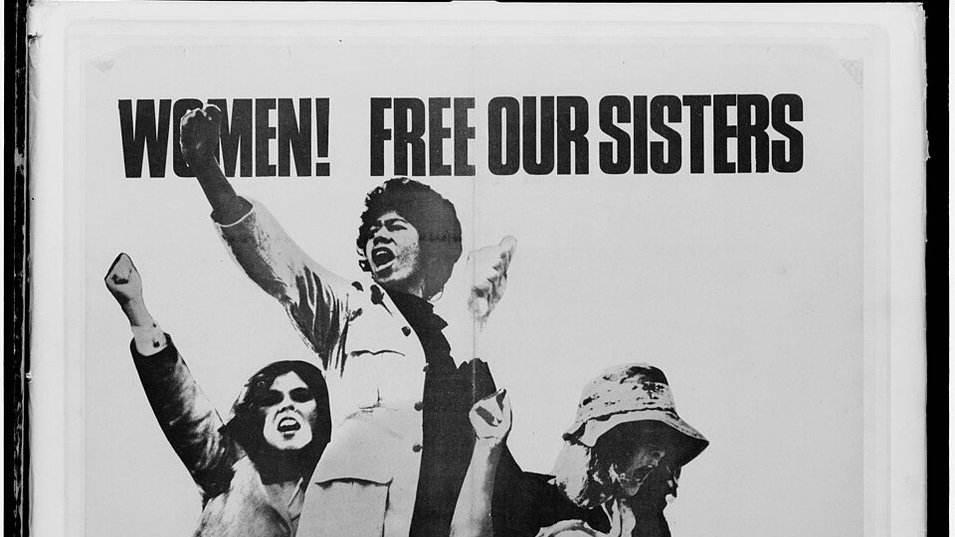
When I say feminism here, I don’t mean the proposition that women should be allowed to vote, I mean the mentality. A grievance-centred worldview in which relations between the sexes are interpreted through female victimhood, male culpability and a presumption of female moral innocence. Once that framework is in place, any unequal outcome becomes evidence of discrimination, and any unhappiness a woman experiences invites a search for the man or institution responsible. This way of thinking is psychologically appealing because it gives a woman two things at once. She can understand herself as having less power over what happens to her, while gaining more moral power over how other people must respond. Being angry at unfairness is more appealing than to ask: What did I choose? What did I contribute? At the same time, being the injured party gives her a claim on sympathy and accommodation. That is a powerful bargain.
So, when we hear that “feminism lied to women,” we should also ask why so many women found the story attractive. Any attempt to undo the feminist mentality has to deal with that appeal and replace the psychological rewards, not just argue that some facts were wrong.

The Premature Acquisition of Purpose
We talk constantly about purposeless young men, and with some justification. The developmental problem facing young women is different. They are offered a sense of ideological purpose extraordinarily early. A girl of fifteen or seventeen can already learn that being a woman means belonging to a historically wronged group. Taking up the mantle of being a woman offers her a chance to recognise injustice, identify oppression and take part in causes through which her anger becomes evidence of moral seriousness. She doesn’t have to have been responsible for anybody’s wellbeing. Adolescence already comes with a complete moral mission.
This is psychologically attractive because it answers questions that young people badly need answered. Who am I? Who are my people? What am I for? What makes me good? Who needs me? The appeal of feminism is that the identity of simply being a woman answers all those at once. You are good because you are a woman. Your achievements are extraordinary because you managed despite the oppression and discrimination of being a woman. For adult purpose and identity to be healthy, it needs to be about developing into someone others can rely on.
When the Identity Arrives Before Adult Life
This helps explain why simply telling someone to “stop being a feminist” is usually useless. First of all, many won’t consciously identify with feminism, but will have adopted the mentality and identity of historically oppressed woman, nonetheless. You are not asking her to change her opinion about an employment statistic or an abortion law. You are asking her to give up the answer to who she is, who her people are, what makes her morally good and what her life is for. Something has to replace it. That is the transition that is supposed to happen; from woman to mother. From woman to wife. And that is the stunted maturity we sadly see with many women now, because the prematurely adopted identity of “woman” prevents that transition. Family, children, husband, extended kin, religious community, friendship, caregiving, mentoring and useful local service can all provide that alternative because they combine belonging with actual responsibility.
How Belief Systems Finally Break
People rarely leave a totalizing worldview because somebody produces one devastating fact. Research on subtyping helps explain why. Counterexamples are often isolated as exceptions instead of being allowed to challenge the rule. People have usually encountered contrary evidence before and already have an explanation ready. The decent man is an exception. The abusive woman was traumatized. The happy homemaker doesn’t know any better. It’s identity-protective cognition.
So instead of speculating about what might change women’s minds, let’s look at women who actually managed to recover:
Janice Fiamengo says teaching university students made the asymmetry impossible to ignore: she watched young men treated as collectively suspect while female students were protected and encouraged in the name of equality. Carolyn Baker had herself been seriously abused by women and worked with abuse survivors, making feminist claims that female abuse was negligible increasingly impossible to reconcile with what she had actually seen. Karen Woodallsays years of work with separated families repeatedly put her in front of manipulative or harmful mothers and excluded fathers, until the default categories of woman-as-victim and man-as-perpetrator stopped matching the families in front of her. Cassie Jaye approached men’s-rights activists expecting misogynistic adversaries and instead met a host of individual men describing suffering that didn’t fit her narrative. Rachel Bock attended a Women’s March and found herself surrounded by slogans attacking men, which clashed with her experience of the supportive men in her own life. *Catherine Johnson *stopped going out because feminist ideas had made ordinary male attention feel threatening; becoming more frightened of the world made her question an ideology that promised empowerment. Carolyn McCulleytravelled to South Africa, heard a Christian sermon, then began attending church and reading the Bible, where the demand to examine her own anger, pride and selfishness challenged her habit of locating fault outside herself. *Tara Kennedy-Kline *became the mother of two boys and tried to raise them as courteous, chivalrous young men; seeing feminist campaigns describe behaviours she was teaching them as creepy, predatory or oppressive changed how she heard feminist rhetoric about men.
The common denominator is that one powerful experience, or an accumulation of too many contradictory experiences, made it impossible to keep filtering reality through the theory of female victimhood and male culpability.

I have seen motherhood work as one such powerful confrontation more times than I can count, including myself. A woman will be surprised by the strength of her attachment to her baby and by how quickly priorities shift. If motherhood suddenly feels deeply meaningful, the feminist framework becomes harder to maintain. This would the point, after such an experience has opened the door, at which exposure to different sources of information can get through: books by Erica Komisar, Suzanne Venker or Janice Fiamengo for example.
But sadly, age matters. If she has already built a life that makes acting on those maternal impulses costly and if her surrounding values only material status, suppressing them might be the easiest way through. I have seen this happen many times, rarely without it leading to resentment building, and the old framework hardening around the conflict. The people around her can prevent this by attaching admiration to the new role: tell her motherhood suits her, that you are proud of how she cares for her baby, that her tenderness is attractive, that the family life is more important than wealth, and that selflessness and devotion to family are admirable. If feminism lowered the status of those qualities, part of the way out is to make them desirable again.
Men Have More Influence Over Female Incentives Than They Admit
Men have an important role in the cure, and no, it’s not “grow up or stop playing video games.” It is that they reward the wrong traits in women. We have to bring back the distinction between being desirable and being marriageable. Modern dating, from apps to the removal of family and community from mate choice, has made it easier to choose somebody almost entirely on optics and “chemistry”. I continue to meet men in therapy who eventually reach an impasse in their marriages because their wives cannot tolerate discomfort, look past themselves or make the sacrifices when the going gets tough. When I ask why they got married, the answer is often awkwardly thin: they had a good time together and were attracted to each other.

They dated in isolation. There was no shared community watching them, often little common background, no serious test of how either behaved under obligation, and sometimes remarkably little discussion about what marriage was actually supposed to look like. How many children? Who would stay home with them, if anyone? What did each think a husband owed a wife, and a wife owed a husband? These questions are sometimes dealt with only after marriage, when the answer has become expensive.
If men do not screen for those traits, women receive very little feedback that they matter. It astonishes me how many young women genuinely believe that what men most value in them is their cleverness and professional success. Perhaps because those raise eyebrows at dinner tables. But when men reward that kind of status in dating without screening seriously for character, they help create the very women they later complain are unsuitable for marriage.
What This Looks Like in Practice
The basic rule is simple: encourage the behaviour and mentality you want to see.
1. Reward accountability, not grievance
When she says, “I might have handled that badly,” give that immediate attention and affection. If externalising blame produces attention and shared outrage, the social environment is teaching her which narrative pays. When she admits fault, repairs something or recognises her own contribution, respond with warmth and respect. Accountability should leave her feeling more connected to the people around her, not humiliated for having admitted fault.
2. Make reciprocity feel good
Notice when she accommodates someone, apologises, tolerates inconvenience or shows generosity. Feminist framing can make these behaviours look like capitulation or unpaid female labour, when in ordinary adult relationships they are simply part of being someone other people can live with. Treat reciprocity as competence. She should experience generosity and accommodation as signs of strength, not as evidence that somebody has taken advantage of her.
3. Make the man’s experience visible before the fight
The counterweight to female grievance is not male grievance. It is widening the frame to include men. Women have been trained to anticipate exploitation and overlook male burdens, which makes it easy to overestimate their own contribution. Men often carry those burdens quietly and stoically, and I do not think the answer is endlessly nagging them to “open up.” But if he never makes those burdens visible, she may be perfectly willing to conclude that his life is easy because she is carrying everything.
This is reflected in how often “mental load” appears as a chief complaint in couples therapy among marriages heading toward divorce. I was taught to assume that she probably had not communicated her needs clearly enough, teach her how to disengage, and send her home with terms such as “weaponised incompetence.” Now I would ask different questions. What does her husband think his burdens are? What does he do so reliably that she no longer notices it? How would he describe the division of labour?
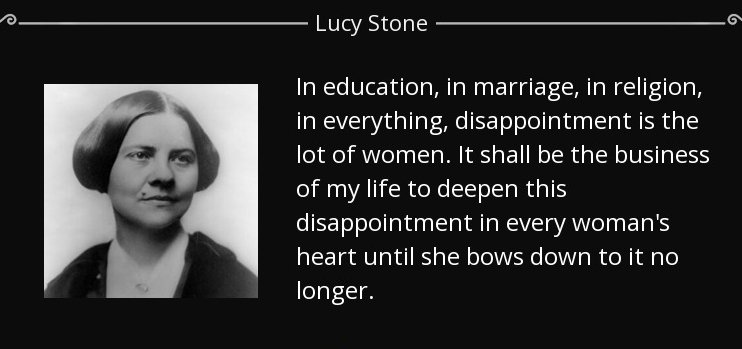
Most importantly, therapy should direct attention toward what grievance is doing to the relationship. What does she gain from understanding the marriage this way? What happens after ten years of seeing her husband primarily through the things he failed to notice, failed to anticipate or failed to do for her? Therapy should not simply make a grievance more articulate.
The feminist mentality written in black and white.
4. Reward curiosity about men
When she asks, “What might this have been like for him?” reinforce it. The habit you are trying to break is one in which male concerns disappear whenever they compete with female grievance. Perspective-taking toward a husband, father or son should not feel like betrayal of women.
5. Make interdependence normal and wanted
Marriage was feminism’s target organ because marriage limits female autonomy. Women are still warned endlessly about “losing themselves,” as though proximity to a man will inevitably consume their identity. And in one sense it will, because marriage does threaten the premature ideological identity of womanhood. A serious marriage changes who you are. Somebody else now has a permanent claim on your time, decisions and loyalties.
And yet couples are encouraged to build a life together while remaining prepared for its failure. Keep separate money. Preserve an independent career. Never become too dependent. My turn to vacation with my friends with the money I earned while you watch our kids. The language is independence, but the underlying message is that marriage should never change you so much that you can’t leave it with the same separate, unaltered “self” you brought into it.
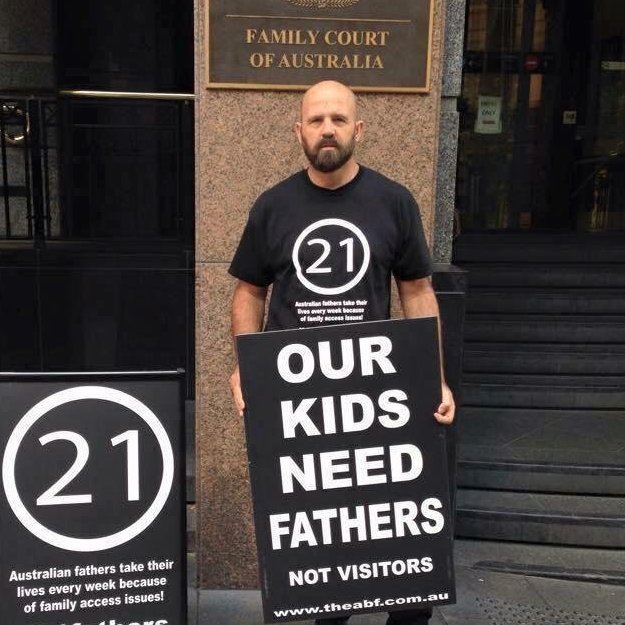
There is no curing feminism without strengthening marriage. There is no egalitarian way out of feminism. We have spent decades making marital dependence safer for women through legal protections; the next question is how to make commitment safer for men. My argument is that divorce law should make unilateral exit more difficult. How can we encourage deep mutual dependence if either spouse can dissolve the arrangement with little friction? If we want people to build lives around one another, the structure surrounding marriage has to reward staying and repairing more strongly than it does leaving.
6. Expose her to attractive countermodels
Spend time with women who genuinely enjoy marriage, who are content and reciprocal, and who are neither miserable nor infantilised. One happy mother can be dismissed as an anomaly. Several very different, functioning women are harder to quarantine as exceptions. The same applies to good fathers, decent husbands and marriages in which dependence has produced contentment instead of the ever-anticipated exploitation.
But countermodels work in both directions. If the couples around you speak about each other with contempt, mock one another and treat marriage as a running joke, that too becomes normal. The first thing I said to my husband when we got married was that I never wanted us to become one of those couples who made jokes at each other’s expense—“oh, the old ball and chain.” I have seen too many times where that leads, and that place is no joke.
7. Let consequences remain connected to choices
If she treats a good man badly and he leaves, do not immediately explain that he was intimidated by her strength. If she neglects friendships, do not tell her that if her friends truly care, they will understand, or that the best friendships are those where you can press pause and play whenever you need. If she makes work choices that predictably damage family life, do not erase the connection when she becomes unhappy with the result.
The point is not to be punitive. It is to stop helping women rewrite consequences as things that just happened to them. Adult agency requires being able to trace an outcome back to a decision and ask what should be done differently next time.
8. Change what receives prestige
Treat being a dependable wife, mother, daughter and friend as impressive. Celebrate the repaired marriage, the competent mother, the woman who keeps her promises and the woman other people can actually rely on. If every professional promotion gets admiration while competence within a family is treated as mundane, the incentive structure is already clear. Women notice what other people praise.
In my wildest dreams, we would be allowed to admire mothers who managed to raise children into teenagers without behavioural or mental-health problems. We would treat that as evidence of skill, sacrifice and sustained adult competence. But doing so would require us to admit something our culture has spent years avoiding: motherhood is a complete sentence.
The Status System Around Women Matters
There is a longstanding argument about whether culture has to change before laws can change. I largely agree: culture is upstream from law. But with women I have noticed something that complicates this and the COVID lockdowns made this especially obvious. An unwavering faith that the government knows best. If government recommends something or funds it, many women take that as evidence that it must be sensible. “Government wouldn’t subsidize daycare if it was bad for kids.” Policy carries a message.
Pension credits for caregiving years, tax structures that support one-earner and unequal-earner families, protections for caregiving spouses and material recognition of motherhood would be crucial drivers in changing women's mentality around motherhood and self-prioritization.
The same is true of quotas and DEI programmes. A quota carries a story: women require preferential treatment because women have been held back. Repeat that story through university admissions, hiring, leadership targets and promotion programmes and you reinforce the belief that female disadvantage is the natural explanation whenever men and women end up in different places. Removing sex-based preferences would send the message that women have agency and that men might have been set aside for too long. It may also help repair some of the resentment among young men who have spent years watching female classmates and colleagues receive opportunities explicitly unavailable to them.
Government can widen the frame here. Instead of continually telling women to look backward at what women were denied, policy can stop treating historic female disadvantage as a permanent claim on present-day men. Refusing to make grievance hereditary.
The same has to happen across the institutions women encounter when things go wrong: mental-health services, universities, workplaces and the courts. Too often the first question after female bad behaviour is not, “What did she do?” but “What happened to her?” A woman becomes aggressive and the search begins for the trauma underneath it. She mistreats her husband and therapy searches for the unmet need he failed to recognise. She makes an accusation at university or at work and the institution may become so frightened of appearing unsympathetic that establishing whether the accusation is true becomes secondary. In family disputes, a mother's fear or distress can itself be treated as evidence that the father must be dangerous. Each time this happens, the woman is infantilised: her actions are treated as symptoms of what was done to her, while somebody else remains the responsible adult in the story.
That does more than fail to hold individual women accountable. It reinforces the entire psychology of victimhood. The corrective is straightforward: investigate accusations, punish deliberate falsehoods when established, take male victims seriously, and hold women responsible for aggression, manipulation and abuse without first searching for a male cause. Women should receive the same adult message men receive: what happened to you matters, and you are still responsible for what you do.

Lindsay Clancy was depressed and anxious AND she killed her kids.
So What Would It Mean to “Cure” Feminism?
The cure begins by telling women that “womanhood” is not an identity. Ask a man who he is and “I am a man” is not an acceptable answer. Give her an identity built around being somebody to actual people. “I am good enough for myself” is not enough of an adult purpose and certainly not something we accept hearing from men. You become somebody through what you build, repair, endure, protect and contribute. Being female shouldn't make you morally important or entitle you to anything from other people.
This is crucial because grievance destroys gratitude. If you begin with the assumption that women have historically been uniquely deprived and that what you receive now is simply overdue compensation, almost nothing can register as a gift. The husband who works for the family, the father who protected you, the man who helped you, the society you inherited, the people who tolerated your failures, their contribution disappears because you were entitled to it anyway. Gratitude requires a different starting point: I have received things I was not simply owed. Other people have sacrificed for me. Men have carried burdens I did not carry. That is why gratitude is such a powerful antidote to grievance and victimhood.