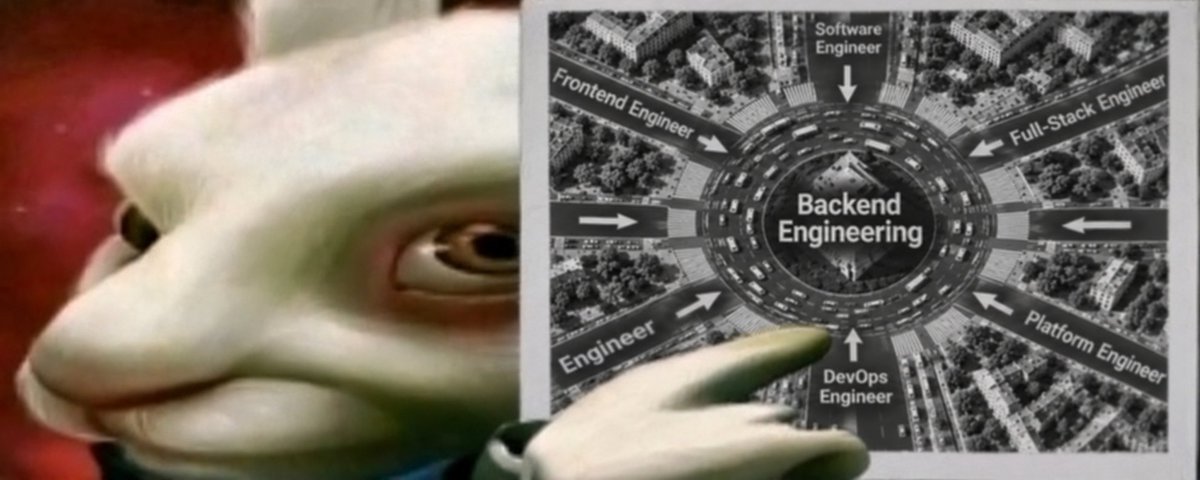
all roads lead to BACKEND ENGINEERING
文章目录
the backendification pull :
talk to enough engineers and you'll eventually notice something funny.
the frontend guy who just wanted to build ui is suddenly thinking about caching and api latency. the data scientist is now building services around their models. the ai engineer spends less time thinking about the model and more time dealing with observibility, databases and failures.
the more end-to-end stuff people build, the more responsibility you need to take for what you ship, the more you get pulled towards the backend.

- Kailash Nadh
we all know that ai can arguably write better code than most of the humans today, and its only going to get better at it. so maybe knowing how to write code isn't really the most valuable skill anymore. you can ask your claude/codex to write an entire feature would've probably taken you few weeks to build years ago, and it'll probably do a decent job at it.
obviously this doesnt mean you don't need to know how to code anymore. knowing how to prompt these models, giving them right context, reviewing what they write actually matters more than ever
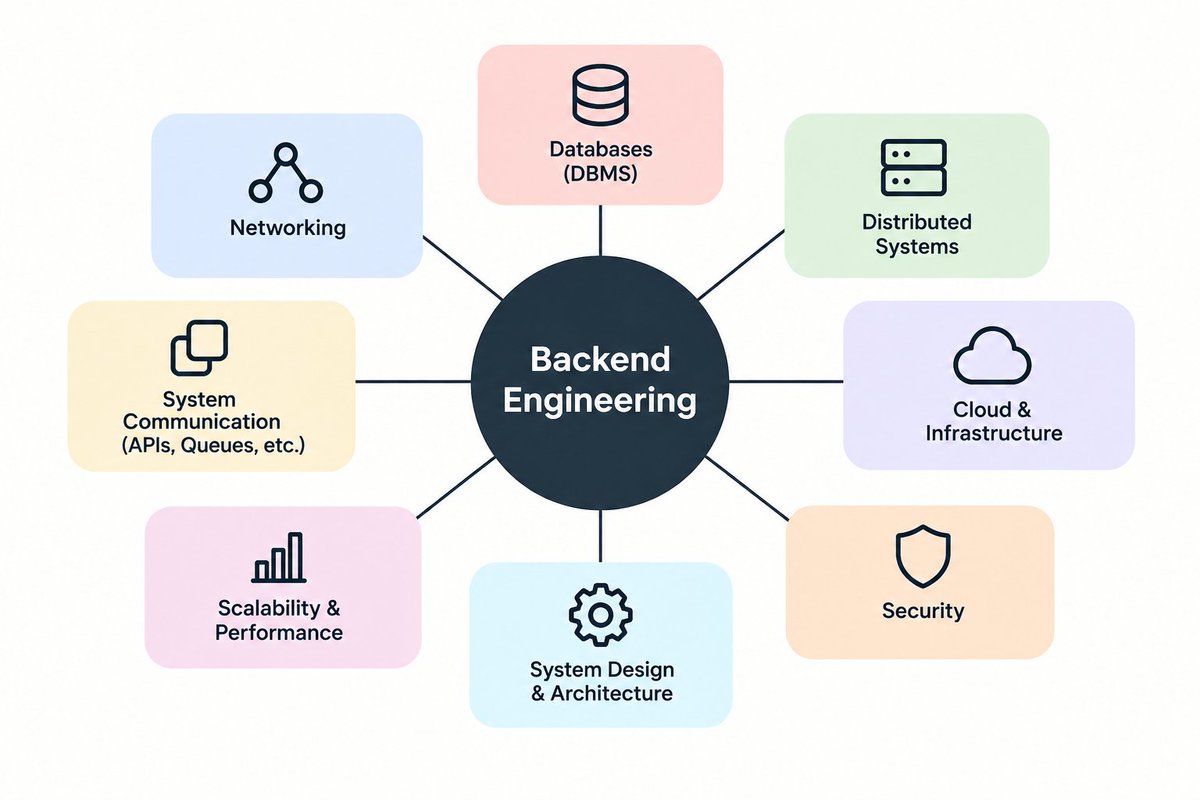
but underneath all this, i think one of the most important fundamental skills you can have right now is BACKEND ENGINEERING. i dont mean writing CRUD API in express js. i mean understanding how systems work like system design, database schema design, networking, concurrency, distrubuted systems, reliablity, scalability and what actually happens when things start breaking in production.
i know ai can do this stuff either way, but thats not the point. having these fundamentals is what actually makes you a better engineer, even if you're not writing every line of code.
ai engineer and forward deployed engineer are some of the most trending jobs of 2026. but if you actually look at what these jobs are its just backend engineering with some additional skills.
what actually makes you a good engineer ?

this is actually something which ive read somewhere, "thinking from fundamentals by asking stupid questions and understanding the tradeoffs will actually make you a good engineer".
-
thinking from fundamentals : breaking a problem down and understanding what to know, then reasoning from there instead of blindly following pattens, frameworks and shipping features
-
asking stupid questions : questioning things that everyone else might just accept. "why do i need this service ?", "what happens if this request runs twice ?"
-
understanding tradeoffs : realizing there is almost never a perfect techincal decision. making something scalable might make it more complex. strong consistency might actually hurt the system, better security might add a friction. the skill is knowing what you're gaining, what you're sacrificing and whethers its worth it.
earlier i was talking with a CTO of a pretty big company about AI, coding and he gave me one piece of advice that really struck with me. no matter how much code you end up writing with AI, designing schemas, designing systems, understanding how to make things scalable, secure are going to be some of the biggest skills that differentiate an engineer from a good engineer.
BACKEND ENGINEERING :
backend has always been the unsung hero of software development. fullstack, AIML, what ever you build in software, most of it eventually becomes a wrapper around some kind of backend system.
the frontend might change, the models might change and the frameworks definitely will, but the underneath all of them you still have data that needs to be stored, APIs that need to communicate, users that need to be authenticated, jobs that need to run, systems that need to scale and failures that need to be handled.
and this is exactly why i think learning backend engineering is so valuable right now. it forces you to understand the system like databases, networking, concurrency, distrubuted systems etc. basically all the boring invisible shit that actually keeps the software running.
a good example of this is Anthropic. they already had the best AI models and claude was growning insanely fast, but as more people started using it, their infrastructure started becoming a problem. there was outages, reliability issues and eventually rate limits as claude and claude code usage exploded. it didnt matter how good the model and their product was if people couldn't reliably use it. Anthropic eventually started putting much bigger focus on infra.
understand the fundamentals of system design, APIs, databases, distributed systems, caching, security, DevOps, performance, cloud infrastructure and observability.
The Vibecoding Problem
the biggest problem with vibecoding isnt that AI writes bad code, it's that it can write code that looks pretty fine even when you have no idea what's happening underneath. your app runs, tests pass everything looks good so you ship it.
but working backend doesn't necessarily mean a good backend. your database queries might work perfectly with 100 users and fall apart at 100k. two requests happening at the same time might create an error.
this is where knowing fundamentals actually helps with AI. you dont need to write any piece of code by yourslef. but you need to understand what parts of the system deserve a second look and when the solution your agent gave you is not good enough
AI needs backend :
as i already mentioned before, AI engieering today is basially AI + backend engineering. once you go beyond experimenting with models and actually start building products around them, most of the problems you run into are backend problems like databases, caching, data pipelines and all the systems that keep the AI actually running.
the model is probably the easiest part of building an ai product today. calling an api takes few lines of code, but turning that into an actual product that thousands of people can reliably use is an entirely different problem.
the interesting part is that AI systems are also inherently unpredictable. an api call can fail a model can timeout, return something unexpected, call the wrong tool. so handling these kind of things becomes extremely important.
you can build an impressive AI demo in few hours today. making that same thing reliable, secure and scalable enough for a thousand people to actually depend on is where teh real engineering starts.
Backend is increasingly important because AI makes writing code cheap.
i've ignored backend engineering for a long time. but for some reason, i kept getting pulled back into learning more about it. and i've probably spent more time trying to understand backend concepts than anything else in software engineering. the more i learnt about DBMS, systems, networking and all the things happening behind an application, the more i understood how important this stuff actually is. that's probably the biggest reason i wanted to write this article
and if you want to learn, this is the resource that helped me understand backend engineering the most :
also none of this article is me trying to say that AI can't replace backend engineers or backend is AI prooof. that's not my point at all.
ai will keep getting better at coding, designing systems and probably most of the things that i talked about in this article. my point is just that no matter how good AI gets, understanding these fundamentals, knowing how systems work and being able to reason about the decisions being made are some of the skills that will make you a good engineer.
and thats basially what i think will eventually happen, the more end-to-end things you ship the more you'll be pulled underneath, all the roads will eventually lead to BACKEND ENGINEERING.
that's it from your friendly neighbourhood spiderman :)