The Government Admits the Job Posting Was Fake
The Labor Department put it in writing. Its 350-page proposal to rewrite PERM is in the Federal Register today. I wrote more on this yesterday before it went live...
PERM is the labor certification step behind most employer-sponsored green cards, and its rules haven’t been rewritten since 2004.
The rule’s title calls it “Modernizing the Labor Market Test.”
In its own federal document, the government lays out what American tech workers have been saying for years and getting called bitter for saying it.
Here’s what DOL says in its own document
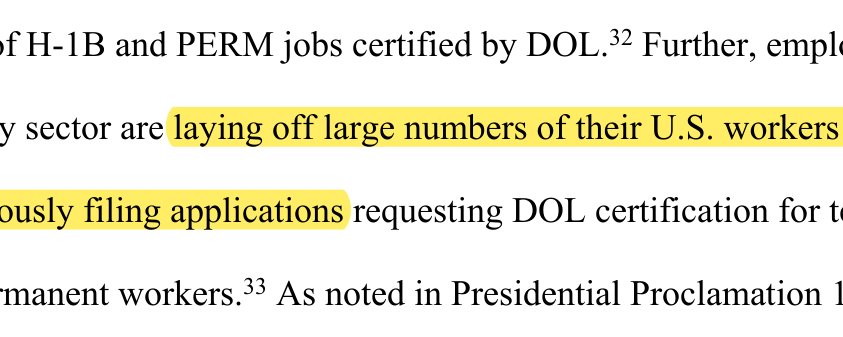
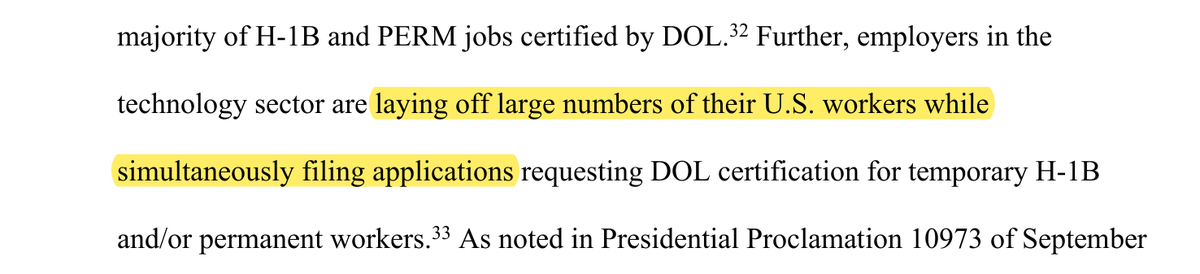
Employers in the technology sector are “laying off large numbers of their U.S. workers while simultaneously filing applications” for H-1B and permanent foreign workers.
U.S. workers in computer-related jobs, “particularly recent U.S. college graduates,” are facing “high unemployment and underemployment rates.”

The rule also describes companies that ran a separate, harder hiring process for green card jobs. In one case DOJ found, the jobs were left off the company’s own careers site and applicants had to mail in paper applications, while every other job at the company took online applications.
The footnotes cite government actions against Apple, Facebook, Cloudera and Cognizant, and reports of allegations against Amazon and Tesla.

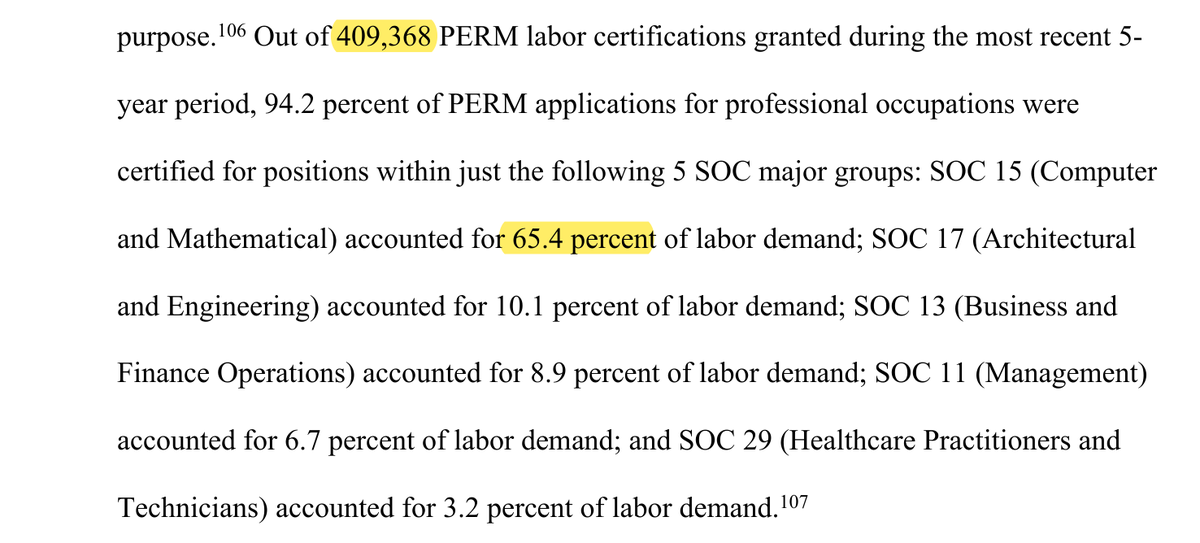
Here’s the number that should get your attention though... it certainly got mine.... DOL reviewed 409,368 green card labor certifications from 2021 to 2025. Among degree-level jobs, 65.4% were computer and math. Nearly 60% of all PERM applications are filed for people already working here on H-1Bs.

Read that again
If you’ve applied to a big tech company in the last few years, plenty of those postings were never meant to be filled by you. The job already had someone in it. The ad existed to prove to the government that no American wanted it. The government just proved those job postings were actually FAKE.
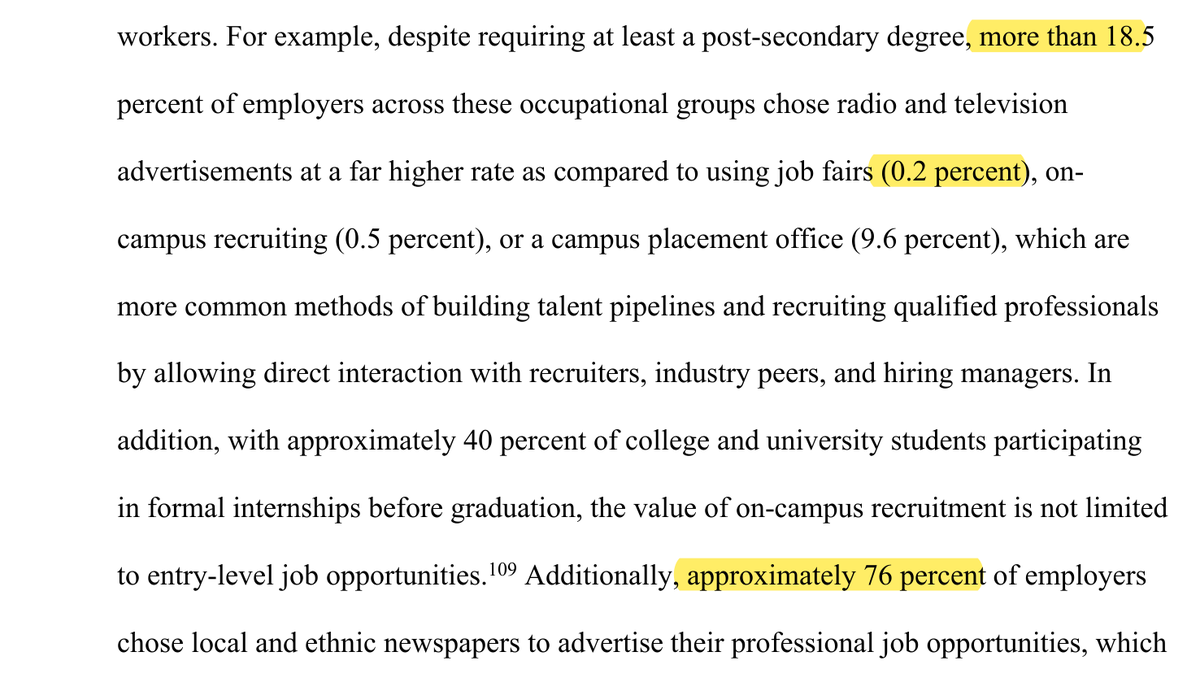
DOL’s own data shows how they did it. For degree-level PERM jobs, about 76% of employers advertised in local and ethnic newspapers, and more than 18.5% ran radio or TV ads. Job fairs got 0.2%.
Think about who reads a Sunday print classified ad looking for a software developer job. Nobody. That was the point.
What would change
1. Lay people off and lose green card sponsorship for two years. Right now the lookback is six months. The proposal makes it two years. If a company lays off even one U.S. worker in the same or similar job in the same area, it can’t file for that job in that area for two years.
Restructuring counts. Downsizing counts. “Reduction in force” counts.
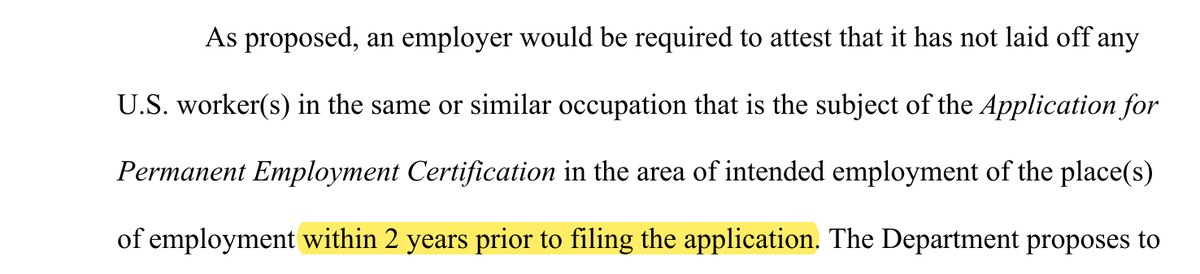

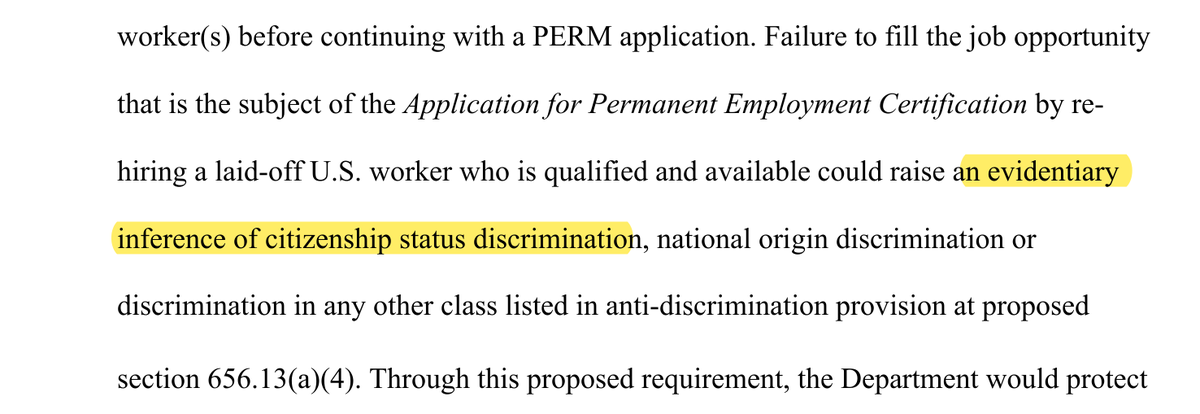
2. Lay people off mid-process and call those workers back. If a company lays people off while a green card case is pending, it would have 5 business days to report it to DOL and USCIS. Then it would have to offer the job to the people it let go. DOL says that passing over a qualified laid-off American could raise an inference of discrimination.
3. The staffing shell game ends. Outsourcing firms couldn’t place sponsored workers at a client that laid off people in the same role within two years. If a company fires its own engineers and brings in a vendor’s engineers, the vendor’s green card cases are at risk.
4. Nurses lose their shortcut. Hospitals have been able to sponsor foreign nurses and physical therapists without ever testing whether an American would take the job. Employers filed 20,557 to 27,428 petitions a year under that exemption from FY2023 to FY2025. DOL says it can’t prove a national shortage exists and proposes ending it.

Job ads would have to run at least 90 days and show the pay and whether the job is remote. Companies would have to recruit the same way they do for every other job. The person interviewing you would have to be a U.S. worker. The print newspaper ad requirement goes away.
6. The lawyers can be punished. Immigration attorneys and agents could be banned on their own, separately from the employer. A ban would cover every DOL foreign labor program, H-1B included.
What this means if you’re...
A laid-off tech worker: Your old employer may have to offer you your job back before it can keep sponsoring someone into it. Keep your records.
A CS graduate: You’d see these jobs advertised where you actually look, with the pay listed, for three months.
A nurse: Hospitals that recruited abroad for years without posting locally would have to post locally first.
This is already happening
On October 8, DOL froze green card filings for Microsoft, Adobe, Cognizant, Infosys, TCS, Wipro, HCL and Capgemini, new and pending, with no end date. Cloudera settled with a two-year ban.
The suspensions hit eight companies. This rule would hit every company that sponsors.
What companies will do next
I watch people, so here’s what I expect:
-
Layoffs will start getting called “performance exits.” The rule only covers cuts without cause.
-
Expect fewer announced layoff rounds and more quiet pushouts.
-
Companies will shift green card cases into EB-1 and national interest waivers, which skip this test entirely.
-
Immigration lawyers will be in the room for layoff decisions.
Here’s the problem with the Labor Department’s new green card rule, and here’s what will happen..
The rule only counts a layoff if it’s “without cause.” So companies will stop having layoffs. They’ll have performance problems instead. Your manager will tell you that you aren’t meeting expectations, your team will shrink through attrition, and your work will go to a vendor. On paper nobody gets laid off, and the company keeps sponsoring green cards.
The layoff numbers will drop, and the headlines will call it a stronger job market. We are already seeing that! You’ll be looking for work anyway.
The two-year ban is also local. It only covers layoffs in the same metro area. A company can cut software developers in San Francisco and file for software developers in Seattle the next day. Remote jobs are worse. DOL admits in the rule that it hasn’t figured out where a remote job’s layoff happens, and it’s asking for comments.
Then there’s enforcement. The company swears it hasn’t laid anyone off. If it lays people off later, it’s supposed to report itself within five business days. In the rule’s own cost analysis, DOL says it “lacks sufficient information regarding the extent of relevant layoffs.” That’s the agency enforcing a layoff ban telling you it doesn’t have the layoff data.
Vendors get squeezed from the other side. The H-1B rules have an exception for contracts that expire, and this rule has none. If a vendor lets its own American staff go when a client contract ends, that’s a layoff, and it blocks the vendor’s green card filings for two years. So vendors will stop letting people go. They’ll keep their people on the bench and rotate them from client to client.
It’s not final
It’s a proposed rule. Comments are open until January 16, 2027, at regulations.gov under docket ETA-2026-0133.
Expect corporate lawyers to file hundreds of pages asking to cut two years down to six months and to bring back the exemptions. Laid-off workers usually don’t file anything.
Want DOL to hear from you? Comment here: https://www.federalregister.gov/d/2026-23370. Comments are public, so anything you include, your name too, gets posted for anyone to read. Write it the way you’d want your next employer to see it.
So here’s my question for you:
Have you been laid off and then watched your job get posted again, or filled through a vendor? Tell me in the replies.
And should two years be longer?