10/10 AI Visibility Growth with Fable 5.2

文章目录
(232 tactics behind 170,000 AI mentions. RANKED)
These are the SEO tactics you need to be found on Google and in AI answers in 2027.
Give Claude your website, this connector, your product facts and Search Console data. Pick one topic below and ask it to work through the bullets. 👇
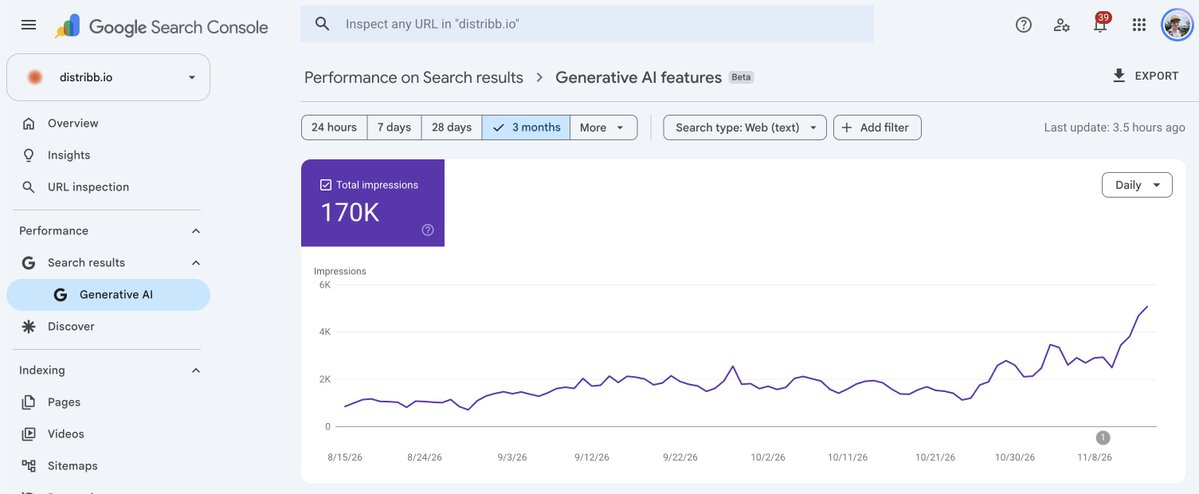
This is the full playbook behind these results. Connect the DISTRIBB.IO SEO connector to your Claude and let it replicate it.
S tier
Find keywords that bring customers
-
Read sales calls and support questions to find the words buyers use.
-
Filter buying queries in Search Console to find demand you reach.
-
Search Google autocomplete to find specific problems buyers want solved.
-
Rank keywords by buying intent to prioritize likely customers.
-
Check the live search results to choose the page format buyers expect.
-
Group searches needing the same answer to keep them on one useful page.
-
Target a specific buyer and use case to compete for a narrower search.
Build the pages buyers need
-
Put prices and plan limits on one pricing page to answer budget questions.
-
Compare products on the same criteria to help buyers choose between them.
-
Explain switching reasons to help buyers choose an alternative.
-
Show trial terms beside signup to help visitors get started.
-
Publish discount terms to explain what shoppers will actually pay.
-
Demonstrate features and integrations to answer purchase objections.
-
Write migration guides to help customers move from a competitor.
-
Add a relevant trial or demo button to turn interest into action.
Build topical authority
-
Choose a product page first to give each topic a commercial purpose.
-
List related buyer questions to plan complete topic coverage.
-
Write one broad guide to help readers understand the whole task.
-
Give detailed questions their own pages to explain the full answer.
-
Reuse existing answers to fill topic gaps without duplicate pages.
-
Link broad guides and detailed pages to help readers continue.
-
Cover the same buyer's next problem to expand into another relevant topic.
Add information gain
-
Read the top ten Google results to see which answers already exist.
-
Read YouTube transcripts to find demonstrations the articles missed.
-
Collect forum and review complaints to find unanswered questions.
-
Compare buyer questions with existing answers to find a research gap.
-
Let Claude interview you to collect firsthand examples for articles.
-
Analyze your records to answer a question only your data can resolve.
-
Count review complaints to show recurring problems in your sample.
-
Test the same task across products to give buyers a firsthand comparison.
-
Save observations and calculations to make your findings checkable.
-
Put evidence beside findings to make the answers easy to verify.
Improve content you already have
-
Find pages losing search clicks to choose which answers to update.
-
Compare seasonal periods to distinguish recurring dips from new ones.
-
Find relevant pages near page one to choose content worth updating.
-
Match unanswered queries to existing pages to add missing answers.
-
Refresh old prices and screenshots to make the instructions usable again.
-
Compare overlapping pages to find answers that should share one URL.
-
Merge duplicate answers and redirect old URLs to consolidate pages.
-
Rewrite weak search titles to explain why someone should open the page.
Add internal links people will use
-
Link articles to relevant product pages to help readers try the tool.
-
Link to pages with no incoming links to make them discoverable.
-
Link from established pages to help readers find pages near page one.
-
Put links beside the questions they answer to give readers a reason to click.
-
Describe the destination in the linked words to show what opens next.
-
Vary linked words with the sentence to describe the destination naturally.
-
Add guides and product pages to your footer to keep them easy to find.
-
Measure internal-link clicks to find links worth keeping or rewriting.
A tier
Get into the lists buyers read
-
Find competitor roundups to locate publishers covering your category.
-
Check AI's cited roundups to find sources used in buying answers.
-
Find a missing buyer need to give list authors a reason to add you.
-
Send a tested feature or fresh example to support your proposed addition.
-
Send the author your exact addition to make the edit easy to assess.
-
Refresh your roundup entries to keep the product details accurate.
Recover links you already earned
-
Find unlinked brand mentions to ask editors to link readers to the source.
-
Search for reused charts and quotes to find missing source credits.
-
Restore removed pages with live backlinks to make those links useful.
-
Redirect old URLs to equivalent replacements to restore reader access.
Find link opportunities through competitors
-
Inspect competitors' linked pages to find resources publishers cite.
-
Read the sentence around each link to learn why the author added it.
-
Add missing evidence to give those publishers a useful new source.
-
Pitch the specific missing answer to show what your resource adds.
Replace broken and outdated resources
-
Find dead competitor URLs with backlinks to locate broken references.
-
Read archived pages to learn what readers expected from the dead URL.
-
Publish a matching replacement to give editors a working source.
-
Send the broken link and replacement to make the repair easy.
-
Find guides naming closed tools to offer a current replacement.
Publish statistics people can cite
-
Choose a question your buyers need answered to make the research useful.
-
Publish original statistics to give writers a source they can cite.
-
Explain the sample and method to make each statistic checkable.
-
Write each finding as a complete sentence to make it easy to quote.
-
Keep research URLs stable to preserve links when findings change.
-
Link research to relevant product pages to help readers try the tool.
Answer journalist requests
-
Show real experience in your profile to help reporters assess you.
-
Check Qwoted requests to find reporters who need your knowledge.
-
Filter by topic and deadline to find requests you can answer.
-
Lead with a direct answer to give the journalist a usable quote.
-
Add an original number or firsthand example to support the quote.
-
Include your research page to let the journalist verify the answer.
-
Log requests and replies to avoid pitching the same request twice.
Build the visual an article is missing
-
Find text-heavy guides to locate explanations that need a visual.
-
Offer a graphic for a named section to give the author a clear use.
-
Ask before making graphics to spend time on interested publishers.
-
Use the author's checked facts to make a graphic they can trust.
-
Send the image and embed code to make publishing and source credit easy.
Turn another author's article into a video
-
Find guides missing a demo to offer a video their readers could use.
-
Pitch a short video for one section to explain exactly what you will make.
-
Record the steps after the author agrees to produce something they want.
-
Send the finished video with source-credit wording to make adding it easy.
Build free tools that earn links
-
Find a repeated buyer calculation to choose a useful free tool to build.
-
Ask Claude to build a calculator to answer the buyer's question.
-
Test normal and unusual inputs to check the tool's answers work.
-
Give the tool a permanent page to give publishers a place to link.
-
Offer the tool to relevant guides to give their readers a shortcut.
Exchange relevant editorial links
-
Join a relevant business network to find editorial link partners.
-
Match links with the surrounding topic to make each reference useful.
-
Link to the answer readers need to give each placement a purpose.
-
Log published sources and destinations to track delivered links.
B tier
Build useful programmatic pages
-
Combine categories and real buyer needs to find distinct page ideas.
-
Merge combinations needing the same answer to avoid duplicate pages.
-
Add specific facts to each page to answer its particular question.
-
Store verified facts in a spreadsheet to reuse them across templates.
-
Review a small draft batch to fix the template before scaling.
-
Link each page to the matching offer to give buyers a next action.
Use parasite SEO
-
Check which platforms rank for your query to choose where to publish.
-
Publish complete answers there to reach buyers using those platforms.
-
Put the search topic in the headline to make the page's subject clear.
-
Answer the question in the opening to make the page useful at once.
-
Adapt each article's format to fit how the platform's readers use it.
-
Link to a relevant next step to bring interested readers to your site.
Find gaps in AI recommendations
-
Save real buying questions to make AI visibility checks repeatable.
-
Test each AI separately to see where your brand gets recommended.
-
Record brands and citations separately to identify missing sources.
-
Find prompts naming competitors to choose answers to investigate.
-
Read repeated citation sources to learn which evidence those answers use.
-
Improve your answer or pitch the cited page to address the gap.
-
Repeat the same checks after edits to see if recommendations changed.
Publish YouTube answers buyers search for
-
Check for videos in search results to choose a useful video topic.
-
Target a specific product question to help buyers make a decision.
-
Record the product completing the task to prove the instructions work.
-
Name the task in the video title to show searchers what the video answers.
-
Add captions and chapters to help viewers find the answer they need.
-
Answer buyer questions in the description to explain the demo.
-
Embed videos beside written answers to let readers watch the steps.
Improve local search visibility
-
Choose the specific business category to describe the service you sell.
-
Match business names and contact details to help customers identify you.
-
Link your profile to the matching service page to show the right offer.
-
Complete contact and booking details to help customers reach you.
-
Ask for honest reviews after each job to collect recent feedback.
-
Reply with relevant public details to answer reviewers personally.
-
Upload real job photos to show customers the work your business does.
-
Publish current offers to give profile visitors a reason to act.
Show who is behind the content
-
Add a real author byline to let readers check who wrote the advice.
-
Link bylines to relevant experience to explain the author's knowledge.
-
Show firsthand tests to support the author's recommendations.
-
Publish a factual About us page to help readers identify the business.
-
Keep company facts consistent to make your business easy to recognize.
Make important pages accessible
-
Inspect URLs in Search Console to check whether Google can index them.
-
Fix unintended blocks and noindex tags to make intended pages accessible.
-
Add pages to navigation and sitemaps to help search engines find them.
-
Use working, crawlable links to let search engines follow them.
-
Correct canonical URLs to identify your preferred page version.
-
Check rendered pages to confirm readers and crawlers can see the answer.
C tier
Find timely topics
-
Filter Google Trends by category and country to find rising searches.
-
Check trend history to distinguish seasonal demand from a short spike.
-
Cover relevant rising questions to reach buyers asking something new.
-
Read the original news announcement to explain what changed accurately.
-
Explain news using your expertise to help readers understand its effect.
-
Share the timely finding with relevant reporters to offer a useful source.
Earn links through tools you use
-
List software you use to find vendors that could feature your story.
-
Document your workflow and result to give vendors a customer story.
-
Send the case study to the right editor to propose a customer feature.
Claim relevant business listings
-
Find eligible supplier directories to make your business discoverable.
-
Complete eligible government profiles to help buyers find your business.
-
Add your website where allowed to help directory visitors reach you.
-
Keep listing details consistent to help people recognize your business.
Get customer reviews and independent coverage
-
Complete G2 and Capterra profiles to help buyers compare your product.
-
Ask customers for real reviews to give buyers firsthand evidence.
-
Give reviewers access and current facts to help them test your product.
-
Answer relevant community questions to help people researching a purchase.
Reuse research across platforms
-
Turn articles into YouTube demos to reach people who want to watch.
-
Share original findings on Reddit to answer questions with evidence.
-
Answer existing Quora questions to reach people seeking those answers.
-
Adapt research for Medium or Substack to reach their readers.
-
Work with complementary creators to reach buyers who follow them.
Publish LinkedIn articles people can find
-
Choose queries LinkedIn already ranks for to target suitable topics.
-
Put the query early in the headline to make the search topic clear.
-
Check your headline before publishing to get a relevant article URL.
-
Lead with an answer and example to make the article useful at once.
-
Link from relevant pages on your site to help readers find the article.
Turn articles into carousels and short videos
-
Put one answer on each carousel slide to make the steps easy to follow.
-
Write descriptive captions and alt text to explain each slide.
-
Cut a product demo into short answers to reuse the parts buyers ask about.
-
Show the product or result immediately to make the video clear.
-
Repeat formats bringing relevant enquiries to build a useful routine.
-
Offer a related guide at the end to give viewers a clear next step.
Give Claude a repeatable SEO job
-
Connect Search Console and your CMS to let Claude prepare page edits.
-
Save product facts and writing examples to give Claude accurate context.
-
Save instructions and finished examples to make Claude's job repeatable.
-
Save corrections in the playbook to stop the same mistake recurring.
-
Schedule page and citation checks to turn fresh data into useful edits.
-
Open each published URL to confirm the intended change appeared.
-
Log finished jobs and failed attempts to resume without duplicate posts.
Track the actions that produce customers
-
Save starting metrics and page edits to compare results after changes.
-
Track sales by landing page to find content bringing customers.
-
Tag distribution links to find platforms sending interested visitors.
-
Track profile calls and bookings to measure local enquiries.
D tier
Improve search and sharing previews
-
Write specific meta descriptions to explain why someone should visit.
-
Match the title and main heading to keep the page's promise consistent.
-
Set a useful sharing image and title to make shared links understandable.
Add accurate structured data
-
Add supported structured data to describe your content for search engines.
-
Match structured data to visible facts to keep both versions accurate.
-
Run Google's Rich Results Test to find supported structured data errors.
Remove page friction
-
Compress oversized images to reduce what visitors need to download.
-
Remove unnecessary scripts to reduce work the browser must do.
-
Fix broken mobile interactions to help visitors complete the next action.
-
Add llms.txt for compatible agents to give them an index of your pages.
Try Distribb to run your SEO work with Claude
Thanks for reading.
Borja
沿着这个主题继续读
从一篇文章,找到相关的教程、经验和阅读路径。