note to the team - nov 12
It was always obvious or likely that the unwinding of the AI boom would start with Nvidia. It just never seemed possible that the catalyst would be so profoundly stupid as this. The AI capex trade is too interconnected and too much of that interconnectivity runs through Nvidia for this to not matter.
And it's been clear for a long time that the unwinding of the AI trade would be painful for the macroeconomy; the economy IS the AI trade at this point.
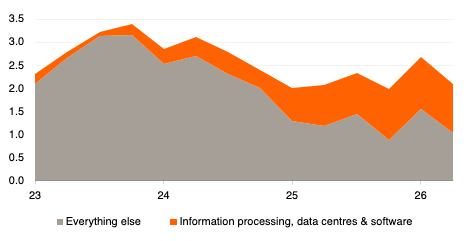
https://think.ing.com/opinions/how-much-is-ai-contributing-to-us-economic-growth/
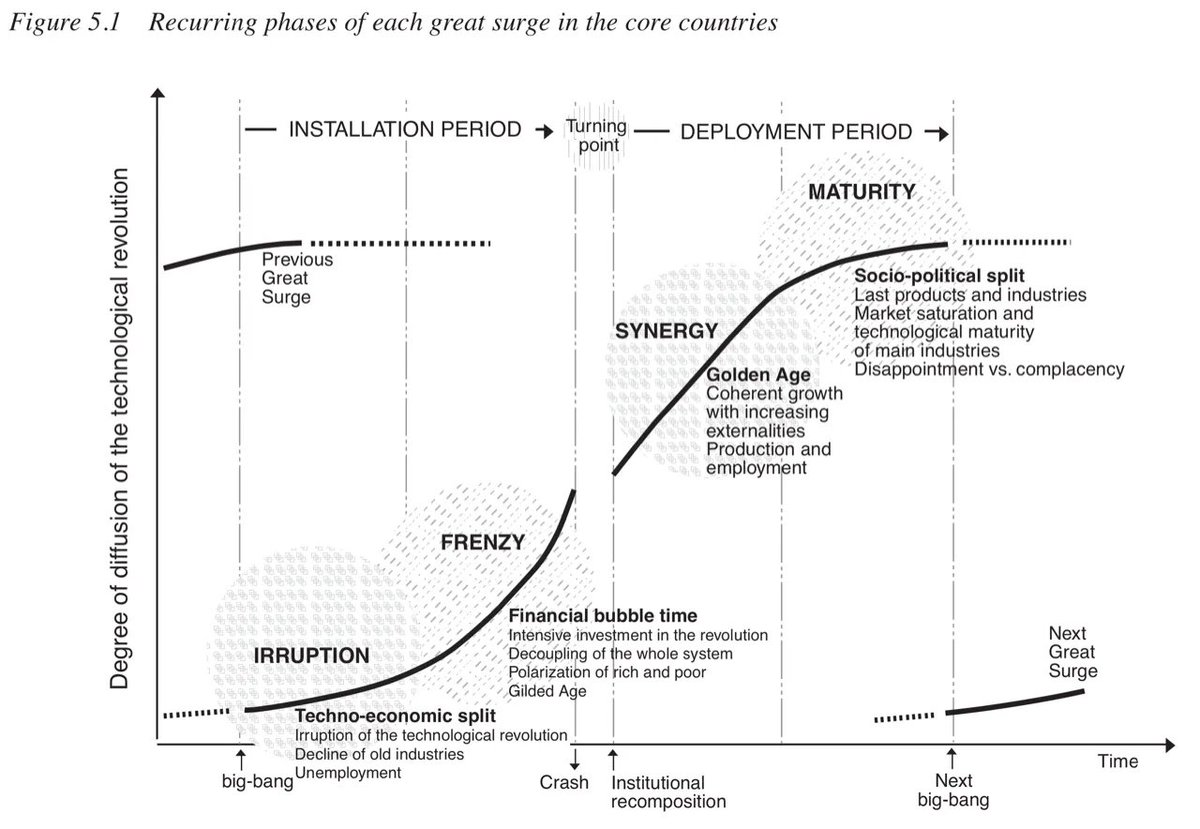
Irrespective of the short term swings in the market (Nvidia has reversed some of its pre-market losses and S&P is up on the day), this will be the beginning of the end the period of financial frenzy.
That Jensen is stepping down makes it all the more likely that the effects will be swift. Nvidia has functionally become a bank running on his singular charisma, relationships, dealmaking, and recursive access to capital. Some CFO running the company as interim CEO will not have the authority and charisma to muster $100B in credit agreements and guarantees to prop up the neoclouds, model labs, etc.
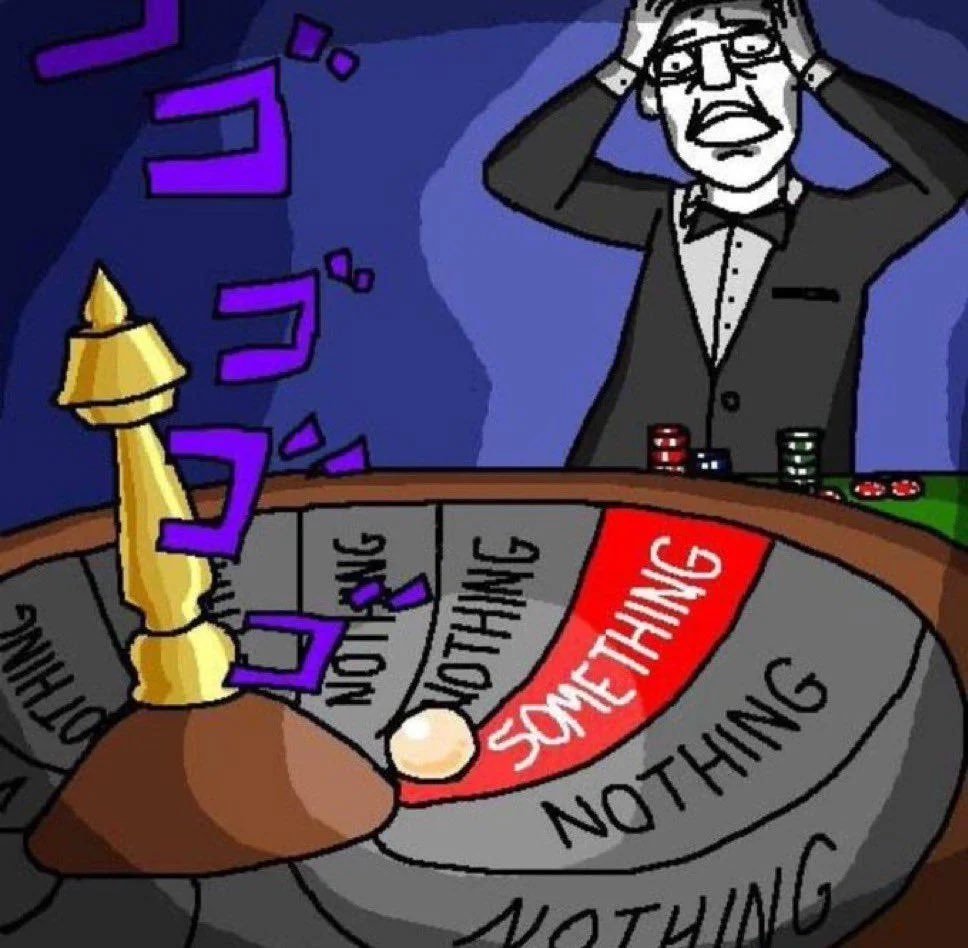
That is, this will matter and something has happened.
I think we will wind up looking prescient for trying to be "beta neutral" in AI but now we need to reposition. There are basically three options
-
Be greedy when others are fearful
-
Dollar cost average / play the game on the field
-
Retrench and reposition
#1 Be Greedy When Others Are Fearful
During FTX/SVB Greenoaks and others made great money stepping into the crisis to provide liquidity to companies like Rippling. They acted extremely quickly, put big dollars to work, and bought in at a stale/depressed valuation.
In 2022 at the end of the Covid boom, Kleiner Perkins and others aggressively started buying discounted shares in names like Rippling and SpaceX as the markets ground to a halt. Soon after Thrive et al bought into Ramp in a substantial down round.
In early covid, everyone who stepped in to provide a backstop to their companies crushed it when interest rates went to 0% and the market ripped. Silverlake ripped Airbnb's face off when their revenue was collapsing. a16z and others did Stripe at $36B at the same time and crushed it.
*What is could look like for us: *Start being much more aggressive on terms either with existing names in our portfolio (offer extensions to the last round, eg) and/or new names ("i know you were expecting $50M post but we'll do it at $25M today or not at all"). Give certainty and execution in exchange for CoC.
Put together a shopping list of names that we want outside the portfolio and find/create special situations.
#2 Dollar cost average / play the game on the field
This is basically Y Combinator. Their valuations and terms are roughly fixed and they only adjust up and down by changing the size of the classes / aggregate dollars out the door. They do well across cycles in part because they have a diverse book and are early enough to be somewhat insulated from the macro.
Similarly, the seed funds that keep going through the GFC wind up killing it with some of the best vintages of all time (eg FRC's Uber and Square fund).
What it could look like for us: essentially change nothing about how we're operating. If we believe we're in the alpha trade and not very exposed to the beta, we're fine to keep going, right? Moreover, if we believe that the tailwinds we care about are long dated and durable (and I do!), we should be comfortable continuing to buy as though nothing as has changed.
But in a crisis correlations go to 1 and it would be a mistake to believe that we're truly neutral beta just because we're not super levered long. Our companies need to raise capital, our valuations move in correlation with the market (even if they're lower across the board), and our capital base is indexed / levered long even if we're not. So blindly "staying the course" does not seem like a viable option.
#3 Retrench and reposition
Fred Wilson launched USV as the successor to Flatiron Partners with a web 2.0 thesis in the shadow of the dotcom boom. Essentially he was out of market entirely for two years while working on the thesis for what become of the best franchises of all time. Founders Fund, Accel, etc. all look roughly similar in this regard.
And they all made their huge gains backing the deployment phase (internet companies) after watching the installation phase (fiber and networking companies) get entirely blown up.
a16z launched into the GFC on similar terms. Sarah Guo started conviction as a crypto fund and completely repositioned to the AI trade as one of the first people there with an extremely correct shot call.
What it could mean for us: simply put, completely stop or dramatically slow investing and while we focus on building our thesis for the deployment phase (the application layer for the AI/machine economy). Wait for the market to cool and be ready with a strong POV on what to buy next.
Arguably, we already have that. We just need to wait to action it.
So What
It is my strong belief that we are about to move from the frenzy and financial bubble to the synergy and the deployment phase of AI.
Positioning accordingly looks like:
-
Slow down our pace. We can always speed up later.
-
Do not blindly follow on. Treat every dollar as precious.
-
Be valuation sensitive. Assume that the market will correct down.
-
Be opportunistic. We can create situations for ourselves if we have conviction in stories that matter. There will be situations that require us to act with extreme aggressiveness and urgency but that does not mean everything requires that.
-
Do more thesis work. We need to be ready to act in the next act of the story.
My early POV is that we want to continue working at the application layer and betting on the long term arc of AI/model improvement. The application layer and "neoeconomy" (new businesses made possible by AI) are the closest parallel to the web 2.0 thesis, and the overall arc of history clearly bends in the direction of more power, diffused intelligence. But the next few years may be really bumpy.