Generating region-accurate trees, using Unreal MCP and PVE
文章目录
With the Epic AI MegaJam just around the corner, we're looking to share some inspirational AI explorations from folks within Epic. First up: trees! Believable vegetation goes a long way to making a believable world and Senior Technical Product Manager Oyvind Fiksdal has been utilizing MCP and PVE in order to help that believability take root with his Botanical Converter🌳
The tool combines a C++ function with a general-purpose MCP skill to help populate projects with a good, environment-accurate botanical foundation for Vegetation Artists to build on. Check out our article on Oyvind's Botanical Converter here👇
Hi everyone. I’m Oyvind Fiksdal, Senior Technical Product Manager at Epic Games. Vegetation makes or breaks a believable world. Players may not know what's botanically correct, but they can tell right away when something is out of place.
Take a game set in Kentucky in the 1870s: knowing the Latin names of every species in that biome shouldn't be a prerequisite for building a believable setting. But ask any AI agent which five species you need for a forest in that region, and it will confidently give you an answer most of us would agree on. The hard part is turning that answer into usable trees.
That's the gap I wanted to close. The exploration isn't meant to replace vegetation artists, but to build a tool that can likely cover a lot of what a team needs: enough for most background assets, and a good starting point for the rest.
The Workflow
Start with one prompt
The Botanical Converter is a tool I built that combines a C++ function with a general-purpose Unreal MCP (Experimental) skill. Most of it could be done with pure MCP skills, but this approach is faster and gives deterministic output.
The inquiry step relies entirely on the MCP's reasoning, from a single prompt. That prompt can be abstract ("I'm making trees for a WW2 shooter"), in which case it looks up historical points of interest that suit the scenario, or explicit ("the ten most common trees in a Baltic forest"). Either way, the MCP returns the most common species for the matching region, as a mix of common names and Latin botanical names.
Pull real botanical data
For each species, the MCP performs a lookup in the most comprehensive botanical databases. The results are formatted so it fetches only usable data, and it won't fill in blanks just to meet a requirement.
Match species to archetypes
The Botanical Converter itself is a Blueprint-callable function. It evaluates the gathered data against known archetypes, built on a solid understanding of botany, taxonomy, and crown structure.
Database data is often incomplete, inconsistent in its metrics, or occasionally inaccurate. The converter resolves those discrepancies: each species is paired with an archetype and evaluated against that archetype's hard-coded behavior, plus per-species adjustments from the database. The result is normalized data ready to be parameterized in the Procedural Vegetation Editor (PVE).
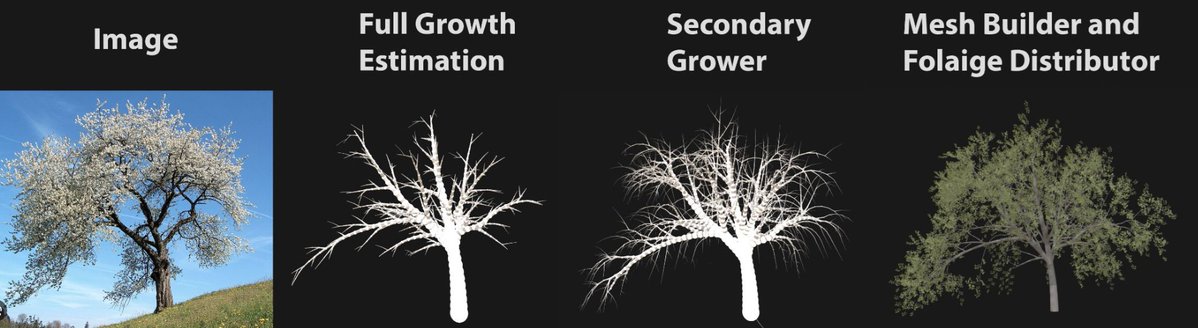
Seven archetypes, around 80% of trees
Look at foliage around the world and you'll quickly find that similarities outweigh differences. Mapping out seven archetypes covers around 80% of common tree species, without the user ever needing to modify grower data.
The output is a PVE preset that stays fully parametric, so it's easy to adjust for different stages of growth and produce near-infinite variations.
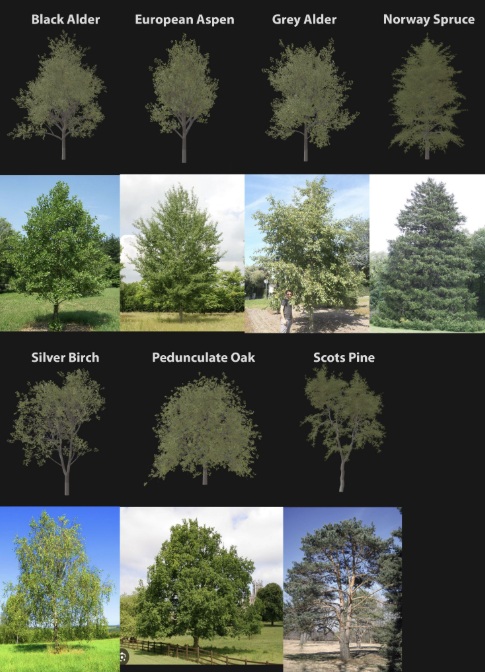
The toolset is still in early development. Once it matures, it's likely to cover all vegetation creation except tailored hero assets.
Parting Advice
In my experience, it's easy to fall into treating the AI like a junior. Frontier models are trained on top-tier code and handle complex algorithms extremely well. Use that to your advantage, and don't develop an adversarial relationship with it.
Start with minimal instructions, let it make choices in a single stream, then question those choices.
Lastly,** **MCPs try to run as lightweight as possible and don't evaluate more context than they need. Prompt the MCP to look for existing functionality in the codebase. It will write good general-purpose implementations, but Unreal Engine’s existing functions are purpose-built for the engine and almost always the better choice.
You can find out more about Epic AI MegaJam 2026 here: https://epic.gm/epic-ai-megajam-2026