How to become impossible to distract in 1 day (The 7 step attention reset)
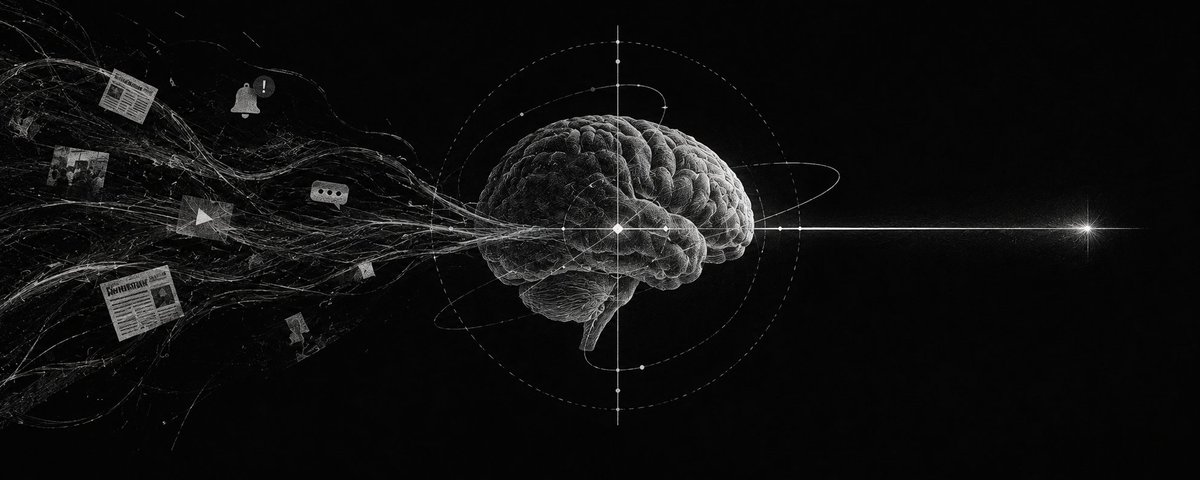
You check your phone for one notification.
Twenty minutes later, you're watching a video about a person you've never met, arguing with strangers in your head, and somehow you've forgotten what you were supposed to be doing.
And then you wonder why you can't focus.
Here's what I think most people get wrong about concentration:
You don't need more discipline to resist distractions. You need fewer distractions competing for your attention.
Think about it. You spend your entire day exposing yourself to notifications, breaking news, random opinions, recommended videos and conversations that have absolutely nothing to do with your life.
Then you expect your brain to sit down and concentrate on one difficult task.
That's a terrible setup.
Your attention is limited. Every unnecessary thing you allow into your mind takes something away from the things that actually deserve it.
So instead of spending another month trying to become more disciplined, let's spend one day changing the way you use your attention.
Here's the seven-step reset.
- Decide what actually deserves your attention
Before changing your phone settings or deleting applications, figure out what you're trying to protect your attention for.
Write down your three most important priorities right now.
Maybe you're building a business, learning a skill, preparing for an exam or improving your health.
Whatever they are, make them specific.
Now use those priorities as a filter.
Whenever you encounter something you want to read, watch or investigate, ask yourself:
- Does this help me make progress on something important?
- Does it help me make a better decision?
- Is it relevant to a responsibility I have?
- Am I genuinely curious, or am I just bored?
That last question matters.
You don't have to turn every moment of your life into productive work. Entertainment and curiosity have their place.
But you should know when you're choosing to be entertained instead of automatically consuming whatever appears on your screen.
- Become comfortable not knowing things
This might be the most important part of the entire exercise.
You need to become comfortable being ignorant about things that don't matter to you.
There is always something happening.
Another controversy. Another political argument. Another celebrity scandal. Another person explaining why everybody else is wrong.
And the internet makes you feel like you need to know about all of it.
You don't.
Something can be completely true, interesting and popular without deserving your attention.
Think about how much time you spend learning about problems you have absolutely no ability to influence.
What does knowing about another internet argument actually change in your life?
What does watching 15 videos about somebody else's success do for your own?
You can spend years collecting information and still make very little progress on the things you actually care about.
Stop confusing being informed with becoming capable.
- Remove the distractions before testing your discipline
Now look at your phone.
How many notifications do you receive that genuinely require your immediate attention?
How many applications do you open without even thinking?
How many accounts do you follow that consistently leave you with nothing useful?
Start removing them.
Turn off unnecessary notifications. Unfollow accounts that waste your attention. Remove distracting applications from your home screen.
If you repeatedly open an application without any particular reason, consider deleting it for the day.
And don't keep algorithmic feeds open just because you want to test your self-control.
That's like trying to eat healthier while keeping your favourite junk food open on your desk.
Make the behaviour you want easier, and the behaviour you want to avoid harder.
- Stop switching between things every five minutes
One of the biggest mistakes people make is treating multitasking like a productivity skill.
You write something, check a message, open another tab, reply to someone, watch a video and return to your original task.
You feel busy, but you're constantly restarting your thinking.
Research by Sophie Leroy describes something called attention residue: thoughts about an unfinished task can continue occupying your attention after you've switched to something else.
In other words, closing a tab doesn't necessarily mean your mind has closed it too.
Here's what to do.
Choose one important task and give it 45 minutes of uninterrupted attention.
Close everything unrelated to that task. Put your phone away. Keep a piece of paper beside you.
Whenever another thought appears, write it down instead of acting on it.
Need to reply to someone? Write it down.
Remembered something you need to research? Write it down.
Suddenly want to check something? Write it down.
You can deal with those things later.
Your job during those 45 minutes is to stay with the work in front of you.
- Stop consuming information without using it
Here's another trap that makes people feel productive while keeping them distracted.
Learning.
You watch a business video, listen to a podcast, read an article and save 15 useful posts.
At the end of the day, you feel like you've learned a lot.
But what can you actually do now that you couldn't do yesterday?
There's a difference between recognizing an idea and being able to use it.
If you're learning sales, make a sales call.
If you're learning writing, write something.
If you're learning psychology, try applying what you've learned to understand a real situation.
Whenever you consume something educational, ask yourself:
What can I do with this information?
Try explaining the idea without looking at the original material. Connect it to something you already know. Find a situation where you can apply it.
If you can't do any of those things, you might need to understand the subject better before moving on to another video.
Stop collecting information like it's a substitute for progress.
- Give your mind some time without stimulation
Most people can't tolerate being bored anymore.
Waiting five minutes? Phone.
Eating lunch? Video.
Walking somewhere? Podcast.
Sitting alone? Open an application.
Every empty moment becomes an opportunity to consume something.
But if you never give yourself a moment without external stimulation, you're constantly feeding your attention something new.
Try doing a few ordinary activities without reaching for your phone.
Take a walk without listening to anything. Eat a meal without watching videos. Sit with a problem instead of immediately searching for someone else's answer.
Let your mind wander.
You don't have to fill every quiet moment with information.
Sometimes the best thing you can do for your thinking is stop putting more things into it.
- Decide what gets access to your mind tomorrow
Before ending the day, review what happened.
Which distractions did you remove? Which ones kept returning? When did you feel most focused? What information did you consume that genuinely helped you?
Then establish a few rules for tomorrow.
For example:
- No social media before completing your first important task.
- Check messages at specific times instead of constantly.
- No algorithmic feeds during working hours.
- One uninterrupted 45-minute work session every morning.
- Only consume educational content when you have a reason to learn something.
Don't create 25 rules you'll abandon by Wednesday.
Choose a few that address your biggest distractions and stick to them.
The goal isn't to spend your entire life avoiding your phone.
It's to stop allowing your phone to decide what you do with your time.
The point
You can spend the next year trying different productivity apps, focus techniques and morning routines.
But none of them will fix the underlying problem if you continue giving your attention to everything that asks for it.
You have to become selective.
Selective about the information you consume. The conversations you participate in. The arguments you entertain. The people you listen to. And the problems you allow to occupy your mind.
You don't need an opinion about everything. You don't need to follow every trend. You don't need to know what happened in every corner of the internet.
You need enough mental space to think about your own life.
So take one day. Remove the unnecessary noise, choose what deserves your attention and spend some uninterrupted time doing something that actually matters.
Your life is happening while you're busy paying attention to everything else.
Stop giving it away.
Follow me @OGMayank for more on building a better mind, developing useful skills and taking control of your life.