Toolmakers
文章目录
Every few generations, a technology arrives that changes how everyone lives and works. Fire. The printing press. Electricity. The internet. Now, intelligence.
It's the most important technology of our lifetime, and the whole industry is hunting for its iPhone moment: the pendant, the pin, the glasses, the companion, some magical consumer device that makes AI part of everyone’s life. I admire the boldness, but I read this moment differently.
The iPhone came at the end of a thirty-year story that started with pagers on doctors' belts and finished with a supercomputer in every pocket. It was the payoff for decades of quiet work on tools people used for their jobs. AI is only at the start of its story, and right now it’s stuck in a chat box. Looking for the iPhone of AI today is a dead end. Consumer demand for AI exists in a handful of niches, but it's tiny next to the demand from knowledge work.
Product-market fit for AI will come in productivity first, in the tools people rely on to get real things done, and that’s where the real opportunity is today. When the iPhone of AI does arrive in a few years, it will be built on that work. It might be a form factor nobody has imagined yet, or three of today's devices collapsing into one.
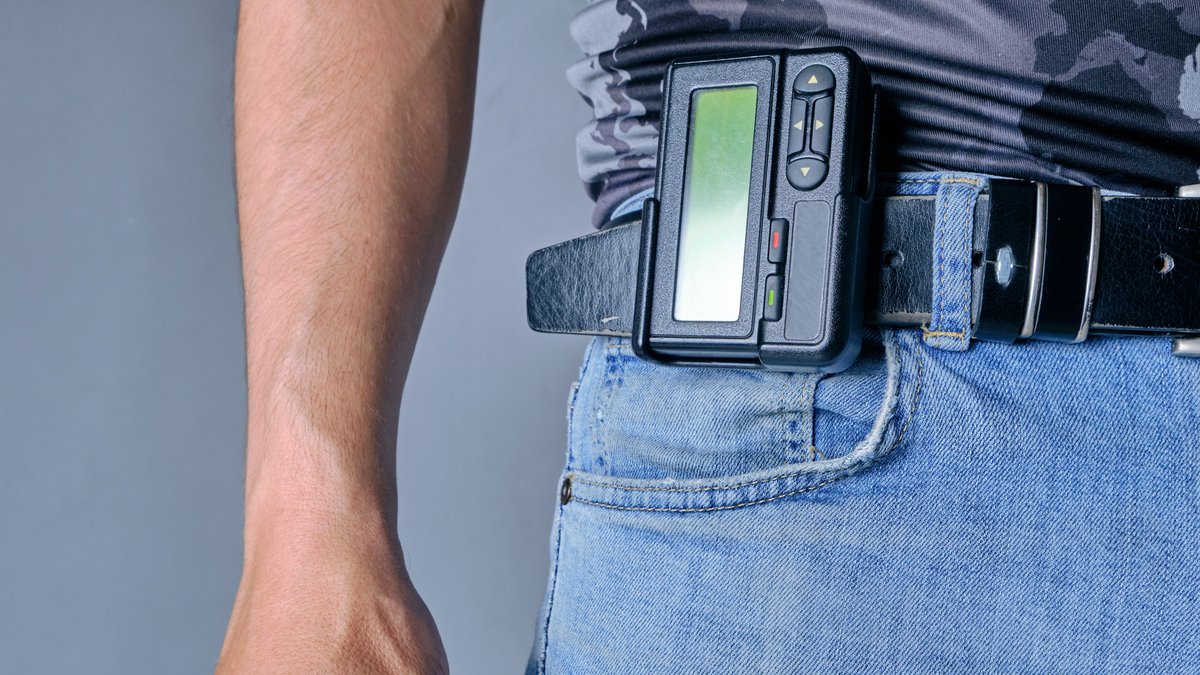
The pager, 1990s. For doctors, dealers and anyone on call, the future of mobile computing clipped onto a belt and beeped.
Every era starts with a tool
New technology wins people over at work long before it wins their hearts at home. Personal computers caught on as spreadsheet and word-processing machines years before most people used them for music or gaming. Mobile phones started as car phones for people doing deals on the road, and reached teenagers decades later. Each time, the technology proved itself on real work, got cheap and trusted there, and only then became something a billion people love.
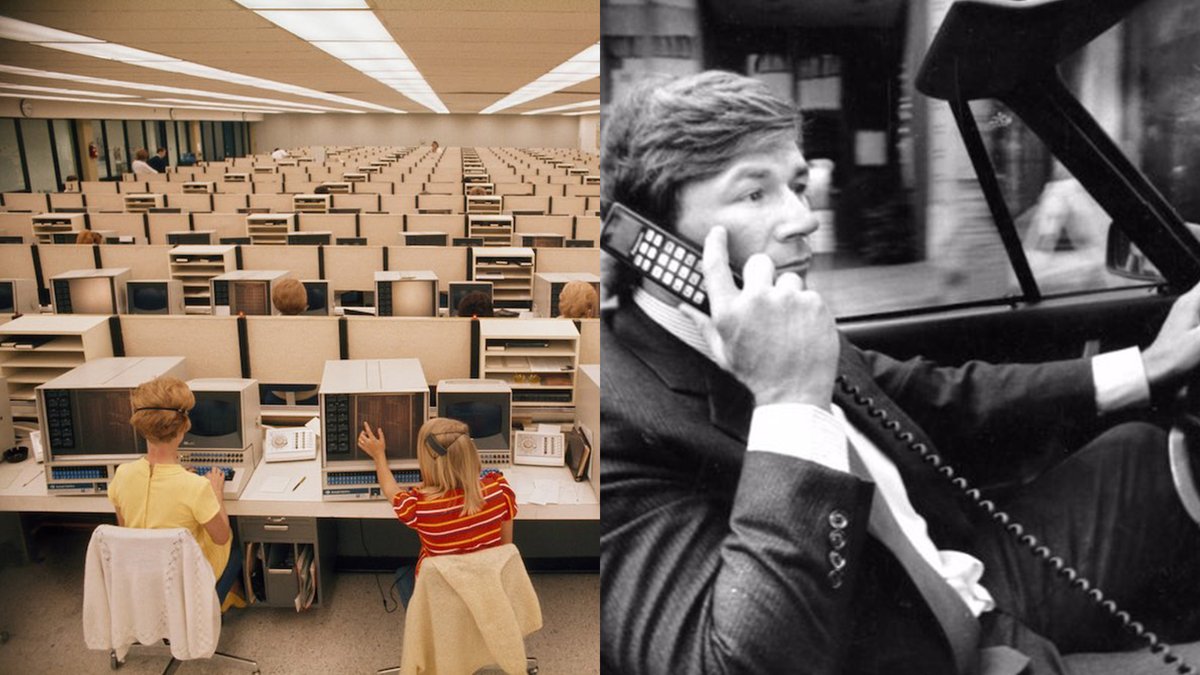
Left: an office terminal pool, 1970s. Computers earned their place doing work long before anyone played a game on one. Right: the car phone, 1980s. Mobile phones started as a deal-maker’s tool, decades before they reached teenagers.
AI is on the same path. Follow the money and you find work: coding alone accounts for more than half of what companies spend on AI built for specific jobs, followed by IT, customer support and legal. Even the chatbot in nearly a billion pockets is a productivity tool at heart.
So the first step is well underway: AI is proving itself in real work. What it needs next is context.
AI has a context gap
The biggest unlock in AI is hiding in plain sight. The models are extraordinary. You can already have agents working for you around the clock, each with its own job, checking in only when they need a decision. And they still know almost nothing about your day.
So we feed them. We connect our inboxes, calendars, screenshot Slack threads and explain the backstory. Half the work of using AI is getting context into the text box.
Meanwhile, the context that matters most never reaches the model at all. Think about the last time someone said something worth keeping: an idea over coffee, a throwaway comment that unblocks your whole week. What did you do? "Hold on, let me write that down." Out comes the phone, and by the time you look up, the moment has moved on without you. Or you don’t bother, and it's gone by the end of the day.
That’s the gap. The intelligence is already here, and the context is what’s missing. Close it, and everything AI can already do gets dramatically more useful. And context doesn't live in a chat box. It lives in the tools you use and carry every day.
Work tools should be beautiful
People spend most of their waking hours at work, and most of those hours in the company of tools. A careless tool tells the person using it, every day, what their work is thought to be worth.
Somewhere along the way, the industry decided that a machine for work should look like an apology. Beige boxes. A Polycom squatting on the conference table. We were taught that seriousness and beauty could not share a room.
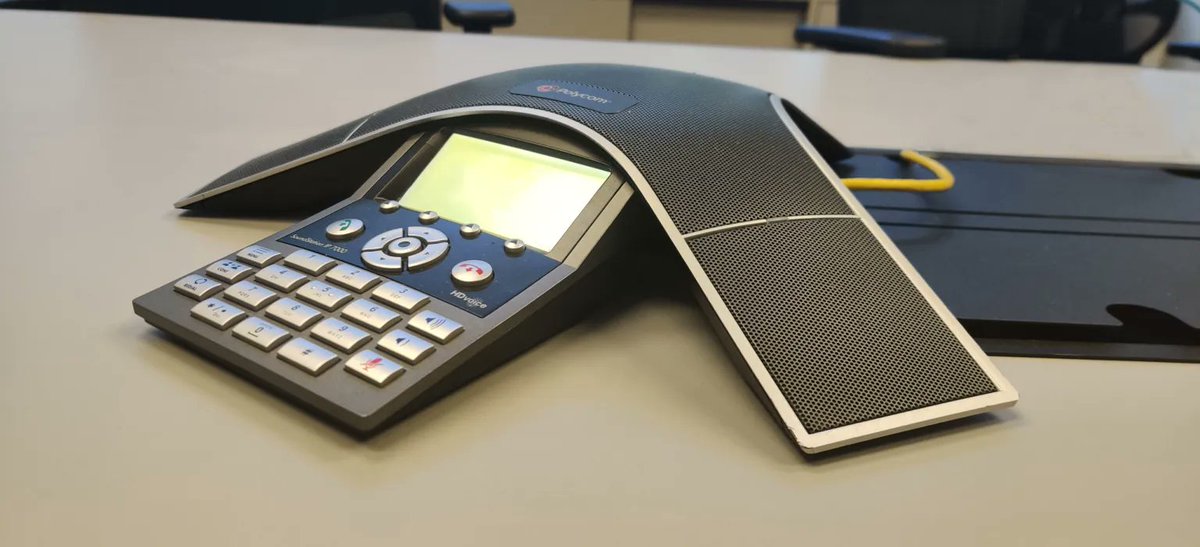
The Polycom Speakerphone: in every meeting room, loved by no one.
It hasn’t always been this way. Olivetti made typewriters, about the most utilitarian objects on earth, and hired artists to design them. The Valentine was portable and playful, and people fell in love with it. The 1960s imagined the whole future like that, with space-age curves and gadgets that looked delighted to exist. Somewhere between the Jetsons and the conference room, the future got boring.
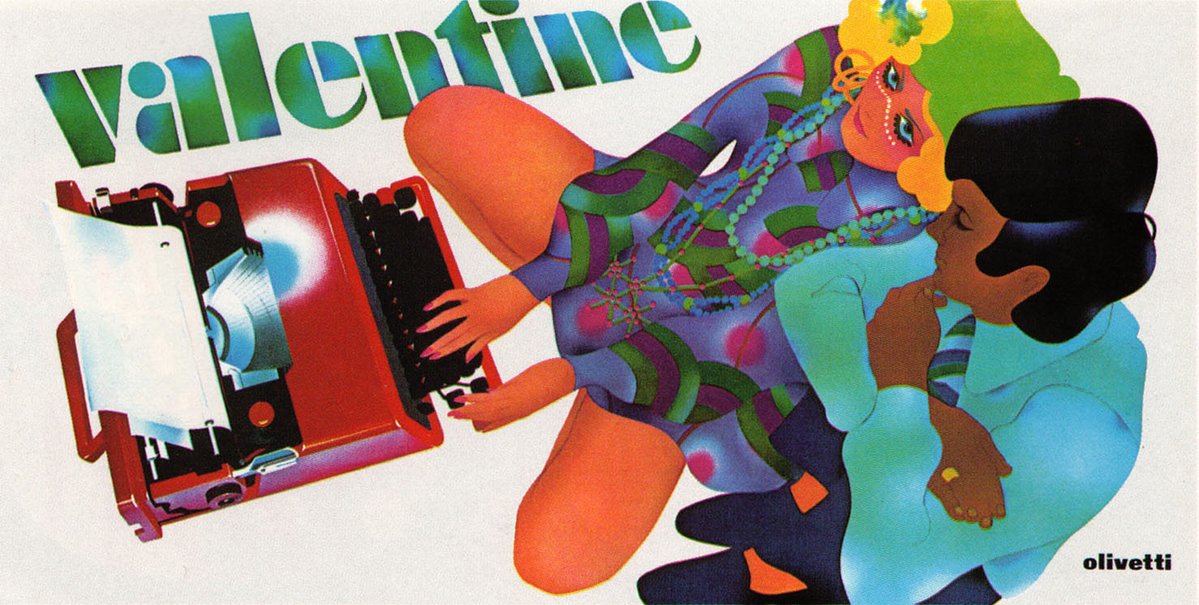
Olivetti Valentine, 1969, designed by Ettore Sottsass. Proof that even a typewriter can be beautiful.
At Nothing, we exist to inspire creativity by making tech fun, and for the first time, the most important category in technology is wide open on the thing we do best.
What happens next
Today, you work with your AI. Tomorrow, it works for you. Close the context gap, and work itself gets rewritten: how people work together, how organizations work with people, and how people work with agents. Tools become proactive, taking care of the mundane so people can spend their time on what's creative and strategic.
For now, AI is a productivity technology and we are betting it stays that way for years. The winners of this era will be the ones who build the tools of the intelligence age with the care and pride of a toolmaker. Earning context. Earning trust. Making machines that look like the future people used to be excited about.
We're in a rare position to make this happen. We build our products end to end, hardware and software under one roof, our design language is recognizable across a room, and tens of millions of our devices are already in people's pockets and ears.
Someday the magical consumer device everyone is searching for will exist, and it will be the shadow of years of quiet work. We would rather do the work than chase the shadow.
That work has already started. Our first AI-native product ships next month. It’s a tool, but one built with the personality and care that have come to define a Nothing product. It has no new screen, and it couldn't have been an app.
We can't wait to show you what we've been building.
What a time to be a toolmaker.