How to thrive in the next decade (do it in this order)

文章目录
If you’re anything like me, you grew up with many interests.
When I was a kid, I tried to do everything at once.
But the people around me (teachers, adults, and authority figures) would try their best to label me.
I hated being put in a box. It felt like it was limiting what I could do.
And growing up, I realized there are two paths that people choose:
1) The Specialist
Society’s goal is to create specialists.
You go to school for 12 years to get indoctrinated, then another 4 years to get a degree that says you’re skilled in a very narrow domain. Once you have your degree, you can either spend another 6-10 years specializing even further, or spend the next 45 years working in that field and nothing else.
Funny enough, after your first 6-12 months working a job, you’ll realize that you’re doing the same tasks day in and day out.
What most people miss is that the current education system (and therefore the job market) was created by the Prussians in the 1800s to create disciplined, loyal, and obedient workers. They wanted people who were extremely good at doing one thing.
Do you know who else is extremely obedient, disciplined, and great at doing one thing?
AI.
Most people think that the answer to AI is to specialize even further, but frankly it’s dumb.
You can’t outlearn AI.
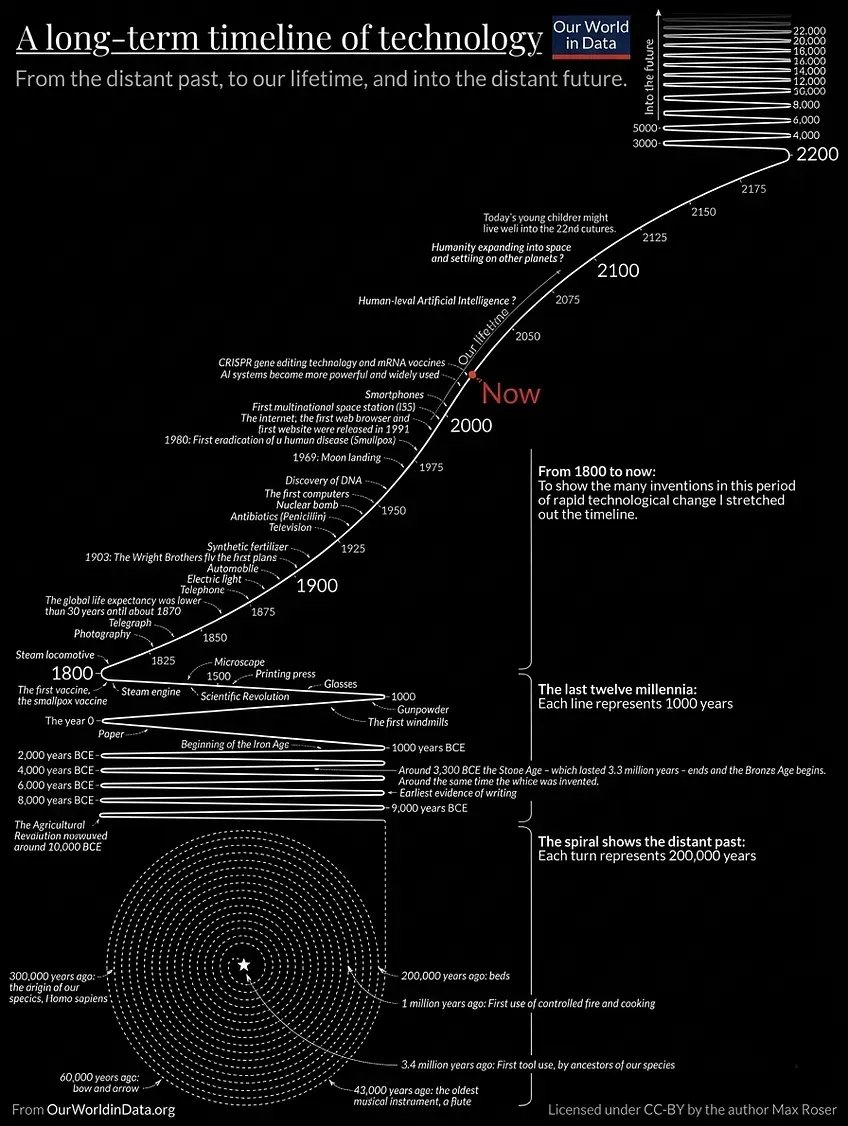
It can complete 1,000 learning loops in a matter of minutes while for you it takes a week, a month, or even a year to complete 1 learning loop.
Then comes the second path...
2) The Generalist
Most people who say “I’m a generalist” are coping because they’re not great at anything.
They’re jacks of all trades. They do a lot of things, but aren’t typically great at anything.
They’re only useful for general or low-level tasks or for getting a rough prototype of something. They can’t solve the bigger problems. They can’t create your product from A-Z. They don’t have the skills necessary to take your ideas to market. They’re simply not skilled enough.
To create anything that is game-changing or revolutionary, you need to be at the cutting edge.
So what should you do? If AI is good at everything, what is the answer?
Should you specialize even further?
Should you just give up all hope and accept that AI is going to take over our jobs?
What jobs will survive the next decade?
How can you set yourself up for success?
How can you earn a living in the future?
I’m not here to add to the AI noise and tell you that AI is coming for your jobs.
Frankly, I’m sick of people saying that and coming up with doomsday scenarios.
It’s much easier to imagine doom scenarios (that almost never happen) than to imagine the optimistic ones.
My goal for this letter is to show you a third path that you can take. One that I believe will be the future of how we work as individuals and also how society will run itself.
Let’s begin:
=======
Quick break:
If you want to write newsletters around your interests, grow your audience, and generate sales, next Tuesday I’m hosting a live workshop with Dan Koe showing you how to do it.
You’ll leave with 4 newsletters outlined and 3 frameworks you can use to write your next newsletter (from beginner to advanced).
=======
I - How To Thrive In The Next Decade (Become A Specialized Generalist)
Let’s get one thing straight:
AI won’t replace humans.
Why?
Because it does not know what it wants.
It has no desires, and therefore it has no agency. It cannot self-identify problems, create goals, or come up with unique and novel solutions.
The future favors the specialized generalist.
The most successful founders are specialized generalists. They are great at many things, but they’re exceptional in one or a few domains.
When you become a specialized generalist, AI becomes a tool that you can use to achieve your goals.
You can see how things connect with each other and you know if the work that the AI is producing is trash or good. You have judgment, taste, and creativity. These are all high-value, evergreen skills that AI cannot replace.
You see, the generalist accepts whatever AI throws at them because they don’t have any expertise in the work that the AI is doing. The specialist has no clue about anything other than their domain of expertise and so they struggle to see the bigger picture. You need to become a specialized generalist, my friend.
Here’s how:
1) Interest Stacking
Most people know what a “skill stack” is.
It’s similar to having a diversified stock portfolio, but for your skills. Rather than putting all your money in one stock and risking it all, you invest in various stocks. Even if one crashes, a few others might increase and you’ll still end up making a profit.
Being the best at something is damn near impossible. If you were going to become an NBA player or write a platinum album, you’d know by now.
But everyone can be very good (in the top 25%) at a few things. By sheer statistics, you’re bound to be the best in the world at your unique intersection.
And no, it does not take that long to be in the top 25% of anything. It only takes 6-12 months.
Think of a CrossFit athlete. They’re not the strongest lifters, or the best gymnasts, or the best endurance athletes. But when you combine all the different disciplines together, they become the fittest person in the world.
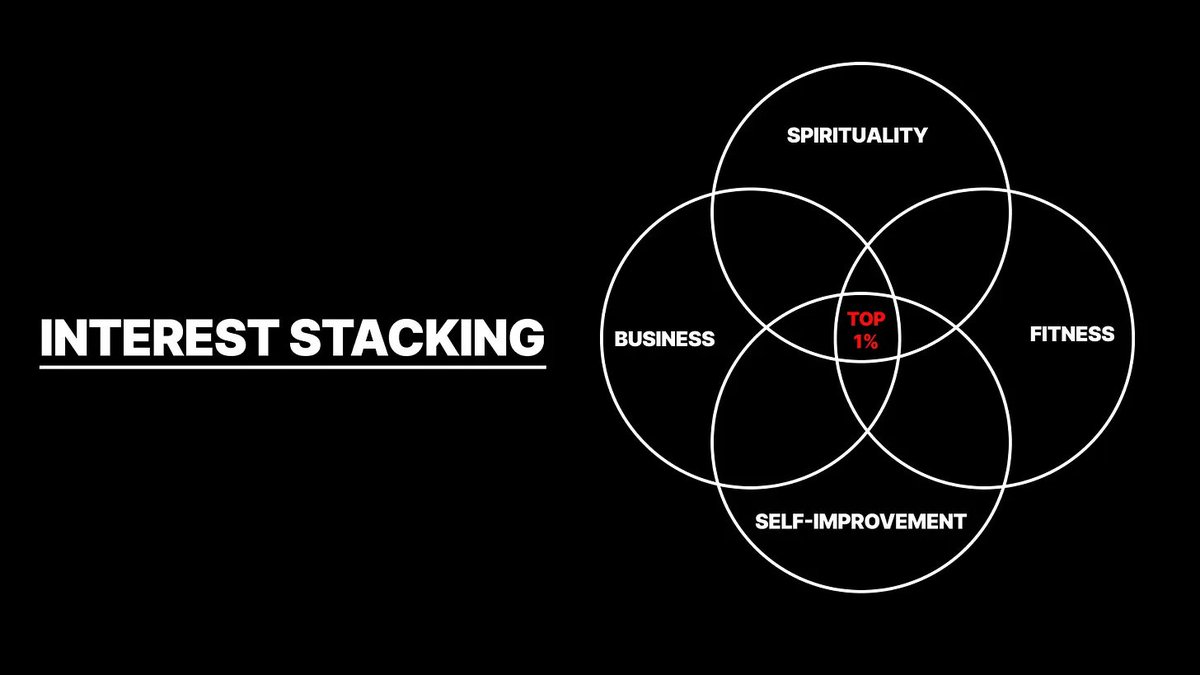
With interest stacking, rather than being a specialist and only relying on one skill or interest for the rest of your life (and having AI potentially replace you), you learn many different skills, and you explore many different interests and topics. You’ll wear as many hats as you can. You’ll experience as much as you possibly can.
All of this will help you develop yourself as a human and make you more valuable to society.
The more valuable you are, the harder it becomes for society to replace you.
Acquiring and developing your interests assumes that you have high agency:
-
Identify a goal in your life — like learning a new skill, understanding a new topic, finding a partner, or getting fit.
-
Dive into the unknown — start with what you know. You’ll only know what you need to learn when you encounter a problem. Hit one fast.
-
Iterate through feedback — let your experiences, curiosity, and reasoning guide you into new paths.
Once you get to the top 25% (which doesn’t take that long), you can start branching out to new interests.
You can study marketing to attract supporters to your work, show the world the value you bring, spread your ideas, or reach any goal that needs outside help (public support, customers, investors, or brands).
2) Lean into Your Authenticity
*“Most older, successful people will tell you that their life was best when they lived it unapologetically, on their own terms.”
- Naval Ravikant*
Everything is artificial nowadays.
Food is filled with artificial chemicals. Content is created by AI. People are faking their lives and interests just so others will love them.
We’ve lost the human connection.
I see many people in my life faking their lives not only on social media but also in real life. When they try to speak to someone, they lie about their names, age, and what they do for work just so the other person admires them or might help them land a date or something.
It blows my mind that people do this.
It’s sad.
If you are lying about who you are to people just to impress them or be accepted by them, then you have a bigger problem to solve.
Lying to be accepted by people is you being needy. Changing the way you speak, act, or dress just to impress someone is you being needy. Saying something just to impress someone is you being needy.
Being genuinely yourself, saying what you believe, and refusing to change just to fit a mold is attractive.
It takes a lot of courage to be authentic. Because you’re exposing yourself to the world, and if the world doesn’t like it, you’ll get rejected, attacked, and even shunned by society, which hurts.
But one thing I noticed in my life is that the more I lean into who I am, the more people want to work with me, the more opportunities I have, and the more success I find. And it’s all because I’m being unapologetically myself.
When everything is fake, being real is attractive.
3) Live In The Arena
The world is filled with theoretical knowledge.
Everyone is talking in hypotheticals, living in their imaginations, and drowning themselves in knowledge with having zero practical experience.
“The Intellectual Yet Idiot* **is a production of modernity hence has been accelerating since the mid twentieth century, to reach its local supremum today, along with the broad category of people without skin-in-the-game who have been invading many walks of life.”
- Nassim Taleb*
When you fill your mind with theories and general principles, you become an intellectual idiot. You have a lot of knowledge, but you don’t know where, when, and how to leverage that knowledge.
You need knowledge and experience.
The only way to gain experience is by doing.
You don’t become a New York Times bestselling author by reading books on how to do it. You become one by having great ideas and writing great books.
You don’t become a great painter by studying Picasso’s paintings. You become one by painting, experimenting with new techniques, and improving over time.
You don’t become a great investor by watching tutorials on how to invest.
You become great at something by doing.
Don’t learn. Do first.
3 reasons why:
-
You’ll learn by doing and through experience.
-
The act of taking action will naturally make you want to learn more about that domain.
-
When you live in the arena, when you look to gain real-world experience, that’s when you will know when to apply the principles you’ve learned.
Live in the arena. Learn in the arena. Do everything in the arena.
II - All Roads Lead To Starting A One-Person Business (4 Pillars)
*“Learn to sell. Learn to build. If you can do both, you’ll be unstoppable”
- Naval Ravikant*
When you’re a founder, nothing can replace you.
A founder is someone who solves problems. If you’ve been “replaced” by AI, then that just becomes another problem for you to solve.
When you’re a founder, AI and technology become tools for you to leverage to achieve your goals.
A one-person business is the only model I’ve found that aligns with human nature. Your business grows as you grow as a person.
When your interests change, your business changes. When you gain new skills, you unlock new challenges in your business.
Solving your problems offline = self-improvement.
Solving your problems online = business.
The more time I spend building my business, the more I realize that it is the perfect vessel for personal development, skill acquisition, and learning new interests.
Every problem in your business has a personal problem attached to it. Every problem you encounter in your life becomes a potential product you can create.
-
If you’ve struggled with your weight, and now you’re in shape, you’re more than qualified to help others do the same.
-
If you’re a filmmaker, you can help others (creators, beginners, everyday people) shoot, film, and edit their videos and photos like you.
-
If you’re an introvert and you’re good at communication, you can help people overcome their social anxiety.
Here’s how to build a business around what you love:
Passion: Curiosity
As you go through life, you’ll naturally gravitate towards the things you’re good at.
Which are usually the things you enjoy doing.
When you do something you love, you’ll easily put in enough time, effort, and energy to reach the top 25%.
If you’re only doing it for the money, you won’t last very long. Because you will realize that it takes years or even decades before you see any monetary success.
But when you do it out of joy, nobody needs to tell you to do it. You don’t need to rely on motivation. You don’t care about financial success. You’ll simply go and do it because you want to. You’ll outwork and outlast everyone because to them it feels like work, but to you, it’s play.
It’s extremely hard for people to compete with you when you’re having fun.
Earn a living: Business
*“Smart people get paid to be themselves.”
- Alan Watts*
You want to make money.
This is a safe space. You can admit it. We don’t judge.
Everyone needs money. This is how we survive. Without it, you can’t do what you want for a living. And no, business is not evil. Money is not evil. Marketers aren’t all grifters. That’s just society’s voice telling you that.
Business is the vehicle humans use to advance human civilization.
Business is how you create value in society and distribute it in the form of products.
The phone you’re reading this on was created by a business. The chair you’re sitting on, the clothes you wear, the car you drive, they’ve all been created by a business.
The only way to do what you love long-term is to earn a living while doing it. Otherwise, you’ll have to spend 8 of your most productive hours doing work you don’t care about, which will leave you mentally drained, with no creative energy left to do what you love.
When you are successful, in the long term, you’ll find almost all of your work is just you doing your hobbies for a living.
*“My goal in life is to unite my avocation with my vocation”
- Robert Frost*
Communication: Writing
You need to write more.
Schools did a terrible job of teaching people how to write. They turned the most valuable activity into the most boring and hated activity any person can do.
Writing is everywhere. You do it every day. When you text your friends, that’s writing. Email is writing. Tweeting is writing. An Instagram caption is writing.
The people who had the biggest cultural impact were writers.
Marcus Aurelius, who ruled the Roman Empire, used to journal (which is writing). Winston Churchill used to write. Franz Kafka was a writer. Dostoevsky was a writer. Philosophers used writing to etch their ideas in history. The only reason we know about Socrates, Plato, Epictetus, and many other philosophers is because of writing.
Writing is so much more than just words.
It’s how you think, speak, understand, learn, attract supporters to your work, persuade people to take action, and make an impact on the world.
You need to start a writing habit.
Write for 10 minutes in the morning. It doesn’t matter what you write. It can be tweets, a newsletter, a brain dump, a journal entry, gratitude. Write on paper, on your phone, or your writing app.
It’s even better if you share your ideas on social media. It will open doors and opportunities you didn’t even know existed.
The only reason I have my business today is because I started posting my ideas on the internet.
Grow: Philosophy
Everyone eventually becomes a philosopher.
We’re all trying to solve the same big problems: happiness, purpose, fulfillment, and what it means to live a good life.
Philosophy gives you a North Star. It gives you a set of rules that you use to live your life. You can use philosophy to add depth to your brand, ideas, design, writing, or really anything as a creator.
That’s why specialized generalists win.
They can give a deeper meaning to what they’re doing. They can weave in their interests, tie them together, and create a mission that is bigger than themselves or any individual.
This gives you a unique position to monetize your knowledge, skills, and experiences. And that is something no person or AI can copy or replace.
You want to specialize in being you.
Thank you for reading.
Enjoy the rest of your day.
—Hussain
P.S.
Gentle reminder: Next Tuesday, November 10, Dan Koe and I are hosting our first live workshop together.
For 60 minutes, we’ll show you how to write newsletters that reach beyond your existing audience, even if you’re starting from zero.
You’ll leave with 4 newsletters outlined and 3 frameworks you can use to write your next one (from beginner to advanced).