Warsh and Bessent Are Building a New Treasury-Fed Accord to Revalue America’s Gold

文章目录
This is how they will do it: revalue the gold, pledge it behind a capped bond, and hold savers’ returns below inflation, under a Treasury-Fed accord.
The US is preparing to shrink its debt by revaluing its gold and holding savers’ returns below inflation, and it has hired the authors of both plans to do it.
On 9 Oct, Treasury Secretary Scott Bessent made Judy Shelton his Counselor. She has spent 14 years designing a Treasury bond redeemable in gold and has called for revaluing America’s gold to back it.
Eleven days earlier, he gave the same title to David Zervos, whose public record is on financial repression, which means holding savers’ returns below inflation so that inflation shrinks the debt.
In Fed Chair Kevin Warsh’s office, Paul Winfree, an adviser hired on 2 Jun 2026, has spent ten years designing plans for the Fed and the executive branch. In Trump’s first term, he worked on domestic policy in the White House and led the order to reorganise the federal government, Executive Order 13781. In 2023 he wrote the Federal Reserve chapter of Project 2025. CNBC reported the hire.
The Heritage Foundation produced Project 2025 as a plan for a new president to remake the federal government quickly. In April 2023 it published the plan’s 920-page book, Mandate for Leadership, backed by more than 110 conservative groups.
On 5 Jul 2024 Trump disavowed it: “I know nothing about Project 2025.” After winning, he hired its authors. Russ Vought, who wrote its chapter on the president’s office, runs the budget office. By February 2026, the administration had started or completed 283 of its 532 domestic recommendations, according to groups that oppose Project 2025.
Winfree’s chapter is radical reform by any measure. It ranks its remedies, and the first is free banking, under which “the Federal Reserve is effectively abolished”. It tells the Fed to wind its balance sheet down “as quickly as is prudent” to pre-2008 levels and to stop paying interest on excess reserves “immediately”. It names “gold-convertible Treasury instruments”, Shelton’s bond, as the way to gold backing.
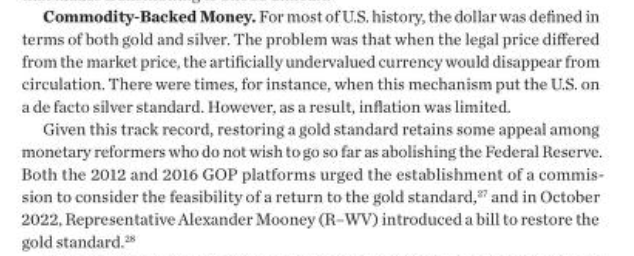
Winfree’s chapter on commodity-backed money. Source: Mandate for Leadership, 2023.
The three great changes to American money since 1913 all kept the Federal Reserve: Congress created it on a gold dollar in 1913, Roosevelt took the nation’s gold, ended redemption and repriced it in 1934, and Nixon closed the gold window to foreign governments in 1971. Winfree’s chapter ranks first a system in which “the Federal Reserve is effectively abolished” and money is backed by gold (p. 735), and second a new gold price at which every Federal Reserve note could be redeemed (p. 737). It would remove the Fed that all three kept and restore the gold link that 1934 and 1971 cut, and Winfree now works in the Fed chair’s office.
Of course, what he said in an essay in 2023 doesn't make it about to happen today; it just raises the odds considerably.
Treasury now employs Judy Shelton, who designed the gold-convertible bond, and the Fed chair’s office employs Paul Winfree, who wrote the Project 2025 Federal Reserve chapter that calls for that bond. These are the people you hire when you intend to issue the bond.
Scott Bessent, the US Treasury Secretary, runs the government’s bond program. When he told markets “I am the house now,” he explained to Axios that he meant he has “superior information.” Gold matters here because its price rises as investors doubt the government can repay its debt in sound money, so a rising gold price signals that the supply of government debt is outrunning the market’s willingness to buy it.
The strain on US government borrowing is the late, visible sign.
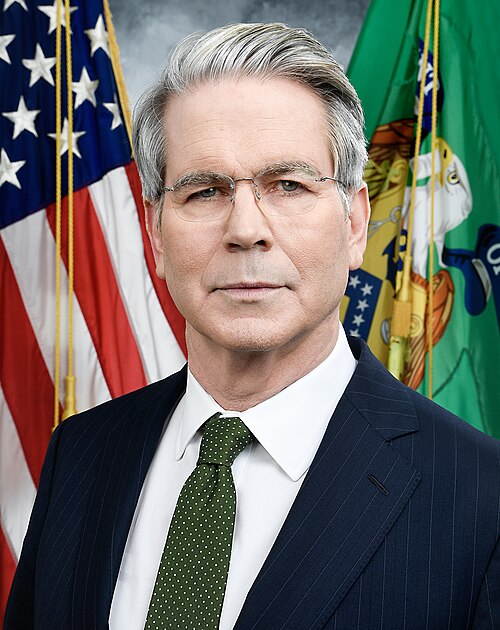
Figure 1. Scott Bessent, the US Treasury Secretary, who runs the government’s borrowing. Official portrait, 6 Feb 2025.
Stephen Miran, who chaired the White House Council of Economic Advisers, proposes the foreign counterpart to Shelton’s gold bond: a century bond sold to foreign governments. A century bond matures after 100 years, so Treasury does not refinance that debt in the market until then. Shelton’s bond covers domestic debt and gold. Miran’s covers the roughly $3.76 trillion in Treasuries held by foreign governments.
In his Nov. 2024 paper, Miran writes that the US Treasury could “replace that borrowing with century bonds sold to the foreign official sector” (p. 29). He also proposes lending dollars to foreign governments against those bonds. A short-term version of that lending already exists: the Federal Reserve’s FIMA repo facility lends short term at a penalty rate against Treasuries, where Miran proposes lending at face value against century bonds.
Miran chaired the Council of Economic Advisers from March 2025, took unpaid leave from it when he joined the Fed Board on 16 Sep 2025, resigned the chairmanship on 3 Feb 2026, and left the Board on 22 May 2026 to return to Hudson Bay Capital. His plan is the foreign half of the gold plan: Shelton’s bond deals with domestic debt and gold, and his century bond takes the Treasuries held by foreign governments off the market: a reserve manager who needs cash borrows against them instead of selling. Shelton’s capped bond can start on its own.
This piece tests the standard Washington and Wall Street view against the record gathered since I first set out this argument on 22 Sep. That view is that revaluing US gold is a fringe idea with no plan behind it, and that the people Treasury and the Federal Reserve have hired are not there to plan and implement it.
That view does not fit the hires, the published plans or the strain in the bond market set out below.
Bloomberg put it this way on 13 Feb 2025: “The gold market attracts its share of fringe ideas, and in recent weeks one of them, that the US should revalue its gold stockpiles, has gripped Wall Street.” Its summary line read: “The idea isn’t seen as under serious consideration in White House”.
A week after that Bloomberg report, Bessent himself waved it off. Asked about revaluing the gold, he said: “When we were talking about the sovereign wealth fund, and I said, ‘monetize the balance sheet,’ I promise you, that’s not what I had in mind.” Fed staff noted in Aug 2025, after describing Lebanon’s debt continuing to rise after it used revaluation gains: “While gold revaluations can provide funds for the government, their ability to offset larger structural challenges can be limited.”
My reading hasn’t changed. Bessent runs the government’s borrowing and, by his own account, has “superior information”. The question is what that “superior information” includes.
David Zervos, Paul Winfree and Judy Shelton were put in place for a particular project: a gold bond plus a revaluation of gold.
The plan exists in writing, step by step, in the work of the people now around Bessent and Warsh. Shelton has spent 14 years designing the bond, and the step-by-step path is in the book she edited.
The US holds about 261.5 million ounces of gold, booked at $42.22 an ounce, or $11 billion. At market it is worth between about $1.0 trillion and $1.5 trillion, depending on the gold price on the day: $3,900 to $5,600 an ounce, the band gold has traded in this year. If Congress raises the $42.22 figure in the statute, Treasury issues larger gold certificates to the Fed and the Fed credits Treasury’s cash account with the difference, cash that can retire long bonds, cutting duration and yields. Judy Shelton’s gold-convertible Treasury Trust Bonds could also expand demand.
Winfree’s chapter reads as a work order for Federal Reserve reform rather than an essay.
Winfree works in Warsh’s office and Zervos and Shelton work beside Bessent: the authors of the plans now work inside the institutions that would carry them out.
For gold, it calls those instruments the soft way in and cites Judy Shelton for them. For the Fed it also says to buy only Treasuries and to “appoint a commission to explore the mission of the Federal Reserve”. Warsh brought him into the chair’s office “to support Warsh in his policy analysis and planning on special projects”. Five weeks after that 2 Jun hire, on 9 Jul, the Fed set up a task force to examine “the costs, benefits, and institutional implications of the Federal Reserve’s current balance sheet regime”. His chapter asked for that review. Now the Fed is running it, and he works in the chair’s office.
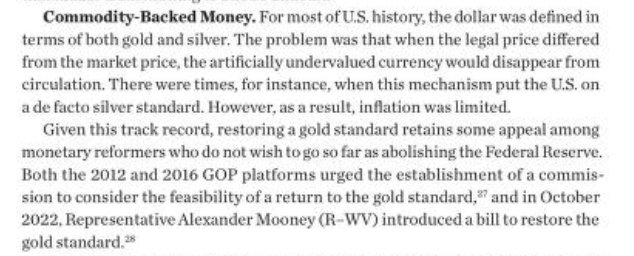
Winfree’s chapter on commodity-backed money. Source: Mandate for Leadership, 2023.
Bessent had Zervos, a Jefferies strategist, on his 2025 list of candidates for Fed chair a year before making him Counselor on 28 Sep 2026, and Shelton, the gold bond’s designer, said in Nov. 2025 that she had been at Treasury before her appointment.
The consensus claim that no plan exists fails on the evidence we have. What the record doesn’t show (yet) is an official act: no rule change, no bill passed, and no change in the gold certificates, the paper Treasury issues to the Fed against its gold, booked at $42.22 an ounce. A change in any of these would show the revaluation has begun, and they are what to watch.
The record below covers the people Treasury has hired, the written plan for a gold bond and a revaluation, the legal and accounting routes the plan would take, and the official acts that would show it being carried out.
Since 22 Sep, Treasury has hired Shelton and Zervos, Bessent has met the new Fed chair more often, and long-term US bond yields have risen
Shelton was hired to advise on China’s currency, the job her gold bond was designed for
Treasury hired Shelton to advise on China’s currency. Her gold bond is a tool for exactly that job. A bond redeemable in gold fixes a dollar price in gold, so any country holding its currency below its real value shows up against that fixed price. In her book Good as Gold, she says that gap can then be used to set a tariff. Advising on China’s currency and building a gold bond are part of that assignment.
On 9 Oct Bessent announced her appointment as Counselor to the Secretary, a senior adviser who reports directly to him, 11 days after he gave Zervos the same title. Treasury’s release gives her a defined job: to “advise the Secretary on currency policy, with a particular focus on evaluating financial conditions in China”.
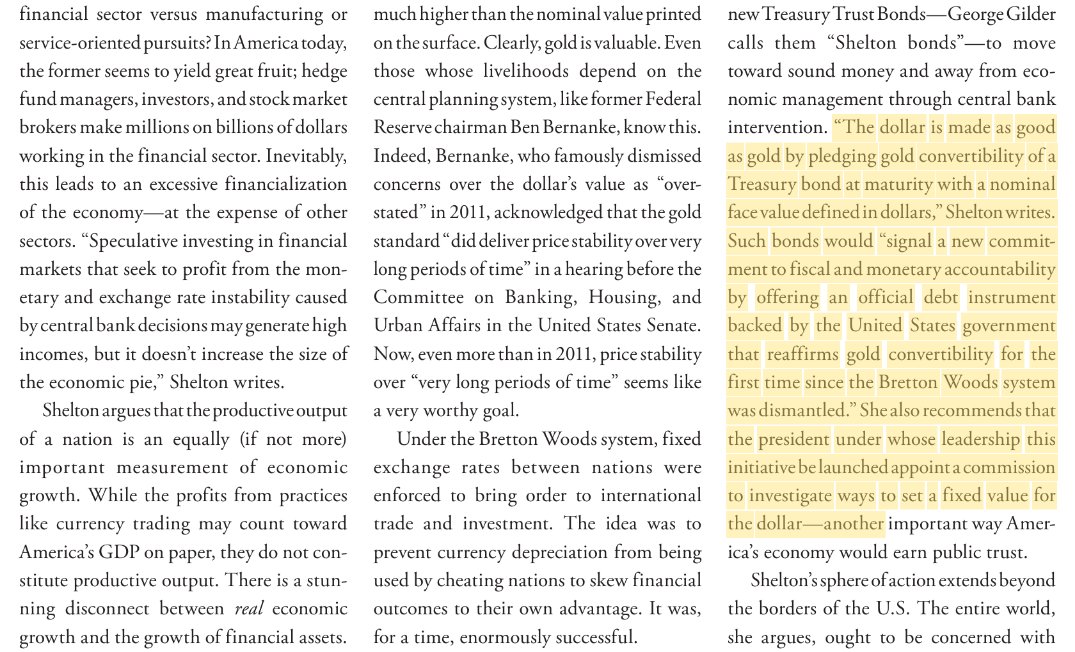
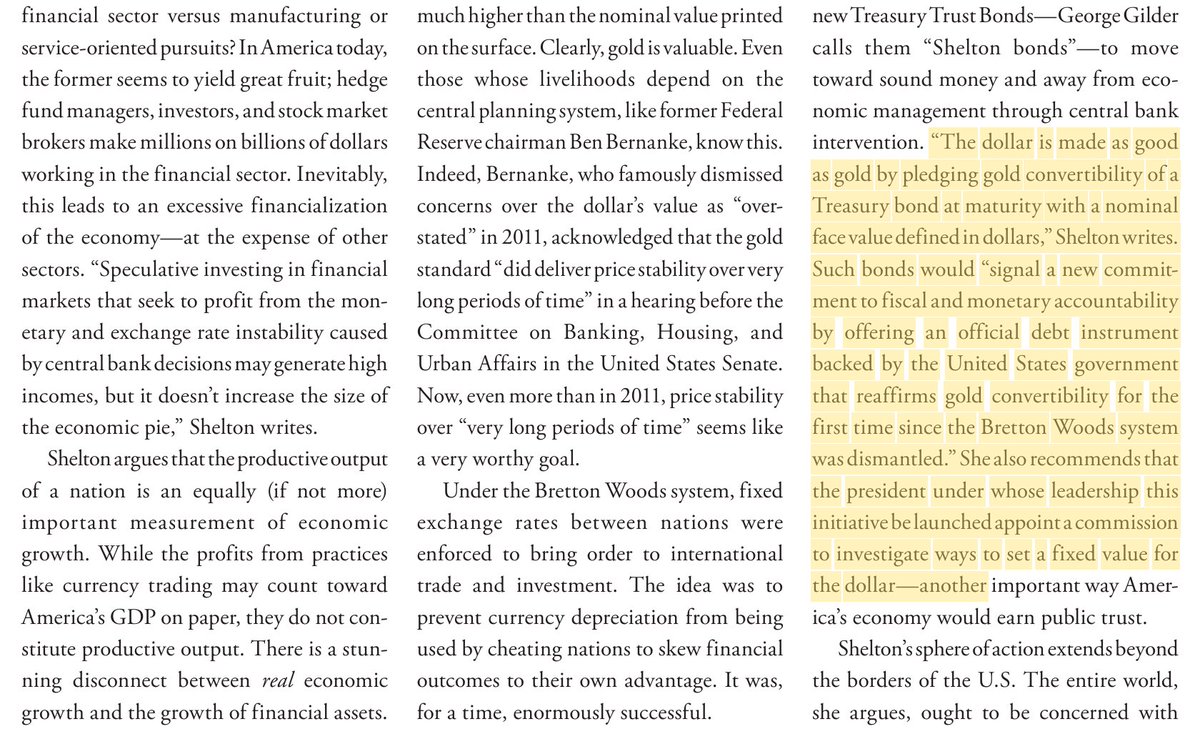
Figure 2. Shelton’s Good as Gold proposes a Treasury bond redeemable in gold at maturity, followed by a commission to investigate a fixed value for the dollar. Source: Independent Institute.
Shelton has worked at the Hoover Institution, a policy research institute; served as US Director at the European Bank for Reconstruction and Development (EBRD); and chaired the National Endowment for Democracy. In 2020, she was nominated to the Federal Reserve Board, which governs the US central bank.
The nomination failed on 17 Nov 2020, when the Senate voted 47–50 on cloture, the motion to end debate and hold a final vote; cloture needed a majority, so 47 votes fell short. Counselor to the Secretary is not a Senate-confirmed post, so the Senate that blocked her in 2020 had no vote this time. Her books also include Good as Gold (2024).
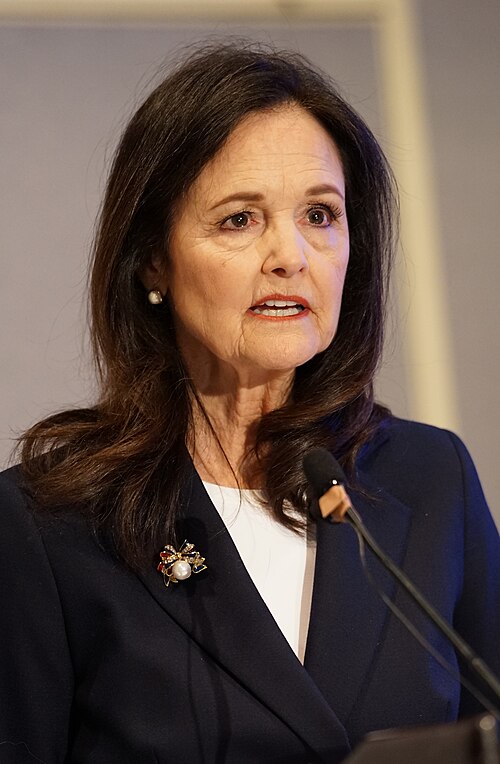
Figure 3. Judy Shelton, whose appointment as Counselor to the Secretary was announced on 9 Oct 2026, a former US Director at the EBRD and a 2020 nominee to the Federal Reserve Board.
On 17 Jan 2025, a week before the inauguration, she explained in the New York Sun why she treats trade as a currency problem. From 1945 to 1971, the Bretton Woods system held other currencies at fixed rates against the dollar, and the dollar converted into gold at $35 an ounce. When President Nixon ended convertibility in 1971, the fixed rates ended, and since then differences in central bank interest rates have driven exchange rates. A country that cheapens its currency, for example by cutting its central bank’s interest rates, makes its exports cheaper in the country it sells to, because buyers there need less of their own money to pay for them.
That advantage causes trade disputes, and tariffs follow. Her current cases: Mexico’s peso fell 23% against the dollar in 2024, the Canadian dollar neared its weakest point in nearly five years, and China’s yuan weakened past 7.3 to the dollar as China’s central bank eased policy.
In her words, “the key to confronting our broken system of international trade … is to understand how central banks impact trade and investment flows through divergent monetary policy stances.” Her remedy: “Imagine if President Trump were to direct his Treasury secretary to issue a 50-year debt obligation that could be redeemed in gold on July 4, 2076.” The same column says a new link between the dollar and gold gives a “common reference point for stable money”, on which America “alone can define the terms for a new trade alliance”.
China’s central bank manages the yuan’s exchange rate against the dollar. Her column records the last time the US objected: China let the yuan weaken to seven to the dollar, and on 5 Aug 2019 President Trump told Treasury Secretary Steven Mnuchin to label China a currency manipulator.
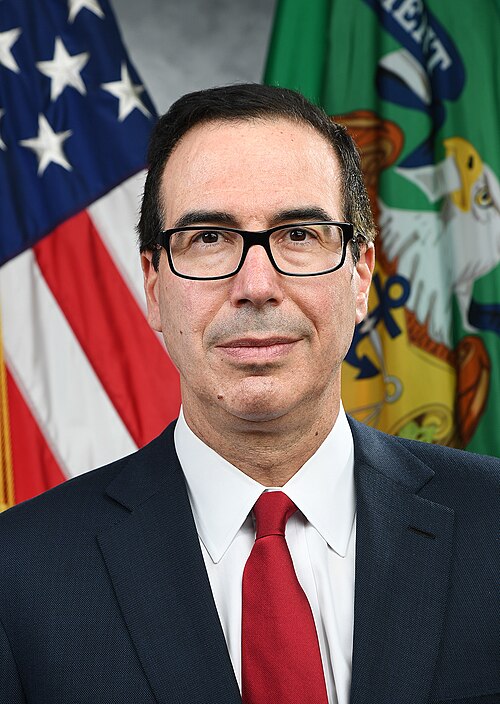
Figure 4. Steven Mnuchin, the Treasury Secretary whom President Trump told on 5 Aug 2019 to label China a currency manipulator.
Treasury applies that label in a regular report on its major trading partners’ currency policies, which also keeps a Monitoring List of partners Treasury watches but has not designated.
The report of 23 Jul 2026 named no manipulator, kept China on the Monitoring List and warned that China’s lack of transparency “will not preclude Treasury from designating China”.
Shelton’s brief is currency policy with a focus on China, so she is working on the question the next report has to answer: whether to designate China a currency manipulator.
At maturity, the holder of her gold bond chooses between dollars and gold. In The Wall Street Journal (WSJ), she described it as “introducing a U.S. Treasury security offering gold convertibility at maturity”. Good as Gold connects the bond to the currency question. Reviewing the book for the American Institute for Economic Research (AIER), Paul Mueller reports that she sees the bond as the way for the market to find the price at which the dollar should link to gold: “Dr. Shelton has suggested that incorporating a gold clause in Treasury bonds could be a good method for discovering the right price of convertibility.”
Once found, that price is a fixed reference, so a trading partner’s devaluation can be measured against gold rather than against another floating currency.
If the dollar’s gold price holds while the partner’s currency buys less gold, the gap is the devaluation, and it sets the size of a tariff. In her words, this makes it possible “to assess an appropriate tariff to apply as compensation for the impact of currency devaluation” (p. 169). The Supreme Court ruled on 20 Feb 2026 that the emergency-powers law, IEEPA, “does not authorize the President to impose tariffs” (CRS), so any such tariff must rest on a trade statute Congress has passed. China manages its exchange rate, and her bond is designed to measure that kind of devaluation.
Her plan ends in an international system that names China. In a 2012 Cato Journal article, she wrote: “China would likely be the first major nation to follow the U.S. lead by issuing its own series of gold-backed bonds; it should be encouraged to do so by U.S. officials.”
The gold-linked offerings then spread to “an increasingly broader group of countries”, and “The transition process would utilise the aggregate wisdom of private markets to bring about fixed exchange rates”: the prices investors pay for these bonds would show where exchange rates should be fixed. At the end, “A Universal Gold Reserve Bank could evolve toward the end of the transition process”.
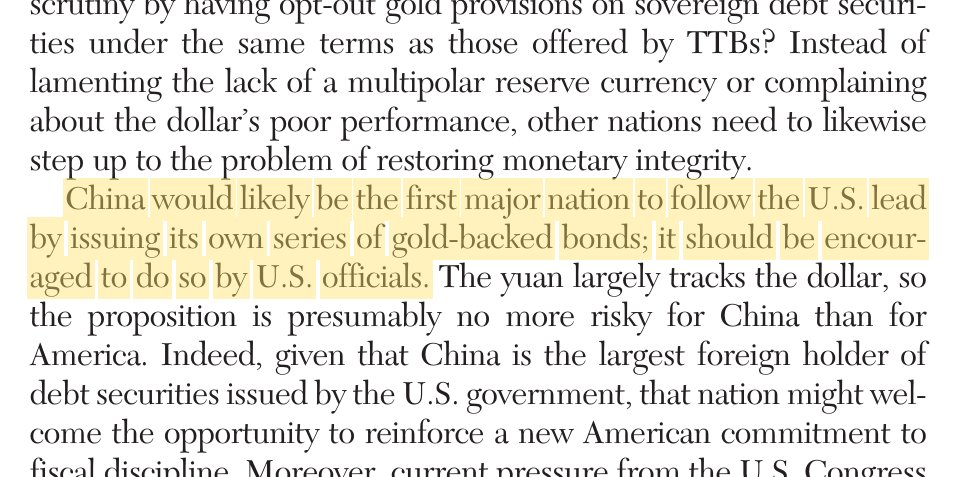
Figure 5. Shelton wrote in 2012 that China would likely be the first major nation to follow the US in issuing gold-backed bonds, and that US officials should encourage it. Source: Judy Shelton, Cato Journal, 2012.
Good as Gold gives a new job to the International Monetary Fund (IMF), the body of member governments that oversees exchange rates and lends to countries in difficulty. In her words, it “would facilitate a move toward a new international monetary order based on gold convertibility for a class of long-term government debt instruments issued by participating nations using their own currencies.” Trading partners join only if they are “willing to abide by its tenets”. That is a plan for how governments issue, price and settle debt across borders.
The 2012 book she edited is Roads to Sound Money. Sound money holds its value here through a link to gold. Her foreword endorses the collection as “a compelling case for a return to the Gold Standard”, under which dollars can be exchanged for a fixed amount of gold.
One chapter is by Lewis Lehrman, who co-wrote the minority report of the US Gold Commission of 1982 with Ron Paul. His chapter lays out a five-step path back to gold that ends where her plan ends: a gold standard shared by many nations that “would effectively terminate floating and pegged-undervalued exchange rates.” Pegged-undervalued rates are currencies a government fixes below their real value to cheapen its exports.
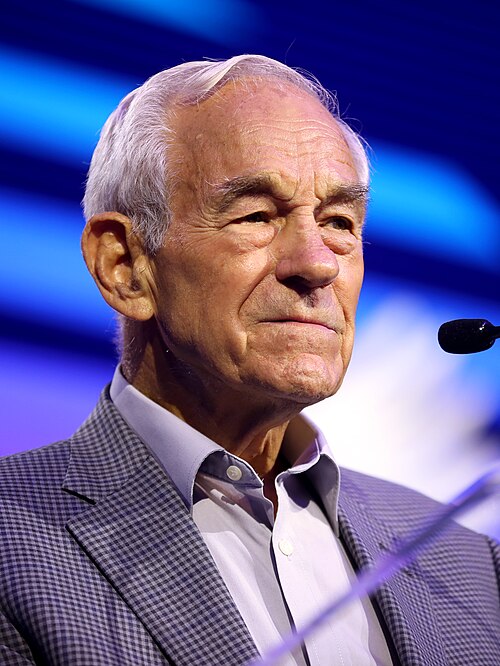
Figure 6. Ron Paul, co-author of the Gold Commission minority report with Lewis Lehrman.
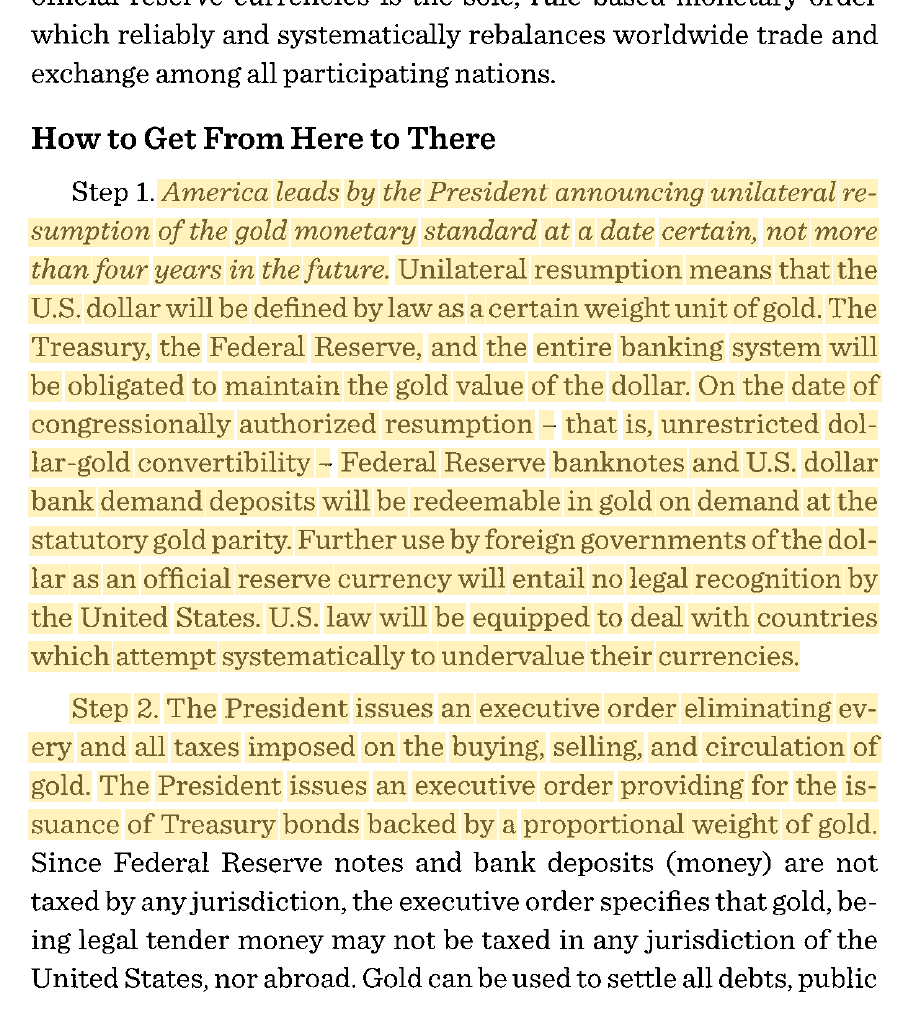
Figure 7. Lehrman sets out five steps back to gold, ending in a gold standard shared by many nations. Source: Roads to Sound Money, 2012, p. 113.
The standard view objects that she was hired for currency, not debt. Her own written plan answers that: a trading partner’s undervalued currency is the problem, the gold-convertible bond measures the undervaluation, and a tariff of that size is the remedy. Treasury hired the author of the gold bond to do the job the bond was designed for.
Zervos was on Bessent’s list for Fed chair, and his public record is on financial repression
Bessent assessed Zervos himself as a candidate for Fed chair. On 13 Aug 2025, CNBC listed “Jefferies Chief Market Strategist David Zervos” among the administration’s 11 candidates for the post. Officials described a “deliberative process” in which Bessent “will interview all of the candidates”, narrow the list and pass a final list to the president. On 19 Aug 2025, CNBC reported that Bessent had confirmed the 11, including “David Zervos of Jefferies”. On 28 Sep 2026, a year later, Bessent appointed Zervos Counselor to the Secretary.
At the investment bank Jefferies, Zervos was a macro strategist who forecast interest rates, currencies and economies for clients. Before that, he was an economist at the Fed Board, and a Visiting Advisor there in 2009. He has also worked at the hedge funds UBS O’Connor and Brevan Howard.
Financial repression means holding returns on safe savings below inflation, so inflation shrinks government debt in real terms. In Mar 2013, Cyprus imposed a levy that took a slice of bank deposits directly. Zervos called it “This is a nuclear war on savings and wealth”, and called the slower method used under Fed chair Ben Bernanke “Bernanke style slow moving financial repression against risk free savings”.
One quote circulated as his belongs to someone else. On Bloomberg’s Odd Lots podcast, co-host Tracy Alloway called a measure under discussion financial repression, and co-host Joe Weisenthal agreed and said it could be presented as patriotic: “It is a form of financial repression… Just make it patriotic”. Weisenthal said it, not Zervos, but I included it because it captures the flavour of the new era.
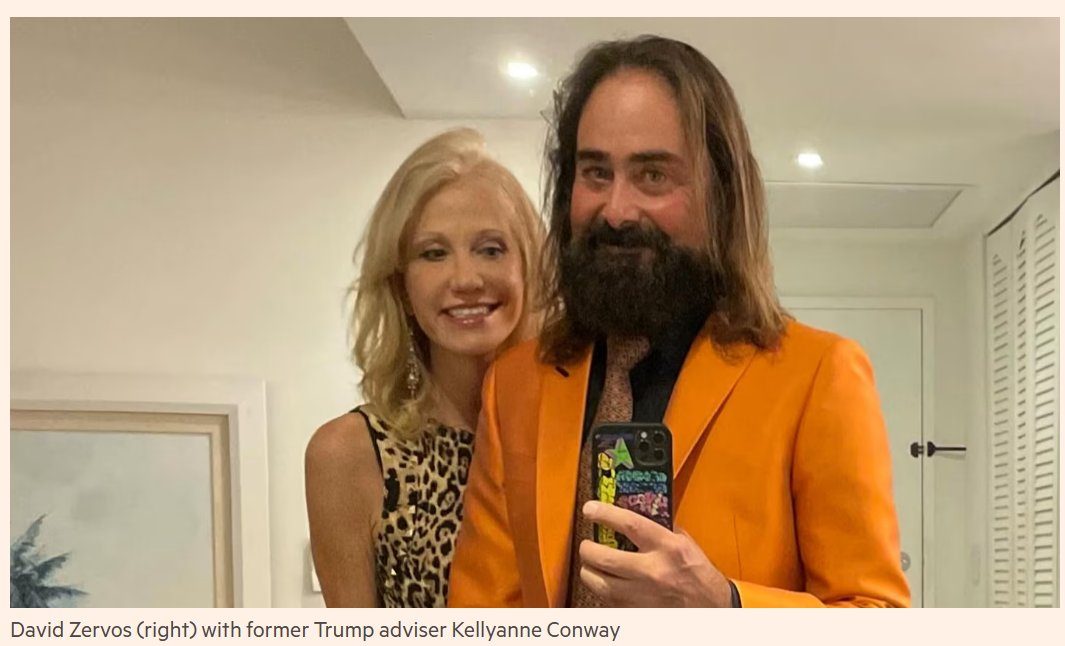
David Zervos, right, with former Trump adviser Kellyanne Conway.
David Zervos as a younger man, a reminder that we all change over time.
The Fed chair’s published calendars show Bessent meeting Warsh more often than he met Powell
Kevin Warsh, a prior Fed governor, succeeded Jerome Powell as Fed chair in May 2026. The Fed publishes each chair’s diary under the Freedom of Information Act, which opens federal records to the public. Powell’s diary shows Bessent on 15 and 29 Jan, 11 and 24 Feb, 5, 12 and 26 Mar, 7, 9 and 23 Apr, and 21 May 2026: about 11 times in five months, or twice a month, including a 7 Apr meeting at Treasury with Bessent and seven bank chief executives. Warsh’s diary shows Bessent eight times between 28 May and 20 Aug, under three months, or nearly three times a month: breakfasts on 28 May, 5 Jun, 11 Jun, 25 Jun and 16 Jul, a lunch on 30 Jul, a call on 3 Aug and a breakfast on 20 Aug.
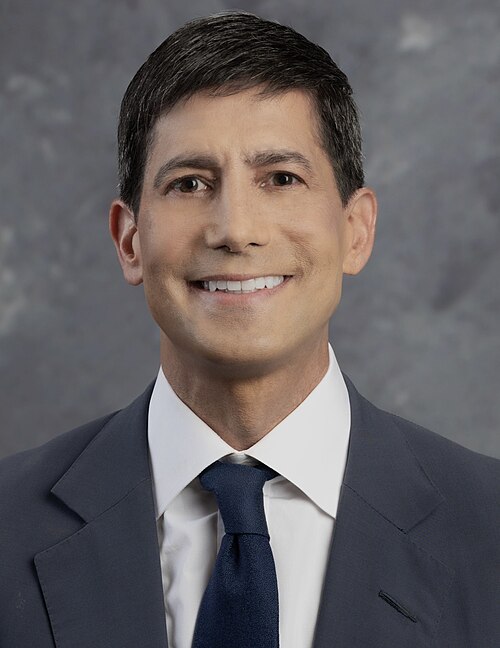
Figure 8. Kevin Warsh, chair of the Federal Reserve.
From Jun to Oct 2026, four appointments placed people at Treasury and around the Fed chair: Zervos and Shelton at Treasury, set out above, and Schwab and Winfree as advisers to Warsh. The Fed also set up a new body, five task forces. Schwab, Winfree and the task forces:
Samantha Schwab, Bessent’s principal deputy chief of staff from Apr 2026, was set to join the Fed as an adviser to Warsh, Bloomberg reported on 1 Jul 2026.
Paul Winfree became an interim adviser to the Chair in Jun 2026.
On 9 Jul the Fed set up five task forces, co-led by outside advisers, to produce findings for the Federal Open Market Committee, which sets interest rates. One covers the balance sheet, led by Karen Dynan, Raghuram Rajan and Jeremy Stein.
Paul Winfree, one of Warsh’s first two hires as Fed chair alongside Daniel Heil of the Hoover Institution, has argued since 2019 that Fed purchases of government debt feed federal borrowing.
Trump’s 2017 director of budget policy, he was hired on 2 Jun 2026 as a temporary contractor “to support Warsh in his policy analysis and planning on special projects”, CNBC reported.
In a commentary in The Hill on 18 Jul 2019, reposted by Heritage, he wrote that “The Federal Reserve system created domestic demand for debt by standing ready to purchase Treasury debt.”
In another, on 15 Oct 2019, he warned that “the inevitable unwinding of its assets will cause interest rates to rise again” and that “Once risk-free, U.S. Treasury bonds will no longer be viewed as safe investments.”
In his 2023 Project 2025 chapter on the Fed, he calls on the Fed to “Wind down the Federal Reserve’s balance sheet” (p. 733). If the Fed winds down its Treasury holdings, Treasury must refinance the maturing debt with private buyers.
On p. 737, the chapter lists “gold-convertible Treasury instruments” as one path to gold backing, and judges a fixed money-growth rule “a more politically viable alternative to gold”.
Its source for those instruments is Judy Shelton’s 2012 Cato Journal paper, which proposes a Treasury bond whose holders can choose “receiving payment in the form of physical gold (one troy ounce) versus the principal amount”.
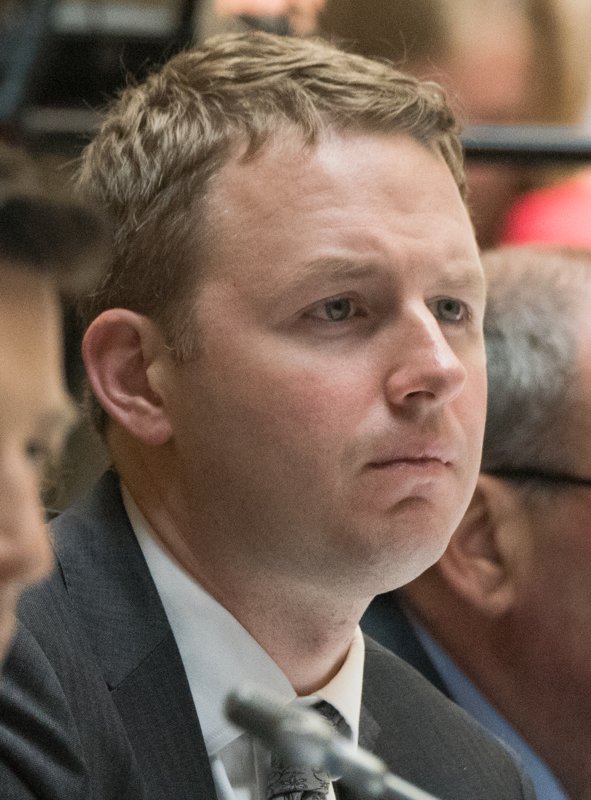
Figure 9. Paul Winfree, adviser to Fed chair Kevin Warsh since Jun 2026 and author of the Fed chapter in Project 2025’s Mandate for Leadership, pictured in 2017.
These are radical reformers, and their record points to radical reform. Radical in the sense of changing the current policy regime, not radical in the sense that the policies Winfree advocates have a longer tenure in US history than the current policies. In many ways, his calls for reform reflect a return to traditional central bank values. Gold has long been a foundation of the US central banking environment.
While modern thinking largely sees gold as old-fashioned and outmoded, it raises the question of whether it is permanently outmoded or part of a recurring central banking cycle.
The Fed’s balance sheet is mainly the bonds it holds and the money it created to buy them. Treasury holds the gold and issued gold certificates to the Fed; the Fed records those claims on the gold as an asset.
So a revaluation passes through the chair’s office as well as through Treasury, and Schwab, a former senior Bessent aide, was set to join that office. Bessent met the chair eight times between May and August, six of them over breakfast. The next signal is Warsh’s diary for Sep and Oct.
Warsh highlighted the need for a Federal Reserve and Treasury accord, and the diary shows Warsh and Bessent meeting at breakfast.
Warsh asked for a new Treasury-Fed accord before he took the chair. On 17 Jul 2025 he said:
“We need a new Treasury-Fed accord, like we did in 1951 after another period where we built up our nation’s debt and we were stuck with a central bank that was working at cross purposes with the Treasury. That’s the state of things now … So if we have a new accord, then the … Fed chair and the Treasury secretary can describe to markets plainly and with deliberation, ‘This is our objective for the size of the Fed’s balance sheet.’”
As chair, on 17 Jun 2026, he said: “The long tradition at the central bank is that the Fed Chairman and the Treasury Secretary meet weekly. I think we’ve pulled off three of those so far.” The diary shows eight meetings with Bessent between 28 May and 20 Aug, fewer than weekly but more than Powell’s pace. He has not raised an accord in public as chair: “accord” does not appear in the transcripts of his press conferences of 17 Jun, 29 Jul and 16 Sep 2026, and “gold” appears in none of them.
Treasury buybacks hit their cap three times in a row
In a buyback, Treasury uses cash to buy its own older bonds from investors before they mature. The programme began in May 2024 and allows up to $38 billion a quarter to support trading in the market. Each operation covers a range of maturities, called a bucket, and Treasury accepts offers up to a cap.
On 1 Oct it took the full $6 billion for the first time under the new caps, and it has now done so three times in a row. The bonds it bought most heavily traded between 65 and 76 cents on the dollar. They were issued when interest rates were much lower, and a bond paying a low fixed coupon is worth less once new bonds pay more.
At each operation, holders offered more than Treasury would take. In the 10–20 year bucket they offered $46.4 billion on 1 Oct and $40.8 billion on 15 Oct, almost eight times the cap.
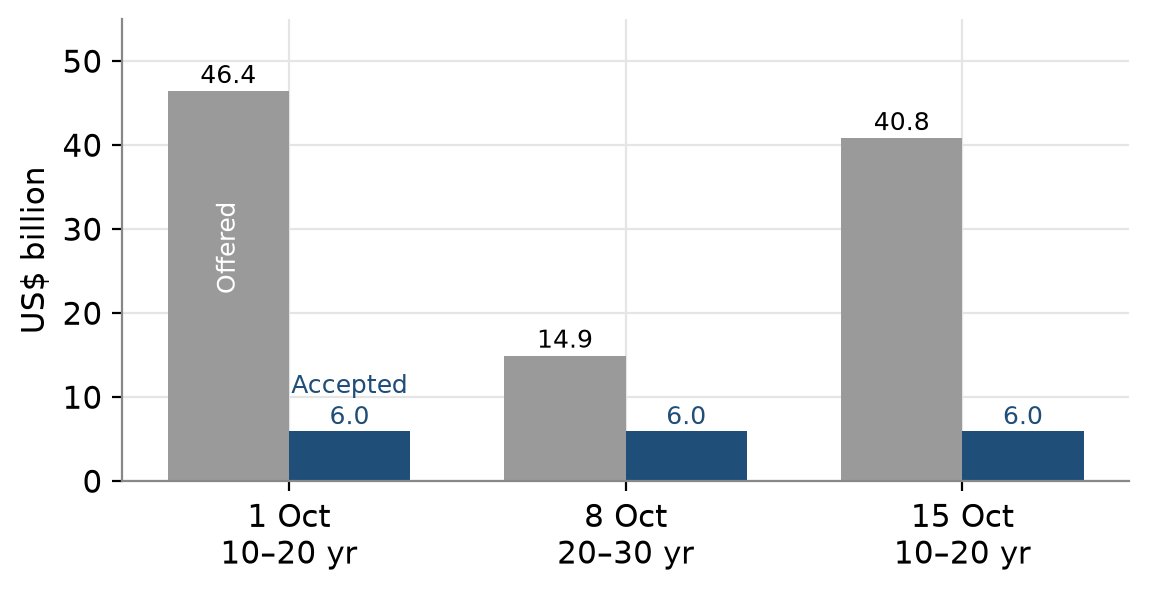
Figure 10. Treasury accepted its full $6bn cap at three buybacks in a row. Offers and accepted amounts by maturity bucket, 1, 8 and 15 Oct 2026, US$ billions. Source: US Treasury FiscalData.
Table 1 gives the exact amounts offered and accepted at each buyback and names the single bond Treasury bought most of each time.
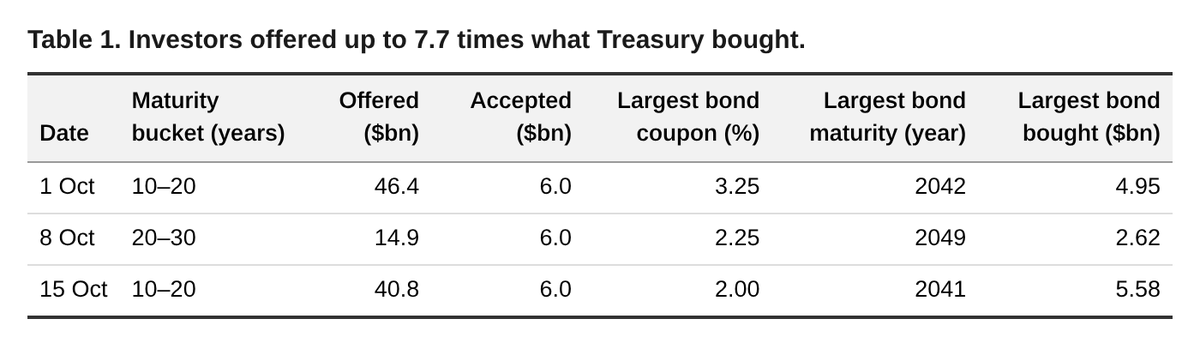
Table 1. Investors offered up to 7.7 times what the Treasury bought. Long-end buybacks, 1, 8 and 15 Oct 2026.
Source: Buybacks operations and buybacks security details from US Treasury, Fiscal Service (FiscalData).
Treasury bought these bonds far below face value. On 1 Oct it paid 76 cents per dollar of face value for the 3.25% 2042 bond and 67 cents for the 2.25% 2041 bond. On 15 Oct it paid 65 cents for its largest purchase, the 2% 2041 bond.
Investors wanted to sell far more bonds with 10 to 30 years to run than Treasury would buy.
On 15 Oct Treasury retired $6 billion of face value, or par, for about $4 billion of cash. Most of the buying also went into particular bonds. A futures contract is an agreement to buy or sell at a set price on a future date, and the seller of a bond futures contract settles by delivering one of a list of eligible Treasury bonds.
The Chicago Board of Trade (CBOT) runs two long-bond contracts, the classic Bond contract and the Ultra, each accepting a different range of maturities. The long end means bonds with 10 years or more to run. Since 10 Sep, about 82% of long-end buyback par ($17.6 billion of $21.3 billion) has gone into bonds deliverable into the classic Bond future. Treasury’s long-end buying has gone almost entirely into the bonds that settle the classic contract, and almost none into the longest bonds.
The 30-year yield rose after Treasury’s largest buybacks
On 22 Sep Deputy Secretary Francis Brooke, the Treasury’s second-ranking official, said Treasury had bought back “nearly $500 billion” of bonds in “more than 150 operations”. A yield is the annual return an investor earns on a bond at its current price. The 30-year par yield is the rate a new 30-year bond sold at face value would pay, so it measures what the government would pay to borrow for 30 years. It rose from 5.29% on 22 Sep to 5.64% eight days later and stayed at 5.60% or higher on every trading day through 9 Oct. Table 2 shows the 30-year par yield on the day of the statement and on three later dates, with the change from 22 Sep.
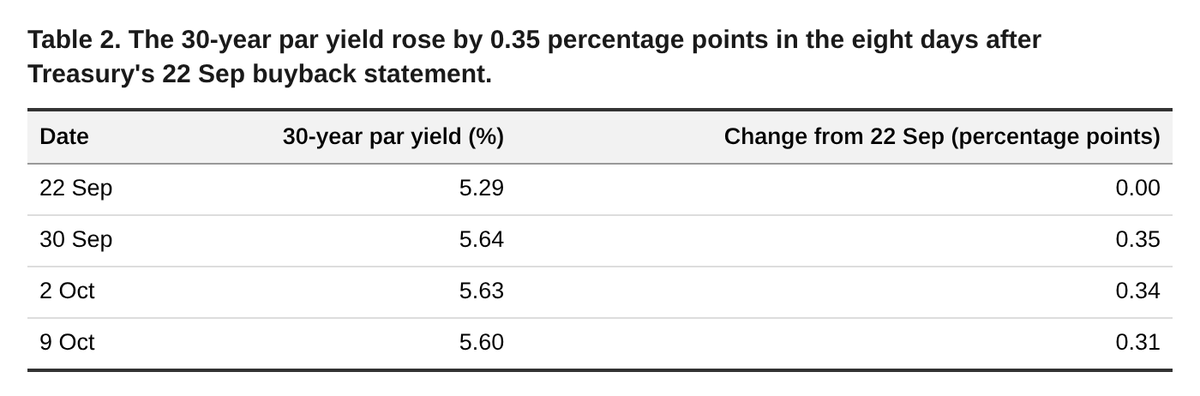
Table 2. The 30-year par yield rose by 0.35 percentage points in the eight days after Treasury’s 22 Sep buyback statement.
Source: Daily Treasury Par Yield Curve Rates from the US Treasury.
A basis point is one hundredth of a percentage point. On 9 Oct the 30-year yield stood 0.31 percentage points, or 31 basis points, above its 22 Sep level.
The 10-year yield in the same series touched 5.342% on 1 Oct, its highest since 2002. On 21 Sep Bessent told CNBC that the 30-year yield had barely moved since the bigger buybacks began, putting the rise at “one basis point”. On 3 Oct he told Axios: “I can’t control the bond market. What I can do is get people to slow down and think”. Asked in the same interview whether the market had slapped back at the buybacks, he said: “No, it didn’t. How did it slap back? Rates went up, but oil went up.”
Kennedy’s Treasury ran the same pairing. In Operation Twist, which Kennedy announced on 2 Feb 1961, the Fed bought long bonds while Treasury shortened the maturities it issued, to bring long rates down without cutting the short rates that slowed gold outflows (Swanson, Brookings). From Nov 1962 Treasury added Roosa bonds, named after Robert Roosa, its Under Secretary for Monetary Affairs, to keep foreign central banks in Treasury paper rather than gold. Today Treasury’s long-end buybacks, run by its debt office since May 2024, play the Twist role and Shelton’s gold bond the Roosa role: one holds domestic long rates down, the other keeps foreign central banks in dollars rather than gold. Bessent used the name himself. On CNBC on 20 Aug 2026 he said: “Do we know something the market doesn’t know that, in terms of being willing to do you know what I would call a Treasury twist here in terms of the bond market?”
Foreign governments cut their holdings of short-term US Treasury bills in August
Treasury counts foreign holdings of US securities each month in the Treasury International Capital (TIC) data. The data separates foreign official holders, meaning central banks and governments, from private foreign investors, and bills, which mature within a year, from notes and bonds, which run longer. In August, official holders cut bills by $42.2 billion and added $24.6 billion of notes and bonds. Total foreign holdings rose by $83.3 billion while official holdings fell by $17.5 billion, so private foreign investors added about $100.8 billion.
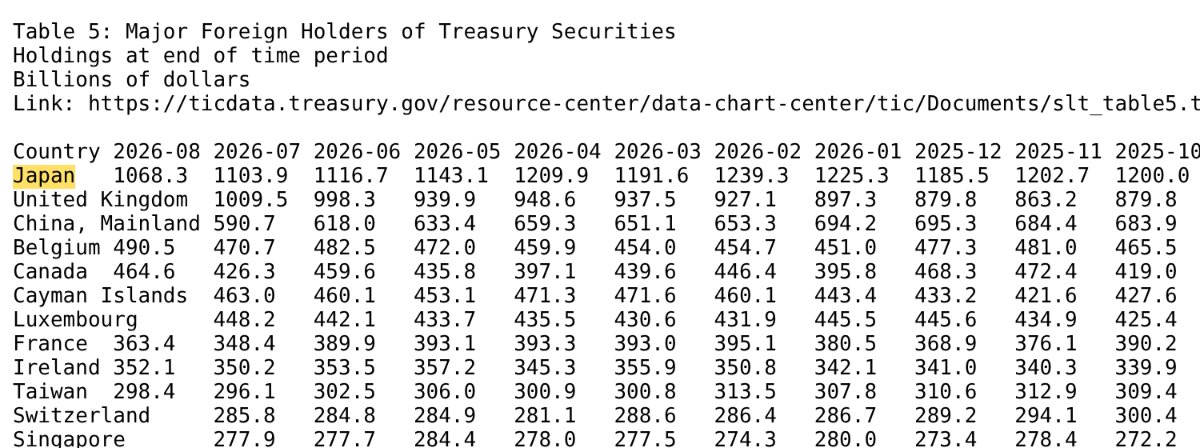
Figure 11. Japan’s holdings of US Treasury securities fell from $1,103.9bn in Jul 2026 to $1,068.3bn in Aug 2026. Source: US Treasury TIC Table 5.
Table 3 compares foreign holdings of US Treasury securities in Jul and Aug.
Figures may not add up to totals because of rounding. Country rows include official and private holders.
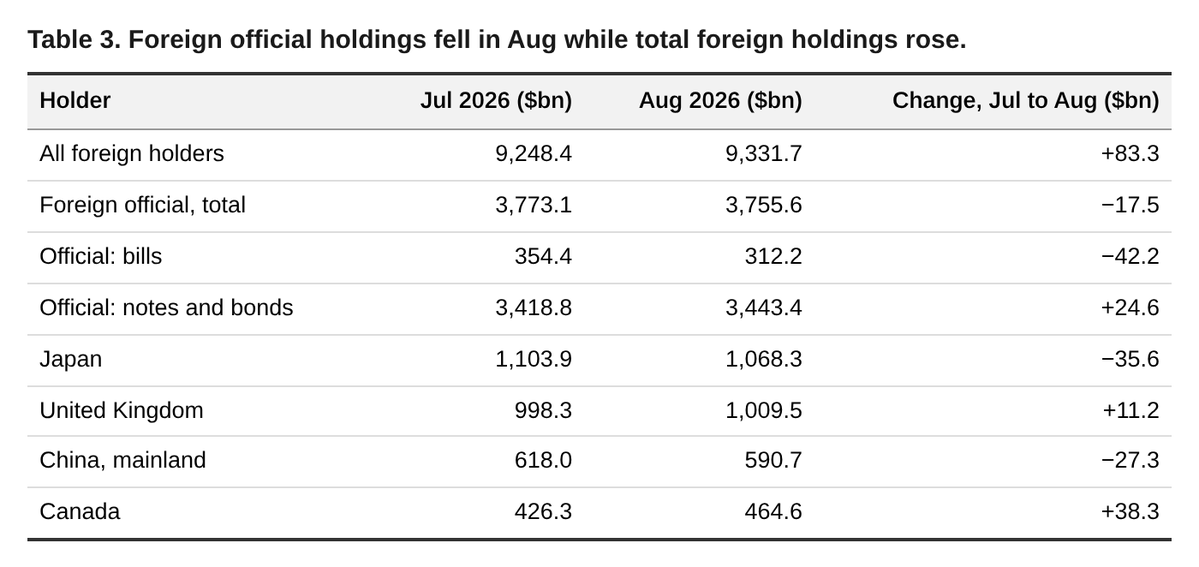
Table 3. Foreign official holdings fell in Aug while total foreign holdings rose.
Source: Treasury International Capital (TIC) data for August 2026, press release sb0662 of 16 Oct 2026, and TIC Table 5, major foreign holders, from the US Treasury.
Of the 20 largest holders in the Treasury’s list, Japan and China made the two largest cuts, and no other listed holder cut more than $1.2bn, while Canada and the United Kingdom added.
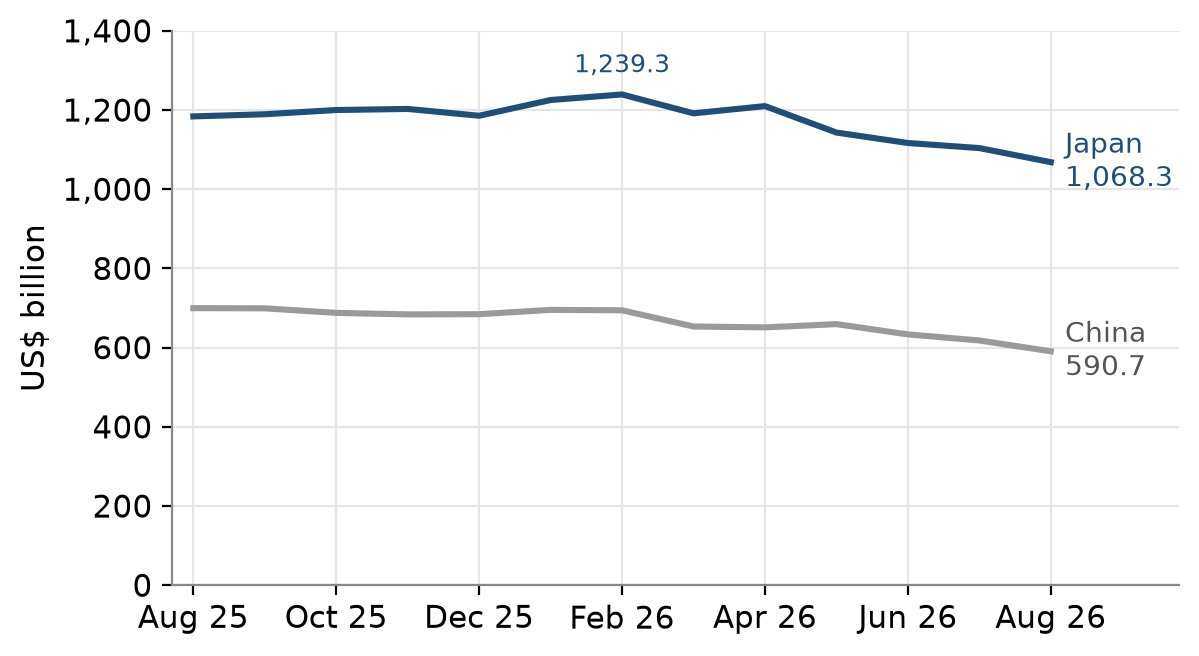
Figure 12. Japan and China cut their US Treasury holdings in Aug 2026. Monthly holdings, Aug 2025 to Aug 2026, US$ billions. Source: US Treasury TIC Table 5.
The decline has run for a year. Foreign official holdings were $3,919.8 billion in Aug 2025, $164.2 billion more than in Aug 2026, and Japan’s July figure was already $135 billion below its February figure. The weekly figures point the same way. The Fed’s weekly balance-sheet release, the H.4.1, includes the Treasuries that the New York Fed, the Federal Reserve’s regional bank in New York, holds in safekeeping for foreign central banks. Those holdings were $2,565.5 billion on 7 Oct and $2,550.9 billion on 14 Oct, down $14.6 billion on the week, and the weekly average was down about $202 billion on the year.
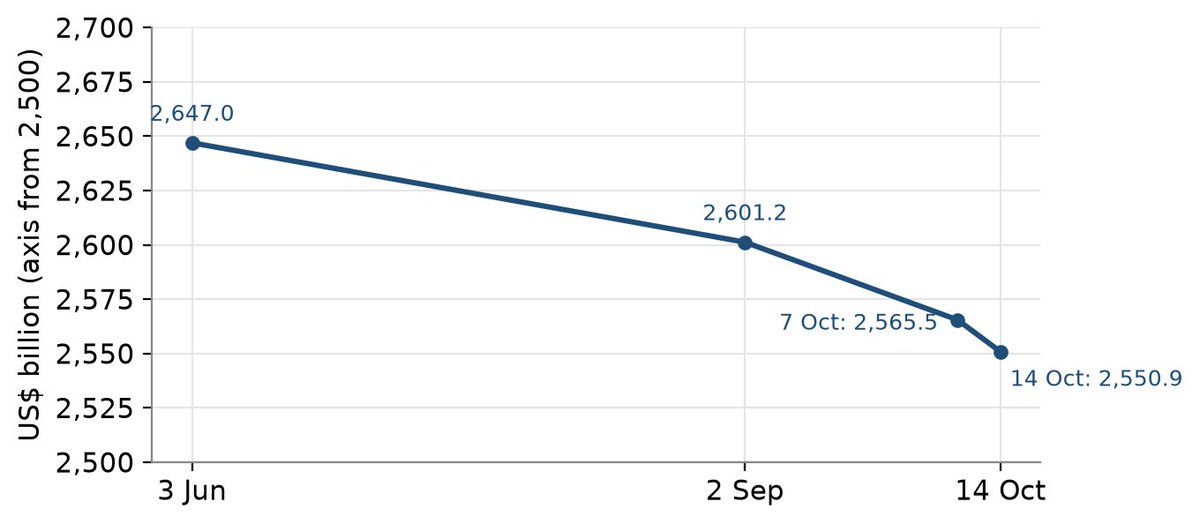
Figure 13. Foreign official Treasury custody holdings at the New York Fed fell by $14.6bn in the week to 14 Oct. US$ billions; the vertical axis starts at $2,500bn. Source: Federal Reserve H.4.1.
Foreign central banks had another option and did not use it. The Fed’s Foreign and International Monetary Authorities (FIMA) repo facility lets an approved foreign central bank borrow dollars from the Fed for one night or seven days against Treasuries it owns, buying the bonds back at the end of the loan; that repurchase is the “repo”. Foreign-official repo at the Fed was $0 in the same week that their custody holdings fell. Foreign governments are selling Treasuries outright rather than borrowing dollars against them.
The value of the Fed’s gold certificates has not changed
The US government owns about 261.5 million troy ounces of gold. By law the gold is valued at $42.22 an ounce, a price set in 1973, which puts it on the books at about $11 billion. At market it is worth $1.0 trillion to $1.5 trillion at $3,900 to $5,600 an ounce, this year’s band. Revaluing the gold would raise the book price to the market price and record the difference as a gain.
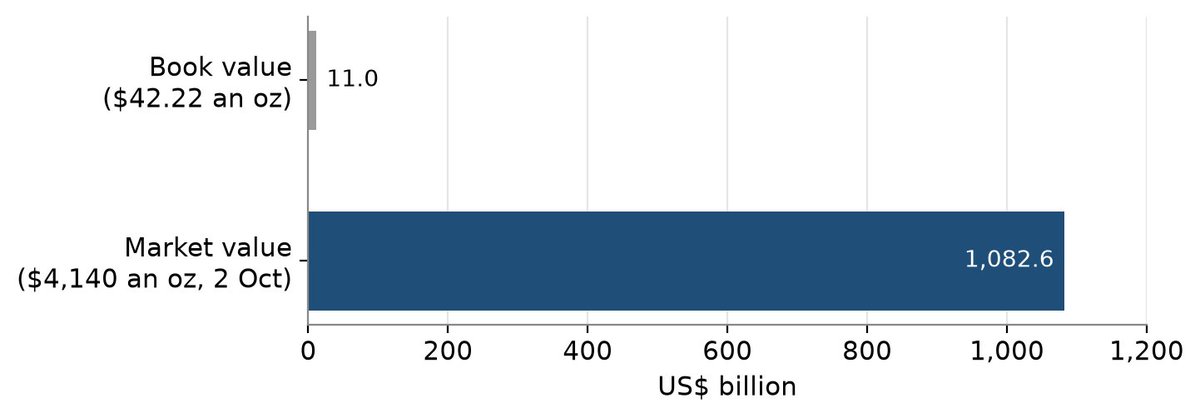
Figure 14. The market value of US gold was about $1,082.6bn on 2 Oct 2026, against an $11,037m book value; the market value is the author’s calculation (261.5m oz × $4,140). Source: Federal Reserve H.4.1.
After the Gold Reserve Act of 1934, the Treasury gave the Fed gold certificates, and the Fed credited the Treasury’s account with their value. The certificates stand at $11.037 billion. On the Fed’s balance sheet they were $11,037 million in the week to 14 Oct, unchanged.
There are two routes, and only Congress’s produces cash. If Congress raises the $42.22 price in 31 USC 5117(b), Treasury issues new gold certificates to the Fed for the difference and the Fed credits Treasury’s cash account with it: $1.0 trillion to $1.5 trillion at $3,900 to $5,600 an ounce, none of it borrowed. That is more than the $972 billion of borrowing room Treasury had left on 14 Oct. It can be spent once, so it is a choice: outlays, if Congress appropriates them; paying off Treasuries maturing on the Fed’s books, which shrinks the Fed as Winfree wants without moving bank reserves; or buying back long bonds. Without Congress the official price stays at $42.22, so there is no windfall: any cash raised on the executive route is borrowed against the gold. Buybacks below par still give breathing room under the debt limit. Outright sales of the nation’s gold are politically off the table, and in any case 31 USC 5116(a)(2) reserves sale proceeds “for the sole purpose of reducing the national debt”. The route that remains is Shelton’s: retire certificates, pledge the freed gold behind her bond or behind swap lines, and pair it with buybacks. Treasury is buying 2041 bonds at 65 cents, and the debt limit counts face value, so each dollar of cash spent on the 2041 bond retires about $1.54 of debt; even when the dollar is borrowed, about 54 cents of room is left over. Neither route raises a tax.
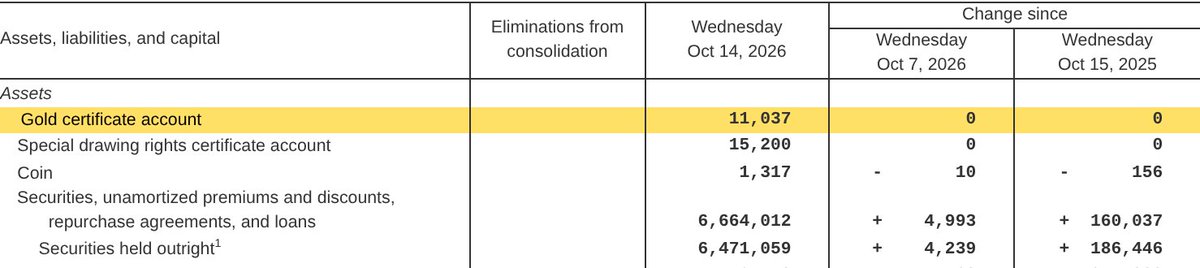
Figure 15. The Fed’s gold certificate account was unchanged at $11,037 million in the week to 14 Oct 2026. Source: Federal Reserve H.4.1.
Treasury has made no statement on revaluation in 2026.
Gold was $4,140 an ounce on 2 Oct, down 5% since 21 Sep and 26% below its January peak; Reuters reported that a strong dollar and high Treasury yields pushed the price down. The policy signal to watch is the gold certificate account on the Fed’s balance sheet, which stands at $11,037 million.
Shelton’s own words take the bond from a 2012 pilot to a revalued, gold-pledged Treasury offering
In her 2012 Cato Journal article, Shelton called the bond Treasury Trust Bonds (TTBs). She wrote that the article;
“provides details on how TTBs would be structured and how they might spur a transition toward new global monetary arrangements”.
It gave two ways to launch the bond: “This first step toward sound money could be implemented either through congressional legislation or as an initiative by the Department of the Treasury in response to an administration’s directive”. I favour the latter.
The pilot capped both the buyers and the gold. At first, sales could be limited to US citizens, “subject to a maximum purchase of $5,000 per calendar year per entity”. There would be four five-year offerings, one a year. Each would encumber 12 million ounces, which means holding that gold as security, for “a total commitment of 48 million ounces devoted to the four-year pilot program”, or “18.4 per cent of U.S. government holdings at the maximum”. Part of the gold, “presently carried as Treasury assets and pledged to the Federal Reserve as ‘gold certificates’”, would be “set aside as collateral”.
That bond needed no revaluation. It was a zero-coupon note. It sold below face value and paid no interest, so the holder’s return was the gap between the price paid and the face value repaid. At maturity, the holder chose dollars or gold. The gold only had to be on hand for delivery, so nothing in the design required raising the $42.22 book price. The design drew on her 2011 book Fixing the Dollar Now.
By Oct 2024 she had dropped the pilot. On 29 Oct 2024 she told Kitco, a gold-market news outlet: “I thought maybe these would be five-year bonds and kind of a pilot program and then you could do another offering and another offering … but now I think … the greater value would be to set up these bonds as a barometer”.
Good as Gold came out that month from the Independent Institute, a policy institute. It puts the bond first, then a commission, then a fixed value for the dollar.
I quote the book. It says: “The solution to providing sound money at home and abroad is to link the value of the dollar once again to gold—not all at once, not overnight.” The bond comes first: “The dollar is made as good as gold by pledging gold convertibility of a Treasury bond at maturity with a nominal face value defined in dollars.” The president who launches the bond should then “appoint a commission to investigate ways to set a fixed value for the dollar”. Thomas Savidge reviewed the book for Law & Liberty. He ties the commission to the 2012 and 2016 Republican Party platforms, both of which called for one. The fixed value is the parity: the number of dollars that would exchange for one ounce of gold. No source gives the parity figure.
Jeffrey Rogers Hummel reviewed the book for Econlib on 1 May 2026: “Shelton does offer a proposal for eventually restoring a gold standard. It has several steps”.
At maturity, the holder is paid “at either the face value of the bond in dollars or the prespecified equivalent in gold” (p. 156). Hummel adds that the bonds would pay no interest and run twenty, thirty or fifty years. Mueller’s account of the gold clause gives the same order. The bond comes before the parity, and the bond’s market price is how she finds the parity. She says the bond’s interest rate “would reflect how much people are willing to pay for effectively a gold futures contract”. The price buyers pay therefore shows the dollar price of gold they expect at maturity.
In Dec 2024 she linked a revaluation of the gold to the bond. Miles Franklin Media posted a conversation about the book on 24 Dec 2024, in which she said: “you would bring it up to today’s market price and that’s where you get the windfall profit”.
Shelton wants all of the windfall kept for the bond: “I’m saying openly no save it use it all for the gold back[ed] Bond”.
In the same conversation, she named the route. Robert Rubin, President Clinton’s Treasury Secretary, launched Treasury Inflation-Protected Securities (TIPS) as a new Treasury offering. TIPS are bonds whose principal rises with inflation. She said: “could be accomplished by his treasury secretary Scott Bessent just as Treasury Inflation-Protected Securities were brought into being [by] Robert Rubin … it’s just a Treasury offering but with the president’s blessing”. 31 CFR 356 is Treasury’s rulebook for the securities it sells. Section 356.5 covers TIPS as securities repaid at their inflation-adjusted principal. The TIPS route runs through that section, so an amendment to it is one of the signals listed at the end. She also gave the order of work: “audit warehouse and assign it as specific collateral for that Bond”. Gold set aside behind the bond stays there until the bond matures on 4 Jul 2076. In her words, that tells the world the US will still be there then.
Her 14 Feb 2025 column followed the 50-year bond in her 17 Jan 2025 column. It put revaluation first and the pledge second: “By revaluing the gold and then pledging American gold reserves as collateral behind the newly issued government bonds, America would set up a barometer for measuring progress toward monetary soundness.” Monetary soundness means a dollar that keeps its value. She also sized the gain: “Monetizing the 261 million troy ounces in gold held by the U.S. government by revaluing them would deliver a windfall gain of roughly three-quarters of a trillion dollars.” That estimate used Feb 2025 gold prices.
On 27 Oct 2025, she set out the steps in the WSJ. The gold is on the books at “$11 billion, as the result of a statutory price of $42.22 an ounce set in 1973”. The gap between book and market value “suggests that the U.S. government has an opportunity to realise a windfall profit by assigning gold holdings as collateral for gold-backed bonds”. Unless Congress raises the $42.22 price, that windfall is not cash: on the executive route the government can only borrow against the gold. She expected the first gold bond of this century to draw more buyers than there were bonds: “this century’s maiden issuance … say, on July 4, 2026—would be oversubscribed”. 4 Jul 2026 has passed without that Treasury offering.
The offering is the signal to watch. She offered the bond as the answer to the US debt burden, writing in the same column: “No nation can prosper when concerns over the soundness of its fiscal policies and debt burden undermine confidence in its money.”
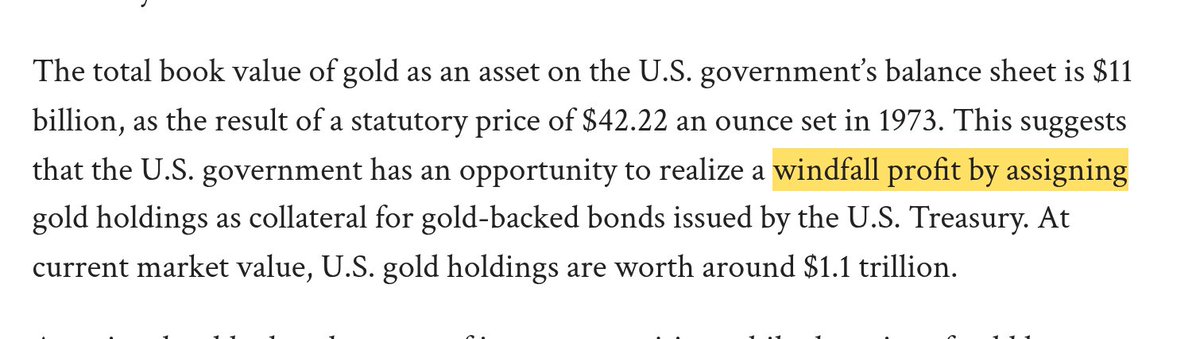
Figure 16. Shelton says pledging the US government’s gold as collateral for gold-backed Treasury bonds lets the government realise a windfall profit from the gap between the gold’s book value and its market value. Her 27 Oct 2025 column puts the book value at $11 billion at the statutory price of $42.22 an ounce set in 1973. Source: Judy Shelton, Wall Street Journal, 27 Oct 2025.
On 19 Nov 2025, on the maneco64 YouTube channel, she named a way to do the revaluation. Mexico and Brazil had deposited gold with the IMF. The IMF sold that gold at the market price and bought it back the same day, which put it on the books at the market price with the holding unchanged. She said she was “aware how the International Monetary Fund was able to do simultaneous transactions … for both Mexico and Brazil where they bought and sold the gold … on the same day and that allowed them to revalue the gold”.
On 8 Jan 2026, on the Soar Financially channel, she placed the entry on the government’s books. She treats the $42.22 figure as only a book price: “I don’t see why we couldn’t mark it up to market value, especially since we’re using it officially as collateral”. And: “Yes, you would change it on the balance sheets of assets owned by the US government.”
On 19 Mar 2026 she told In Gold We Trust, an annual gold report, that the Fed’s certificates need fixing. If they give the Fed no right to the gold, she asked, “why are they carrying them at any value at all? … I think that needs to be straightened out”. She wants the law to stop a future government from selling the gold: “I would want to bind the hands of an administration that would be inclined to do that”.
Her plan does not contradict her 2020 testimony. At her Fed nomination hearing before the Senate Banking Committee, she testified under oath that “You never go back with money”. She meant that a country does not restore an old monetary system.
She also said: “I would not advocate going back to a prior historical monetary arrangement.” Her published plan is for “a new international monetary order”. It rests on gold-convertible bonds, not on Bretton Woods’ fixed currencies and gold-convertible dollars. In Good as Gold she writes that “there are reasons not to resurrect the Bretton Woods system as it was originally structured”. The testimony rules out a return to a past system, and the plan builds a new one.
This is the first half of the essay. The second half, with the step-by-step plans for a return to gold, the legal path a gold bond must clear, and the weekly watch on Treasury and the Fed, is on Substack: https://ctindale.substack.com/p/warsh-and-bessent-are-building-a