使用H3提示词 完成俯视互动舞
文章目录
整体设计为 30 秒成片,由两个独立的 15 秒 H3 片段组成:
30 秒舞蹈结构
2 × 15s
01|俯视互动舞
00–15s
固定高位前置摄影机。跪坐、唇边手势、掌心展示、双臂展开、身体前倾、重心回收,最后自然进入侧坐地面姿态。
02|贴地 Floor Dance
15–30s
贴地平视摄影机。侧坐螺旋、后撑展胸、腿部扫动、侧卧延伸、俯卧支撑、骨盆旋转回坐,最后完成地面 Hero 造型。
视觉锁定: 两段都使用同一张 Picture 1。人物身份、五官、发型、服装、身体比例、已有饰品、原图环境、光线和色彩全部交给图片,不再用文字重新设计。
声音锁定: 两段分别使用 Audio 1 的 0–15 秒和 15–30 秒音频切片。节拍、重音、乐句、弱拍和动作落点均以实际音频为准,不预设 BPM。
摄影机变化: 15 秒处安排一次动作匹配切镜,从高位斜俯拍切换到贴地平拍。两段内部各自保持连续拍摄,不额外插入剪辑。
动作链采用你最新的 Rev.1.4 库规范:入态、支撑、动力传递、动作峰值、回收和下一链入口都要明确,而不是简单排列动作名称。
Segment 01 — High-Angle Kneeling Dance
15 seconds · Picture 1 + Audio 1 (00:00–00:15)
subject_definitions:
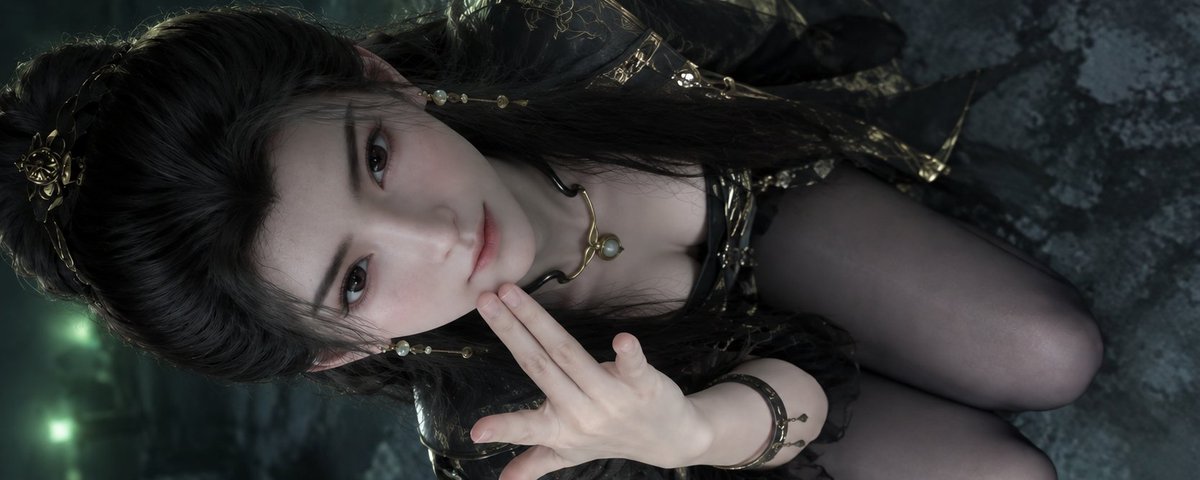
<Subject 1> is the exact person shown in <Picture 1>.
Use <Picture 1> as the sole visual authority for the subject's identity, face, hair, skin, body proportions, clothing, accessories and existing visual details.
<Picture 1> is also the sole authority for the complete environment, original lighting, color relationships and visual appearance.
Preserve these visual elements consistently throughout the entire video. Do not restyle, redesign or reinterpret the subject.
The action instructions below define the choreography and body positions. <Picture 1> is an identity and visual-world reference, not a mandatory opening-pose reset.
summary:
Create a 15-second vertical 9:16 photorealistic live-action dance performance using <Picture 1> and the supplied <Audio 1>.
The choreography begins in a low kneeling position and develops through a playful sequence of hand gestures, expressive upper-body movement, controlled forward and backward weight transfers, and a fluid transition into a seated floor position.
The entire performance follows the actual rhythm and musical phrasing of <Audio 1>.
The movement should feel like a continuous piece of choreography rather than a collection of disconnected poses.
No dialogue or spoken performance.
camera_direction:
camera_position
Use one real physical camera positioned approximately 1.5 meters above the floor, directly in front of the kneeling performer and slightly above the subject's head level.
Keep the horizontal camera-to-torso distance approximately 0.7–0.8 meters.
The camera remains physically fixed in this location throughout the entire 15-second segment.
optical_axis
The lens points steeply downward from its elevated front position toward the performer's upper-body and hand-action area.
The optical axis follows a strong diagonal downward direction.
The camera is not directly above the performer, and the lens is not pointing vertically toward the floor.
The viewer must see both the upper surfaces of the subject and the front of the torso and face.
The floor surrounding the knees and hands remains visible, clearly establishing the elevated physical viewpoint.
framing_and_composition
Vertical 9:16 composition.
Use a medium-full kneeling composition with the head, torso, both arms, hands and knees readable.
Keep the performer's body centered and preserve enough foreground space for the hands to interact with the floor.
During the forward lean, the face naturally becomes larger in the frame because the subject physically approaches the stationary camera.
The apparent close-up is created by subject movement, not by zoom or cropping.
camera_movement
The camera remains completely locked off during this segment.
No dolly, truck, pedestal, pan, tilt, orbit, zoom or handheld motion.
The subject is the only moving element in the choreography.
integrated_multimodal_description:
A continuous playful kneeling dance with a progressive movement arc, beginning with delicate hand mime and developing into grounded body movement.
[00:00–00:01.6] Opening state: kneel with both knees and shins supporting the body, pelvis resting near the heels.
The torso faces the camera. One hand lifts to the mouth, with the index and middle fingers resting lightly near the lips. The opposite hand rests naturally near the thigh.
The head is lifted, gaze directed toward the camera.
Hold the initial pose briefly while retaining subtle natural breathing and eye movement.
[00:01.6–00:03.2] The hand near the lips draws away.
Initiate from the shoulder, release through the elbow and forearm, then rotate the wrist until the palm faces upward.
The hand extends forward in a small presenting gesture, followed by one relaxed wrist-led wave.
The fingers unfurl in sequence rather than opening simultaneously.
The opposite hand gradually rises from the thigh to support the gesture.
[00:03.2–00:04.8] Both arms unfold outward through a smooth shoulder-led arc.
The elbows remain softly bent, forearms rotate outward and palms turn slightly upward.
The chest opens as the shoulder blades draw gently apart.
Reach one clear open-arm accent on a strong musical beat.
Add one natural single-eye wink with a small head tilt at the corresponding musical accent.
Hold the completed arm shape briefly.
[00:04.8–00:06.8] The arms fold inward along two different pathways.
One hand traces a curved path across the upper torso while the opposite hand travels outward and downward beside the thigh.
The wrists rotate independently, creating a coordinated but asymmetrical hand pattern.
The head follows the hand that travels outward, then returns the gaze to the camera.
Use a gentle shoulder and ribcage response to connect the arm movements.
[00:06.8–00:08.5] Both hands travel downward and make contact with the floor beside the knees.
Transfer weight gradually from the seated pelvis into the two palms and knees.
The shoulders move forward over the hands.
The pelvis lifts slightly away from the heels, initiating a controlled forward body movement.
[00:08.5–00:10.2] Continue the forward lean.
The palms press into the floor, the shoulder girdle stabilizes, the spine extends and the head follows last.
The subject approaches the camera until the face naturally becomes a close-up.
The movement reaches one clear peak, with the face directed toward the lens.
Maintain a soft, natural expression.
[00:10.2–00:11.8] Press through both palms to reverse the movement.
The pelvis travels backward first, followed by the ribcage and shoulders.
The spine returns to its upright kneeling alignment.
The hands release from the floor and return through a low curved pathway toward the thighs.
Complete the recovery with controlled weight distribution over both knees and shins.
[00:11.8–00:13.2] Initiate a new movement from the pelvis.
The torso rotates slightly toward one side while one hand sweeps outward in a horizontal arc near the floor.
The opposite hand provides a brief supporting contact.
The head and gaze follow the direction of the torso, then turn partially back toward the camera.
This is a controlled spiral preparation rather than a full-body spin.
[00:13.2–00:15.0] Transfer the body's weight onto the supporting palm and one hip.
The pelvis rotates sideways while one lower leg begins sliding outward along the floor.
The opposite knee remains folded underneath the body.
The free arm sweeps low across the floor to counterbalance the pelvis rotation.
Finish in a stable side-sitting position, with one hand grounded beside or slightly behind the hip, one leg extended diagonally and the other folded.
The torso remains partially oriented toward the camera.
This final physical position is the transition state for the next segment.
body_mechanics:
Maintain believable weight distribution throughout the kneeling and seated movements.
For each action, establish the support point before transferring the body's weight.
The gesture sequence follows shoulder → upper arm → elbow → forearm → wrist → fingertips.
The forward lean follows palms contacting the floor → shoulders moving over the hands → pelvis lifting → spine extending → head following.
The recovery reverses this order through controlled pressure against the floor.
The final side-sitting transition follows supporting palm → shoulder stabilization → pelvis rotation → leg extension → torso counterbalance.
All hand contacts, knee contacts and hip contacts must remain physically grounded.
Keep the transitions connected and give each movement a clearly identifiable completion point.
performance:
Natural, playful and affectionate performance.
Expressions remain subtle and responsive to the music.
Use small head tilts, eye contact, occasional natural blinking and one clearly readable wink.
Avoid repetitive gestures or continuously smiling without expression changes.
Every hand gesture should have a distinct beginning, direction and finish.
audio_timing:
<Audio 1> is the sole source of music and rhythmic information for this segment.
Analyze the actual audio timing, including BPM, beat interval, bar structure, downbeats, phrase boundaries, syncopation and prominent accents.
Place the presenting gesture, arm opening, forward lean, weight recovery and side-sitting transition on appropriate musical events.
Smaller wrist, finger and head accents may occupy subdivisions and offbeats.
Do not invent BPM values or force actions onto an assumed beat grid.
Every action must complete within its allocated time window.
editing:
One continuous take within the segment.
Natural real-time motion.
No internal hard cuts, dissolves, speed ramps, freeze frames or artificial slow motion.
Picture 1 remains the only visual reference.
Preserve the original visual world and all existing visual elements.
Only the subject's pose, movement and expression change.
recording_device:
One physically continuous camera.
All recording equipment and support structures remain outside the image.
No additional camera or filming device appears.
Segment 02 — Floor Dance / Ground-Level Choreography
15 seconds · Picture 1 + Audio 1 (00:15–00:30)
这一段不再继续跪坐手势,而是正式进入地面舞。动作从第一段最后的侧坐状态开始,依次经过后撑展胸、腿部扫动、侧卧腿线、俯卧支撑和回旋坐姿。
主要借鉴动作库的 C9 坐姿后弯、C11 地面段和侧卧腿部动作链,并控制难度,使每个动作都能在对应时间内完成。
dance-motion-chain-h3.md
dance-motion-chain-h3.md
subject_definitions:
<Subject 1> is the exact same person shown in <Picture 1>.
Use <Picture 1> as the sole visual authority for identity, face, hair, skin, body proportions, costume, accessories and the complete visual environment.
Preserve the exact same subject and visual world as the previous segment.
Do not redesign or restyle any part of the subject.
<Picture 1> is an identity and environment anchor, not an instruction to reset the subject to the original pictured pose.
summary:
Create a 15-second vertical 9:16 photorealistic floor-dance performance using <Picture 1> and the supplied <Audio 1> segment corresponding to the original soundtrack from 00:15 to 00:30.
This is the continuation of the previous kneeling choreography.
The opening body position is a low side-sitting position matching the previous segment's final action state.
Develop a connected floor-dance sequence using seated spirals, supported back extension, controlled leg sweeps, side-lying extensions, prone forearm support and a final seated floor-dance accent.
The movement should feel fluid, rhythmic, physically grounded and expressive.
This is active floor choreography, not a sequence of static floor poses.
camera_direction:
camera_position
Use the same single physical recording camera, now positioned at floor level.
The lens is approximately 10–15 cm above the floor.
The camera is located in front of the dancer, slightly toward one side, with sufficient horizontal distance to capture the entire body during floor movements.
Keep the camera approximately 1.5–1.8 meters away from the main dancing area.
The camera stays outside the subject's movement path.
optical_axis
The lens points almost horizontally across the floor toward the dancer.
Its optical axis is close to parallel with the floor, with only a slight upward direction to preserve the visibility of the face and upper torso.
This is a genuine floor-level horizontal viewpoint, not an elevated downward-looking camera.
The floor plane extends naturally from the immediate foreground toward the dancer.
The subject's legs, pelvis, torso and face must retain physically consistent perspective relationships.
Maintain enough shooting distance to keep the face recognizable and prevent the nearest leg from dominating the image.
framing_and_composition
Vertical 9:16 composition.
Keep the entire floor choreography within the visible frame as much as possible.
Arrange the subject's body diagonally through the frame so that both the torso and extended legs remain readable.
Preserve enough room around the body for leg sweeps, hip rotation and arm extensions.
The face remains visible whenever the movement allows it naturally.
camera_movement
The camera is fixed at the established floor-level physical position throughout this segment.
No orbiting, unnecessary tracking, zoom or digital reframing.
The choreography itself creates the movement and visual changes.
transition_from_previous_segment
The previous segment ends in a side-sitting position.
Begin this segment with the same recognizable body geometry:
- Weight supported by one hand and one hip.
- One leg extended diagonally along the floor.
- The opposite knee folded.
- Torso turned partially toward the camera.
At the 15-second edit boundary, use a match-on-action cut that changes only the physical camera viewpoint.
The subject continues the same movement rather than restarting from a new standing or kneeling pose.
integrated_multimodal_description:
[00:00–00:01.8] Continue from the established side-sitting position.
The supporting palm presses into the floor.
The pelvis shifts forward slightly while the ribcage rotates toward the camera.
The extended arm makes a smooth low-to-high curved sweep.
The folded leg remains the stable anchor as the torso begins a seated spiral.
The movement develops from the planted hand through the shoulder, ribs and pelvis.
[00:01.8–00:04.0] Begin a supported seated back-extension chain.
Both hands move behind the hips and plant firmly against the floor.
The fingers spread naturally to establish support.
Press through the palms and extend the elbows while gradually lifting the chest.
The spine articulates into a controlled backward curve, beginning with the lower torso and continuing through the chest and shoulders.
The head follows the upper-spine movement naturally.
At the musical accent, one arm releases from the floor and travels through a graceful arc above the shoulder while the other hand continues supporting the body.
The back extension reaches a clear but comfortable peak.
[00:04.0–00:06.2] Release the back extension.
The lifted arm sweeps forward across the body as the supporting elbow softens and the pelvis returns toward the floor.
One knee folds inward while the opposite leg slides outward along the floor.
The extended foot traces a shallow semicircle, initiating a new hip spiral.
The torso rotates in the opposite direction to balance the leg movement.
Finish with the pelvis turned diagonally and the body ready to transfer onto one forearm.
[00:06.2–00:08.3] Lower the body toward one side.
The near forearm makes contact with the floor, taking part of the upper-body weight.
The lower leg remains relaxed and grounded.
The upper leg extends outward and rises into a clean diagonal line.
The foot lengthens naturally through the ankle and toes.
Reach the leg-extension accent on a strong beat, then lower the leg through a controlled forward arc.
The arm opposite the supporting forearm extends in the counterbalancing direction.
The movement should read as one complete side-lying leg-extension chain rather than a repeated kicking action.
[00:08.3–00:10.5] The lowering leg continues its curved path and initiates a smooth body roll from the side toward the floor.
The pelvis follows the leg movement.
The torso rotates onto the front of the body.
Both forearms establish support underneath the shoulders.
Press through the forearms and gradually lift the chest into a small controlled cobra-like floor extension.
One knee bends naturally behind the body.
The head follows the spinal extension without excessive neck compression.
Hold the chest-opening accent briefly, then begin releasing the weight forward.
[00:10.5–00:12.5] Both palms replace the forearm support.
The shoulders shift over the hands and establish a new stable support point.
One knee draws underneath the pelvis.
The pelvis travels through a circular pathway, moving from the prone support into a low side-sitting position.
The opposite arm sweeps outward from the floor, counterbalancing the hip rotation.
The movement is continuous and weight-driven, with no sudden teleporting or floating between positions.
[00:12.5–00:14.2] From the side-sitting position, plant one palm beside the hip.
The folded leg anchors the pelvis while the extended leg sweeps across the floor in a broad controlled horizontal arc.
The pelvis follows the leg, creating a visible spiral through the waist and ribcage.
The upper body counter-rotates, allowing the free arm to open diagonally in the opposite direction.
Reach one clear musical accent at the end of the sweep.
[00:14.2–00:15.0] Complete the final floor-dance Hero pose.
The extended leg settles along a diagonal line across the floor.
The opposite knee remains folded to support the pelvis.
One palm stays grounded beside the body.
The free arm rises through a smooth outward arc and finishes in a deliberate extended line.
The chest lifts, the head turns toward the camera and the eyes return to the lens.
Hold the completed pose for the final musical accent.
body_mechanics:
All floor movements must have clearly defined support and weight transfer.
Use the palm, forearm, hip, knee and lower leg as genuine contact points.
Seated extension: Hands establish support behind the pelvis before the chest opens. The spine extends progressively. The pelvis returns before the hands release.
Leg sweep: The movement initiates from the hip joint. The thigh leads the pathway, followed by the lower leg and foot. The pelvis responds to the moving leg while the torso counterbalances.
Side-lying extension: The lower forearm stabilizes the shoulder. The pelvis rests on the supporting side. The upper leg extends and lifts with controlled momentum. The leg returns through a defined arc before the body changes position.
Prone transition: The descending leg initiates the body roll. The pelvis rotates before the ribcage. The forearms and palms establish the next supporting surface.
Final recovery: The planted palm supports the torso. The folded knee stabilizes the pelvis. The free leg completes its floor pathway. The arm extension finishes only after the main weight transfer is secure.
Every action must have a visible entry, a clear main accent and a completed recovery.
Keep all contact with the floor believable. The dancer must never float, slide through the floor or change positions without a physical transition.
performance:
Expressive and fluid floor-dance performance.
Use changes in gaze, head direction and torso expression to complement the leg pathways.
The upper body should remain musically active even during leg extensions.
Vary the movement energy between flowing extensions, crisp beat accents and short moments of controlled stillness.
Avoid repeating the same arm sweep, the same leg lift or the same seated gesture.
The final pose should feel earned by the preceding movement chain rather than appearing as a disconnected model pose.
audio_timing:
<Audio 1> contains the original soundtrack segment from 00:15 to 00:30.
Reset the local video clock to 00:00 for this generation while retaining the corresponding position in the original music.
Use the supplied audio as the sole authority for BPM, beat intervals, bars, phrase boundaries, downbeats, syncopations and musical accents.
Map:
- Seated back extension to the appropriate musical expansion.
- Chest-opening peak to a strong accent.
- Leg sweep to a clearly defined rhythmic pathway.
- Side-lying leg extension to a distinct musical peak.
- Prone-to-side-sit transition to the following phrase.
- Final floor Hero pose to the final suitable accent.
Use smaller head, wrist and finger movements on subdivisions.
Do not invent BPM values, add extra music or compress multiple complete movement chains into a short beat window.
editing:
One continuous take within this segment.
No internal hard cuts, dissolves, speed changes or freeze frames.
The viewpoint change from Segment 01 occurs at the exact segment boundary only.
The body movement begins from the previous segment's side-sitting endpoint.
Keep the same subject, visual world and original image appearance throughout.
recording_device:
One real physical camera.
The camera and supporting equipment remain outside the visible image.
No additional camera or filming device appears.
最终执行方式
生成任务
图片输入
音频输入
视频长度
Segment 01
同一张 Picture 1
Audio 1,00:00–00:15
15 秒
Segment 02
同一张 Picture 1
Audio 1,00:15–00:30
15 秒
这次特别做了三个动作设计上的调整:
-
前半段保留原始提示词的俯视互动逻辑,但去掉了写死的万圣节人物和道具设定。
-
后半段不再是简单坐在地上摆姿势,而是通过支撑点转移、骨盆螺旋、腿部扫动和俯卧支撑形成真正的地面舞。
-
两段采用不同的物理摄影机位置。第一段高机位斜俯,第二段离地 10–15cm 平行地面拍摄,不把贴地平拍误写成垂直向上仰拍。
这份提示词可以更换 Picture 1 中的人物,保留同一套动作结构和 Audio 1 节奏驱动方式。
沿着这个主题继续读
从一篇文章,找到相关的教程、经验和阅读路径。