H3《七七来点名》宅舞导演版|10 段独立提示词
文章目录
SEGMENT 01 — 签名开场|贴身环绕后进入宅舞
原曲时间: 0.000–10.876s | 段长: 10.876s | Audio 1 文件: seg01_00m00p00s-00m10p88s.mp3 本段乐句强拍(local): 0.000s, 3.623s, 7.245s, 10.868s 本段小节强拍(local): 1.811s, 5.434s, 9.057s
Create SEGMENT 01 of a photorealistic vertical 9:16 solo Japanese otaku dance cover (宅舞), 24fps. Match the supplied Audio 1 excerpt length exactly: 10.876 seconds, corresponding to original-song time 0.000–10.876s. No added tail, no slow motion, no audio stretch. This is an independently generated segment; every rule below is self-contained.
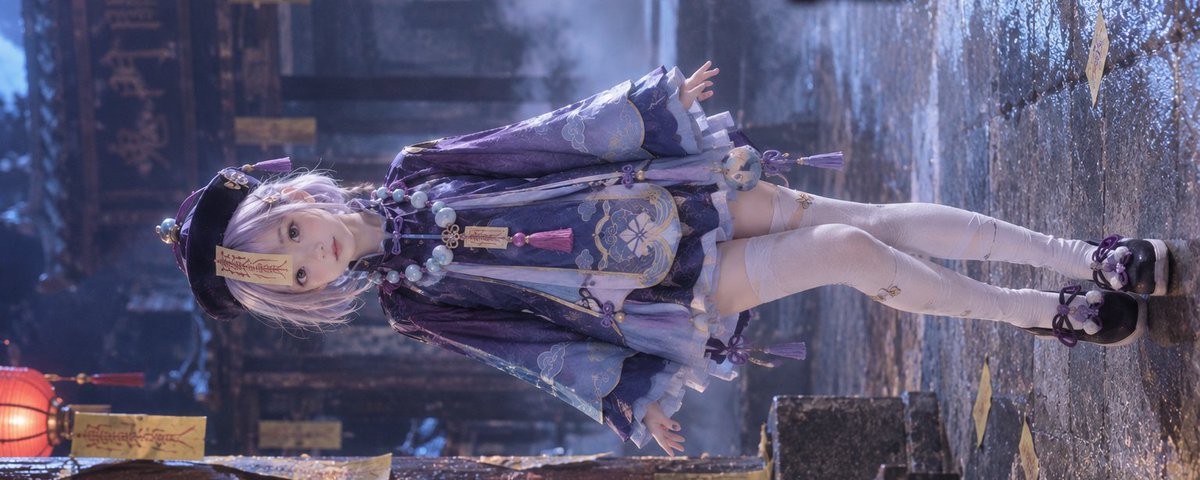
INPUT REFERENCE MAP — REQUIRED <Image 1> = the ONLY identity and appearance reference. Lock the same person’s face, hairstyle, hair color, skin tone, body proportions, costume, accessories, realistic skin texture and overall photographic appearance. Preserve the full-body design across every shot. <Image 2> = POSE REFERENCE LIBRARY ONLY. Use the visible poses as choreographic key poses and brief pose accents. Do not transfer the reference person’s face, identity, hair, clothing, accessories, background or collage layout. Connect the referenced poses with continuous dance steps; do not turn them into a slideshow. If several poses are visible, sample distinct poses and avoid repeating the same one too often. <Audio 1> = the exact soundtrack excerpt for this segment. It controls beat, groove, musical accents and phrase timing only. Preserve the audio exactly. The sung lyrics are NOT action instructions.
DANCE DIRECTOR MODE — PURE OTAKU DANCE, NOT LYRIC ACTING Perform a continuous, full-body Japanese otaku dance cover with cute, crisp, camera-friendly choreography. This is a dance performance, not a narrative scene, character skit, lyric illustration or acting exercise. Do NOT mime, pantomime, lip-sync, point at imaginary people, pretend to handle objects, or create gestures based on words or nouns in the lyrics. Do not visualize any named character, medicine, flower, food, location or event mentioned by the song. The audio provides rhythm and energy; choreography comes from dance technique and the pose references. Keep the dance moving through connected phrases: clear weight transfers; step-touch and cross-step patterns; heel-toe footwork; alternating knee lifts; compact pivots; shallow knee bends and rises; diagonal arm lines; wrist accents; crossed-and-open arm patterns; short levels changes; occasional small hops only when balanced and physically plausible. Use full body coordination—feet lead the weight transfer, then hips and torso, then shoulders, elbows, wrists and head. Avoid idle standing, random gestures, repetitive chest shaking, or arm-waving without footwork.
MUSIC STRUCTURE — TIMING ONLY Reference tempo from the edit manifest: about 132.5 BPM, beat ≈ 0.4528s, bar ≈ 1.8113s, 8-beat phrase ≈ 3.6226s. Segment-local phrase accents: 0.000s, 3.623s, 7.245s, 10.868s. Use these as approximate choreography and editorial anchors, while following the actual Audio 1. Strong phrase accents may land on a clean Image 2 pose; smaller beats are handled within continuous steps or arm accents. Do not make a cut or pose change on every beat.
CAMERA DIRECTOR SYSTEM A — PHYSICAL PLACEMENT Keep a tight full-body frame as the default: during regular dance coverage, begin roughly 1.8–2.8 m from the dancer, camera around waist-to-chest height or slightly below, with head, hands and both feet inside frame plus a small movement margin. Use a real camera move and natural perspective rather than digital zoom. Reframe only when necessary; do not crop the feet during full-body footwork. Brief medium-full or upper-body crops are allowed only between full-body dance phrases and must not conceal a required step. SEGMENT 01 ONLY has the explicitly specified close-pass opening exception; after that pass, return to the readable full-body distance. Do not use that compound close-pass sequence in later segments.
CAMERA DIRECTOR SYSTEM B — ONE PRIMARY MOVE PER PHASE Camera motion serves the dancer and never replaces choreography. For each phase use one primary camera behavior, with a clear trigger and end position. Use a controlled rhythmic handheld sway, a short lateral track, a small diagonal dip, a brief wrap during an actual pivot, or a short push-in for a clear pose accent—not several competing moves at once. The opening sway is deliberately kinetic but must recover to a readable frame. SEGMENT 01 ONLY uses its explicitly described compound close-pass sequence. Do not bob the camera with every knee bend. Plant the camera at the peak of a kick or knee lift. A whip-pan is a camera move, not a reason for the dancer to spin. After each move, recover or settle cleanly.
EDITING GRAMMAR Keep the body choreography continuous inside each phrase. At selected strong accents, use a crisp hard cut to a different crop or a different approved Image 2 key pose. Occasionally use a very brief directional blur, foreground wipe or 1–2-frame flash to bridge poses, but keep the dancer readable. Pose changes are editorial cuts, never body morphs. Avoid constant strobing and do not let all movement become motion blur.
SEGMENT-SPECIFIC CHOREOGRAPHY — IGNORE LYRIC MEANING 0.00–2.15 | SIGNATURE CAMERA PASS: Start with the dancer already in a lively three-quarter dance stance. The camera sweeps close past the shoulder, diagonally down the outfit, whips once, arcs around the side and resolves to full body. The dancer performs a compact step-touch, shoulder accent and quarter-pivot; keep the movement dance-led and physically plausible. 2.15–3.62 | DANCE PHRASE A: Full body. Step-touch right then left, knees softly bouncing; arms travel from crossed wrists at chest level to a wide diagonal opening. Finish with a crisp, balanced pose from Image 2 on the phrase accent. 3.62–5.43 | DANCE PHRASE B: Two alternating knee lifts with opposite arm punches, then a quick heel-toe switch and a small quarter-turn back to front. Keep the torso and hips involved; do not reduce the dance to hand waving. 5.43–7.25 | DANCE PHRASE C: Travel one small step diagonally out and back to center, arms sweep low-to-high and open into a clean V-line. Camera makes only a short lateral correction, then steadies. 7.25–9.06 | DANCE PHRASE D: A compact half-pivot, two springy side steps, alternating wrist flicks and one lifted-knee accent. Let hair and fabric follow naturally. Cut on a musical accent to a distinct Image 2 pose; do not morph between poses. 9.06–END | CLOSING PHRASE: Perform a quick two-beat footwork finish, arms open and return into a bright, readable Image 2 pose. Keep subtle breathing and residual motion so the next segment can continue.
IDENTITY, BODY MECHANICS AND VISUAL CONTINUITY Image 1 overrides Image 2 for identity, face, body, outfit and color. Use natural full-body anatomy and visible weight shifts. Knees bend before push-off; hips and torso follow the feet; arms arrive with a slight natural delay; hair and loose fabric follow the body and settle afterward. Preserve natural eyes and expressions with normal blinking; no forced acting, no lip-sync, no exaggerated reaction to the song’s words.
NEGATIVE CONSTRAINTS No lyric acting, no miming, no lip-sync, no narrative gestures, no named-character cameos, no additional people, no imaginary props, no medicine/food/flowers/weapons created from lyrics, no subtitles, no lyrics on screen, no text, no logos, no watermarks, no split screen, no scene change unrelated to Image 1, no identity drift, no face swap, no costume or hairstyle redesign, no body morphing between poses, no duplicate limbs, no malformed hands, no foot cropping during full-body dance, no endless orbit, no random camera shake, no camera bob on every beat, no constant strobe, no long black frame, no excessive blur, no static slideshow, no idle standing, no isolated repetitive chest shaking, no freeze before the audio ends.
ENDING / CONTINUATION Finish on the final audible beat of this Audio 1 excerpt with a clear dance pose derived from Image 2 and a small amount of natural residual motion. Segments 01–09 must feel like a flowing middle section that can cut into the next segment; do not add a title card or final fade. Segment 10 may end on the strongest approved pose, but only at the exact end of the supplied audio.
SEGMENT 02 — 侧向步伐|交叉步与手臂线条
原曲时间: 10.876–21.943s | 段长: 11.067s | Audio 1 文件: seg02_00m10p88s-00m21p94s.mp3 本段乐句强拍(local): 3.615s, 7.237s, 10.860s 本段小节强拍(local): 1.803s, 5.426s, 9.049s
Create SEGMENT 02 of a photorealistic vertical 9:16 solo Japanese otaku dance cover (宅舞), 24fps. Match the supplied Audio 1 excerpt length exactly: 11.067 seconds, corresponding to original-song time 10.876–21.943s. No added tail, no slow motion, no audio stretch. This is an independently generated segment; every rule below is self-contained.
INPUT REFERENCE MAP — REQUIRED <Image 1> = the ONLY identity and appearance reference. Lock the same person’s face, hairstyle, hair color, skin tone, body proportions, costume, accessories, realistic skin texture and overall photographic appearance. Preserve the full-body design across every shot. <Image 2> = POSE REFERENCE LIBRARY ONLY. Use the visible poses as choreographic key poses and brief pose accents. Do not transfer the reference person’s face, identity, hair, clothing, accessories, background or collage layout. Connect the referenced poses with continuous dance steps; do not turn them into a slideshow. If several poses are visible, sample distinct poses and avoid repeating the same one too often. <Audio 1> = the exact soundtrack excerpt for this segment. It controls beat, groove, musical accents and phrase timing only. Preserve the audio exactly. The sung lyrics are NOT action instructions.
DANCE DIRECTOR MODE — PURE OTAKU DANCE, NOT LYRIC ACTING Perform a continuous, full-body Japanese otaku dance cover with cute, crisp, camera-friendly choreography. This is a dance performance, not a narrative scene, character skit, lyric illustration or acting exercise. Do NOT mime, pantomime, lip-sync, point at imaginary people, pretend to handle objects, or create gestures based on words or nouns in the lyrics. Do not visualize any named character, medicine, flower, food, location or event mentioned by the song. The audio provides rhythm and energy; choreography comes from dance technique and the pose references. Keep the dance moving through connected phrases: clear weight transfers; step-touch and cross-step patterns; heel-toe footwork; alternating knee lifts; compact pivots; shallow knee bends and rises; diagonal arm lines; wrist accents; crossed-and-open arm patterns; short levels changes; occasional small hops only when balanced and physically plausible. Use full body coordination—feet lead the weight transfer, then hips and torso, then shoulders, elbows, wrists and head. Avoid idle standing, random gestures, repetitive chest shaking, or arm-waving without footwork.
MUSIC STRUCTURE — TIMING ONLY Reference tempo from the edit manifest: about 132.5 BPM, beat ≈ 0.4528s, bar ≈ 1.8113s, 8-beat phrase ≈ 3.6226s. Segment-local phrase accents: 3.615s, 7.237s, 10.860s. Use these as approximate choreography and editorial anchors, while following the actual Audio 1. Strong phrase accents may land on a clean Image 2 pose; smaller beats are handled within continuous steps or arm accents. Do not make a cut or pose change on every beat.
CAMERA DIRECTOR SYSTEM A — PHYSICAL PLACEMENT Keep a tight full-body frame as the default: during regular dance coverage, begin roughly 1.8–2.8 m from the dancer, camera around waist-to-chest height or slightly below, with head, hands and both feet inside frame plus a small movement margin. Use a real camera move and natural perspective rather than digital zoom. Reframe only when necessary; do not crop the feet during full-body footwork. Brief medium-full or upper-body crops are allowed only between full-body dance phrases and must not conceal a required step. SEGMENT 01 ONLY has the explicitly specified close-pass opening exception; after that pass, return to the readable full-body distance. Do not use that compound close-pass sequence in later segments.
CAMERA DIRECTOR SYSTEM B — ONE PRIMARY MOVE PER PHASE Camera motion serves the dancer and never replaces choreography. For each phase use one primary camera behavior, with a clear trigger and end position. Use a controlled rhythmic handheld sway, a short lateral track, a small diagonal dip, a brief wrap during an actual pivot, or a short push-in for a clear pose accent—not several competing moves at once. The opening sway is deliberately kinetic but must recover to a readable frame. SEGMENT 01 ONLY uses its explicitly described compound close-pass sequence. Do not bob the camera with every knee bend. Plant the camera at the peak of a kick or knee lift. A whip-pan is a camera move, not a reason for the dancer to spin. After each move, recover or settle cleanly.
EDITING GRAMMAR Keep the body choreography continuous inside each phrase. At selected strong accents, use a crisp hard cut to a different crop or a different approved Image 2 key pose. Occasionally use a very brief directional blur, foreground wipe or 1–2-frame flash to bridge poses, but keep the dancer readable. Pose changes are editorial cuts, never body morphs. Avoid constant strobing and do not let all movement become motion blur.
SEGMENT-SPECIFIC CHOREOGRAPHY — IGNORE LYRIC MEANING 0.00–1.20 | MOVING ENTRY: Already in motion: two light rebounds through the knees, a clean step-touch and a diagonal arm reach. The camera sways rhythmically but keeps the entire dancer readable. 1.20–3.62 | PHRASE A: Cross-step right, uncross, cross-step left, uncross; arms alternate between shoulder-height diagonals and a compact chest-level cross. Add a quarter-pivot on the final two beats. 3.62–5.43 | PHRASE B: Two knee lifts with opposing elbow pulls, then a heel-toe switch and arms opening outward. Land a clean Image 2 pose as a brief pose accent. 5.43–7.24 | PHRASE C: Step out-in on both sides with a small hip bounce; arms draw mirrored semicircles, then snap into a diagonal line. Camera performs one short lateral track triggered by the dancer returning to center. 7.24–9.05 | PHRASE D: Small pivot away and back, two quick side steps, then a low-to-high arm sweep with a controlled knee dip and rise. No long travel across the set. 9.05–END | PHRASE E / HANDOFF: Use a crisp musical hit for a new Image 2 pose, then immediately flow into a simple two-step rebound. Finish in motion, not an end-card freeze.
IDENTITY, BODY MECHANICS AND VISUAL CONTINUITY Image 1 overrides Image 2 for identity, face, body, outfit and color. Use natural full-body anatomy and visible weight shifts. Knees bend before push-off; hips and torso follow the feet; arms arrive with a slight natural delay; hair and loose fabric follow the body and settle afterward. Preserve natural eyes and expressions with normal blinking; no forced acting, no lip-sync, no exaggerated reaction to the song’s words.
NEGATIVE CONSTRAINTS No lyric acting, no miming, no lip-sync, no narrative gestures, no named-character cameos, no additional people, no imaginary props, no medicine/food/flowers/weapons created from lyrics, no subtitles, no lyrics on screen, no text, no logos, no watermarks, no split screen, no scene change unrelated to Image 1, no identity drift, no face swap, no costume or hairstyle redesign, no body morphing between poses, no duplicate limbs, no malformed hands, no foot cropping during full-body dance, no endless orbit, no random camera shake, no camera bob on every beat, no constant strobe, no long black frame, no excessive blur, no static slideshow, no idle standing, no isolated repetitive chest shaking, no freeze before the audio ends.
ENDING / CONTINUATION Finish on the final audible beat of this Audio 1 excerpt with a clear dance pose derived from Image 2 and a small amount of natural residual motion. Segments 01–09 must feel like a flowing middle section that can cut into the next segment; do not add a title card or final fade. Segment 10 may end on the strongest approved pose, but only at the exact end of the supplied audio.
SEGMENT 03 — 反向律动|摆动、抬膝与回正
原曲时间: 21.943–32.966s | 段长: 11.023s | Audio 1 文件: seg03_00m21p94s-00m32p97s.mp3 本段乐句强拍(local): 3.415s, 7.038s, 10.661s 本段小节强拍(local): 1.604s, 5.227s, 8.849s
Create SEGMENT 03 of a photorealistic vertical 9:16 solo Japanese otaku dance cover (宅舞), 24fps. Match the supplied Audio 1 excerpt length exactly: 11.023 seconds, corresponding to original-song time 21.943–32.966s. No added tail, no slow motion, no audio stretch. This is an independently generated segment; every rule below is self-contained.
INPUT REFERENCE MAP — REQUIRED <Image 1> = the ONLY identity and appearance reference. Lock the same person’s face, hairstyle, hair color, skin tone, body proportions, costume, accessories, realistic skin texture and overall photographic appearance. Preserve the full-body design across every shot. <Image 2> = POSE REFERENCE LIBRARY ONLY. Use the visible poses as choreographic key poses and brief pose accents. Do not transfer the reference person’s face, identity, hair, clothing, accessories, background or collage layout. Connect the referenced poses with continuous dance steps; do not turn them into a slideshow. If several poses are visible, sample distinct poses and avoid repeating the same one too often. <Audio 1> = the exact soundtrack excerpt for this segment. It controls beat, groove, musical accents and phrase timing only. Preserve the audio exactly. The sung lyrics are NOT action instructions.
DANCE DIRECTOR MODE — PURE OTAKU DANCE, NOT LYRIC ACTING Perform a continuous, full-body Japanese otaku dance cover with cute, crisp, camera-friendly choreography. This is a dance performance, not a narrative scene, character skit, lyric illustration or acting exercise. Do NOT mime, pantomime, lip-sync, point at imaginary people, pretend to handle objects, or create gestures based on words or nouns in the lyrics. Do not visualize any named character, medicine, flower, food, location or event mentioned by the song. The audio provides rhythm and energy; choreography comes from dance technique and the pose references. Keep the dance moving through connected phrases: clear weight transfers; step-touch and cross-step patterns; heel-toe footwork; alternating knee lifts; compact pivots; shallow knee bends and rises; diagonal arm lines; wrist accents; crossed-and-open arm patterns; short levels changes; occasional small hops only when balanced and physically plausible. Use full body coordination—feet lead the weight transfer, then hips and torso, then shoulders, elbows, wrists and head. Avoid idle standing, random gestures, repetitive chest shaking, or arm-waving without footwork.
MUSIC STRUCTURE — TIMING ONLY Reference tempo from the edit manifest: about 132.5 BPM, beat ≈ 0.4528s, bar ≈ 1.8113s, 8-beat phrase ≈ 3.6226s. Segment-local phrase accents: 3.415s, 7.038s, 10.661s. Use these as approximate choreography and editorial anchors, while following the actual Audio 1. Strong phrase accents may land on a clean Image 2 pose; smaller beats are handled within continuous steps or arm accents. Do not make a cut or pose change on every beat.
CAMERA DIRECTOR SYSTEM A — PHYSICAL PLACEMENT Keep a tight full-body frame as the default: during regular dance coverage, begin roughly 1.8–2.8 m from the dancer, camera around waist-to-chest height or slightly below, with head, hands and both feet inside frame plus a small movement margin. Use a real camera move and natural perspective rather than digital zoom. Reframe only when necessary; do not crop the feet during full-body footwork. Brief medium-full or upper-body crops are allowed only between full-body dance phrases and must not conceal a required step. SEGMENT 01 ONLY has the explicitly specified close-pass opening exception; after that pass, return to the readable full-body distance. Do not use that compound close-pass sequence in later segments.
CAMERA DIRECTOR SYSTEM B — ONE PRIMARY MOVE PER PHASE Camera motion serves the dancer and never replaces choreography. For each phase use one primary camera behavior, with a clear trigger and end position. Use a controlled rhythmic handheld sway, a short lateral track, a small diagonal dip, a brief wrap during an actual pivot, or a short push-in for a clear pose accent—not several competing moves at once. The opening sway is deliberately kinetic but must recover to a readable frame. SEGMENT 01 ONLY uses its explicitly described compound close-pass sequence. Do not bob the camera with every knee bend. Plant the camera at the peak of a kick or knee lift. A whip-pan is a camera move, not a reason for the dancer to spin. After each move, recover or settle cleanly.
EDITING GRAMMAR Keep the body choreography continuous inside each phrase. At selected strong accents, use a crisp hard cut to a different crop or a different approved Image 2 key pose. Occasionally use a very brief directional blur, foreground wipe or 1–2-frame flash to bridge poses, but keep the dancer readable. Pose changes are editorial cuts, never body morphs. Avoid constant strobing and do not let all movement become motion blur.
SEGMENT-SPECIFIC CHOREOGRAPHY — IGNORE LYRIC MEANING 0.00–1.80 | MOVING ENTRY: Full-body view with a controlled camera sway. The dancer uses two alternating side steps, a relaxed shoulder groove and a small arm sweep across the body. 1.80–3.42 | PHRASE A: Step right with a diagonal arm line, rebound to center, step left with the opposite line; add one clear knee lift and return. Finish with an Image 2 pose on the phrase accent. 3.42–5.23 | PHRASE B: A fast but readable heel-toe pattern, arms fold inward then open wide, followed by a quarter-turn. Camera briefly holds position during the turn so the body action reads. 5.23–7.04 | PHRASE C: Two alternating knee lifts, a side lunge of modest depth, then rise into a high diagonal arm line. Keep weight transfers visible from feet through hips and torso. 7.04–8.85 | PHRASE D: Cut cleanly to a different framing on the music accent. The dancer performs a half-pivot, two quick step-touches and a symmetrical arm pattern that resolves into another referenced pose. 8.85–END | PHRASE E / HANDOFF: Add a small bounce, alternating wrist accents and an outward step-return. Camera settles as the dancer hits the final readable pose, with slight residual movement.
IDENTITY, BODY MECHANICS AND VISUAL CONTINUITY Image 1 overrides Image 2 for identity, face, body, outfit and color. Use natural full-body anatomy and visible weight shifts. Knees bend before push-off; hips and torso follow the feet; arms arrive with a slight natural delay; hair and loose fabric follow the body and settle afterward. Preserve natural eyes and expressions with normal blinking; no forced acting, no lip-sync, no exaggerated reaction to the song’s words.
NEGATIVE CONSTRAINTS No lyric acting, no miming, no lip-sync, no narrative gestures, no named-character cameos, no additional people, no imaginary props, no medicine/food/flowers/weapons created from lyrics, no subtitles, no lyrics on screen, no text, no logos, no watermarks, no split screen, no scene change unrelated to Image 1, no identity drift, no face swap, no costume or hairstyle redesign, no body morphing between poses, no duplicate limbs, no malformed hands, no foot cropping during full-body dance, no endless orbit, no random camera shake, no camera bob on every beat, no constant strobe, no long black frame, no excessive blur, no static slideshow, no idle standing, no isolated repetitive chest shaking, no freeze before the audio ends.
ENDING / CONTINUATION Finish on the final audible beat of this Audio 1 excerpt with a clear dance pose derived from Image 2 and a small amount of natural residual motion. Segments 01–09 must feel like a flowing middle section that can cut into the next segment; do not add a title card or final fade. Segment 10 may end on the strongest approved pose, but only at the exact end of the supplied audio.
SEGMENT 04 — 斜线展开|低重心与弹起
原曲时间: 32.966–44.116s | 段长: 11.150s | Audio 1 文件: seg04_00m32p97s-00m44p12s.mp3 本段乐句强拍(local): 3.260s, 6.883s, 10.506s 本段小节强拍(local): 1.449s, 5.072s, 8.694s
Create SEGMENT 04 of a photorealistic vertical 9:16 solo Japanese otaku dance cover (宅舞), 24fps. Match the supplied Audio 1 excerpt length exactly: 11.150 seconds, corresponding to original-song time 32.966–44.116s. No added tail, no slow motion, no audio stretch. This is an independently generated segment; every rule below is self-contained.
INPUT REFERENCE MAP — REQUIRED <Image 1> = the ONLY identity and appearance reference. Lock the same person’s face, hairstyle, hair color, skin tone, body proportions, costume, accessories, realistic skin texture and overall photographic appearance. Preserve the full-body design across every shot. <Image 2> = POSE REFERENCE LIBRARY ONLY. Use the visible poses as choreographic key poses and brief pose accents. Do not transfer the reference person’s face, identity, hair, clothing, accessories, background or collage layout. Connect the referenced poses with continuous dance steps; do not turn them into a slideshow. If several poses are visible, sample distinct poses and avoid repeating the same one too often. <Audio 1> = the exact soundtrack excerpt for this segment. It controls beat, groove, musical accents and phrase timing only. Preserve the audio exactly. The sung lyrics are NOT action instructions.
DANCE DIRECTOR MODE — PURE OTAKU DANCE, NOT LYRIC ACTING Perform a continuous, full-body Japanese otaku dance cover with cute, crisp, camera-friendly choreography. This is a dance performance, not a narrative scene, character skit, lyric illustration or acting exercise. Do NOT mime, pantomime, lip-sync, point at imaginary people, pretend to handle objects, or create gestures based on words or nouns in the lyrics. Do not visualize any named character, medicine, flower, food, location or event mentioned by the song. The audio provides rhythm and energy; choreography comes from dance technique and the pose references. Keep the dance moving through connected phrases: clear weight transfers; step-touch and cross-step patterns; heel-toe footwork; alternating knee lifts; compact pivots; shallow knee bends and rises; diagonal arm lines; wrist accents; crossed-and-open arm patterns; short levels changes; occasional small hops only when balanced and physically plausible. Use full body coordination—feet lead the weight transfer, then hips and torso, then shoulders, elbows, wrists and head. Avoid idle standing, random gestures, repetitive chest shaking, or arm-waving without footwork.
MUSIC STRUCTURE — TIMING ONLY Reference tempo from the edit manifest: about 132.5 BPM, beat ≈ 0.4528s, bar ≈ 1.8113s, 8-beat phrase ≈ 3.6226s. Segment-local phrase accents: 3.260s, 6.883s, 10.506s. Use these as approximate choreography and editorial anchors, while following the actual Audio 1. Strong phrase accents may land on a clean Image 2 pose; smaller beats are handled within continuous steps or arm accents. Do not make a cut or pose change on every beat.
CAMERA DIRECTOR SYSTEM A — PHYSICAL PLACEMENT Keep a tight full-body frame as the default: during regular dance coverage, begin roughly 1.8–2.8 m from the dancer, camera around waist-to-chest height or slightly below, with head, hands and both feet inside frame plus a small movement margin. Use a real camera move and natural perspective rather than digital zoom. Reframe only when necessary; do not crop the feet during full-body footwork. Brief medium-full or upper-body crops are allowed only between full-body dance phrases and must not conceal a required step. SEGMENT 01 ONLY has the explicitly specified close-pass opening exception; after that pass, return to the readable full-body distance. Do not use that compound close-pass sequence in later segments.
CAMERA DIRECTOR SYSTEM B — ONE PRIMARY MOVE PER PHASE Camera motion serves the dancer and never replaces choreography. For each phase use one primary camera behavior, with a clear trigger and end position. Use a controlled rhythmic handheld sway, a short lateral track, a small diagonal dip, a brief wrap during an actual pivot, or a short push-in for a clear pose accent—not several competing moves at once. The opening sway is deliberately kinetic but must recover to a readable frame. SEGMENT 01 ONLY uses its explicitly described compound close-pass sequence. Do not bob the camera with every knee bend. Plant the camera at the peak of a kick or knee lift. A whip-pan is a camera move, not a reason for the dancer to spin. After each move, recover or settle cleanly.
EDITING GRAMMAR Keep the body choreography continuous inside each phrase. At selected strong accents, use a crisp hard cut to a different crop or a different approved Image 2 key pose. Occasionally use a very brief directional blur, foreground wipe or 1–2-frame flash to bridge poses, but keep the dancer readable. Pose changes are editorial cuts, never body morphs. Avoid constant strobing and do not let all movement become motion blur.
SEGMENT-SPECIFIC CHOREOGRAPHY — IGNORE LYRIC MEANING 0.00–1.60 | MOVING ENTRY: Begin full-body, slight three-quarter angle. Two compact step-touches and a shoulder-led arm sweep create immediate dance energy. The camera dips once and returns to a stable frame. 1.60–3.26 | PHRASE A: Open to a wide but comfortable stance, bend both knees, sweep the arms across a diagonal and rise with arms opening outward. Hold the final geometry for one clear accent. 3.26–5.07 | PHRASE B: Travel a small diagonal step and return, using heel-toe footwork; arms trace a low-to-high pathway and finish in an angular pose from Image 2. 5.07–6.88 | PHRASE C: Alternating knee lift and opposite arm reach, then a quick quarter-turn back to camera. Keep the feet grounded and the turn physically continuous. 6.88–8.69 | PHRASE D: Two side steps, arms swing outward then cross briefly at chest height, followed by a controlled dip-and-rise. Camera remains planted during the low point. 8.69–10.51 | PHRASE E: A clean pose cut on the accent, then a short pivot and two rebounds. Maintain full-body framing and visible foot placement. 10.51–END | PHRASE F / HANDOFF: Finish with a synchronized step-close, a sharp arm line, and a relaxed transition into the next segment—no final ending card.
IDENTITY, BODY MECHANICS AND VISUAL CONTINUITY Image 1 overrides Image 2 for identity, face, body, outfit and color. Use natural full-body anatomy and visible weight shifts. Knees bend before push-off; hips and torso follow the feet; arms arrive with a slight natural delay; hair and loose fabric follow the body and settle afterward. Preserve natural eyes and expressions with normal blinking; no forced acting, no lip-sync, no exaggerated reaction to the song’s words.
NEGATIVE CONSTRAINTS No lyric acting, no miming, no lip-sync, no narrative gestures, no named-character cameos, no additional people, no imaginary props, no medicine/food/flowers/weapons created from lyrics, no subtitles, no lyrics on screen, no text, no logos, no watermarks, no split screen, no scene change unrelated to Image 1, no identity drift, no face swap, no costume or hairstyle redesign, no body morphing between poses, no duplicate limbs, no malformed hands, no foot cropping during full-body dance, no endless orbit, no random camera shake, no camera bob on every beat, no constant strobe, no long black frame, no excessive blur, no static slideshow, no idle standing, no isolated repetitive chest shaking, no freeze before the audio ends.
ENDING / CONTINUATION Finish on the final audible beat of this Audio 1 excerpt with a clear dance pose derived from Image 2 and a small amount of natural residual motion. Segments 01–09 must feel like a flowing middle section that can cut into the next segment; do not add a title card or final fade. Segment 10 may end on the strongest approved pose, but only at the exact end of the supplied audio.
SEGMENT 05 — 脚步加速|脚跟脚尖与转身
原曲时间: 44.116–56.983s | 段长: 12.867s | Audio 1 文件: seg05_00m44p12s-00m56p98s.mp3 本段乐句强拍(local): 2.978s, 6.601s, 10.224s 本段小节强拍(local): 1.167s, 4.790s, 8.412s, 12.035s
Create SEGMENT 05 of a photorealistic vertical 9:16 solo Japanese otaku dance cover (宅舞), 24fps. Match the supplied Audio 1 excerpt length exactly: 12.867 seconds, corresponding to original-song time 44.116–56.983s. No added tail, no slow motion, no audio stretch. This is an independently generated segment; every rule below is self-contained.
INPUT REFERENCE MAP — REQUIRED <Image 1> = the ONLY identity and appearance reference. Lock the same person’s face, hairstyle, hair color, skin tone, body proportions, costume, accessories, realistic skin texture and overall photographic appearance. Preserve the full-body design across every shot. <Image 2> = POSE REFERENCE LIBRARY ONLY. Use the visible poses as choreographic key poses and brief pose accents. Do not transfer the reference person’s face, identity, hair, clothing, accessories, background or collage layout. Connect the referenced poses with continuous dance steps; do not turn them into a slideshow. If several poses are visible, sample distinct poses and avoid repeating the same one too often. <Audio 1> = the exact soundtrack excerpt for this segment. It controls beat, groove, musical accents and phrase timing only. Preserve the audio exactly. The sung lyrics are NOT action instructions.
DANCE DIRECTOR MODE — PURE OTAKU DANCE, NOT LYRIC ACTING Perform a continuous, full-body Japanese otaku dance cover with cute, crisp, camera-friendly choreography. This is a dance performance, not a narrative scene, character skit, lyric illustration or acting exercise. Do NOT mime, pantomime, lip-sync, point at imaginary people, pretend to handle objects, or create gestures based on words or nouns in the lyrics. Do not visualize any named character, medicine, flower, food, location or event mentioned by the song. The audio provides rhythm and energy; choreography comes from dance technique and the pose references. Keep the dance moving through connected phrases: clear weight transfers; step-touch and cross-step patterns; heel-toe footwork; alternating knee lifts; compact pivots; shallow knee bends and rises; diagonal arm lines; wrist accents; crossed-and-open arm patterns; short levels changes; occasional small hops only when balanced and physically plausible. Use full body coordination—feet lead the weight transfer, then hips and torso, then shoulders, elbows, wrists and head. Avoid idle standing, random gestures, repetitive chest shaking, or arm-waving without footwork.
MUSIC STRUCTURE — TIMING ONLY Reference tempo from the edit manifest: about 132.5 BPM, beat ≈ 0.4528s, bar ≈ 1.8113s, 8-beat phrase ≈ 3.6226s. Segment-local phrase accents: 2.978s, 6.601s, 10.224s. Use these as approximate choreography and editorial anchors, while following the actual Audio 1. Strong phrase accents may land on a clean Image 2 pose; smaller beats are handled within continuous steps or arm accents. Do not make a cut or pose change on every beat.
CAMERA DIRECTOR SYSTEM A — PHYSICAL PLACEMENT Keep a tight full-body frame as the default: during regular dance coverage, begin roughly 1.8–2.8 m from the dancer, camera around waist-to-chest height or slightly below, with head, hands and both feet inside frame plus a small movement margin. Use a real camera move and natural perspective rather than digital zoom. Reframe only when necessary; do not crop the feet during full-body footwork. Brief medium-full or upper-body crops are allowed only between full-body dance phrases and must not conceal a required step. SEGMENT 01 ONLY has the explicitly specified close-pass opening exception; after that pass, return to the readable full-body distance. Do not use that compound close-pass sequence in later segments.
CAMERA DIRECTOR SYSTEM B — ONE PRIMARY MOVE PER PHASE Camera motion serves the dancer and never replaces choreography. For each phase use one primary camera behavior, with a clear trigger and end position. Use a controlled rhythmic handheld sway, a short lateral track, a small diagonal dip, a brief wrap during an actual pivot, or a short push-in for a clear pose accent—not several competing moves at once. The opening sway is deliberately kinetic but must recover to a readable frame. SEGMENT 01 ONLY uses its explicitly described compound close-pass sequence. Do not bob the camera with every knee bend. Plant the camera at the peak of a kick or knee lift. A whip-pan is a camera move, not a reason for the dancer to spin. After each move, recover or settle cleanly.
EDITING GRAMMAR Keep the body choreography continuous inside each phrase. At selected strong accents, use a crisp hard cut to a different crop or a different approved Image 2 key pose. Occasionally use a very brief directional blur, foreground wipe or 1–2-frame flash to bridge poses, but keep the dancer readable. Pose changes are editorial cuts, never body morphs. Avoid constant strobing and do not let all movement become motion blur.
SEGMENT-SPECIFIC CHOREOGRAPHY — IGNORE LYRIC MEANING 0.00–1.17 | MOVING ENTRY: Full-body shot. Begin on the groove with a small bounce, alternating heel-toe footwork and arms swinging in compact opposing diagonals. Camera sways left-right once and recenters. 1.17–2.98 | PHRASE A: Cross-step, open-step, cross-step, open-step; arms alternate between wrist-cross and outward fan shapes. End with a crisp shoulder-level pose. 2.98–4.79 | PHRASE B: Two knee lifts and one controlled quarter-pivot, followed by a quick two-step rebound. Use hair and costume inertia naturally. 4.79–6.60 | PHRASE C: Small diagonal travel out-and-back with broad arm circles that stop cleanly at the wrists. No prop interaction. Snap to another Image 2 pose on the phrase accent. 6.60–8.41 | PHRASE D: Compact low dip, immediate rise, two side steps and alternating arm punches. Keep the chest/shoulders integrated with full-body movement rather than repeating isolated chest shakes. 8.41–10.22 | PHRASE E: Pivot away and return to front, one heel flick or knee lift, then an open-arm silhouette. Camera stays steady through the foot accent. 10.22–12.04 | PHRASE F: Increase energy with quick step-touch pairs and a crisp hand/arm picture from Image 2, readable for a brief moment. 12.04–END | PHRASE G / HANDOFF: One final syncopated foot pattern, arms open then return close to the body; finish still rhythmically alive.
IDENTITY, BODY MECHANICS AND VISUAL CONTINUITY Image 1 overrides Image 2 for identity, face, body, outfit and color. Use natural full-body anatomy and visible weight shifts. Knees bend before push-off; hips and torso follow the feet; arms arrive with a slight natural delay; hair and loose fabric follow the body and settle afterward. Preserve natural eyes and expressions with normal blinking; no forced acting, no lip-sync, no exaggerated reaction to the song’s words.
NEGATIVE CONSTRAINTS No lyric acting, no miming, no lip-sync, no narrative gestures, no named-character cameos, no additional people, no imaginary props, no medicine/food/flowers/weapons created from lyrics, no subtitles, no lyrics on screen, no text, no logos, no watermarks, no split screen, no scene change unrelated to Image 1, no identity drift, no face swap, no costume or hairstyle redesign, no body morphing between poses, no duplicate limbs, no malformed hands, no foot cropping during full-body dance, no endless orbit, no random camera shake, no camera bob on every beat, no constant strobe, no long black frame, no excessive blur, no static slideshow, no idle standing, no isolated repetitive chest shaking, no freeze before the audio ends.
ENDING / CONTINUATION Finish on the final audible beat of this Audio 1 excerpt with a clear dance pose derived from Image 2 and a small amount of natural residual motion. Segments 01–09 must feel like a flowing middle section that can cut into the next segment; do not add a title card or final fade. Segment 10 may end on the strongest approved pose, but only at the exact end of the supplied audio.
SEGMENT 06 — 上肢波浪|屈膝层次与原地轴转
原曲时间: 56.983–69.743s | 段长: 12.760s | Audio 1 文件: seg06_00m56p98s-01m09p74s.mp3 本段乐句强拍(local): 0.979s, 4.602s, 8.225s, 11.847s 本段小节强拍(local): 2.791s, 6.413s, 10.036s
Create SEGMENT 06 of a photorealistic vertical 9:16 solo Japanese otaku dance cover (宅舞), 24fps. Match the supplied Audio 1 excerpt length exactly: 12.760 seconds, corresponding to original-song time 56.983–69.743s. No added tail, no slow motion, no audio stretch. This is an independently generated segment; every rule below is self-contained.
INPUT REFERENCE MAP — REQUIRED <Image 1> = the ONLY identity and appearance reference. Lock the same person’s face, hairstyle, hair color, skin tone, body proportions, costume, accessories, realistic skin texture and overall photographic appearance. Preserve the full-body design across every shot. <Image 2> = POSE REFERENCE LIBRARY ONLY. Use the visible poses as choreographic key poses and brief pose accents. Do not transfer the reference person’s face, identity, hair, clothing, accessories, background or collage layout. Connect the referenced poses with continuous dance steps; do not turn them into a slideshow. If several poses are visible, sample distinct poses and avoid repeating the same one too often. <Audio 1> = the exact soundtrack excerpt for this segment. It controls beat, groove, musical accents and phrase timing only. Preserve the audio exactly. The sung lyrics are NOT action instructions.
DANCE DIRECTOR MODE — PURE OTAKU DANCE, NOT LYRIC ACTING Perform a continuous, full-body Japanese otaku dance cover with cute, crisp, camera-friendly choreography. This is a dance performance, not a narrative scene, character skit, lyric illustration or acting exercise. Do NOT mime, pantomime, lip-sync, point at imaginary people, pretend to handle objects, or create gestures based on words or nouns in the lyrics. Do not visualize any named character, medicine, flower, food, location or event mentioned by the song. The audio provides rhythm and energy; choreography comes from dance technique and the pose references. Keep the dance moving through connected phrases: clear weight transfers; step-touch and cross-step patterns; heel-toe footwork; alternating knee lifts; compact pivots; shallow knee bends and rises; diagonal arm lines; wrist accents; crossed-and-open arm patterns; short levels changes; occasional small hops only when balanced and physically plausible. Use full body coordination—feet lead the weight transfer, then hips and torso, then shoulders, elbows, wrists and head. Avoid idle standing, random gestures, repetitive chest shaking, or arm-waving without footwork.
MUSIC STRUCTURE — TIMING ONLY Reference tempo from the edit manifest: about 132.5 BPM, beat ≈ 0.4528s, bar ≈ 1.8113s, 8-beat phrase ≈ 3.6226s. Segment-local phrase accents: 0.979s, 4.602s, 8.225s, 11.847s. Use these as approximate choreography and editorial anchors, while following the actual Audio 1. Strong phrase accents may land on a clean Image 2 pose; smaller beats are handled within continuous steps or arm accents. Do not make a cut or pose change on every beat.
CAMERA DIRECTOR SYSTEM A — PHYSICAL PLACEMENT Keep a tight full-body frame as the default: during regular dance coverage, begin roughly 1.8–2.8 m from the dancer, camera around waist-to-chest height or slightly below, with head, hands and both feet inside frame plus a small movement margin. Use a real camera move and natural perspective rather than digital zoom. Reframe only when necessary; do not crop the feet during full-body footwork. Brief medium-full or upper-body crops are allowed only between full-body dance phrases and must not conceal a required step. SEGMENT 01 ONLY has the explicitly specified close-pass opening exception; after that pass, return to the readable full-body distance. Do not use that compound close-pass sequence in later segments.
CAMERA DIRECTOR SYSTEM B — ONE PRIMARY MOVE PER PHASE Camera motion serves the dancer and never replaces choreography. For each phase use one primary camera behavior, with a clear trigger and end position. Use a controlled rhythmic handheld sway, a short lateral track, a small diagonal dip, a brief wrap during an actual pivot, or a short push-in for a clear pose accent—not several competing moves at once. The opening sway is deliberately kinetic but must recover to a readable frame. SEGMENT 01 ONLY uses its explicitly described compound close-pass sequence. Do not bob the camera with every knee bend. Plant the camera at the peak of a kick or knee lift. A whip-pan is a camera move, not a reason for the dancer to spin. After each move, recover or settle cleanly.
EDITING GRAMMAR Keep the body choreography continuous inside each phrase. At selected strong accents, use a crisp hard cut to a different crop or a different approved Image 2 key pose. Occasionally use a very brief directional blur, foreground wipe or 1–2-frame flash to bridge poses, but keep the dancer readable. Pose changes are editorial cuts, never body morphs. Avoid constant strobing and do not let all movement become motion blur.
SEGMENT-SPECIFIC CHOREOGRAPHY — IGNORE LYRIC MEANING 0.00–0.98 | PICKUP: The audio enters mid-phrase. Continue immediately with two compact step-touches and a flowing arm line; no fresh establishing shot. 0.98–2.79 | PHRASE A: Arm wave travels from one wrist through elbows and shoulders, then resolves into a diagonal reach. Pair it with a clear side-to-side weight shift. 2.79–4.60 | PHRASE B: Bend knees into a shallow grounded level change, rise into alternating knee lifts, then pivot a quarter-turn and return to front. 4.60–6.41 | PHRASE C: Cross-step sequence with arms opening from crossed forearms into a wide V; place a short Image 2 pose hit at the phrase end. 6.41–8.22 | PHRASE D: A small in-place pivot, two quick heel-toe steps and a smooth mirrored arm wave. Camera performs one short wrap only during the pivot, then stops. 8.22–10.04 | PHRASE E: Alternate right/left knee accents with opposing arm lines; use a controlled bounce through the legs and a clear return to center. 10.04–11.85 | PHRASE F: Quick two-step, arms sweep low-to-high and settle in a sharp diagonal pose. Keep face natural and expressive, not acting the words. 11.85–END | PHRASE G / HANDOFF: Open the stance, make a small upper-body turn, then step back to the center mark and continue moving into the cut.
IDENTITY, BODY MECHANICS AND VISUAL CONTINUITY Image 1 overrides Image 2 for identity, face, body, outfit and color. Use natural full-body anatomy and visible weight shifts. Knees bend before push-off; hips and torso follow the feet; arms arrive with a slight natural delay; hair and loose fabric follow the body and settle afterward. Preserve natural eyes and expressions with normal blinking; no forced acting, no lip-sync, no exaggerated reaction to the song’s words.
NEGATIVE CONSTRAINTS No lyric acting, no miming, no lip-sync, no narrative gestures, no named-character cameos, no additional people, no imaginary props, no medicine/food/flowers/weapons created from lyrics, no subtitles, no lyrics on screen, no text, no logos, no watermarks, no split screen, no scene change unrelated to Image 1, no identity drift, no face swap, no costume or hairstyle redesign, no body morphing between poses, no duplicate limbs, no malformed hands, no foot cropping during full-body dance, no endless orbit, no random camera shake, no camera bob on every beat, no constant strobe, no long black frame, no excessive blur, no static slideshow, no idle standing, no isolated repetitive chest shaking, no freeze before the audio ends.
ENDING / CONTINUATION Finish on the final audible beat of this Audio 1 excerpt with a clear dance pose derived from Image 2 and a small amount of natural residual motion. Segments 01–09 must feel like a flowing middle section that can cut into the next segment; do not add a title card or final fade. Segment 10 may end on the strongest approved pose, but only at the exact end of the supplied audio.
SEGMENT 07 — 节奏密集|交叉脚步与姿势重音
原曲时间: 69.743–80.676s | 段长: 10.933s | Audio 1 文件: seg07_01m09p74s-01m20p68s.mp3 本段乐句强拍(local): 2.710s, 6.332s, 9.955s 本段小节强拍(local): 0.899s, 4.521s, 8.144s
Create SEGMENT 07 of a photorealistic vertical 9:16 solo Japanese otaku dance cover (宅舞), 24fps. Match the supplied Audio 1 excerpt length exactly: 10.933 seconds, corresponding to original-song time 69.743–80.676s. No added tail, no slow motion, no audio stretch. This is an independently generated segment; every rule below is self-contained.
INPUT REFERENCE MAP — REQUIRED <Image 1> = the ONLY identity and appearance reference. Lock the same person’s face, hairstyle, hair color, skin tone, body proportions, costume, accessories, realistic skin texture and overall photographic appearance. Preserve the full-body design across every shot. <Image 2> = POSE REFERENCE LIBRARY ONLY. Use the visible poses as choreographic key poses and brief pose accents. Do not transfer the reference person’s face, identity, hair, clothing, accessories, background or collage layout. Connect the referenced poses with continuous dance steps; do not turn them into a slideshow. If several poses are visible, sample distinct poses and avoid repeating the same one too often. <Audio 1> = the exact soundtrack excerpt for this segment. It controls beat, groove, musical accents and phrase timing only. Preserve the audio exactly. The sung lyrics are NOT action instructions.
DANCE DIRECTOR MODE — PURE OTAKU DANCE, NOT LYRIC ACTING Perform a continuous, full-body Japanese otaku dance cover with cute, crisp, camera-friendly choreography. This is a dance performance, not a narrative scene, character skit, lyric illustration or acting exercise. Do NOT mime, pantomime, lip-sync, point at imaginary people, pretend to handle objects, or create gestures based on words or nouns in the lyrics. Do not visualize any named character, medicine, flower, food, location or event mentioned by the song. The audio provides rhythm and energy; choreography comes from dance technique and the pose references. Keep the dance moving through connected phrases: clear weight transfers; step-touch and cross-step patterns; heel-toe footwork; alternating knee lifts; compact pivots; shallow knee bends and rises; diagonal arm lines; wrist accents; crossed-and-open arm patterns; short levels changes; occasional small hops only when balanced and physically plausible. Use full body coordination—feet lead the weight transfer, then hips and torso, then shoulders, elbows, wrists and head. Avoid idle standing, random gestures, repetitive chest shaking, or arm-waving without footwork.
MUSIC STRUCTURE — TIMING ONLY Reference tempo from the edit manifest: about 132.5 BPM, beat ≈ 0.4528s, bar ≈ 1.8113s, 8-beat phrase ≈ 3.6226s. Segment-local phrase accents: 2.710s, 6.332s, 9.955s. Use these as approximate choreography and editorial anchors, while following the actual Audio 1. Strong phrase accents may land on a clean Image 2 pose; smaller beats are handled within continuous steps or arm accents. Do not make a cut or pose change on every beat.
CAMERA DIRECTOR SYSTEM A — PHYSICAL PLACEMENT Keep a tight full-body frame as the default: during regular dance coverage, begin roughly 1.8–2.8 m from the dancer, camera around waist-to-chest height or slightly below, with head, hands and both feet inside frame plus a small movement margin. Use a real camera move and natural perspective rather than digital zoom. Reframe only when necessary; do not crop the feet during full-body footwork. Brief medium-full or upper-body crops are allowed only between full-body dance phrases and must not conceal a required step. SEGMENT 01 ONLY has the explicitly specified close-pass opening exception; after that pass, return to the readable full-body distance. Do not use that compound close-pass sequence in later segments.
CAMERA DIRECTOR SYSTEM B — ONE PRIMARY MOVE PER PHASE Camera motion serves the dancer and never replaces choreography. For each phase use one primary camera behavior, with a clear trigger and end position. Use a controlled rhythmic handheld sway, a short lateral track, a small diagonal dip, a brief wrap during an actual pivot, or a short push-in for a clear pose accent—not several competing moves at once. The opening sway is deliberately kinetic but must recover to a readable frame. SEGMENT 01 ONLY uses its explicitly described compound close-pass sequence. Do not bob the camera with every knee bend. Plant the camera at the peak of a kick or knee lift. A whip-pan is a camera move, not a reason for the dancer to spin. After each move, recover or settle cleanly.
EDITING GRAMMAR Keep the body choreography continuous inside each phrase. At selected strong accents, use a crisp hard cut to a different crop or a different approved Image 2 key pose. Occasionally use a very brief directional blur, foreground wipe or 1–2-frame flash to bridge poses, but keep the dancer readable. Pose changes are editorial cuts, never body morphs. Avoid constant strobing and do not let all movement become motion blur.
SEGMENT-SPECIFIC CHOREOGRAPHY — IGNORE LYRIC MEANING 0.00–2.71 | MOVING ENTRY: Begin with quick step-touch pairs, a neat arm cross-and-open pattern, and a small quarter-pivot. A rhythmic camera sway follows the groove but recovers quickly. 2.71–4.52 | PHRASE A: Cross-step right-left, rebound to center and hit an angular Image 2 pose. Make the pose a clean editorial accent, not an acted reaction. 4.52–6.33 | PHRASE B: Two alternating knee lifts, arms punch diagonally in opposition, followed by a pivot back to front. Camera remains planted at the kick/lift peak. 6.33–8.14 | PHRASE C: Fast side-step pair, shallow squat and rise, arms trace a symmetrical arc and stop crisply. Do not shake the camera through the body level change. 8.14–9.96 | PHRASE D: Use one beat-synchronized hard cut or very short flash to a new referenced pose, then perform a two-step rebound and open arms wide. 9.96–END | PHRASE E / HANDOFF: Maintain dance flow with compact heel-toe steps, wrist accents and a clean final pose, leaving subtle movement at the cut.
IDENTITY, BODY MECHANICS AND VISUAL CONTINUITY Image 1 overrides Image 2 for identity, face, body, outfit and color. Use natural full-body anatomy and visible weight shifts. Knees bend before push-off; hips and torso follow the feet; arms arrive with a slight natural delay; hair and loose fabric follow the body and settle afterward. Preserve natural eyes and expressions with normal blinking; no forced acting, no lip-sync, no exaggerated reaction to the song’s words.
NEGATIVE CONSTRAINTS No lyric acting, no miming, no lip-sync, no narrative gestures, no named-character cameos, no additional people, no imaginary props, no medicine/food/flowers/weapons created from lyrics, no subtitles, no lyrics on screen, no text, no logos, no watermarks, no split screen, no scene change unrelated to Image 1, no identity drift, no face swap, no costume or hairstyle redesign, no body morphing between poses, no duplicate limbs, no malformed hands, no foot cropping during full-body dance, no endless orbit, no random camera shake, no camera bob on every beat, no constant strobe, no long black frame, no excessive blur, no static slideshow, no idle standing, no isolated repetitive chest shaking, no freeze before the audio ends.
ENDING / CONTINUATION Finish on the final audible beat of this Audio 1 excerpt with a clear dance pose derived from Image 2 and a small amount of natural residual motion. Segments 01–09 must feel like a flowing middle section that can cut into the next segment; do not add a title card or final fade. Segment 10 may end on the strongest approved pose, but only at the exact end of the supplied audio.
SEGMENT 08 — 副歌式高潮|连贯宅舞与高频姿势重音
原曲时间: 80.676–95.250s | 段长: 14.574s | Audio 1 文件: seg08_01m20p68s-01m35p25s.mp3 本段乐句强拍(local): 2.645s, 6.267s, 9.890s, 13.513s 本段小节强拍(local): 0.833s, 4.456s, 8.079s, 11.701s
Create SEGMENT 08 of a photorealistic vertical 9:16 solo Japanese otaku dance cover (宅舞), 24fps. Match the supplied Audio 1 excerpt length exactly: 14.574 seconds, corresponding to original-song time 80.676–95.250s. No added tail, no slow motion, no audio stretch. This is an independently generated segment; every rule below is self-contained.
INPUT REFERENCE MAP — REQUIRED <Image 1> = the ONLY identity and appearance reference. Lock the same person’s face, hairstyle, hair color, skin tone, body proportions, costume, accessories, realistic skin texture and overall photographic appearance. Preserve the full-body design across every shot. <Image 2> = POSE REFERENCE LIBRARY ONLY. Use the visible poses as choreographic key poses and brief pose accents. Do not transfer the reference person’s face, identity, hair, clothing, accessories, background or collage layout. Connect the referenced poses with continuous dance steps; do not turn them into a slideshow. If several poses are visible, sample distinct poses and avoid repeating the same one too often. <Audio 1> = the exact soundtrack excerpt for this segment. It controls beat, groove, musical accents and phrase timing only. Preserve the audio exactly. The sung lyrics are NOT action instructions.
DANCE DIRECTOR MODE — PURE OTAKU DANCE, NOT LYRIC ACTING Perform a continuous, full-body Japanese otaku dance cover with cute, crisp, camera-friendly choreography. This is a dance performance, not a narrative scene, character skit, lyric illustration or acting exercise. Do NOT mime, pantomime, lip-sync, point at imaginary people, pretend to handle objects, or create gestures based on words or nouns in the lyrics. Do not visualize any named character, medicine, flower, food, location or event mentioned by the song. The audio provides rhythm and energy; choreography comes from dance technique and the pose references. Keep the dance moving through connected phrases: clear weight transfers; step-touch and cross-step patterns; heel-toe footwork; alternating knee lifts; compact pivots; shallow knee bends and rises; diagonal arm lines; wrist accents; crossed-and-open arm patterns; short levels changes; occasional small hops only when balanced and physically plausible. Use full body coordination—feet lead the weight transfer, then hips and torso, then shoulders, elbows, wrists and head. Avoid idle standing, random gestures, repetitive chest shaking, or arm-waving without footwork.
MUSIC STRUCTURE — TIMING ONLY Reference tempo from the edit manifest: about 132.5 BPM, beat ≈ 0.4528s, bar ≈ 1.8113s, 8-beat phrase ≈ 3.6226s. Segment-local phrase accents: 2.645s, 6.267s, 9.890s, 13.513s. Use these as approximate choreography and editorial anchors, while following the actual Audio 1. Strong phrase accents may land on a clean Image 2 pose; smaller beats are handled within continuous steps or arm accents. Do not make a cut or pose change on every beat.
CAMERA DIRECTOR SYSTEM A — PHYSICAL PLACEMENT Keep a tight full-body frame as the default: during regular dance coverage, begin roughly 1.8–2.8 m from the dancer, camera around waist-to-chest height or slightly below, with head, hands and both feet inside frame plus a small movement margin. Use a real camera move and natural perspective rather than digital zoom. Reframe only when necessary; do not crop the feet during full-body footwork. Brief medium-full or upper-body crops are allowed only between full-body dance phrases and must not conceal a required step. SEGMENT 01 ONLY has the explicitly specified close-pass opening exception; after that pass, return to the readable full-body distance. Do not use that compound close-pass sequence in later segments.
CAMERA DIRECTOR SYSTEM B — ONE PRIMARY MOVE PER PHASE Camera motion serves the dancer and never replaces choreography. For each phase use one primary camera behavior, with a clear trigger and end position. Use a controlled rhythmic handheld sway, a short lateral track, a small diagonal dip, a brief wrap during an actual pivot, or a short push-in for a clear pose accent—not several competing moves at once. The opening sway is deliberately kinetic but must recover to a readable frame. SEGMENT 01 ONLY uses its explicitly described compound close-pass sequence. Do not bob the camera with every knee bend. Plant the camera at the peak of a kick or knee lift. A whip-pan is a camera move, not a reason for the dancer to spin. After each move, recover or settle cleanly.
EDITING GRAMMAR Keep the body choreography continuous inside each phrase. At selected strong accents, use a crisp hard cut to a different crop or a different approved Image 2 key pose. Occasionally use a very brief directional blur, foreground wipe or 1–2-frame flash to bridge poses, but keep the dancer readable. Pose changes are editorial cuts, never body morphs. Avoid constant strobing and do not let all movement become motion blur.
SEGMENT-SPECIFIC CHOREOGRAPHY — IGNORE LYRIC MEANING 0.00–2.65 | MOVING ENTRY: Step-touch pairs with a springy knee bounce; arms sweep diagonally across the body and open wide. Camera sways with the rhythm, then settles into a full-body frame. 2.65–4.46 | PHRASE A: A brisk eight-count combination: cross-step, open-step, right knee lift, return, mirrored left knee lift, arms alternating in diagonals. Finish on a sharp Image 2 pose accent. 4.46–6.27 | PHRASE B: Perform a compact half-turn with arms drawing a circular pathway, then step out and return to center. Use a short wrap around the dancer during the turn only. 6.27–8.08 | PHRASE C: Accelerate with a clean left-right step pattern, double arm punch, wrist-cross, wide opening and one small hop or heel-flick if physically supported by the reference body and outfit. 8.08–9.89 | PHRASE D: Insert two quick editorial pose accents on strong beats, with a short blur between them. The dancer continues moving between accents; no body morphing. 9.89–11.70 | PHRASE E: Low-to-high level change through the knees, arms sweeping upward into a strong diagonal, followed by two side rebounds. 11.70–13.51 | PHRASE F: Fast final combination: step-touch, knee lift, quarter-pivot, opposing arm lines, then a held-but-alive pose from Image 2. 13.51–END | PHRASE G / HANDOFF: Let the energy resolve into a crisp full-body pose, then carry a small bounce or arm release into the next segment.
IDENTITY, BODY MECHANICS AND VISUAL CONTINUITY Image 1 overrides Image 2 for identity, face, body, outfit and color. Use natural full-body anatomy and visible weight shifts. Knees bend before push-off; hips and torso follow the feet; arms arrive with a slight natural delay; hair and loose fabric follow the body and settle afterward. Preserve natural eyes and expressions with normal blinking; no forced acting, no lip-sync, no exaggerated reaction to the song’s words.
NEGATIVE CONSTRAINTS No lyric acting, no miming, no lip-sync, no narrative gestures, no named-character cameos, no additional people, no imaginary props, no medicine/food/flowers/weapons created from lyrics, no subtitles, no lyrics on screen, no text, no logos, no watermarks, no split screen, no scene change unrelated to Image 1, no identity drift, no face swap, no costume or hairstyle redesign, no body morphing between poses, no duplicate limbs, no malformed hands, no foot cropping during full-body dance, no endless orbit, no random camera shake, no camera bob on every beat, no constant strobe, no long black frame, no excessive blur, no static slideshow, no idle standing, no isolated repetitive chest shaking, no freeze before the audio ends.
ENDING / CONTINUATION Finish on the final audible beat of this Audio 1 excerpt with a clear dance pose derived from Image 2 and a small amount of natural residual motion. Segments 01–09 must feel like a flowing middle section that can cut into the next segment; do not add a title card or final fade. Segment 10 may end on the strongest approved pose, but only at the exact end of the supplied audio.
SEGMENT 09 — 方向变化|前后重心与回旋
原曲时间: 95.250–109.053s | 段长: 13.803s | Audio 1 文件: seg09_01m35p25s-01m49p05s.mp3 本段乐句强拍(local): 2.561s, 6.184s, 9.807s, 13.429s 本段小节强拍(local): 0.750s, 4.373s, 7.995s, 11.618s
Create SEGMENT 09 of a photorealistic vertical 9:16 solo Japanese otaku dance cover (宅舞), 24fps. Match the supplied Audio 1 excerpt length exactly: 13.803 seconds, corresponding to original-song time 95.250–109.053s. No added tail, no slow motion, no audio stretch. This is an independently generated segment; every rule below is self-contained.
INPUT REFERENCE MAP — REQUIRED <Image 1> = the ONLY identity and appearance reference. Lock the same person’s face, hairstyle, hair color, skin tone, body proportions, costume, accessories, realistic skin texture and overall photographic appearance. Preserve the full-body design across every shot. <Image 2> = POSE REFERENCE LIBRARY ONLY. Use the visible poses as choreographic key poses and brief pose accents. Do not transfer the reference person’s face, identity, hair, clothing, accessories, background or collage layout. Connect the referenced poses with continuous dance steps; do not turn them into a slideshow. If several poses are visible, sample distinct poses and avoid repeating the same one too often. <Audio 1> = the exact soundtrack excerpt for this segment. It controls beat, groove, musical accents and phrase timing only. Preserve the audio exactly. The sung lyrics are NOT action instructions.
DANCE DIRECTOR MODE — PURE OTAKU DANCE, NOT LYRIC ACTING Perform a continuous, full-body Japanese otaku dance cover with cute, crisp, camera-friendly choreography. This is a dance performance, not a narrative scene, character skit, lyric illustration or acting exercise. Do NOT mime, pantomime, lip-sync, point at imaginary people, pretend to handle objects, or create gestures based on words or nouns in the lyrics. Do not visualize any named character, medicine, flower, food, location or event mentioned by the song. The audio provides rhythm and energy; choreography comes from dance technique and the pose references. Keep the dance moving through connected phrases: clear weight transfers; step-touch and cross-step patterns; heel-toe footwork; alternating knee lifts; compact pivots; shallow knee bends and rises; diagonal arm lines; wrist accents; crossed-and-open arm patterns; short levels changes; occasional small hops only when balanced and physically plausible. Use full body coordination—feet lead the weight transfer, then hips and torso, then shoulders, elbows, wrists and head. Avoid idle standing, random gestures, repetitive chest shaking, or arm-waving without footwork.
MUSIC STRUCTURE — TIMING ONLY Reference tempo from the edit manifest: about 132.5 BPM, beat ≈ 0.4528s, bar ≈ 1.8113s, 8-beat phrase ≈ 3.6226s. Segment-local phrase accents: 2.561s, 6.184s, 9.807s, 13.429s. Use these as approximate choreography and editorial anchors, while following the actual Audio 1. Strong phrase accents may land on a clean Image 2 pose; smaller beats are handled within continuous steps or arm accents. Do not make a cut or pose change on every beat.
CAMERA DIRECTOR SYSTEM A — PHYSICAL PLACEMENT Keep a tight full-body frame as the default: during regular dance coverage, begin roughly 1.8–2.8 m from the dancer, camera around waist-to-chest height or slightly below, with head, hands and both feet inside frame plus a small movement margin. Use a real camera move and natural perspective rather than digital zoom. Reframe only when necessary; do not crop the feet during full-body footwork. Brief medium-full or upper-body crops are allowed only between full-body dance phrases and must not conceal a required step. SEGMENT 01 ONLY has the explicitly specified close-pass opening exception; after that pass, return to the readable full-body distance. Do not use that compound close-pass sequence in later segments.
CAMERA DIRECTOR SYSTEM B — ONE PRIMARY MOVE PER PHASE Camera motion serves the dancer and never replaces choreography. For each phase use one primary camera behavior, with a clear trigger and end position. Use a controlled rhythmic handheld sway, a short lateral track, a small diagonal dip, a brief wrap during an actual pivot, or a short push-in for a clear pose accent—not several competing moves at once. The opening sway is deliberately kinetic but must recover to a readable frame. SEGMENT 01 ONLY uses its explicitly described compound close-pass sequence. Do not bob the camera with every knee bend. Plant the camera at the peak of a kick or knee lift. A whip-pan is a camera move, not a reason for the dancer to spin. After each move, recover or settle cleanly.
EDITING GRAMMAR Keep the body choreography continuous inside each phrase. At selected strong accents, use a crisp hard cut to a different crop or a different approved Image 2 key pose. Occasionally use a very brief directional blur, foreground wipe or 1–2-frame flash to bridge poses, but keep the dancer readable. Pose changes are editorial cuts, never body morphs. Avoid constant strobing and do not let all movement become motion blur.
SEGMENT-SPECIFIC CHOREOGRAPHY — IGNORE LYRIC MEANING 0.00–2.56 | MOVING ENTRY: Start in a three-quarter full-body view. Use a small forward-back weight shift, step-touch and relaxed arm diagonals; camera tracks a short distance, then returns to stable framing. 2.56–4.37 | PHRASE A: Cross-step into a diagonal stance, open the arms, rebound and return to center. Place a clean reference pose at the phrase accent. 4.37–6.18 | PHRASE B: Two quick side steps and alternating knee lifts, arms punching across the body in opposition. Plant the camera at the peak so the move reads clearly. 6.18–8.00 | PHRASE C: Pivot away from camera and rotate back through a controlled half-turn; the feet lead, followed by hips, shoulders and head. Hair and fabric trail after the turn. 8.00–9.81 | PHRASE D: Two short pose hits separated by a directional blur or a one-frame flash, each from Image 2. Keep the connecting footwork continuous, not theatrical. 9.81–11.62 | PHRASE E: A compact level change, step-return, arm wave from low to high and a small outward pivot. Camera performs one brief lateral correction. 11.62–13.43 | PHRASE F: Return to frontal orientation with step-touch pairs and broad arm lines; resolve on a clear musical accent. 13.43–END | PHRASE G / HANDOFF: Continue a small rhythmic bounce and release the arms naturally, ready for the final segment.
IDENTITY, BODY MECHANICS AND VISUAL CONTINUITY Image 1 overrides Image 2 for identity, face, body, outfit and color. Use natural full-body anatomy and visible weight shifts. Knees bend before push-off; hips and torso follow the feet; arms arrive with a slight natural delay; hair and loose fabric follow the body and settle afterward. Preserve natural eyes and expressions with normal blinking; no forced acting, no lip-sync, no exaggerated reaction to the song’s words.
NEGATIVE CONSTRAINTS No lyric acting, no miming, no lip-sync, no narrative gestures, no named-character cameos, no additional people, no imaginary props, no medicine/food/flowers/weapons created from lyrics, no subtitles, no lyrics on screen, no text, no logos, no watermarks, no split screen, no scene change unrelated to Image 1, no identity drift, no face swap, no costume or hairstyle redesign, no body morphing between poses, no duplicate limbs, no malformed hands, no foot cropping during full-body dance, no endless orbit, no random camera shake, no camera bob on every beat, no constant strobe, no long black frame, no excessive blur, no static slideshow, no idle standing, no isolated repetitive chest shaking, no freeze before the audio ends.
ENDING / CONTINUATION Finish on the final audible beat of this Audio 1 excerpt with a clear dance pose derived from Image 2 and a small amount of natural residual motion. Segments 01–09 must feel like a flowing middle section that can cut into the next segment; do not add a title card or final fade. Segment 10 may end on the strongest approved pose, but only at the exact end of the supplied audio.
SEGMENT 10 — 终段收束|最后一轮宅舞与英雄定格
原曲时间: 109.053–122.000s | 段长: 12.947s | Audio 1 文件: seg10_01m49p05s-02m02p00s.mp3 本段乐句强拍(local): 3.249s, 6.872s, 10.494s 本段小节强拍(local): 1.438s, 5.060s, 8.683s, 12.305s
Create SEGMENT 10 of a photorealistic vertical 9:16 solo Japanese otaku dance cover (宅舞), 24fps. Match the supplied Audio 1 excerpt length exactly: 12.947 seconds, corresponding to original-song time 109.053–122.000s. No added tail, no slow motion, no audio stretch. This is an independently generated segment; every rule below is self-contained.
INPUT REFERENCE MAP — REQUIRED <Image 1> = the ONLY identity and appearance reference. Lock the same person’s face, hairstyle, hair color, skin tone, body proportions, costume, accessories, realistic skin texture and overall photographic appearance. Preserve the full-body design across every shot. <Image 2> = POSE REFERENCE LIBRARY ONLY. Use the visible poses as choreographic key poses and brief pose accents. Do not transfer the reference person’s face, identity, hair, clothing, accessories, background or collage layout. Connect the referenced poses with continuous dance steps; do not turn them into a slideshow. If several poses are visible, sample distinct poses and avoid repeating the same one too often. <Audio 1> = the exact soundtrack excerpt for this segment. It controls beat, groove, musical accents and phrase timing only. Preserve the audio exactly. The sung lyrics are NOT action instructions.
DANCE DIRECTOR MODE — PURE OTAKU DANCE, NOT LYRIC ACTING Perform a continuous, full-body Japanese otaku dance cover with cute, crisp, camera-friendly choreography. This is a dance performance, not a narrative scene, character skit, lyric illustration or acting exercise. Do NOT mime, pantomime, lip-sync, point at imaginary people, pretend to handle objects, or create gestures based on words or nouns in the lyrics. Do not visualize any named character, medicine, flower, food, location or event mentioned by the song. The audio provides rhythm and energy; choreography comes from dance technique and the pose references. Keep the dance moving through connected phrases: clear weight transfers; step-touch and cross-step patterns; heel-toe footwork; alternating knee lifts; compact pivots; shallow knee bends and rises; diagonal arm lines; wrist accents; crossed-and-open arm patterns; short levels changes; occasional small hops only when balanced and physically plausible. Use full body coordination—feet lead the weight transfer, then hips and torso, then shoulders, elbows, wrists and head. Avoid idle standing, random gestures, repetitive chest shaking, or arm-waving without footwork.
MUSIC STRUCTURE — TIMING ONLY Reference tempo from the edit manifest: about 132.5 BPM, beat ≈ 0.4528s, bar ≈ 1.8113s, 8-beat phrase ≈ 3.6226s. Segment-local phrase accents: 3.249s, 6.872s, 10.494s. Use these as approximate choreography and editorial anchors, while following the actual Audio 1. Strong phrase accents may land on a clean Image 2 pose; smaller beats are handled within continuous steps or arm accents. Do not make a cut or pose change on every beat.
CAMERA DIRECTOR SYSTEM A — PHYSICAL PLACEMENT Keep a tight full-body frame as the default: during regular dance coverage, begin roughly 1.8–2.8 m from the dancer, camera around waist-to-chest height or slightly below, with head, hands and both feet inside frame plus a small movement margin. Use a real camera move and natural perspective rather than digital zoom. Reframe only when necessary; do not crop the feet during full-body footwork. Brief medium-full or upper-body crops are allowed only between full-body dance phrases and must not conceal a required step. SEGMENT 01 ONLY has the explicitly specified close-pass opening exception; after that pass, return to the readable full-body distance. Do not use that compound close-pass sequence in later segments.
CAMERA DIRECTOR SYSTEM B — ONE PRIMARY MOVE PER PHASE Camera motion serves the dancer and never replaces choreography. For each phase use one primary camera behavior, with a clear trigger and end position. Use a controlled rhythmic handheld sway, a short lateral track, a small diagonal dip, a brief wrap during an actual pivot, or a short push-in for a clear pose accent—not several competing moves at once. The opening sway is deliberately kinetic but must recover to a readable frame. SEGMENT 01 ONLY uses its explicitly described compound close-pass sequence. Do not bob the camera with every knee bend. Plant the camera at the peak of a kick or knee lift. A whip-pan is a camera move, not a reason for the dancer to spin. After each move, recover or settle cleanly.
EDITING GRAMMAR Keep the body choreography continuous inside each phrase. At selected strong accents, use a crisp hard cut to a different crop or a different approved Image 2 key pose. Occasionally use a very brief directional blur, foreground wipe or 1–2-frame flash to bridge poses, but keep the dancer readable. Pose changes are editorial cuts, never body morphs. Avoid constant strobing and do not let all movement become motion blur.
SEGMENT-SPECIFIC CHOREOGRAPHY — IGNORE LYRIC MEANING 0.00–1.44 | MOVING ENTRY: Already dancing: step-touch, a small knee bounce and opposing arm sweep. The camera sways once and returns to a clean full-body composition. 1.44–3.25 | PHRASE A: Use alternating cross-steps, wrist-cross then open-arm lines, and a clear quarter-pivot. No pantomime and no lyric-specific gestures. 3.25–5.06 | PHRASE B: Two knee lifts, a heel-toe switch, then a compact half-turn returning to camera. Keep the movements linked by real weight transfer. 5.06–6.87 | PHRASE C: Use a clean Image 2 pose as the strong phrase accent, then release it directly into two springy side steps. Camera stays stable through the pose. 6.87–8.68 | PHRASE D: Build energy with a diagonal step, a quick arm circle, shallow dip and rise, then snap into another pose-reference silhouette. 8.68–10.49 | PHRASE E: Short rhythmic sequence: step-touch right-left, knee lift, pivot back to front, arms open and close with precision. Use one brief editorial flash only if it lands on a strong accent. 10.49–12.31 | PHRASE F: Final build: fast but clean footwork, both arms trace upward diagonals, then return to a balanced center stance. Avoid frantic shaking or random new actions. 12.31–END | FINAL HIT: On the final audible accent, land the strongest approved pose from Image 2 in a full-body frame. The camera performs a restrained short push-in only if the feet and full silhouette remain visible; otherwise hold position. Finish sharply at the audio endpoint with a natural, confident expression—no title card or extra tail.
IDENTITY, BODY MECHANICS AND VISUAL CONTINUITY Image 1 overrides Image 2 for identity, face, body, outfit and color. Use natural full-body anatomy and visible weight shifts. Knees bend before push-off; hips and torso follow the feet; arms arrive with a slight natural delay; hair and loose fabric follow the body and settle afterward. Preserve natural eyes and expressions with normal blinking; no forced acting, no lip-sync, no exaggerated reaction to the song’s words.
NEGATIVE CONSTRAINTS No lyric acting, no miming, no lip-sync, no narrative gestures, no named-character cameos, no additional people, no imaginary props, no medicine/food/flowers/weapons created from lyrics, no subtitles, no lyrics on screen, no text, no logos, no watermarks, no split screen, no scene change unrelated to Image 1, no identity drift, no face swap, no costume or hairstyle redesign, no body morphing between poses, no duplicate limbs, no malformed hands, no foot cropping during full-body dance, no endless orbit, no random camera shake, no camera bob on every beat, no constant strobe, no long black frame, no excessive blur, no static slideshow, no idle standing, no isolated repetitive chest shaking, no freeze before the audio ends.
ENDING / CONTINUATION Finish on the final audible beat of this Audio 1 excerpt with a clear dance pose derived from Image 2 and a small amount of natural residual motion. Segments 01–09 must feel like a flowing middle section that can cut into the next segment; do not add a title card or final fade. Segment 10 may end on the strongest approved pose, but only at the exact end of the supplied audio.
导演自检清单
-
去掉歌词和背景后,动作本身仍然是一段完整宅舞,而不是对歌词的表演。
-
每段有持续的脚步、重心变化、手臂路线和身体方向变化,不只是 pose 切图。
-
Image 2 的姿势用于关键 pose hit,并通过真实舞步连接;无身体液化变形。
-
强拍处有清晰的舞蹈重音,但不机械地每拍硬切。
-
每个运镜阶段只有一个主运镜;摄影机动作为舞蹈服务,不抢走动作本身。
-
全身舞段头、手、脚均入画,转身/抬膝顶点不会被镜头抖动或裁切遮掉。
-
全片无歌词演绎、无对口型、无按歌词添加人物/道具。
-
每段音频使用 cuts_manifest.json 对应切片,保持实际长度,不延长结尾。
沿着这个主题继续读
从一篇文章,找到相关的教程、经验和阅读路径。