Some Thoughts on Deep Tech in India
There is an interesting irony in the way we sometimes talk about innovation in India. We celebrate the extraordinary growth of fintech, quick commerce, grocery delivery, and consumer internet businesses (and rightly so!), but occasionally question why anyone would choose to spend ten years building rockets, semiconductors, new materials, or advanced energy systems when far quicker commercial opportunities exist (as has been the case on X recently). I think this misses something fundamental. The former exist in large part because previous generations of scientists, engineers, and entrepreneurs were willing to undertake the latter. These are not competing visions of progress. They are different layers of the same story.
Consider what makes a ten-minute grocery delivery possible. Beneath the elegant app interface lies an astonishing accumulation of scientific and technological breakthroughs. The transistor, first demonstrated at Bell Labs in 1947, made modern computing possible. GPS emerged from decades of government-funded research and satellite engineering, becoming fully operational in 1993. Lithium-ion batteries took nearly two decades of research before reaching commercial markets in 1991. Add cellular networks, advanced semiconductor manufacturing, cryptography, cloud computing, and sophisticated logistics systems, and you begin to appreciate the extraordinary technological inheritance on which today's consumer economy rests. The people developing these technologies were not trying to build a grocery delivery business. Most could scarcely have imagined one. Yet entire industries and trillions of dollars of economic activity have emerged from the foundations they laid.
Deep tech expands the frontier of what humanity can do. Everything built on top of it then expands the frontier of what humanity can use.
To clarify, none of this diminishes the importance of quick or ecommerce, or consumer technology in general. Making financial services accessible, bringing efficiency to fragmented markets, building new distribution networks, and improving daily convenience are genuinely valuable achievements. India should continue building great companies in these sectors. And it is returns from these companies that investors will plough back more and more into deep tech companies as our burgeoning investor ecosystem also grows.
But a country cannot build its entire technological future by becoming progressively better at distributing, financing, and consuming things that it does not know how to make. At some point, we must also ask who is inventing the next generation of batteries, chips, medicines, industrial machines, sensors, and energy systems. Who is creating the capabilities on which the next generation of entrepreneurs will build? And if the answer is consistently someone outside India, how much of the future economy are we choosing not to participate in?
But the biggest mistake of all is probably believing that deep tech can wait. That we should first build enough successful consumer companies, accumulate sufficient wealth, and only then turn our attention to harder technological problems. Unfortunately, science and industrial capability do not operate on demand. You cannot decide in 2035 that you need a globally competitive semiconductor, aerospace, or advanced materials industry and expect one to emerge in 2036. These capabilities require years of accumulated knowledge, experimentation, manufacturing experience, supply chains, specialised talent, and institutional memory. They are built through generations of iteration, including many failures. The time to invest in the technologies we will need ten or twenty years from now is ten or twenty years before we need them. Waiting until the market is obvious often means waiting until somebody else has already built the technology, captured the intellectual property, trained the talent, and established the industry around it.
And as the future of the world seemingly simmers at the dangerous precipice of changing global geopolitics and a slight shift towards decentralisation, the added sovereign or atmanirbhar aspects become doubly important for the critical technologies that underpin the running of the entire global and national economies.
For India, this is particularly consequential. We have spent the past three decades building extraordinary capabilities in software, services, and increasingly consumer internet businesses. That is something to be absolutely proud of. But the next stage of our economic development must involve moving further down the technology stack, from being predominantly users and integrators of frontier technologies to becoming inventors, manufacturers, and global suppliers of them. This is not an argument for technological isolation or for making everything ourselves. It is an argument for deliberately building capabilities in the areas that will determine our economic competitiveness, strategic independence, and industrial strength over the coming decades. The countries that control foundational technologies do not merely participate in future markets. They have an outsized role in shaping which markets become possible.
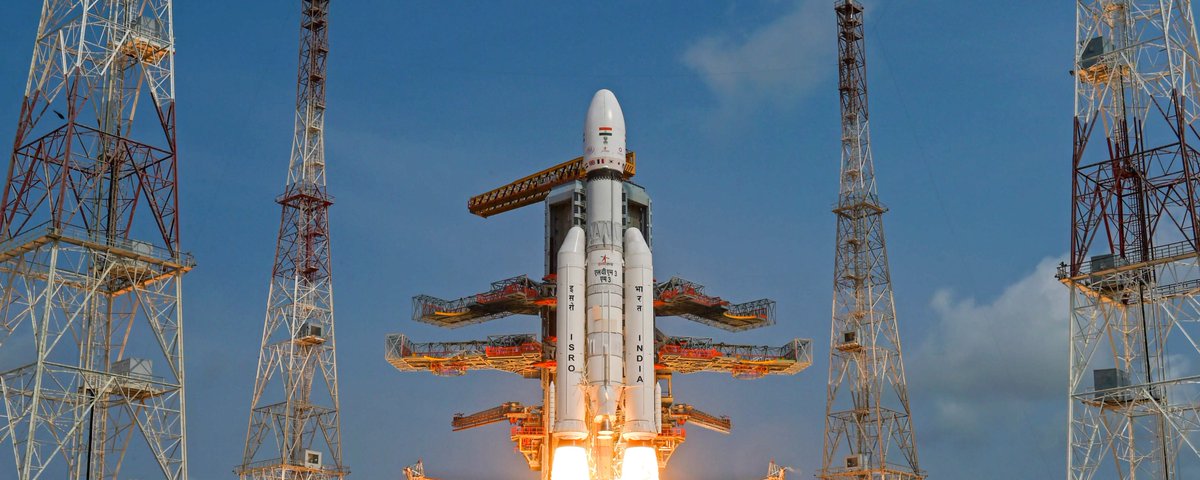
Encouragingly, we are beginning to see the first signs of this transition. Indian private companies have launched rockets, placed sophisticated satellites in orbit, demonstrated advanced propulsion technologies, and begun establishing globally competitive businesses in fields that, not very long ago, seemed almost entirely outside the reach of Indian startups. At Pixxel, we have experienced firsthand just how difficult that journey can be, but also how much becomes possible once the first few companies prove that something can be done. Every such success does more than validate one business. It produces engineers with hard-won experience, develops suppliers, attracts specialised capital, builds investor confidence, and makes the next ambitious company that much more possible. We are still early, and many of these industries have a long way to go, but that is precisely why this is such an important moment.
The government's ₹1 lakh crore Research, Development and Innovation (RDI) initiative is a particularly meaningful development in this context. With the first 19 fund managers recently approved for ₹7,131 crore in commitments, we are beginning to see the creation of a financing architecture that recognises something traditional venture capital has often struggled with. That breakthroughs in science and engineering may require patient, risk-tolerant capital before they can produce predictable commercial returns. But funding alone will not build a deep-tech ecosystem. We also need faster procurement, public and private institutions willing to become early customers, access to world-class testing infrastructure, stronger university-industry collaboration, and investors who understand that a long development cycle is not necessarily evidence of a poor business. Equally, deep-tech founders must be held to rigorous standards of technical progress, commercial discipline, and execution. Ambition is not a substitute for evidence, and patience is not a licence for endless experimentation without results.
Most importantly, we need more people choosing to build in these fields. More of our best engineers, scientists, entrepreneurs, and investors should be willing to tackle problems in aerospace, robotics, semiconductor design and manufacturing, energy, biotechnology, advanced materials, and the many other difficult domains that will define the coming century. There will always be room for another great consumer company, and the market will continue to reward those who build them well. But at this stage of India's development, I would much rather see a greater share of our most ambitious founders attempting to create fundamentally new technological capabilities than competing to make an already well-served consumer market marginally more convenient. Not because deep tech is inherently more virtuous, but because the consequences of failing to build these capabilities are so much greater, and the time available to start building them is not unlimited.
Ultimately, we should stop treating deep tech as an indulgence that prosperous economies can afford and start recognising it as one of the reasons economies become prosperous in the first place. Our ambitions should extend beyond building successful companies on the technological foundations inherited from the past. We should be building the foundations that allow thousands of companies, industries, and entirely new markets to emerge in the future. The transistor, the internet, GPS, and lithium-ion batteries were yesterday's difficult, uncertain bets. Today, we can barely imagine the world without them.
The conveniences of today were built on the deep tech of yesterday. The prosperity of tomorrow depends on the deep tech we choose to build today. Take a look at China once. In 1990, China accounted for less than 3% of global manufacturing value added. Today it's 32%. It produces roughly three-quarters of the world's electric cars, over 80% of EV batteries, and accounts for nearly 60% of new industrial robot installations worldwide.
In 2025, high-tech manufacturing alone accounted for 26% of growth in China's large-scale industrial output. And here's the interesting part -- services still contributed over 60% of China's overall GDP growth.
Because the two aren't competing theories of economic development. China built factories, technologies, supply chains, consumer platforms, and distribution networks. It developed both the ability to create sophisticated products and the ability to bring them to market.
Of course, not every Chinese industrial bet worked. There's plenty of overcapacity, failed ventures, and wasted capital. But that's an argument for better capital allocation, not against building foundational industries.
The lesson for India isn't that services are unimportant. It's that a country can excel at services while also developing the industrial and technological capabilities that make it globally competitive.
There is another false dichotomy that I think we need to put to rest which is the idea that investing in deep tech means choosing between advancing humanity and generating great financial returns. That somehow the pursuit of difficult scientific and engineering problems is noble but economically unattractive, while the pursuit of consumer convenience is where the real money is to be made. History suggests something quite different. Some of the greatest fortunes in technology have been created by companies that fundamentally changed what was technologically possible. The investors who backed them were not simply financing scientific progress out of generosity. They were making a bet that solving an extraordinarily difficult problem would create an extraordinarily valuable business.
Look at SpaceX. What began in 2002 as an almost absurdly ambitious attempt to reduce the cost of reaching space secured a $1.6 billion NASA resupply contract within six years, transformed the economics of the launch industry, built a global satellite communications business, and eventually went public in June 2026 at a valuation of approximately $1.77 trillion. Or consider Anduril, founded in 2017 to rethink how defence systems are designed, manufactured, and deployed. In nine years, it grew to $2.2 billion in annual revenue and reached a $61 billion private valuation. NVIDIA was founded in 1993 and went public just six years later. Tesla took seven years from founding to IPO. Moderna took eight. These are different businesses with different investment outcomes, and a private valuation is not the same as a realised return. But they demonstrate that building difficult technology is perfectly compatible with creating enormous economic value, sometimes within conventional venture capital timelines.
Of course, not every deep-tech company will become SpaceX or NVIDIA, just as not every consumer startup will become Amazon or Google. Many deep-tech ventures will fail, and some will require considerably longer investment horizons. But that is the nature of venture capital. A relatively small number of exceptional outcomes account for a disproportionate share of returns. The right question is not whether deep tech takes longer or costs more than software on average. It is whether the size of the opportunity, the defensibility of the technology, the capital required, and the time to commercialisation together produce an attractive risk-adjusted return. And in many cases, the very difficulty of building these businesses becomes their greatest competitive advantage. A working rocket engine, a semiconductor manufacturing process, a clinically validated therapy, or a satellite constellation cannot be replicated simply by hiring more developers and deploying another instance of software. Years of accumulated engineering knowledge, proprietary technology, manufacturing expertise, and operational experience can create extraordinarily durable businesses.
What is especially exciting is that the pace at which these companies can be built is accelerating. Better simulation, cheaper computing, more sophisticated engineering tools, AI-assisted design, increasingly capable contract manufacturers, and growing demand for strategic technologies are beginning to compress development cycles that once took decades. At the same time, governments and enterprises are becoming willing to procure capabilities from younger companies rather than relying exclusively on established incumbents. This creates opportunities for deep-tech startups to generate meaningful revenue, validate their technologies, and build valuable companies much earlier in their journeys. We should not confuse the time required for a scientific discovery with the time required to build a commercially successful business around it. The two are related, but they are not the same.
We should absolutely celebrate getting things to people in 10 minutes. But we should be equally ambitious about inventing and manufacturing those things ourselves. Otherwise, we might build the world's most efficient distribution network for someone else's industrial revolution.
In the end, we need builders to build both. But build we should.