Buyer Psychology 101: A Guide to Selling Anything Online

文章目录
The most valuable skill you can develop in 2026 is your ability to make strangers want to buy what you're selling.
And psychology explains why some people can sell a $10,000 offer to someone they've never met, while others struggle to sell a $20 product.
The difference isn't always the product, the price, or even the audience.
It's how well you understand the person on the other side of the transaction.
I've used these principles to generate over 200M views and sell high-ticket offers for myself and brands I've worked with across AI, ecom, and marketing.
And the biggest difference I've noticed between brands that consistently convert strangers into customers and those that struggle to make a single sale is simple:
The best sellers obsess over understanding what makes people buy.
They don't just talk about their products. They understand their customers' problems, the outcomes they want, the doubts holding them back, and what they need to believe before making a decision.
In this guide, I'll break down the 7 rules of buyer psychology that you can apply to your content, offers, and sales conversations to turn more strangers into customers.
Let's get into it.
Rule 1: People buy with emotion and justify with logic
Nobody wakes up thinking:
"You know what would make my day better? Buying a fitness coaching program."
They wake up thinking:
"Why don't I feel confident taking my shirt off anymore?" "Does my wife still find me as attractive as she did when we first met?" "What if I keep putting in the effort and still look the same a year from now?"
The product isn't what they want.
The outcome is.
People are motivated by the emotions attached to a problem or a desired outcome. They then look for logical reasons to justify spending money on a solution.
This is why selling the features of your product rarely works as well as selling the transformation it creates.
For example, compare these two messages:
Feature-focused: "Get a personalized workout plan, weekly coaching calls, and a nutrition guide."
Outcome-focused: "Build a physique you're confident in, without spending years guessing what works at the gym."
The first explains what someone gets.
The second explains why they should care.
Of course, logic still matters. Buyers want to know whether your solution works, whether it's worth the price, and whether they can trust you to deliver.
Your job is to connect the emotional desire to a credible, logical reason to buy.
Rule 2: Pain often creates more urgency than pleasure
Making $50k/month sounds great. Building an aesthetic physique sounds great. Living life on your own terms sounds great.
But there's a difference between wanting something and feeling compelled to act on it.
Someone might want to make $50k/month someday.
But someone who's tired of struggling to pay their bills, watching their savings disappear, and feeling trapped in a job they hate has a much more immediate reason to look for a solution.
The desired outcome might be the same.
The urgency is different.
This is why understanding your audience's current frustrations is just as important as understanding their goals.
For example, if you're selling a language-learning app, don't stop at:
"Learn a new language with daily lessons."
Understand what that actually means to your buyer.
-
They're tired of visiting a foreign country and struggling to communicate with locals.
-
They're frustrated that they can understand written words but freeze when someone speaks to them.
-
They're worried they'll spend another year learning a language without ever being able to hold a real conversation.
Now you have something meaningful to communicate.
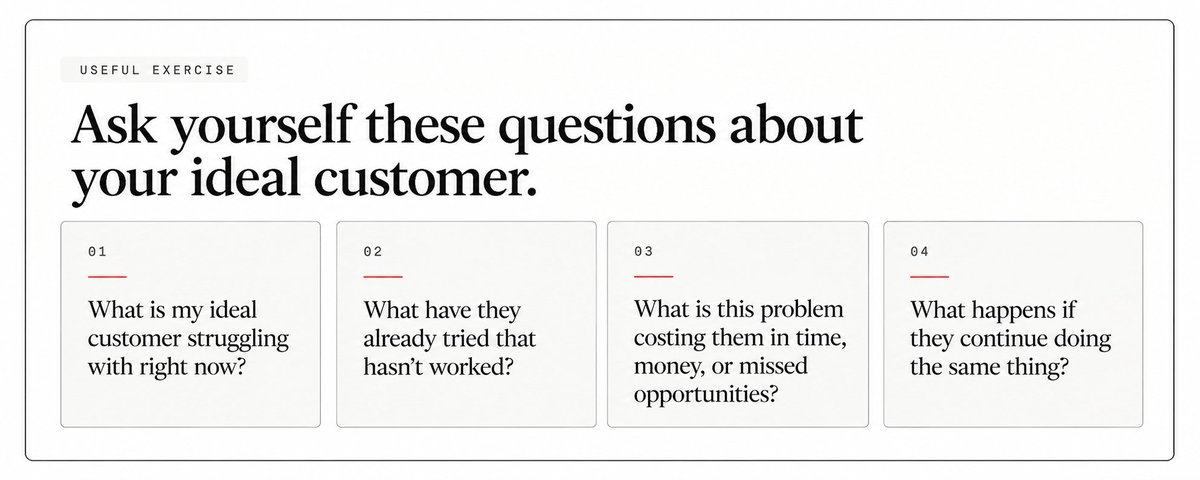
The more accurately you articulate a real problem, the easier it becomes for the right people to recognize themselves in your message.
And that recognition is what makes them pay attention.
Rule 3: You don't need to convince everyone. You need to help the right people recognize the fit.
One of the biggest mistakes people make when selling online is trying to persuade everyone who comes across their content.
They write generic posts.
They make broad promises.
They list every benefit of their product.
And they wonder why nobody feels compelled to buy.
The problem is that their messaging doesn't feel specific enough to anyone.
Compare these two messages:
Generic: "I help businesses grow with content marketing."
Specific: "I help B2B founders turn their expertise into content that attracts qualified leads, without spending hours writing posts themselves."
The second message gives the right buyer a reason to pay attention.
They understand who the service is for, what problem it solves, and why it might be relevant to them.
This is the goal of good positioning.
You aren't trying to make everyone believe your offer is the best.
You're making it easy for your ideal customer to understand why it's a strong fit for their situation.
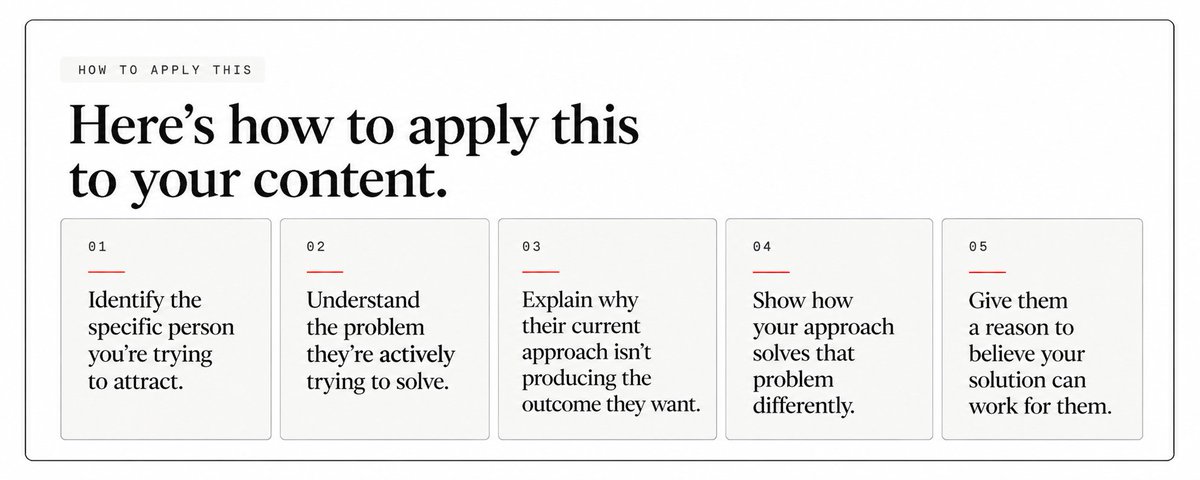
When you get this right, your content stops feeling like a sales pitch.
It starts feeling like an answer to a problem your reader already has.
Rule 4: Objections are often a lack of confidence in the decision
When a prospect says:
"It's too expensive."
"It's not the right time."
"Let me think about it."
It's tempting to immediately defend your price, list more benefits, or offer a discount.
But before you respond, understand what the objection actually means.
Sometimes the prospect genuinely can't afford your offer.
Sometimes the timing really is wrong.
And sometimes they simply don't believe the outcome justifies the risk.
Your job is to find out which one it is.
Imagine someone tells you your $5,000 service is too expensive.
You could immediately offer a discount.
Or you could ask:
"That's fair. Is it more that the investment doesn't fit your budget right now, or that you're not yet confident the service will deliver the outcome you're looking for?"
That question helps you understand what needs to be addressed.
If they don't trust your ability to deliver, lowering the price doesn't necessarily solve the problem.
They may still be afraid of wasting their money.
Instead, you could:
-
Walk them through your process so they understand what they're paying for.
-
Show relevant case studies that demonstrate your approach.
-
Explain what the first few weeks of working together look like.
-
Clarify what's included and what isn't.
-
Be honest about who your offer is and isn't suitable for.
The goal isn't to overcome every objection at all costs.
It's to help the prospect make an informed decision with a clear understanding of the value, cost, and risks involved.
Sometimes that means they buy.
Sometimes it means they don't.
Both are better than convincing someone to purchase something that isn't right for them.
Rule 5: People need a reason to change now, not someday
Most people already know what they need to improve.
They know they need to get healthier. They know they need better marketing. They know they need to develop new skills.
Yet they continue doing what they've always done.
Why?
Because knowing something needs to change isn't the same as feeling compelled to change it.
The current situation might be frustrating, but it's familiar. Changing requires effort, money, uncertainty, and the possibility of failure.
This is why urgency matters in selling.
But urgency doesn't have to mean countdown timers, fake scarcity, or pressure tactics.
It can come from helping someone understand the consequences of continuing with their current approach.
For example, imagine you're selling an email marketing service.
You could tell a potential customer: "Build an email list that generates more sales."
Or you could help them consider: "If 80% of your revenue comes from customers who buy once and never return, how much more could your business make if you had a system that consistently brought those customers back?"
The second message introduces a reason to address the problem now.
It connects the problem to a consequence the buyer already cares about.
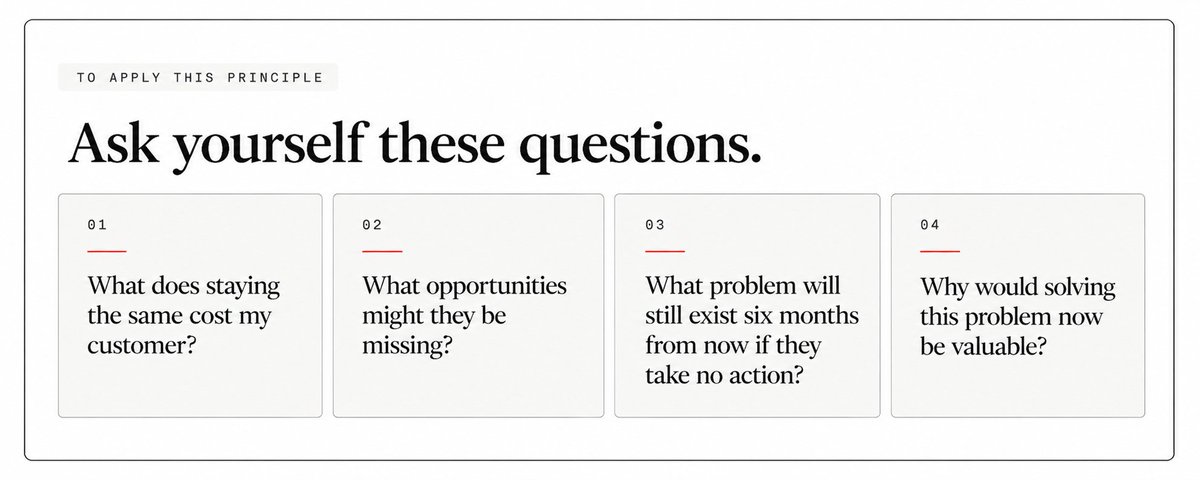
Don't manufacture urgency.
Help people understand the urgency that already exists in their situation.
Rule 6: Sell with confidence, not desperation
There's a difference between wanting someone to buy your offer and needing them to buy it.
When you're desperate for a sale, it often shows up in your behavior.
-
You overexplain your offer.
-
You keep following up without adding anything useful.
-
You lower your price before the prospect even asks.
-
You treat every objection as something you must defeat.
And you make the buyer feel as though the decision is about helping you rather than solving their problem.
That's not a good position to sell from.
A more effective approach is to communicate your offer clearly, explain its value, answer reasonable questions, and let the prospect decide.
For example, once you've explained your service, you don't need to send five more messages listing every benefit in an attempt to force a decision.
You can ask whether they have any questions, clarify the next steps, and agree on when to follow up if they need more time.
Confidence comes from knowing what you offer, who it's for, and why it's valuable.
It also comes from being willing to acknowledge when someone isn't a good fit.
This doesn't mean acting indifferent, ignoring prospects, or refusing to follow up.
It means being professional enough to guide a buying decision without pressuring someone into it.
The principle is simple:
Be invested in solving the customer's problem, not in winning every sale.
Rule 7: Don't just give value. Demonstrate why your value matters.
One of the most common pieces of advice in content marketing is:
"Give as much value as possible, and people will eventually buy from you."
There's some truth to this.
But value alone doesn't guarantee sales.
You can publish tutorials every day, share useful information, and build a large audience without giving people a compelling reason to hire you.
Why?
Because people can find useful information almost everywhere.
What they often struggle to find is someone who understands their specific situation and can help them apply the right solution.
Imagine you're a YouTube growth consultant.
You could publish a post explaining ten ways to get more views on YouTube.
That's useful. But you could also break down how you'd analyze a creator's channel, identify why their videos aren't getting clicked, study audience retention to find where viewers drop off, rewrite their titles and thumbnails to create stronger curiosity, and restructure their video openings to keep people watching.
Now the reader isn't just learning about YouTube growth.
They're seeing exactly how you'd solve a problem in their channel, why your approach works, and what they'd be paying you to do.
That's a much stronger demonstration of your expertise.
Here are three ways to make your content demonstrate your value:
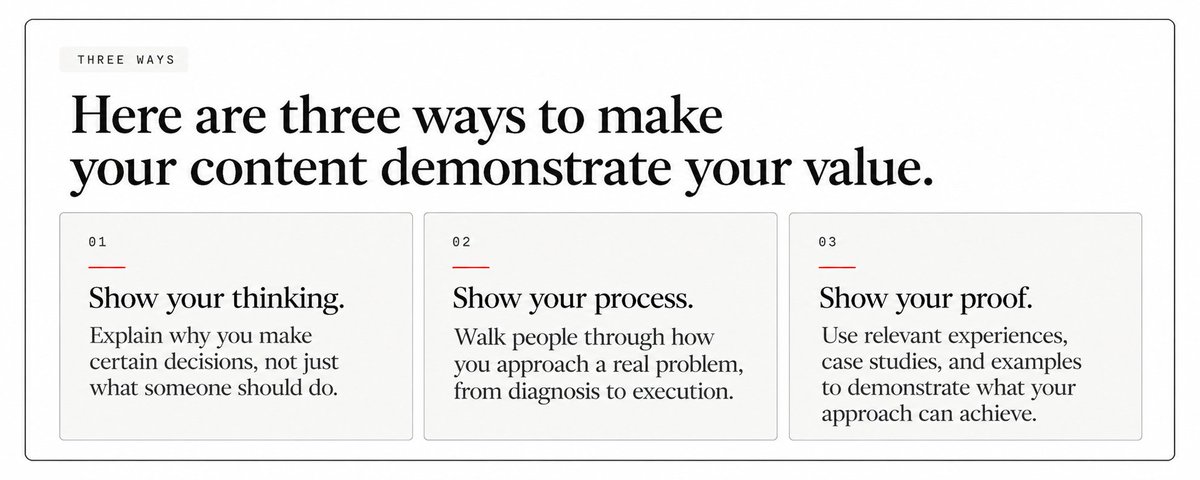
The goal isn't to hide all your knowledge behind a paywall.
It's to make your expertise visible enough that the right people understand why they might benefit from working with you.
When prospects can see how you think and trust your ability to execute, the conversation shifts from "Why should I pay you?" to "Could you help me solve my problem?"
Price still matters.
But now it's being evaluated alongside your credibility, the relevance of your solution, and the outcome the buyer hopes to achieve.
If there's one thing I want you to take away from this article, it's this:
Selling isn't about finding clever ways to persuade people to buy things they don't need.
It's about understanding what people want, what they're struggling with, what prevents them from making a decision, and how your offer can genuinely help.
The best sellers don't just understand their products.
They understand their buyers.
They know how to communicate a problem, explain a solution, establish credibility, address uncertainty, and make the next step clear.
And the more you understand the psychology behind a buying decision, the easier it becomes to create content that attracts the right people, offers that resonate with them, and sales conversations that lead to better decisions.
You don't need to become a better manipulator.
You need to become a better student of your customer.
That's the skill worth developing in 2026 and beyond.
If you found this useful, share it with someone who's trying to get better at selling online.
And if you have any questions, let me know in the comments and I’ll help you apply these principles to your offer, content, or sales process.
Sidd