I'm Building a Cancer Vaccine for One Person. Me.
文章目录
I'm not waiting for a cure to show up in a press release. I'm trying to build one, for one patient: me.
I have stage 4 lung cancer. I'm working on a personalized mRNA vaccine designed from my own tumor's DNA. Not a trial. Not a future slide. A real design with my name on it.
Here's what that actually involves, what it costs, and what I expect to happen.
Quick background
-
I was diagnosed with stage 4 ALK+ lung cancer in July 2024. I was around 40. It started as a slight cough.
-
I've never smoked.
-
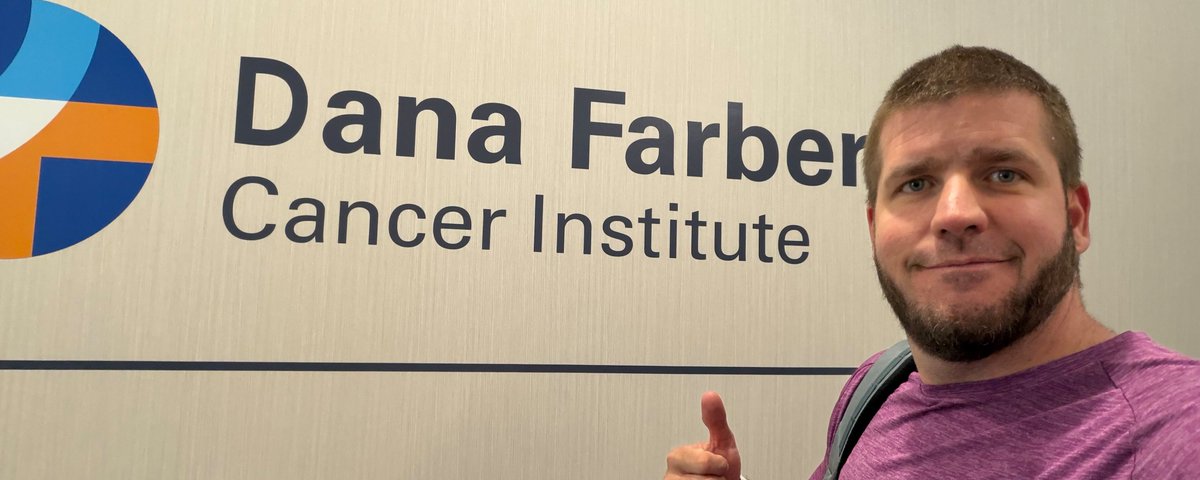
I'm from Ohio and went to Dana-Farber in Boston for a second opinion.
-
I took Alectinib first, then Lorlatinib. Lorlatinib is working reasonably well for me right now.
ALK+ lung cancer is treatable for a while with pills like these. But the cancer usually finds a way around them eventually. That's the problem I'm trying to get ahead of.
I decided about two months ago. I'd read Sid's story before and thought it was cool. Then I read it again and decided I should do this too.
The real reason: Alectinib stopped working for me after 18 months. I switched to Lorlatinib, the second-line drug, and second-line drugs usually don't hold as long. Time is running out, so I pulled the trigger.
Why I'm sharing this
Sid Sijbrandij (@sytses) was open about his own cancer treatment. Seeing how he handled it pushed me to go full founder mode on mine. He was transparent, so I'm going to be too, and hopefully pass it on.
Everything here is public. Ask me anything.
How it works, step by step
1. Sequence your normal DNA. I had my whole genome sequenced. That's about 50 GB of data, and it cost me $300. Costs have come down a lot. This is the "normal" baseline. It shows which genetic quirks I was born with.
2. Sequence the tumor. A biopsy of my tumor was sequenced too, about 100 GB of data. Tumor sequencing looks at the DNA (what's mutated) and, ideally, the RNA (which of those mutations the tumor is actually using).
3. Compare the two. Anything in the tumor that isn't in my normal DNA is a change the cancer acquired. Some of those changes create altered protein fragments called neoantigens. My immune system has never seen them, which makes them potential targets.
4. Pick the targets. Not every mutation is useful. A good target has to be real, actually made by the tumor, displayed on the surface of cancer cells, and recognizable by my T cells. Whether a fragment can be displayed depends on your HLA type, which differs from person to person. That's one big reason this has to be personalized. Computer models help rank the candidates, but people review the final picks.
My design, done with Serova, selected 25 high-confidence neoantigens from about 500 candidates. We're also discussing whether to target the ALK fusion itself, the genetic error that drives my cancer. That isn't final yet.
5. Build the vaccine. The chosen targets are written into a single mRNA sequence and packaged in tiny fat particles. Once injected, my cells read the instructions, make the target fragments, and show them to my immune system. The goal is to train T cells to recognize and attack cancer cells carrying those same fragments. It doesn't change your DNA.
6. Manufacture it. About 3 months: make the template, produce and purify the mRNA, package it, fill the doses, then quality testing before release.
7. Get permission to give it. The FDA doesn't "approve" a design like mine. My oncologist files a single-patient expanded access request with the FDA. That pathway exists for people with serious illness to get investigational treatment outside a trial. The hospital's review board also has to sign off. If that falls through, I'll find another oncologist or location that will do it.
8. Get the shots. A series of injections over about a year, alongside Lorlatinib.
9. Measure along the way. Blood tests to see whether T cells are responding to the specific targets, blood tests that track tumor DNA, and regular scans. If something responds and something doesn't, that tells us what to aim at next.
What it costs
The genome sequencing was $300. The vaccine itself is $210K to $350K.
That's the real barrier. Not the science. The tech to design a vaccine for one person's exact tumor already exists. Cost is what keeps it out of reach for most people.
Nothing about manufacturing the vaccine is covered by insurance. Sometimes these companies will subsidize part of the cost to get data. Whatever I'm asked to pay, I'm paying out of pocket from savings. No insurance. No fundraising.
I've talked with three groups that do this: Serova, Echo Immune, and the Jaime Leandro Foundation. There may be others. I haven't committed to manufacturing yet.
Is there evidence this works at all?
The best data is in melanoma. Moderna and Merck's personalized mRNA vaccine plus Keytruda cut the risk of recurrence or death roughly in half versus Keytruda alone in their earlier trial, and that held up at five years. Their phase 3 trial of 1,137 patients met its main goals in August 2026.
That's melanoma, not lung cancer, and not my vaccine. But it shows the approach is real.
What I expect
Success would be a cure. I'm not going to pretend that's the likely outcome of round one.
My realistic expectation: my immune system will have a partial response, and it will help and possibly extend the life of Lorlatinib. Then we'll develop a second mRNA vaccine based on what we learn, which will help more and possibly be curative. By that time I expect manufacturing costs to be down a lot.
This isn't one shot and done. It's biopsy, sequence, design, manufacture, administer, test, repeat.
The hardest part so far was deciding to do it at all. I'm spending a lot of money and effort on something experimental and unproven.
Ask me anything
I'll keep posting updates as this moves: the manufacturing decision, the first shots, and what the blood work shows.
If you or someone you love is facing cancer and wants to know how to start, or you just have questions about the process, reply or DM me. I'll answer what I can.