The Only Moat Left Is Distribution

文章目录
for as long as you’ve been building, the rules were simple.
build something great.
ship it before anyone else does.
make it so good people never want to leave.
the product was the moat.
that is no longer true.
anyone with a coding agent can rebuild your features, interface and your pricing page over a weekend.
so where does that leave you?
in my opinion.. the only thing a competitor can't copy is distribution you own: an audience that already trusts you and hears from you first.
Why everyone wants a head of content right now
look at the hire startups are fighting over right now.
call it head of content, brand lead or storyteller.
the role everyone wants filled right now is one person who owns brand, comms, storytelling and content, all of it.
and companies only put that much on one desk when attention has become the thing they compete on.
The best-funded firms in tech are buying attention

- Josh Machiz, who Lightspeed hired as chief marketing officer in September 2025. the firm now runs a weekly AI news show out of its own New York studio.
a16z went further. in April 2025 it made the podcaster Erik Torenberg a general partner and bought his network, Turpentine, to help run the firm's media. by November it had a New Media team and a fellowship that can place storytellers inside portfolio companies to work on their launches.
Sequoia built its own show, Crucible Moments, where Roelof Botha walks through the decisions behind companies like YouTube, DoorDash and Reddit.
these firms have more capital and access than almost anyone in tech. they could buy any advantage they wanted, and they chose an audience.
now back in to you. you're one founder with a product and no media team. if the best-funded players in venture decided attention was worth building, you need it more than they do.
the good news is that one person can build it. you just have to build it for trust first.
Three frameworks for building distribution people trust
AI made content free. it didn't make trust free.
anyone can publish a hundred posts this week. the more machine-made content floods every feed, the more people go looking for the few voices they know, like and trust.
publishing my own work has brought me amazing opportunities and quite frankly changed my life. here's how i think about it, in three frameworks you can apply to your own business.
-> the stack shows where my readers are.
-> the ladder shows how much they trust me
-> the loop is the weekly routine i actually run
1. the distribution stack
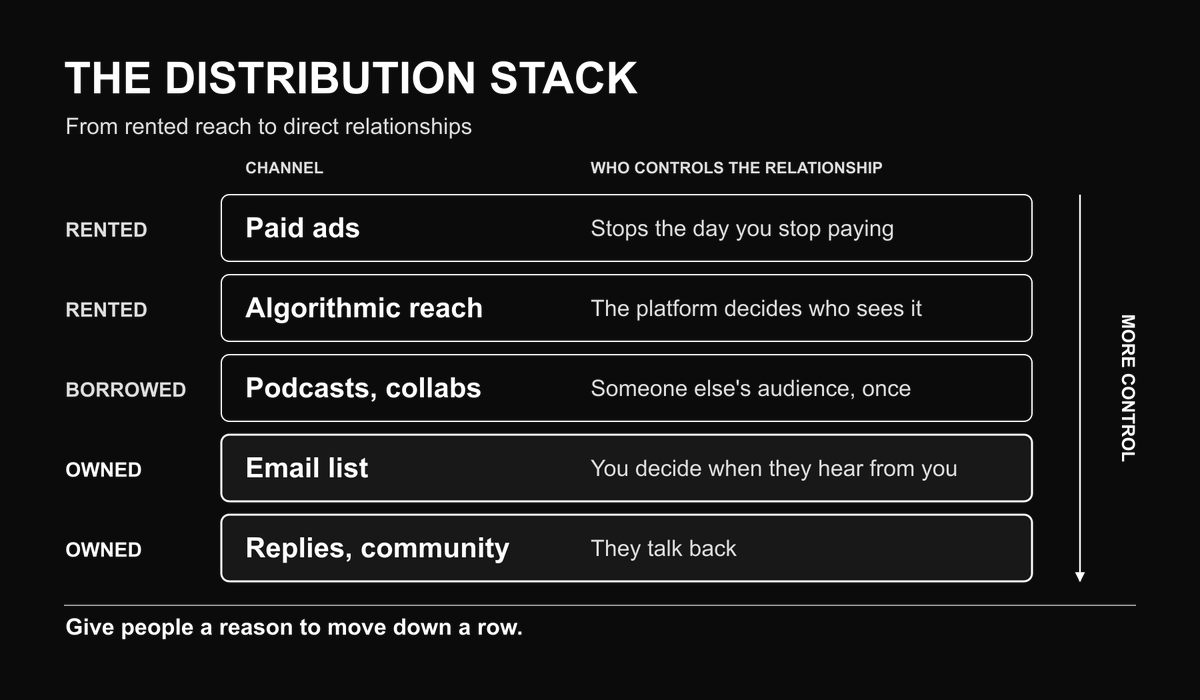
the top rows get you found. the job of every piece is to move a few people down a row.
my articles have done 6.2M impressions, but i can't email a single person who read them. every one of my readers sits in the second row, and the X algo decides whether they see the next thing i write.
(that's also why i'm starting a newsletter next week, more on that later..)
check your last ten posts and count how many gave someone a reason to move down a row.
2. the trust ladder
the stack tells you where someone is. it can't tell you whether they'd buy from you. someone who saw one post and someone who's read you for a year can be on the same email list.
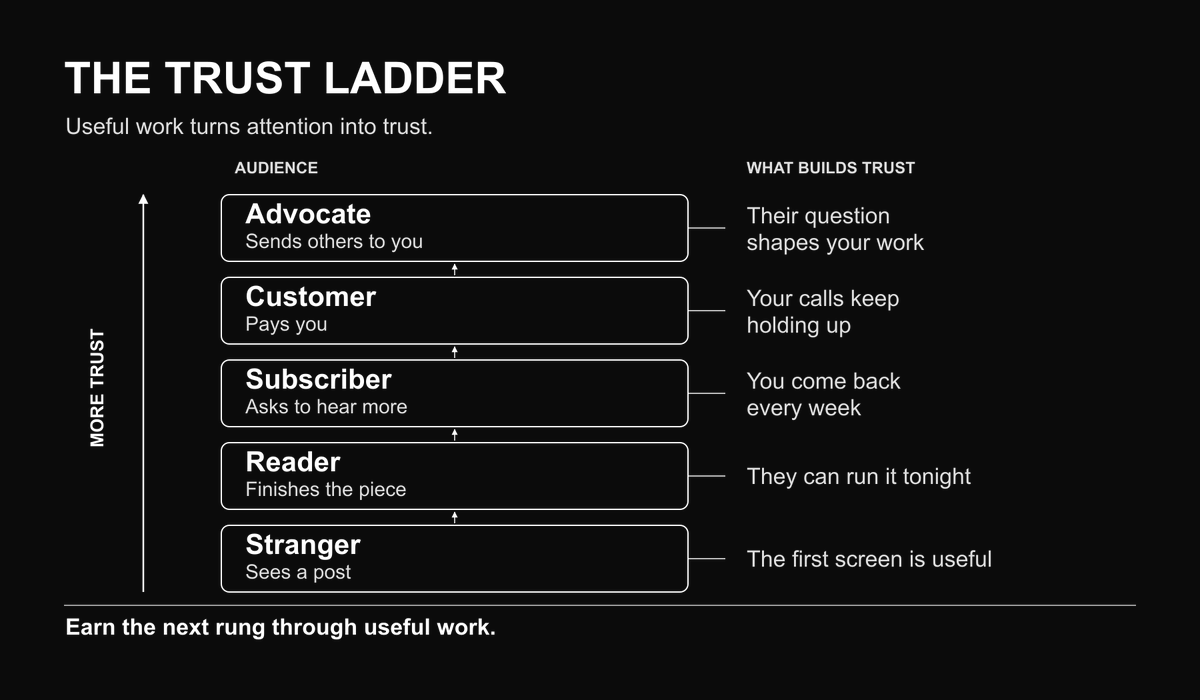
most founders pitch strangers, when a stranger has no reason to believe them yet.
my clearest example is the step from stranger to reader. i open-sourced all of my skills and the actual working files in my VibeMarketer skills repo, and that post became one of the most-saved things i've published.
when i went through the ladder for my own account, the gap was obvious.
i had posts for strangers and articles for readers, and nothing at all for someone who wanted to hear from me every week.
3. the weekly loop
the stack and the ladder tell you what to build. neither one gets you publishing every week on your own. this is the routine i run, with AI handling most of the steps.
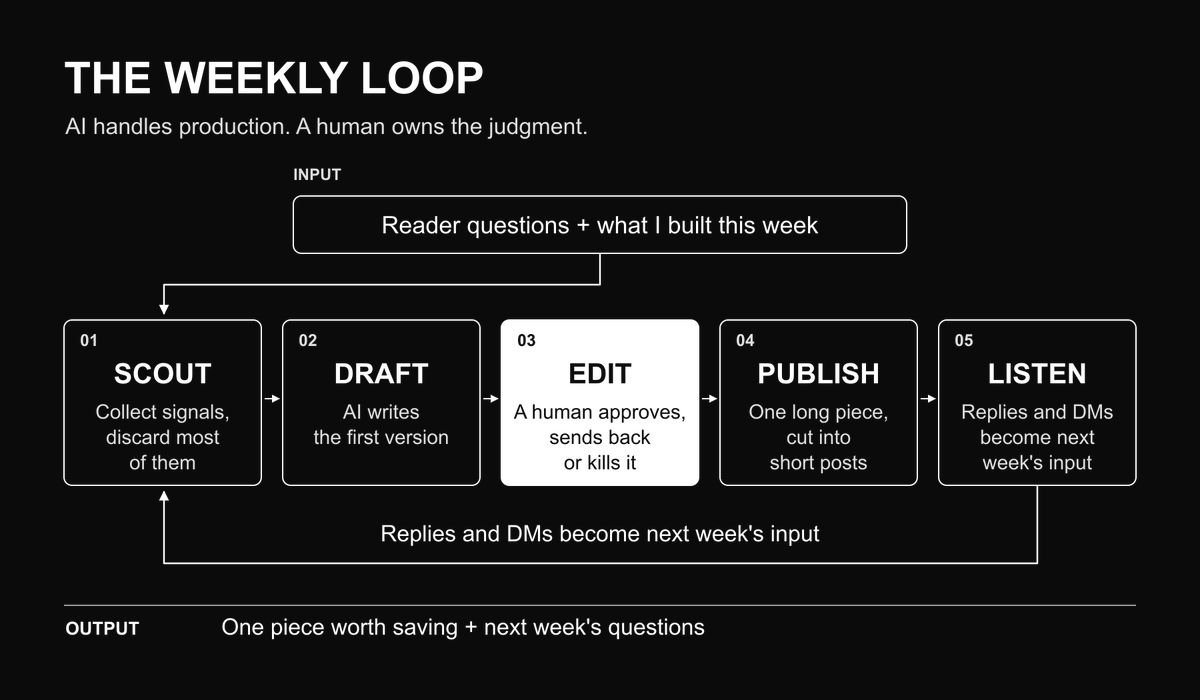
every day my Grokbot pulls up to 60 signals from X, YouTube, Reddit, Hacker News and RSS and groups them into at most 25 stories. from those it writes 10 to 15 rough angles and keeps eight at most. some days fewer than five reach me.
but you don't need to copy my setup to run this. just figure out:
input: a steady feed of what your buyers are struggling with. AI can do the heavy lifting
judgment: deciding what's worth saying and whether it's good enough to put your name on. do not try to automate, as it's the part the audience is actually trusting.
output. turning one sharp idea into everything you ship that week. AI can do the heavy lifting
Who still picks you if your product gets copied tonight?
before your next launch, write down the people who'd stay with you if a copy shipped tomorrow, and how you'd reach each of them. use names, not segments. then check each name against the stack:
-
if the only way to reach them is ads, you're renting them.
-
if it's a feed, the algo decides whether they see you.
-
if it's an email they opened last week or a conversation you're both in, they're yours.
if you can name those people, you have a moat. if you can't, you know exactly what to build next.
one last thing: don't let “building a moat” become another thing you research instead of doing.
you don't need the whole system on day one. publish something useful. talk to the people who respond. come back next week.
the audience that trusts you starts with a few people who are glad you showed up.
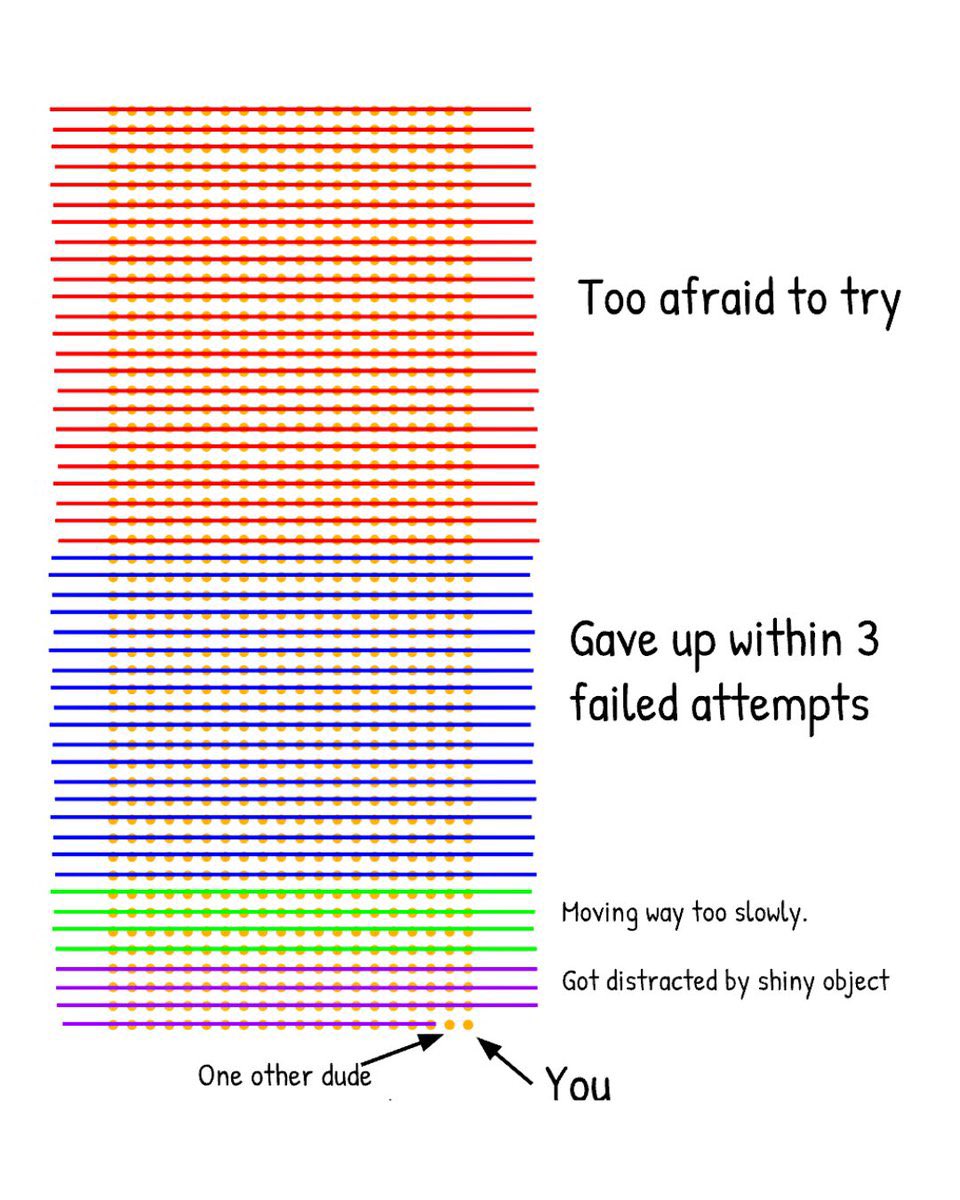
don't be one other dude
Final thoughts
building distribution with AI has become the part of my work i love most. every week i get to test something in public and hear from real people whether it worked.
more coming soon :)
as mentioned, my newsletter launches next week at unfairreach.substack.com if you want those in your inbox.
and if you want to connect about distribution, AI and growth, let's connect @VibeMarketer_.
thank you for reading.