7 guides to become (ridiculously) good at AI content:
文章目录
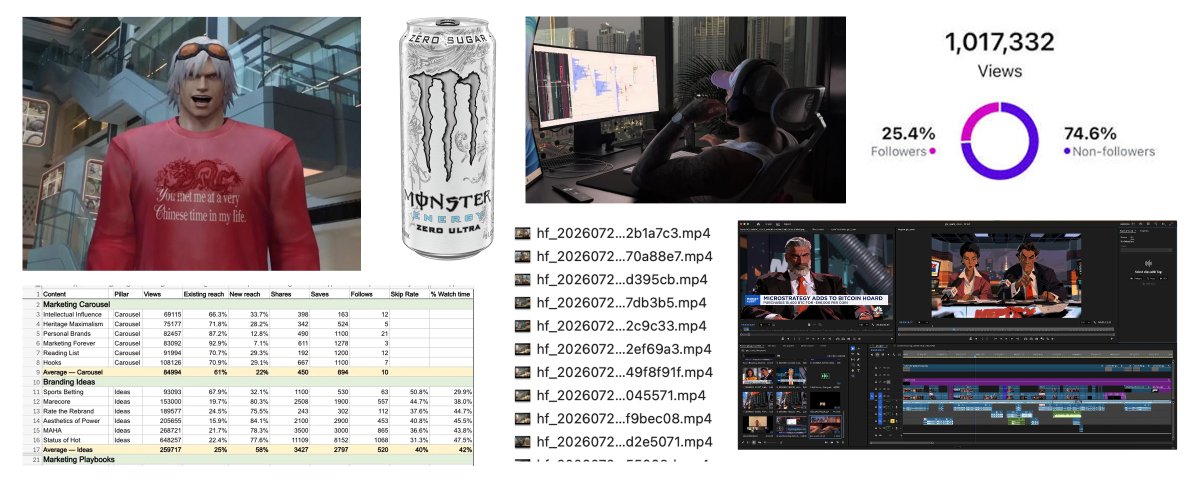
ive been creating content with ai since veo 3 first came out, and have generated millions of views online. here are just a few examples:

i spent the last year mostly checked out on ai video. everything felt like slop and i didn't really want to add to it.
but the better these models get, the more people use them, and the more room opens up for pockets of creativity and innovation.
quality is only going up from here... i treat every project as a test for the future, not a snapshot of where things are right now.
making something good still requires taste. you can't prompt your way into having it (thank god).
these are the resources i'd point you toward to start developing that judgment and putting it to work. two are mine. the others cover people and approaches worth studying, from making the work to figuring out where it belongs.
1. learn the basics
if you're starting from zero, start with @Mho_23's seven-day roadmap.
it gives you an order to learn in: images first, then voices, video generation, scripts, and assembling everything into a finished piece. each stage comes with something to practice.
the useful part is learning to spot what makes a video feel off. a washed-out starting image, a voice that sounds like a studio ad, a script nobody would actually say out loud... fix those individually before combining them.
read: how to master AI content in 7 days
2. get better footage out of seedance
this is my prompting guide.
the biggest shift: generate footage with options for the edit. take a small section of your story, turn it into a montage prompt, and pull the strongest moments from the results.
the guide covers prompt structure, character references, continuity between shots and sound. it also explains when to keep your references tight and when giving the model more freedom gets you interesting coverage.
use this when your generations look cool individually but you keep struggling to cut them together.
read: how to prompt seedance 2.5
3. turn those generations into an actual ad
the prompting guide covers footage. this one shows the full production around it.
its the breakdown of our gte ad: developing the look in stills, building reference sheets for anything that repeats, generating coverage, then finding the film in the edit.
even the car got a reference sheet. if it appears again, the model shouldn't have to reinvent it.
read this for the decisions around the generations, especially the edit and post production. the final piece needs to hold together even after the novelty of it being made with ai wears off.
read: how we're making HQ ai ads in 2026
4. study people at the frontier
study the people finding the overlap between great taste and what new technology makes possible. there's an arb in seeing what a tool can do before the same look is all over your feed.
@0xInk_ is one of my favorites. his recent experiments with 3d renders are a good place to start.
save the work that makes you stop scrolling, then figure out why it works. look at the art direction, how it moves, where the technology opens up an idea you hadn't considered.
pick one of those decisions and test it in your own work. build a reference library from people whose taste pushes yours.
study: ink's 3d render experiments
5. build an ai character around an audience
@Mho_23's ai influencer guide looks at who the character is for and what happens after someone watches.
it connects niche selection and messaging to a lead magnet, email list and an offer. read it for that business side of running a character account.
its a high-level overview, with the full production process in his paid system. the useful question to take into your own project: what would the same person come back to this character for tomorrow?
read: how to get rich with ai influencers
6. build a content agent with something to work from
@EXM7777's content automation guide puts research before writing.
the system collects posts and transcripts, studies the videos, loads your business context, then drafts with sources attached. your corrections get saved for the next run.
read this when you want help finding angles and preparing drafts regularly. the video-analysis step is especially relevant for creatives: a transcript alone misses the opening frame, the pacing and what's being shown as proof.
you still review the work before anything goes out. his guide includes sponsored tool recommendations.
read: how to automate content creation
7. build the gameplan for your content
understand where each piece belongs before you make it. what brings new people in? what gives someone already following you a reason to trust your work?
@orenmeetsworld's guide shows how to build a plan around content pillars. pick 3-5 recurring concepts, pair each with one or two formats, and give each a job.
for an ai filmmaker, that could mean finished films to get attention and production breakdowns to show potential clients how you think.
plan multiple posts for each pillar across the month. then review how they performed against their purpose, decide what to improve and what to replace.
as you learn what works, split the plan by platform. a format that works on x might need a different treatment on instagram or tiktok.
read: how to run content pillars
it's harder than ever to go viral, but learning how to do so will make you a very important player... as long as ai video keeps improving this arb will exist:
-
new ai model drops
-
make something interesting/viral with it
-
know how to post and get traffic
if you want more alpha on how i make these videos, join my telegram... and if you'd like to work on a video with me, reach out here