AI that reasons from first principles, atom by atom
部分视频或图片暂未收录,已在正文保留提示;需要时可查看原文。查看原文 ↗
The ultimate limit of matter is represented in materials like graphene, an atomically thin 2D material with extremely complex physical behavior that we are just beginning to understand. Opening atom-level degrees of freedom results in a very large space of possibilities, and has hence remained inaccessible. Our AI reasons through the physics of matter from first principles, atom by atom: it builds the physical model on its own, uses it to explore material consequences, and confront explanations and an evolving world model with resulting evidence. As the AI constructs its own models, it follows how atomic interactions and movements produce collective behavior, and then uses this foundational reasoning paradigm to extract mechanisms that guide the next experiment - moving across scales and configurations and sampling deep insights about the construction of matter. Physics becomes native to the reasoning process itself, and drives a powerful self-evolving loop where intelligence and matter merge.
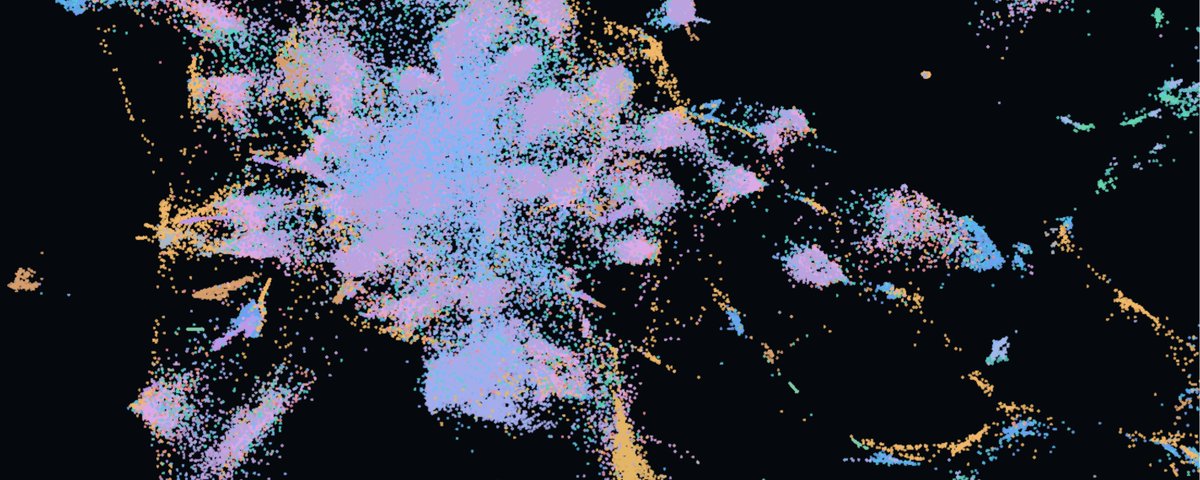
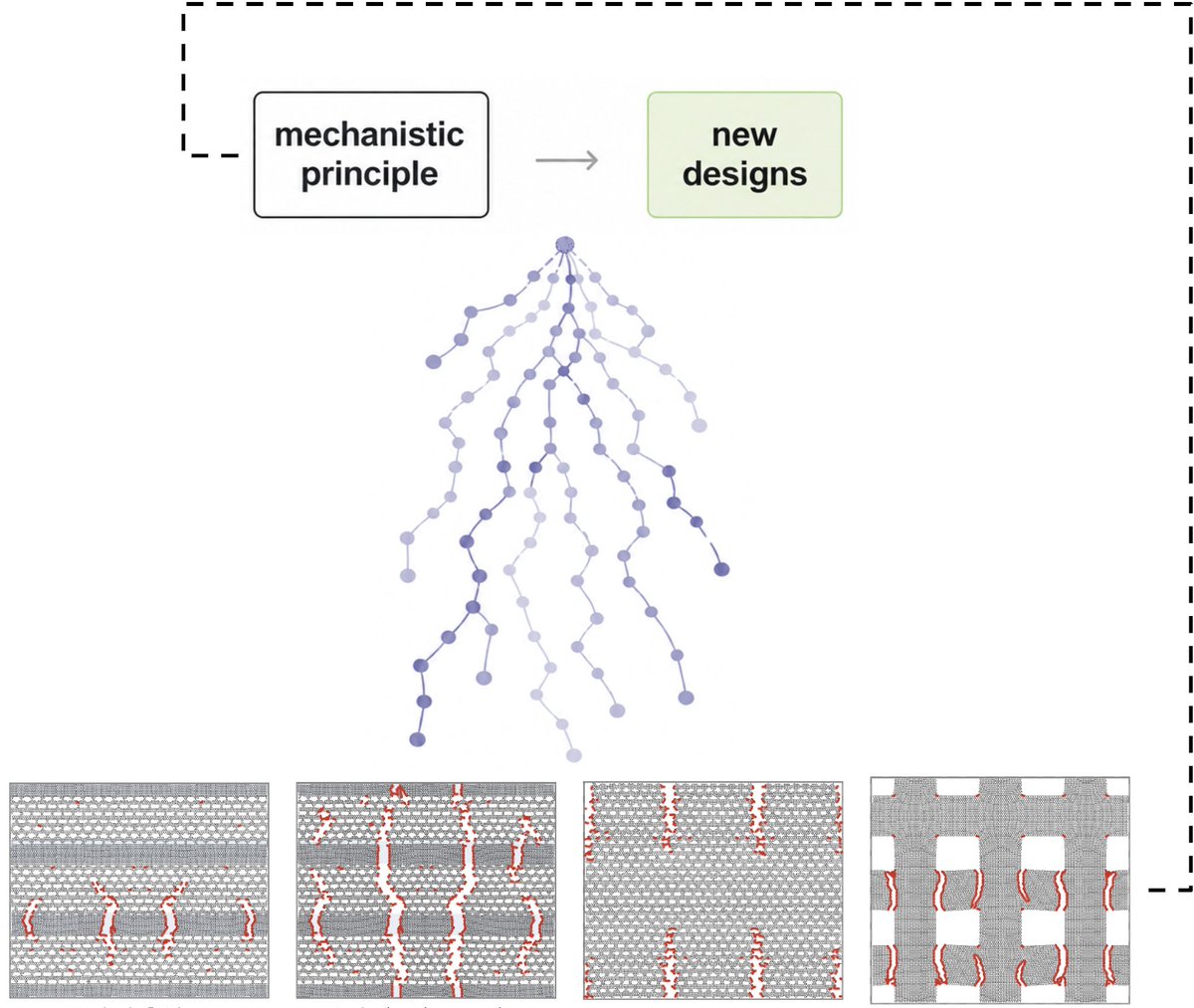
The AI reasons across hundreds of thousands of molecular designs and develops a mechanistic understanding of the material behavior from first principles
Over 20 years ago my own research journey started when I became fascinated with the ability to analyze, understand and synthesize new forms of matter from atomistic principles. Statistical mechanics and chemistry provides the sort of foundational platform that has deep roots in theory, but which lets us understand the world across many systems and implementations. This concept led me to study many different classes of materials, from carbon nanotubes, to graphene, to proteins, to complex hierarchical composites with features across scales.
Now we are at the precipice of a new era where machines are capable of reasoning with atom-level resolution, forming a new principled approach to generative AI that self-evolves from the ground truth of ultimately, quantum mechanical concepts. The jiggling of atoms integrated over space and time becomes the native reasoning fabric by which machines understand and design new forms of matter. It is wild and exhilarating to shape these advances.
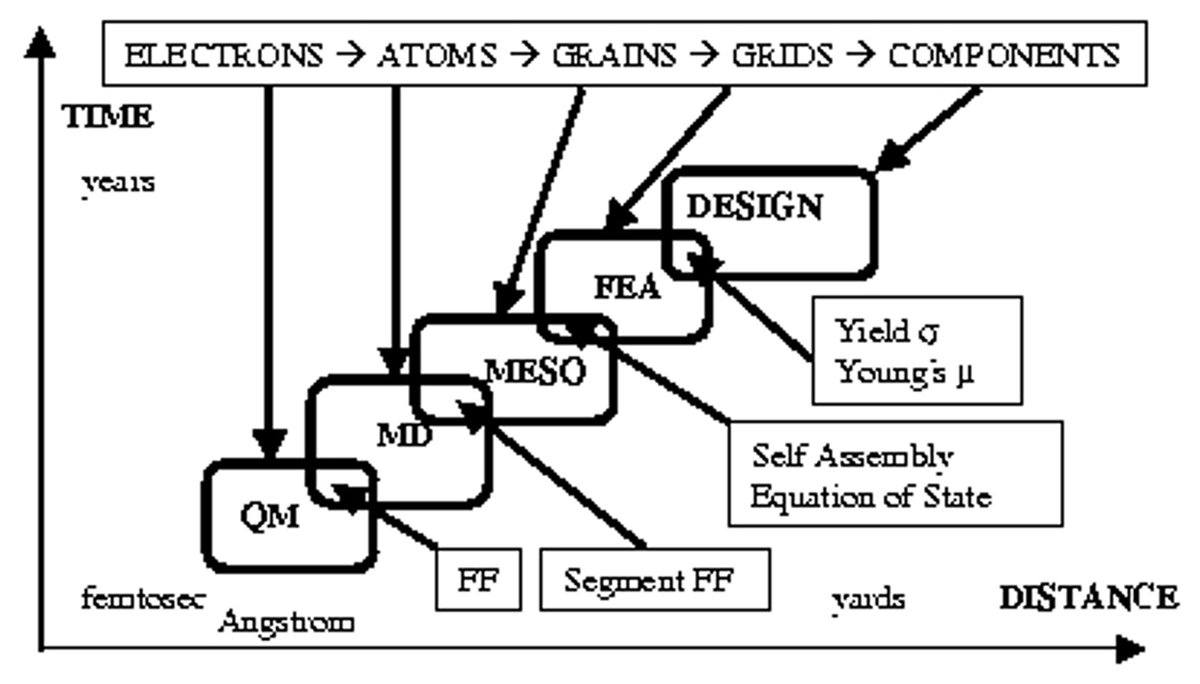
From electrons to components in engineering, as first developed by W.A. Goddard et al. in the 1980s
Matter and thought meet in the problem of emergence. Carbon atoms organize into a sheet with strength, flexibility, and fracture behavior; interacting computational elements organize into systems capable of representation, prediction, and reasoning. In both cases, relationships among the constituents determine which collective capabilities become possible. This connects a central question of philosophy - the relationship between parts and wholes - to the physical problem of explaining macroscopic behavior and the AI problem of constructing intelligence.
A microscopic description specifies the interactions, while concepts such as rigidity, memory, and inference identify organization at different scales. We asl how these levels relate, whether an explanation at one level can replace another, and what distinguishes a representation from an understanding. We can now make these questions concrete by building superintelligence that form and manipulate models of the world. Graphene, a single atomic layer supports a vast range of collective responses through changes in connectivity and geometry, provides a powerful testbed to place intelligence intimately within a material perspective. One physically realized system constructs representations of another, discovering regularities that neither a list of atoms nor a list of computational operations makes immediately apparent.
Reasoning from atomistic principles
The breakthrough is the integration of physical model building with scientific inference, where the AI constructs a model of how atoms interact, derives the forces that govern their collective response, and follows the consequences as a material deforms and fails. It then internalizes those histories into causal reasoning chains, and then into explanations that make new predictions. First-principles reasoning acquires an executable form: it starts from explicit physical foundations, calculate their consequences, and test which higher-level principles survive (across diverse lineagues of potentialities). The AI carries the reasoning from a proposed cause to an observable result and multiple iterations across deep reasoning.
The thinnest material: graphene
Graphene brings this capability to the ultimate thickness limit of a crystalline sheet: a single layer of carbon atoms. At this limit, the geometry of the material and the arrangement of its constituent atoms become inseparable and a myriad of new material properties emerge. Here, an edge is a row of atoms, a ligament is a connected group of bonds. A fracture is a reorganization of the network that transmits force across the sheet. The same atomically thin material combines rich electronic behavior with exceptional mechanical properties, a frontier recognized by the Nobel Prize in Physics for graphene.
The apparent simplicity of this material actually contains an enormous space of unresolved physics. We understand much about the ideal carbon lattice, yet patterning it creates interacting pores, slits, bridges, and nested networks whose collective behavior demands new explanations. A small rotation can change which bonds carry tension, which bridges bend, and whether nearby cracks connect. A second structural level can redirect damage into compartments. A local rearrangement can change the response of the entire sheet. The frontier lies in understanding how atomic interactions and architectural organization together determine the possible histories of a material.
Where physics and AI connect, again
There are deep connections between AI and physics, demonstrated in pioneering work linking neural networks to the dynamics of interacting physical systems, including Hopfield's work on collective computation. We cross another threshold when predictive physics and AI reasoning connect through an explicit model of the material itself. Physical modeling connects descriptions across scales, from electronic bonding to atomic forces and from those forces to collective deformation. An AI agent that builds and interrogates these connections can test how an intervention changes the outcome: rotate a slit, alter a narrow bridge, move a crack, or introduce a vein at a larger scale. The calculation exposes the sequence linking the intervention to the response. Those sequences become the evidence from which the agent constructs a design principle.
Physics becomes native to the scientific workflow because it shapes the AI’s questions, experiments, and explanations
Energy, forces, connectivity, and boundary conditions are working objects the agent implements and tests. A claim about strength or toughness must be based in the collective behavior derived from a loading calculation. Similarly, a claim about a mechanism must explain the atomic trajectory. A failed prediction must be traced to an omitted interaction, a geometric constraint, or a limitation of the calculation. This gives the reasoning a physical structure that can be inspected and challenged.
Together the result is a model that builds a model - AI agents work together to create an executable representation of matter, use it to investigate possible responses, and return with principles that organize further experiments. The instruments and evidence persist beyond the initial investigation. The design approach produced a library of hundreds of thousands of atomically specified graphene structures, revealing an extremely rich design space for physical reasoning by the AI, with fundamental insights into mechanisms and scaling laws extracted by the model.
Models building models: scientific instruments for atom-by-atom analysis built from scratch
The experiment began with a prompt and five images suggesting leaf veins, nested networks, disordered fibers, crossing struts, and rings around a void. We charged the AI agent to infer a design language from those images, construct the atomistic instrument "from scratch" needed to test it, and predict outcomes before running the simulations that would judge those predictions. The physical foundation is an atom-by-atom material description for carbon. It describes how local atomic environments change interaction energies and permits bonding networks to evolve. Forces follow from differentiating that energy. Here, reasoning from physical principles means following this explicit chain within a stated model.
The agent implemented the energy and force calculations in PyTorch from scratch, built geometry generators, neighbor lists, relaxation and loading routines, and an experiment database. It produced thousands of lines of code and passed a series of stringent validation tests. A discrepancy in the reference comparison was traced to the rounding of numerical constants; matching that detail reduced an energy difference from about 10⁻⁸ to 10⁻¹³ eV per atom. Building the instrument included accounting for the numerical details that separate an intended equation from an actual calculation.
The initial reasoning phase ran for several days, covering hundreds of discovery simulations across a large set of architecture families. During the process, the AI repeatedly formulated hypothesis and models, which it then tested, falsified and verified. The AI explored how diverse families of graphene metamaterials deformed, and how the sheets behaved under increasing pressure; how it relaxed its atoms, and which bonds broke and reformed.
Discoveries made by the AI
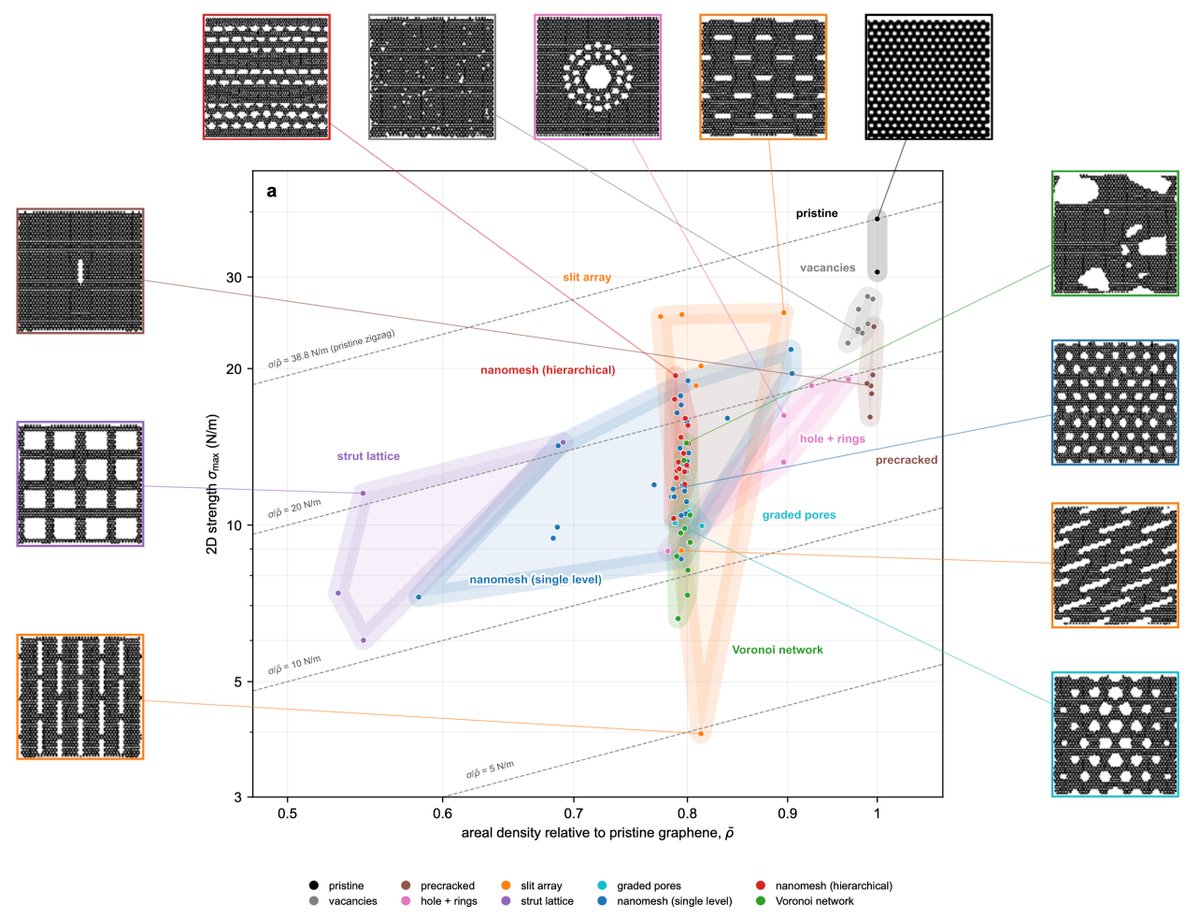
The first major result was unparalleled insight into the scale of architecture's influence in graphene. Among dozens of design families with relative densities between 0.77 and 0.83, density-normalized strength spanned a factor of 6.6. Nearly the same amount of carbon supported sharply different loads because the atoms were organized into different paths through which force had to travel.
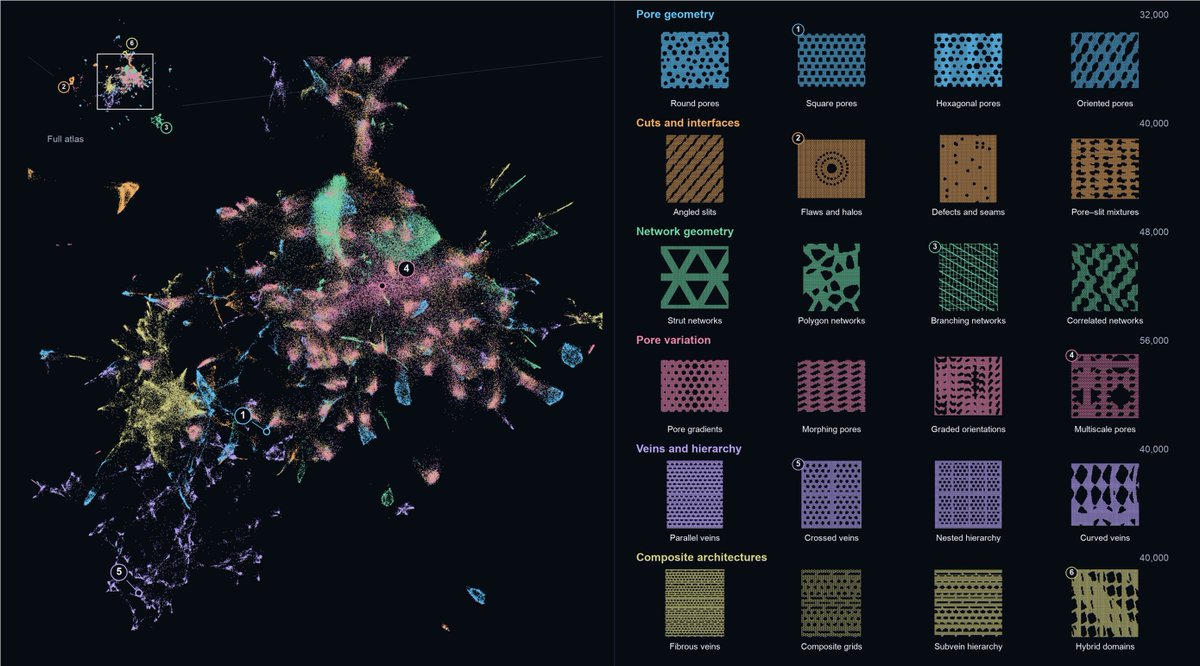
Hundreds of thousands of graphene designs explored by the AI to elucidate mechanistic insights into principles.
These design principles form a rich atlas of geometric principles that include pores, slits, ligaments, veins, and nested patterns; these become ways of organizing carbon atoms into radically different structures. An unsupervised embedding arranges designs by geometric similarity, revealing neighborhoods of related patterns and overlap between families. There are regular perforations, angled cuts, branching networks, curved reinforcements, graded textures, and hybrid domains.
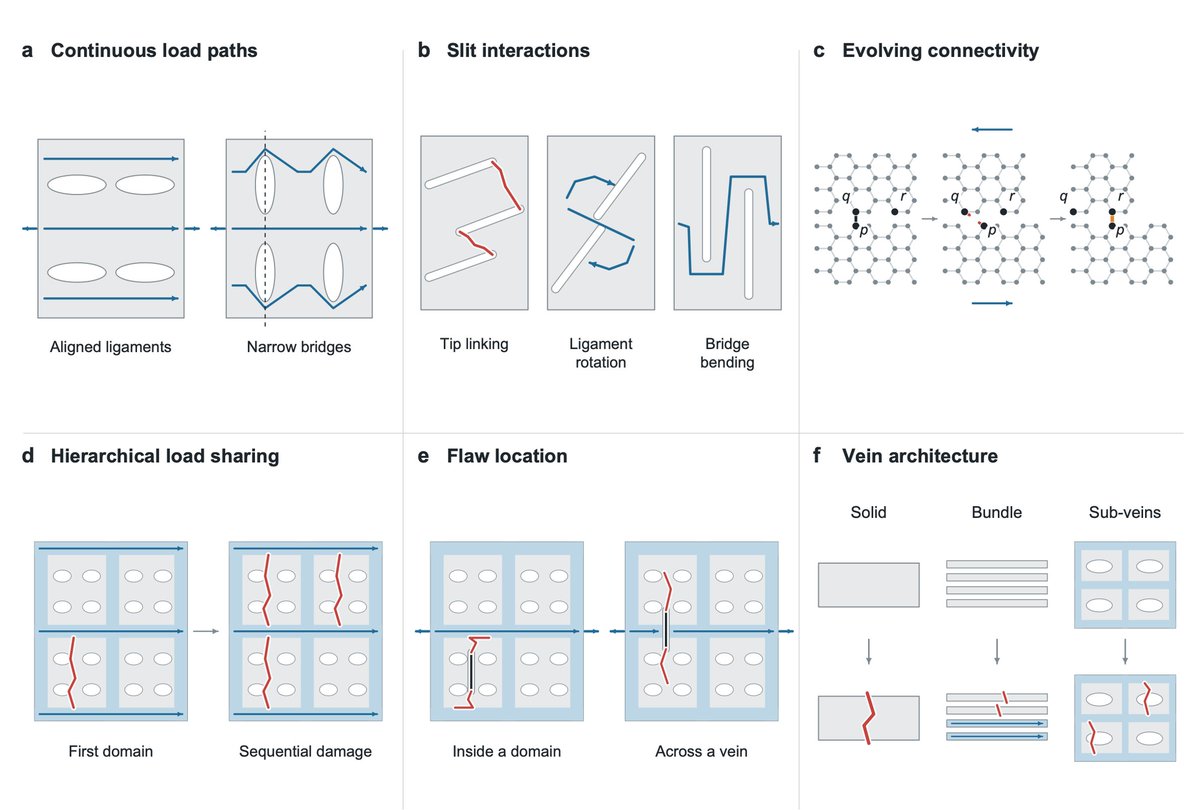
The AI then developed a series of models of the physical behavior - connecting atomistic design principles with dynamical properties - in an attempt to describe the material behavior associated with these designs, from a mechanistic perspective. For instance, it hypothesized that the solid fraction at the narrowest load-bearing section is critical, but must be multiplied by the relevant ligament strength. The rule connected the global response to a local physical constraint providing a critical insight into which structure-property relationships govern the material. Another finding was that straight ligaments aligned with the load carried force efficiently, and narrow or poorly oriented bridges reduced the capacity of the architecture.
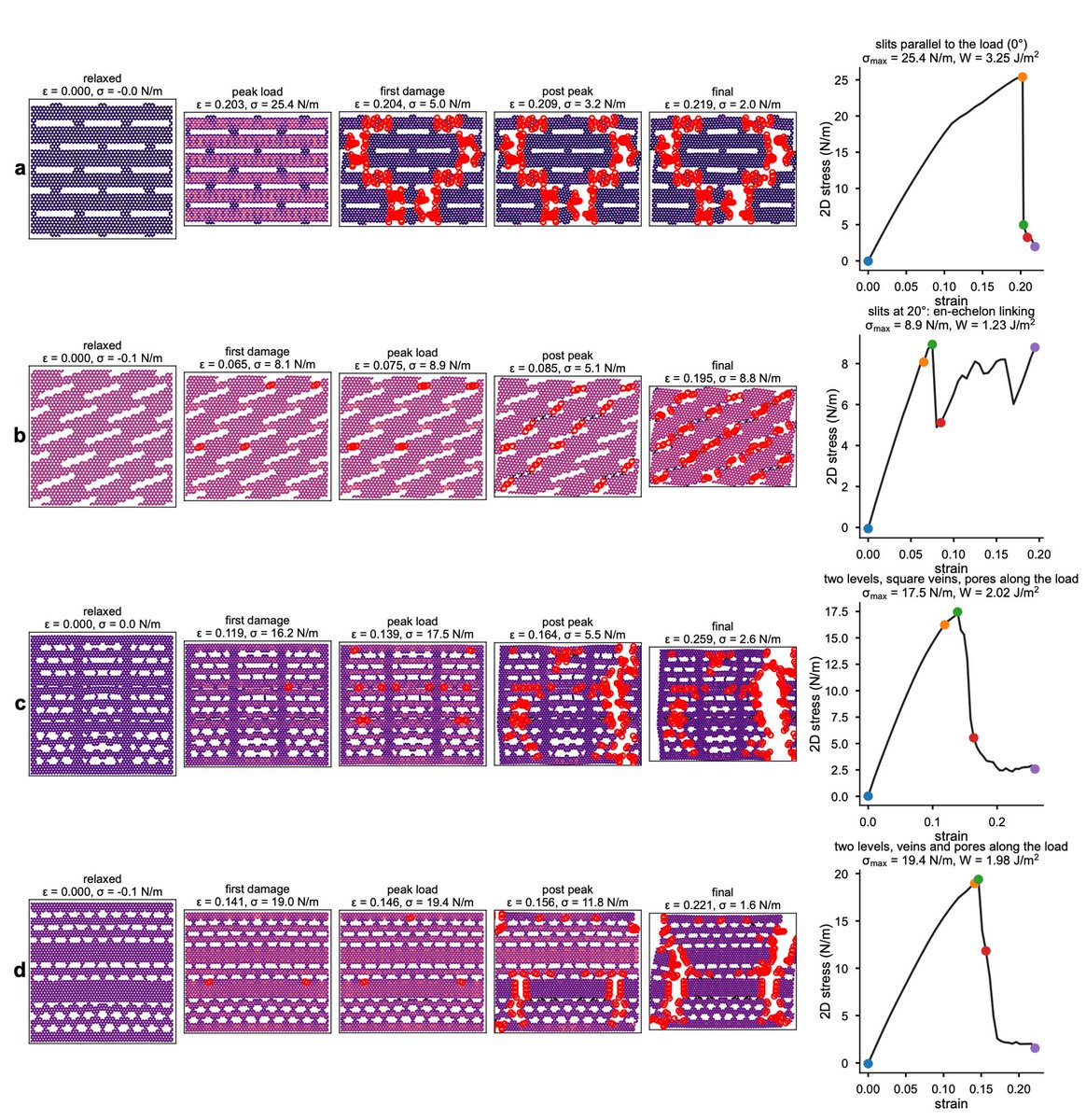
But crucially the power of this abstraction appeared in the experiment that ultimately broke it: A slit array tilted by 20 degrees was predicted to reach a strength that was much higher than what the simulations actually produced. This apparent "error" directed attention to the bridges between neighboring slit tips, showing how the AI was able to reason through multiple world models and revise its understanding autonomously as new data was collected. In the end a key finding was that the overlap of graphene segments, subjected short ligaments to combined tension and shear, are key to understand how the cuts form into a staircase-like fracture path. Counting the available section alone had missed how its connections interacted.
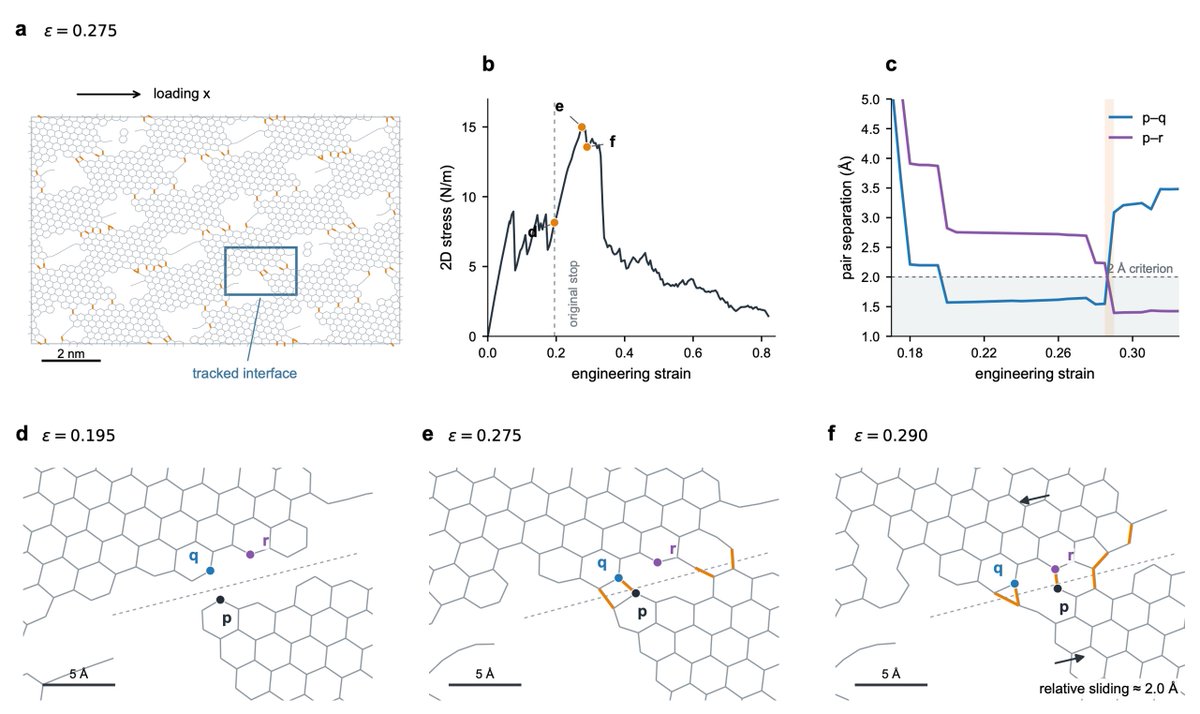
Further tests separated three regimes: neighboring slit tips linked, intervening ligaments rotated, or short bridges bent as straight load paths disappeared. An overlap control supported the geometric explanation. The agent's prediction failed at a boundary between mechanisms, and the follow-up experiments made that boundary explicit. Over and over, a numerical discrepancy becomes a question about cause. Atomic histories identify a missing mechanism and the revised explanation predicts a new comparison, which can confirm it or expose its next limit. The design rule becomes useful because its domain of validity is (by itself!) part of the rule.
There are many other examples in the discovery workflow; for instance, an apparent optimum in a disordered network disappeared under seed replication. Randomizing pore size or position did not provide a general strength advantage over the ordered comparisons. The process removed attractive explanations that the repeated experiments did not support.
Hierarchical meta-structures: scaling and synthesis
Hierarchy made the relationship between structure and explanation even sharper. In the initial population of relatively ordered meshes, strength largely followed load-path alignment. After accounting for alignment, adding nested levels produced no systematic strength premium. Simpler pore shaping achieved similar performance. The number of levels alone did not explain the response. That result defined the next set of experiments with a much larger scale separation, deliberately organized veins, and cracks placed within or across the hierarchical structure. The follow-up added hundreds of new computational experiments that revealed the governing principles by which graphene becomes flaw tolerant while retaining high strength. The mechanism was visible in the sequence of atomic events. Solid veins carried a disproportionate share of the load before damage. Fine porous compartments failed successively while the veins continued to transmit force. Cracks stopped at compartment boundaries or turned along them in the tested designs. The hierarchy organized when different parts of the material lost their load-carrying role.
For instance, a contained crack left the main veins intact and preserved strength close to that supported by the remaining solid section. A crack that severed a vein removed that protection. Replacing solid veins with bundles of narrow strips changed the sequence again, allowing strips to fail progressively. The building blocks determined how much function remained after the first damage event.
The resulting principle concerns the evolution of the material. Architecture controls which connections carry the initial load, where damage begins, and how forces move through the connections that survive. Hierarchy improved both strength and integrated response in the matched larger designs because it changed that organization. These findings identify concrete conditions for benefit and explain why a trend fitted to smaller structures did not transfer unchanged across scales.
Concluding thoughts
The frontier opened by the work is that AI, on its own, constructs the physical instruments through which deep, first principles based reasoning becomes possible. The model of matter constrains the experiment, and the experiment changes the explanation, forming a powerful recursive loop. The explanation defines the next part of the design space to investigate, new reasoning yields new insights, questions, falsifications and world models, resulting in ever-deeper thinking about fundamental physical relationships. Strikingly, physics supplies both the foundation and itself is manipulated, making the growth of scientific understanding an explicit, executable process.
References and notes
-
Buehler, M. J. Models building models for discovery of graphene metamaterial design principles in the context of failure, ChemarXiv (2026).
-
Novoselov, K. S. et al. Electric field effect in atomically thin carbon films. Science 306, 666–669 (2004).
-
Geim, A. K. & Novoselov, K. S. The rise of graphene. Nature Materials 6, 183–191 (2007).
-
Novoselov, K. S. et al. Two-dimensional gas of massless Dirac fermions in graphene. Nature 438, 197–200 (2005).
-
Lee, C., Wei, X., Kysar, J. W. & Hone, J. Measurement of the elastic properties and intrinsic strength of monolayer graphene. Science 321, 385–388 (2008).
-
Balandin, A. A. et al. Superior thermal conductivity of single-layer graphene. Nano Letters 8, 902–907 (2008).
-
Nair, R. R. et al. Fine structure constant defines visual transparency of graphene. Science 320, 1308 (2008).
-
Brenner, D. W. et al. A second-generation reactive empirical bond order (REBO) potential energy expression for hydrocarbons. Journal of Physics: Condensed Matter 14, 783–802 (2002).
-
Pastewka, L., Pou, P., Pérez, R., Gumbsch, P. & Moseler, M. Describing bond-breaking processes by reactive potentials: Importance of an environment-dependent interaction range. Physical Review B 78, 161402(R) (2008).
-
Pastewka, L., Klemenz, A., Gumbsch, P. & Moseler, M. Screened empirical bond-order potentials for Si-C. Physical Review B 87, 205410 (2013).
-
Blees, M. K. et al. Graphene kirigami. Nature 524, 204–207 (2015).
-
Hanakata, P. Z., Cubuk, E. D., Campbell, D. K. & Park, H. S. Accelerated search and design of stretchable graphene kirigami using machine learning. Physical Review Letters 121, 255304 (2018).
-
Ghafarollahi, A. & Buehler, M. J. SciAgents: Automating scientific discovery through bioinspired multi-agent intelligent graph reasoning. Advanced Materials 37, 2413523 (2025).
-
Ghafarollahi, A. & Buehler, M. J. Automating alloy design and discovery with physics-aware multimodal multiagent AI. Proceedings of the National Academy of Sciences 122, e2414074122 (2025).