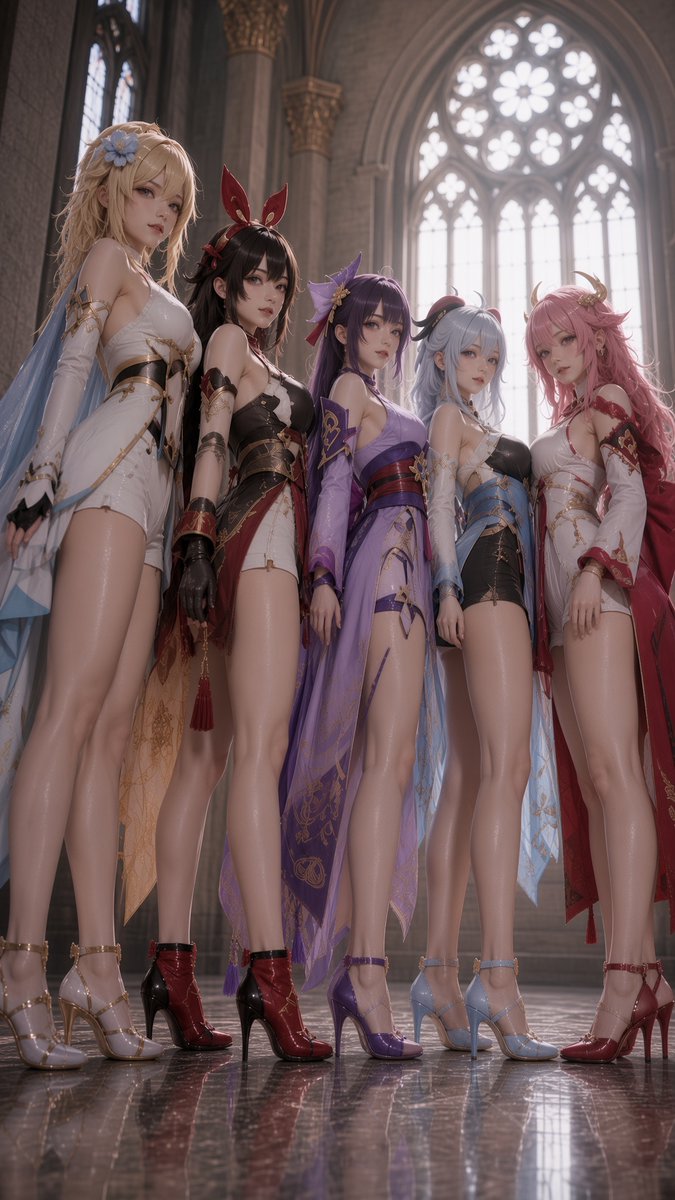
ULTRA-CLOSE CAMERA|FACE PRIORITY
文章目录
部分视频或图片暂未收录,已在正文保留提示;需要时可查看原文。查看原文 ↗
花了很久时间调教了一个酷炫的运镜提示词。
CAMERA DISTANCE MUST BE EXTREMELY CLOSE.
The previous framing is too distant.
Do NOT move the camera backward just to fit all five performers.
FACE CLARITY HAS HIGHER PRIORITY THAN FULL-BODY VISIBILITY.
When the camera is showing a performer's face:
prioritize a close-up or extreme close-up of the face.
The face must occupy a large portion of the frame.
The face must remain:
-
sharp
-
recognizable
-
detailed
-
photorealistic
-
anatomically stable
-
consistent with Picture 1
-
high-resolution
-
free from facial deformation
Visible:
-
realistic pores
-
fine skin texture
-
natural facial micro-details
-
individual eyelashes
-
individual hair strands
-
natural eye detail
-
realistic lips
-
subtle skin imperfections
Do NOT sacrifice facial resolution to show the entire body.
EXTREME CLOSE-UP FACE SHOTS
During the dance, the camera may move extremely close to individual performers.
Use:
extreme close-up → close-up → medium-close shot → close side angle → close three-quarter angle
When focusing on a face, it is NOT necessary to show the entire performer.
It is acceptable to show:
-
face only
-
head and shoulders
-
head, shoulders and upper torso
-
partial upper body
Do NOT force full-body framing during face shots.
The purpose of these shots is to preserve facial identity and realistic facial quality.
FIVE-PERSON GROUP DOES NOT REQUIRE FIVE FULL BODIES
The five performers must remain part of the same continuous dance scene.
However:
ALL FIVE DO NOT NEED TO BE FULLY VISIBLE FROM HEAD TO TOE AT EVERY MOMENT.
This is extremely important.
Do NOT pull the camera far away simply to show all five full bodies.
Instead, alternate naturally between:
individual face close-up → two-person close shot → three-person side composition → five-person close group → close leg movement → high-angle group composition → individual face close-up.
The performers remain spatially connected in the same environment.
CLOSE GROUP COMPOSITIONS
For shots showing multiple performers, use close compositions such as:
Side Composition
Show the five performers from a close lateral perspective.
The bodies may partially overlap naturally.
Maintain recognizable identities.
Three-Quarter Composition
Use a close three-quarter angle.
The nearest performer may occupy more of the frame.
The other performers remain visible behind or beside them.
High-Angle Composition
Use a close elevated or overhead perspective to show:
-
synchronized kicks
-
formation
-
spacing
-
choreography
Do not pull far away.
Close Side Orbit
Move laterally around the performers at very short distance.
Use strong parallax between foreground and background performers.
Close Rear Three-Quarter
Briefly pass behind the group while remaining close.
Do not become a distant rear shot.
CAMERA SHOULD MOVE AROUND THE PERFORMERS, NOT AWAY FROM THEM
The camera movement should feel like a physical camera operator moving among the performers.
Use:
very close Arc Shot → close Push In → face close-up → close lateral movement → close high angle → close three-quarter orbit → close face shot → close group composition.
Avoid:
pulling backward → wide shot → distant orbit → re-establishing the group.
The camera should constantly maintain proximity.
FACE TRANSITION
When transitioning from one performer to another:
move the camera physically toward the next performer.
Do NOT zoom out to fit everyone into the frame.
Example:
Performer 1 extreme close-up → lateral camera movement → Performer 2 close-up → continue orbit → Performer 3 close-up → continue orbit → Performer 4 close-up → Performer 5 close-up → close group composition.
All transitions remain continuous and cinematic.
HIGH-KICK CAMERA
During high kicks, the camera does NOT need to show the entire five-person group from far away.
Instead, use close perspectives:
close side shot of kicking legs → close three-quarter body shot → close high-angle kick shot → close group perspective.
The camera can emphasize the leg extension while staying physically close.
Use natural motion blur.
Preserve realistic anatomy.
FACE QUALITY PRIORITY
When a face is visible, prioritize:
FACIAL QUALITY > BODY COMPLETENESS > ENVIRONMENT COVERAGE.
Priority order:
-
Face identity
-
Facial detail
-
Natural skin texture
-
Stable anatomy
-
Character costume
-
Choreography
-
Group composition
-
Environment
Never sacrifice facial quality for a wider composition.
ABSOLUTE CAMERA DISTANCE RULE
THE CAMERA MUST NEVER BECOME FAR AWAY.
No distant wide shot.
No giant establishing shot.
No large pull-out.
No far orbit.
No tiny performers.
No excessive empty environment.
Even when showing all five performers together:
keep the camera close enough that individual faces remain recognizable.
If all five cannot fit comfortably in a close frame:
use a closer partial group composition instead of moving the camera farther away.
FINAL CAMERA PRINCIPLE
The entire 15-second sequence should feel like:
a real camera moving very close around five performers during a live Can-Can performance.
Use constantly changing close perspectives:
extreme face close-up → close two-person shot → close side group shot → close high-angle kick → close three-quarter orbit → extreme face close-up → close group composition → close low-angle kick → close face → close final group pose
NEVER SOLVE COMPOSITION BY MOVING THE CAMERA FARTHER AWAY.
CLOSE CAMERA AT ALL TIMES.
FACE DETAIL IS MORE IMPORTANT THAN FULL-BODY COVERAGE.
WHEN SHOWING A FACE, SHOW THE FACE LARGE AND CLEAR.
原始图片